
Kirjailija
Phil H Listemann
Kirjat ja teokset yhdessä paikassa: 62 kirjaa, julkaisuja vuosilta 2009-2026, suosituimpien joukossa The Supermarine Spitfire Mk V. Vertaile teosten hintoja ja tarkista saatavuus suomalaisista kirjakaupoista.
Mukana myös kirjoitusasut: Phil H. Listemann
62 kirjaa
Kirjojen julkaisuhaarukka 2009-2026.

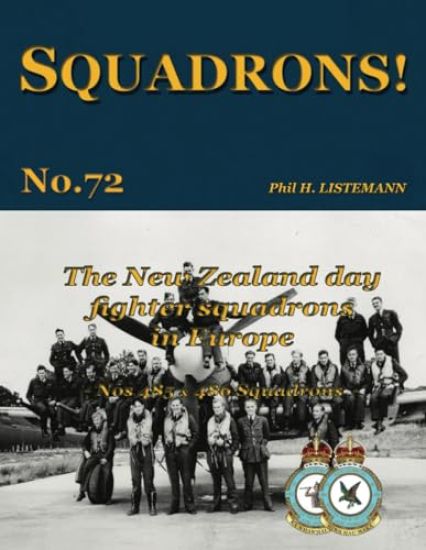
During WW2, New Zealand formed two day fighter squadrons in Europe, Nos 485 and 486 Squadrons. Book made of over 100 pages, over 120 photos and 30 colour profiles, the operational activity of each squadron is fully narrated.
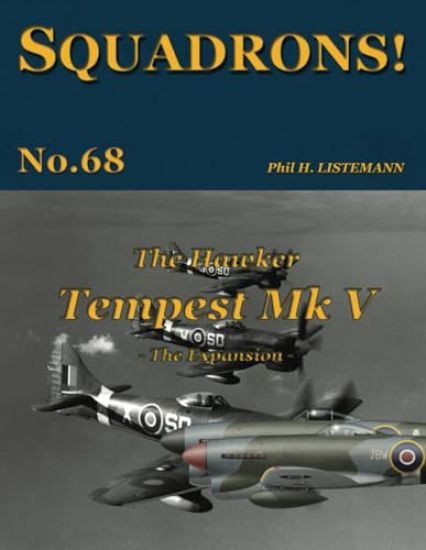
The Hawker Tempest was derived from the Hawker Typhoon. The new design was tested with various engines and eventually the Mk V was the first to enter service making its operational debut in January 1944 with the ADGB. The Tempest participated actively to the V-1 hunt during the summer of 1944, then the Tempest was sent to the Continent to join the 2TAF.During the war eight fighter squadrons became operational on Tempest including Nos 33, 80, 222, 274 and 501 Squadrons which were the last to convert. Over 50 photos illustrate the book alongside thirteen colour profiles and one colour plate.
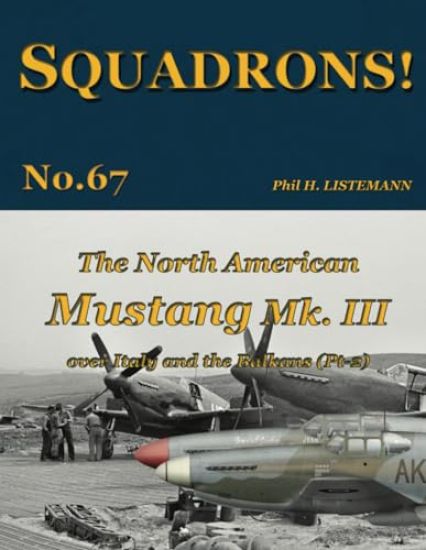
The North American Mustang Mk. III over Italy and the Balkans (Pt-2)
Phil H Listemann
PHILEDITION
2024
pokkari
The North American Mustang is certainly one of the legendary fighters of the Second World War. The aircraft can be split into two 'families', the Allison-powered and Merlin-powered. The RAF Marks I and II belong to the first category, while all subsequent marks belong to the second. The change of engine made the aircraft perform far better at higher altitudes. The Merlin 61 (with the two-stage supercharger) provided significantly improved results above 15,000 feet and was without compare above 20,000 feet. All this without sacrificing range. This was a key point as, in 1942, the RAF was looking for a long-range escort fighter, a role the Spitfire, whatever the mark, could not fulfill with complete satisfaction from the British Isles. The British conducted an experimental programme with the new engine on various test-beds (known within the RAF as the Mustang X) while the Americans were doing the same thing on their side. The Americans first discovered the best way to pair the Merlin and the airframe and, after the first flight of the XP-51B on 30 November 1942, the future of the P-51B was guaranteed. The British ordered hundred of Mustang IIIs (denomination given to both P-51B and P-51C) and they served in Western Europe and in Italy. In Italy up to May 1945, six squadrons were totally equipped with the type, No. 3 RAAF, No. 5 SAAF, and RAF 112, 213, and 249 Squadrons, while, just after the war, other units (RAF 250, 260, and the Australian 450) received a mix of Mustang IIIs and IVs. This first part will develop the operational usage of Nos 112, 213 and 260 Squadrons. Close to 30 photos and 5 colour profiles illustrate this part. (Part 1 is developed in SQUADRONS 40)
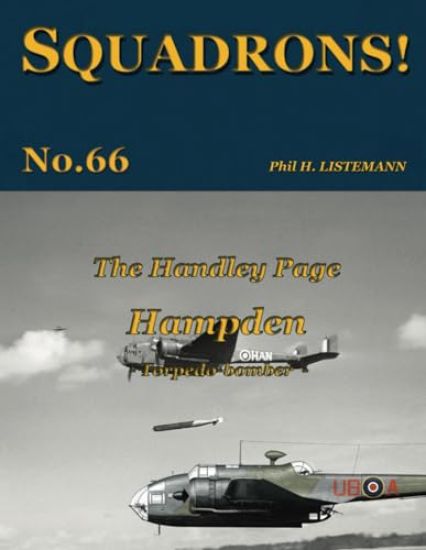
The Handley Page Hampden was one of the British twin-engine medium bombers in service in the RAF when war broke and was used as a bomber with Bomber Command until September 1942. As the operational life of the Hampden as a bomber was coming to an end with the introduction of the four-engine bombers so it was a good way for the type to have a second life on the front line and close to 300 Hampdens were converted as torpedo bombers to respond to Coastal Command's needs. Eventually, four squadrons used this version in operations, Nos. 144, 415 (RCAF), 455 (RAAF) and 489 (NZ) before to be withdrawn from the front line at the end of 1943. This book describes the operational usage of the Hampden torpedo-bomber and is illustrated with 30 photographs and three colour profiles.
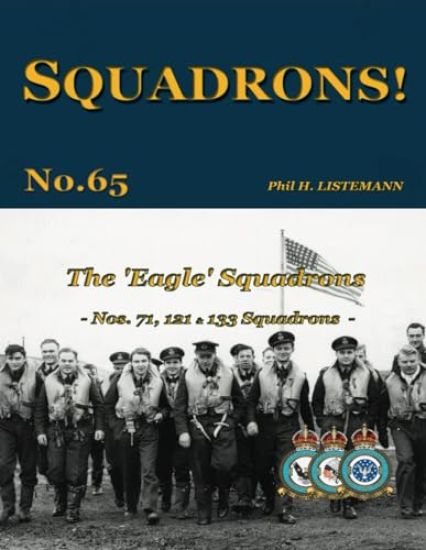
The full operational activity of the three 'Eagle' squadrons (Nos 71, 121 and 133), which were RAF fighter squadrons manned by Amercian personnel during WW2. They were all formed before the USA went to war and were eventually transferred to the USAAF in September 1942. Illustrated with over 60 photographs, 20 colour profiles and 15 biographies of pilots who made history of the 'Eagle' squadrons.
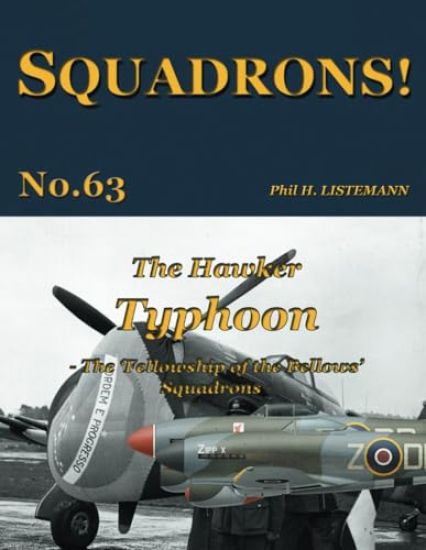
The Hawker Typhoon was designed to Air Ministry specification F.18/37 which sought to take advantage of the new generation of 2000hp engines and satisfy the latest requirements in armament. This major step up demanded a larger and more advanced airframe than that of the company's then current Hurricane and by March 1938 work had commenced on the first two prototypes; one with the Napier Sabre, soon called 'Typhoon' and the other with a Rolls-Royce Vulture, later to be named the 'Tornado'; this latter machine was the first to fly, on 6 October 1939. The Vulture did not give too many problems in the Hawker fighter but by the end of 1940 it was experiencing serious trouble with its installation in the Avro Manchester bomber, and as a result the project was abandoned. With the third engine (Bristol Centaurus) of the new generation still some way off, the Air Ministry had little option but to concentrate on the Typhoon, which had made its first flight on 24 February 1940. The new aircraft encountered teething problems and was also delayed by production priorities for other Hawker types during the Battle of Britain. During its early operational life the Typhoon had to overcome problems that threatened to end its service, but these were eventually remedied so that, by the last quarter of 1943, the Typhoon had become a reliable aircraft. Improvements included the introduction of the new single piece 'blown' hood, a four-bladed propeller and an enlarged tailplane, but there was no change in designation. When production ceased in November 1945, 3317 Typhoons had been built.At first pure fighters were produced, but, by the spring of 1943, only the fighter-bomber version was coming off the production line and by the end of the year all the Typhoon squadrons were undertaking some form of ground attack role. On the eve of D-Day the Typhoon had become the backbone of the 2TAF fighter-bomber force with no less than eighteen squadrons active. This book narrates the operational usage of three squadrons, Nos. 137, 193 and 263 which were connected with the Fellowship of the Bellow. The Fellowship of the Bellows was a fundraising organisation active in Latin America during World War II aimed at raising money to purchase aircraft for the Royal Air Force. Illustrated with 60 photos and 14 colour plates.
The full history of the two Belgian fighter squadrons of the RAF (Nos 349 and 350) detailled in this book illustrated with 90 photographs and 14 colour profiles.
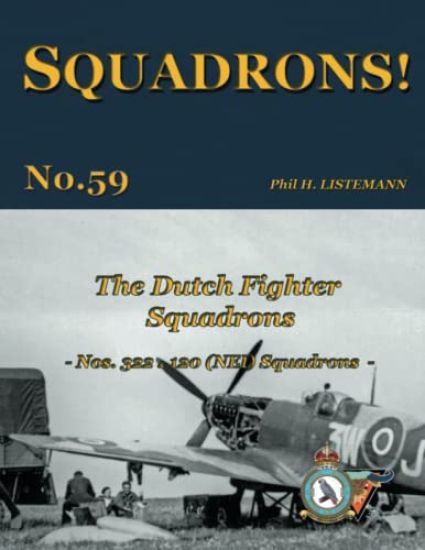
During WW2, the Netherlands and the Netherlands East Indies (NEI) were both occupied after their armed forced had been overrun. However, many Dutchmen decided to continue the struggle and eventually found asylum either in Great Britain either in Australia. Despite the meagre forces available, the Dutch managed to form two fighter squadrons, one in UK, No. 322 placed under RAF command, and one in Australia, No. 120 placed under RAAF command. This book narrates their respective operational commitment between 1943-1945 in 40 pages illustrated with about 40 images and 6 colour profiles.

Fighter Leaders of the RAF, RAAF, RCAF, RNZAF & SAAF in WW2
Phil H Listemann
PHILEDITION
2019
pokkari