Kirjailija
Rabindranath Tagore
Kirjat ja teokset yhdessä paikassa: 822 kirjaa, julkaisuja vuosilta 1910-2026, suosituimpien joukossa A Woman of India: Being the Life of Saroj Nalini, Founder of the Women's Institute Movement in India. Vertaile teosten hintoja ja tarkista saatavuus suomalaisista kirjakaupoista.
822 kirjaa
Kirjojen julkaisuhaarukka 1910-2026.
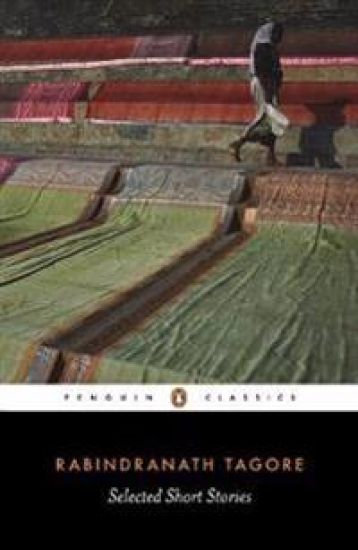
Poet, novelist, painter and musician, Rabindranath Tagore (1861-1941) is the grand master of Bengali culture. Written during the 1890s, the stories in this selection brilliantly recreate vivid images of Bengali life and landscapes in their depiction of peasantry and gentry, casteism, corrupt officialdom and dehumanizing poverty. Yet Tagore is first and foremost India's supreme Romantic poet, and in these stories he can be seen reaching beyond mere documentary realism towards his own profoundly original vision.
Rabindranath Tagore was born to a Brahmin family in Calcutta and through his writings became the literary voice of India. He developed a following for his work in Bengali, but he became a worldwide sensation after the English translation of his poem Gitanjali caught the attention of W.B. Yeats. He toured the world and became known for his spiritual and artistic presence and global views that bridged the East and West. He received the Nobel Prize in Literature in 1913, the first non-Western writer to achieve such an honor. In addition to poetry, Tagore also wrote short stories, plays, novels, and essays, and many of his paintings hang in museums. He also founded a school, Visva Bharati, which combined Hindu and Western influences. Tagore loved music, and two of his songs became the national anthems for India and Bangladesh. The Fugitive is one example of his artistic powers: We came hither together, friend, and now at the cross-roads I stop to bid you farewell. Your path is wide and straight before you, but my call comes up by ways from the unknown. I shall follow wind and cloud; I shall follow the stars to where day breaks behind the hills; I shall follow lovers who, as they walk, twine their days into a wreath on a single thread of song, "I love."
Set on a Bengali noble's estate in 1908, this is both a love story and a novel of political awakening. The central character, Bimala, is torn between the duties owed to her husband, Nikhil, and the demands made on her by the radical leader, Sandip. Her attempts to resolve the irreconciliable pressures of the home and world reflect the conflict in India itself, and the tragic outcome foreshadows the unrest that accompanied Partition in 1947.
The poems of Rabindranath Tagore (1861-1941) are among the most haunting and tender in Indian and in world literature, expressing a profound and passionate human yearning. His ceaselessly inventive works deal with such subjects as the interplay between God and the world, the eternal and transient, and with the paradox of an endlessly changing universe that is in tune with unchanging harmonies. Poems such as 'Earth' and 'In the Eyes of a Peacock' present a picture of natural processes unaffected by human concerns, while others, as in 'Recovery - 14', convey the poet's bewilderment about his place in the world. And exuberant works such as 'New Rain' and 'Grandfather's Holiday' describe Tagore's sheer joy at the glories of nature or simply in watching a grandchild play.

"Gitanjali," or Song Offerings, is a collection of poems translated by the author, Rabindranath Tagore, from the original Bengali. This collection won the Nobel prize for Tagore in 1913. This volume includes the original introduction by William Butler Yeats that accompanied the 1911 English language version. "Gitanjali" is a collection of over 100 inspirational poems by India's greatest poet.
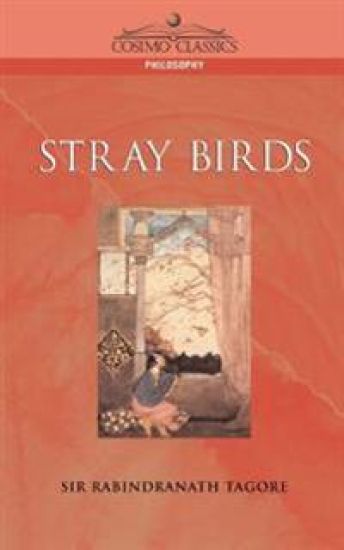
"Stray Birds" contains ideas on nature, man, and his environment as may be entertained by a man sitting by a window where the stray birds of summer sing and fly away. These short, sometimes merely one-line poems are often just an
The ideal introduction to the spirituality of India's greatest modern poet.
Glimpses Of Bengal Selected From The Letters Of Sir Rabindranath Tagore 1885 To 1895
Rabindranath Tagore
KESSINGER PUBLISHING CO
2004
pokkari
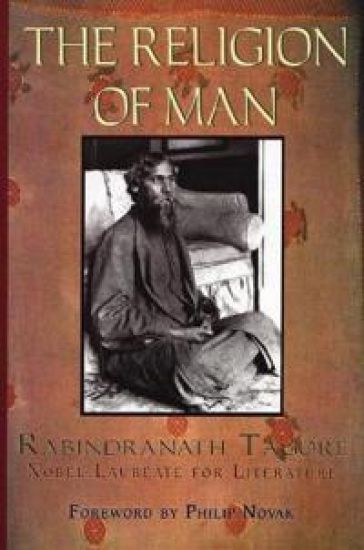
Tagore is unequivocal in his faith. He appreciates the intellectual triumphs of science, but he writes as a poet and philosopher. Man must always be a music-maker and dreamer of dreams; he must never lose, in his material quests, his longing for the touch of the divine. He traces the growth of the idea of God from primitive notions to universality. Today, as he says, all barriers are down and the the God of humanity has arrived at the gates of the ruined temple of the tribe. His book rings with joy and affirmation overstepping all limitations of race and creed. His estimates of western civilization are searching and some of them written in acid one reads much between the lines-but Tagore recognizes the true strength of the west and the faults of the east. The lectures are actually a superb and haunting criticism and evaluation of life from the viewpoint of an immemorial philosophy by a wise man. -"Christian Century"This is a book for everyone: a book whose human interest and pervading charm assure it a wide appeal and lasting value. It is not a philosophical work, as its author repeatedly warns us; in fact, its one semi-philosophical chapter (the first) may well be omitted. Its value is religious and poetical; like the essays of Emerson, it is primarily a document of the spiritual life. -"Journal of Religion" Rich in profound thought and poetic speech he has never written anything so penetrating and illumination on the nature of things Tagore has seen visions, and he can paint them for us with a compelling charm due to utter simplicity and fidelity. But he has not stopped there. His reason hs entered into truth by the doors which his intuition has opened A treasure-store of truth, beauty and wisdom. -"New Chronicle "Rabindranath Tagore (1861-1941) was the youngest son of Debendranath Tagore, a leader of the Brahmo Samaj, which was a new religious sect in nineteenth-century Bengal and which attempted a revival of the ultimate monistic basis of Hinduism as laid down in the Upanishads. He was educated at home; and although at seventeen he was sent to England for formal schooling, he did not finish his studies there. In his mature years, in addition to his many-sided literary activities, he managed the family estates, a project which brought him into close touch with common humanity and increased his interest in social reforms. He also started an experimental school at Shantiniketan where he tried his Upanishadic ideals of education. From time to time he participated in the Indian nationalist movement, though in his own non-sentimental and visionary way; and Gandhi, the political father of modern India, was his devoted friend. Tagore was knighted by the ruling British Government in 1915, but within a few years he resigned the honour as a protest against British policies in India. Tagore had early success as a writer in his native Bengal. With his translations of some of his poems he became rapidly known in the West. In fact his fame attained a luminous height, taking him across continents on lecture tours and tours of friendship. For the world he became the voice of India's spiritual heritage; and for India, especially for Bengal, he became a great living institution.This autobiography/biography was written at the time of the award and later published in the book series Les Prix Nobel/Nobel Lectures.Philip Novak is the author of The World's Wisdom, a widely used anthology of the sacred texts of the world's religions and the companion reader to "Huston Smith's The World's Religions.""
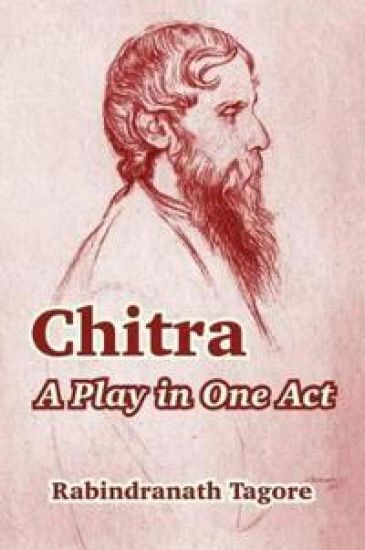
This is Tagore's interpretation of an episode from the Mahabharata. Chitra, daughter and only child of the King of Manipur, has been brought up like a boy. She is proud of her prowess and manliness till she falls in love with Arjuna, who spurns her. Broken-hearted, Chitra realizes the vain pride of her manlike strength and prays to the gods for a brief day of perfect beauty to ensnare Arjuna. Tagore has handled this delicate story with great charm and at times the play is sheer poetry. Sir Rabindranath Tagore (1861-1941) was an Indian author and guru who drew on the classical literature of India, especially the ancient Sanskrit scriptures and the writings of Kalidasa. He won the Nobel Prize in Literature in 1913.
Discover How Tagore’s Spiritual Life and Vision Can Enlighten Your Own "Rabindranath Tagore’s philosophical and spiritual thoughts transcend all limits of language, culture, and nationality. In his writings, the poet and mystic takes us on a spiritual quest and gives us a glimpse of the infinite in the midst of the finite, unity at the heart of all diversity, and the Divine in all beings and things of the universe." —from the Preface bySwami Adiswarananda Rabindranath Tagore is one of the most influential mystic poets and teachers of the last century. Deeply spiritual and profoundly sensitive, his verse speaks to people from all backgrounds who seek a deeper understanding of self, country, creation, God, and love. This beautiful sampling of Tagore’s two most important works, The Gardener and Gitanjali, offers a glimpse into his spiritual vision that has inspired people around the world. Poems from The Gardener explore youth and earthly love, while excerpts from Gitanjali express divine love and Tagore’s difficulty in satisfying it. Overwhelmingly mystical and lovely in its simplicity, this unique collection offers insight into Tagore’s heavenly desires, his ongoing quest for Brahama Vihara, the joy eternal, and illuminates the remarkable diversity that made him the most important bridge between the spirituality of the East and West in the first half of the twentieth century.