Kirjojen hintavertailu. Mukana 12 390 323 kirjaa ja 12 kauppaa.

Kirjailija

Ramin Jahanbegloo

Kirjat ja teokset yhdessä paikassa: 44 kirjaa, julkaisuja vuosilta 2007-2025, suosituimpien joukossa Albert Camus. Vertaile teosten hintoja ja tarkista saatavuus suomalaisista kirjakaupoista.

44 kirjaa

Kirjojen julkaisuhaarukka 2007-2025.

Zola

Zola

Ramin Jahanbegloo

TAYLOR FRANCIS LTD
2023
nidottu
This book examines the figure of the public intellectual through the work of Émile Zola in the Dreyfus affair. It analyzes Zola’s famous letter “J’Accuse” supporting Alfred Dreyfus and its philosophical and political consequences for the intellectual world, including Indian public intellectuals. The volume is an examination of the critical role that can be played by public intellectuals today by referring to the “J’Accuse” model and a homage to the ideal of living decently and truthfully through the exercise of critical reason and moral excellence.Accessible and comprehensive, the book will be essential reading for students of philosophy and critical reasoning. It will be of interest to general readers as well.

Zola

Zola

Ramin Jahanbegloo

TAYLOR FRANCIS LTD
2023
sidottu
This book examines the figure of the public intellectual through the work of Émile Zola in the Dreyfus affair. It analyzes Zola’s famous letter “J’Accuse” supporting Alfred Dreyfus and its philosophical and political consequences for the intellectual world, including Indian public intellectuals. The volume is an examination of the critical role that can be played by public intellectuals today by referring to the “J’Accuse” model and a homage to the ideal of living decently and truthfully through the exercise of critical reason and moral excellence.Accessible and comprehensive, the book will be essential reading for students of philosophy and critical reasoning. It will be of interest to general readers as well.
Albert Camus

Albert Camus

Ramin Jahanbegloo

TAYLOR FRANCIS LTD
2021
nidottu
This book interprets the ideas, thoughts and concepts that characterize the writings and philosophy of Albert Camus for our contemporary times. It investigates Camus’ "revolted compassion" as an outsider and a philosopher-writer who in his own words believed in "creating dangerously". The author examines Camus’ interventions on political, philosophical and moral questions, such as Algerian independence, capital punishment, ideological violence, nihilism in the context of his ideals of the absurd and revolt, and justice and liberty. Further, it goes on to provide an exhaustive analysis of Camus’ critique of violence and his intellectual resistance to totalitarianism. Bringing together latest scholarship with an acute analysis of Albert Camus’ philosophy, this sourcebook throws a powerful light on the intellectual foundations of the twentieth century and its relevance for the twenty-first. The book will be of interest to scholars of literature, philosophy and African Studies.
Mahatma Gandhi

Mahatma Gandhi

Ramin Jahanbegloo

Routledge India
2020
nidottu
This book maps the genesis and development of Gandhi’s idea of non-violence. It traces the evolution of the message of peace from its first expressions in South Africa to Gandhi’s later campaigns against British rule in India, most prominently the Salt March campaign of 1930. It argues that Gandhi’s blueprint for change must be adopted in the present, as the world craters on the precipice of catastrophic climate change, and the threat of nuclear war hangs over our heads.A timely book for uncertain times, this work is a reminder of the value of peace in the 21st century. It will be of great interest to readers, scholars and researchers of peace and conflict studies, politics, philosophy, history and South Asian studies.
Mahatma Gandhi

Mahatma Gandhi

Ramin Jahanbegloo

Routledge India
2020
sidottu
This book maps the genesis and development of Gandhi’s idea of non-violence. It traces the evolution of the message of peace from its first expressions in South Africa to Gandhi’s later campaigns against British rule in India, most prominently the Salt March campaign of 1930. It argues that Gandhi’s blueprint for change must be adopted in the present, as the world craters on the precipice of catastrophic climate change, and the threat of nuclear war hangs over our heads.A timely book for uncertain times, this work is a reminder of the value of peace in the 21st century. It will be of great interest to readers, scholars and researchers of peace and conflict studies, politics, philosophy, history and South Asian studies.
Albert Camus

Albert Camus

Ramin Jahanbegloo

Routledge India
2019
sidottu
This book interprets the ideas, thoughts and concepts that characterize the writings and philosophy of Albert Camus for our contemporary times. It investigates Camus’ "revolted compassion" as an outsider and a philosopher-writer who in his own words believed in "creating dangerously". The author examines Camus’ interventions on political, philosophical and moral questions, such as Algerian independence, capital punishment, ideological violence, nihilism in the context of his ideals of the absurd and revolt, and justice and liberty. Further, it goes on to provide an exhaustive analysis of Camus’ critique of violence and his intellectual resistance to totalitarianism. Bringing together latest scholarship with an acute analysis of Albert Camus’ philosophy, this sourcebook throws a powerful light on the intellectual foundations of the twentieth century and its relevance for the twenty-first. The book will be of interest to scholars of literature, philosophy and African Studies.
Non-Violence and Ecological Imperatives

Non-Violence and Ecological Imperatives

Ramin Jahanbegloo; Pooja Sharma

ANTHEM PRESS
2025
sidottu
Violence impregnates human life in many ways. We do violence to individuals or groups. We do violence to plants and animals. We do violence to the planet Earth. However, Nature will not survive our arrogance and patterns of exploiting and destroying the biosphere if we do not break the cycle of violence. As such, any moral effort to stop barbaric consumerism and chaotic nihilism is simultaneously the possibility of making life and biodiversity flourish on Earth. The moral imperative is thus also an ecological imperative. Therefore, the question is: how can we talk about non-violence in the current ecological crisis? Put differently, we can also ask: how can non-violence be brought to our ecological concerns? Martin Luther King, Jr. once said, ‘Injustice anywhere is a threat to justice everywhere’. The notion of injustice becomes all the more crucial when applied to excluding animals and plants from the history of our planet. This eco-moral crisis must become more public as the ecological trajectory of the Earth foreshadows a very troublesome future. Non-violence and Ecological Imperative is a contribution to the relevance and potential of the philosophy of non-violence in showing clearly that our viable ecological future depends on attitudes and strategies that are rooted in the Gandhian moment of civilising humanity as an antidote to the violent modern techno-industrial way of life. The interdependence and cooperation between humans and nature are inevitable. Non-exploitative and non-violent prerequisites of Gandhian ideology entail that interdependence and cooperation must be based on altruistic values and not on self-interest and materialistic values. This signifies immeasurable love not only among humans but also with nature. Thus, absolute love substitutes greed. Non-possession from an absolute love revolutionises the socio-ecological paradigm of human civilisation. Various ecological scientists and economists have asserted the need for revisiting the harmony between human activities and nature. Stern et.al (1998) concluded that economic growth would never result in improvement in environmental quality. Arrow et.al (1995) concluded that economic growth is not a panacea for environmental quality. Meadows et al. (1972) in his book The Limits to Growth claimed that environmental limits would cause the collapse of the world economic system. Against this backdrop, Gandhi advocated the process of recycling and minimising waste so that humans adopt a lifestyle that integrates with the ecosystem. Humans must dwell in a life that converges with the law of nature and maintains ecological harmony. This notion of continuity of life is inspired by the Gandhian philosophy of non-violence and absolute love. The moment there is a break in continuity, it results in violence leading to unrest or conflict, dismantling the process of continuity.
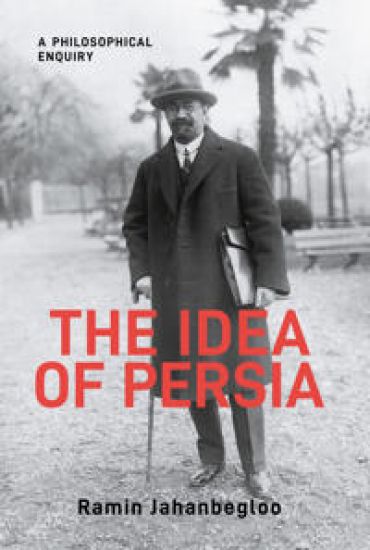
The Idea of Persia

The Idea of Persia

Ramin Jahanbegloo

GINGKO
2025
sidottu
In 1721, in his famous Lettres persane (The Persian Letters), the French philosopher Montesquieu posed the question 'Comment peut-on etre persan?' The answer to that question is perhaps an even more wide-ranging, challenging and fascinating conundrum today. In his exploration of where such an answer might be found, the renowned contemporary philosopher Ramin Jahanbegloo turns to the writings of the politician and diplomat Muhammad Ali Foroughi (1877-1942), and his vision of what 'being' a Persian might embrace. After centuries of invasion, murder, destruction and authoritarian rule, this philosophical investigation examines Montesquieu's original question against a backdrop in which a common, plural subjectivity of Persian-ness has been frustrated for centuries, and at a time when the country is wrestling with the possibility of an extended period of political, social and cultural decline. Even so, the battle for social and political freedoms is still underway in Iran; and in The Idea of Persia, the concept of nationhood is presented as the means by which Iranians may liberate themselves from the heroes and saints of old, and remake their political mentality in a manner that stays true to an age-old idea of Persian-ness, and to the author's own belief in freedom as a virtue that has to be taught.
Hannah Arendt

Hannah Arendt

Ramin Jahanbegloo

TAYLOR FRANCIS LTD
2025
sidottu
This book presents an original understanding of Arendt in the context of comparative political theory. The author discusses Arendt’s acute and perceptive view of violence as well as practical applications of her thought in a comparative context.The book examines Hannah Arendt’s ideas about politics and violence provoked by the horrors of totalitarianism. It applies the rich potential of Arendt’s insights to the wider cultural context and discourse of nonviolence. Through case studies of India and Iran, it presents a new way of reading Arendt’s understanding and critique of violence beyond the simple analysis of her work on power and violence.An original, nuanced and meaningful guide to Hannah Arendt, the book will be essential reading for students and scholars in politics, philosophy and peace and conflict studies.
Hannah Arendt

Hannah Arendt

Ramin Jahanbegloo

TAYLOR FRANCIS LTD
2025
nidottu
This book presents an original understanding of Arendt in the context of comparative political theory. The author discusses Arendt’s acute and perceptive view of violence as well as practical applications of her thought in a comparative context.The book examines Hannah Arendt’s ideas about politics and violence provoked by the horrors of totalitarianism. It applies the rich potential of Arendt’s insights to the wider cultural context and discourse of nonviolence. Through case studies of India and Iran, it presents a new way of reading Arendt’s understanding and critique of violence beyond the simple analysis of her work on power and violence.An original, nuanced and meaningful guide to Hannah Arendt, the book will be essential reading for students and scholars in politics, philosophy and peace and conflict studies.
The Philosophy of Rabindranath Tagore

The Philosophy of Rabindranath Tagore

Ramin Jahanbegloo

BLOOMSBURY PUBLISHING PLC
2025
nidottu
Where does the great Bengali poet and philosopher Rabindranath Tagore stand in today’s global world? The legacy of Rabindranath Tagore is vast. No writer in the history of India and Asia in general matches his variety and range of creation. In this book, Ramin Jahanbegloo looks beyond the poetry and literature for which Tagore was awarded the Nobel Prize, showing how his thinking enriches every branch of the humanities – philosophy, pedagogy and the arts.Each chapter is dedicated to one aspect of Tagore’s philosophy: his vision of human nature and its relation to Nature and God; his views on interculturality and dialogue among cultures; the idea of universal education and its influence on modern educative institutions. Reading Tagore as an intercultural thinker, Jahanbegloo seeks to understand how he confronted violent and fanatic orders. He places an emphasis on Tagore’s social and political contributions, his dialogue with Gandhi and his approach to colonialism.Attempting to bring civilisations and cultures closer together, Tagore answered many of the intellectual, moral and spiritual crises of his time. His work has inspired writers and intellectuals from different parts of the world for more than a century. This far-reaching exploration of the many facets of Tagore’s multi-dimensional thoughts allows us to understand why.
The Philosophy of Rabindranath Tagore

The Philosophy of Rabindranath Tagore

Ramin Jahanbegloo

BLOOMSBURY PUBLISHING PLC
2025
sidottu
Where does the great Bengali poet and philosopher Rabindranath Tagore stand in today’s global world? The legacy of Rabindranath Tagore is vast. No writer in the history of India and Asia in general matches his variety and range of creation. In this book, Ramin Jahanbegloo looks beyond the poetry and literature for which Tagore was awarded the Nobel Prize, showing how his thinking enriches every branch of the humanities – philosophy, pedagogy and the arts.Each chapter is dedicated to one aspect of Tagore’s philosophy: his vision of human nature and its relation to Nature and God; his views on interculturality and dialogue among cultures; the idea of universal education and its influence on modern educative institutions. Reading Tagore as an intercultural thinker, Jahanbegloo seeks to understand how he confronted violent and fanatic orders. He places an emphasis on Tagore’s social and political contributions, his dialogue with Gandhi and his approach to colonialism.Attempting to bring civilisations and cultures closer together, Tagore answered many of the intellectual, moral and spiritual crises of his time. His work has inspired writers and intellectuals from different parts of the world for more than a century. This far-reaching exploration of the many facets of Tagore’s multi-dimensional thoughts allows us to understand why.
Gandhi and the Idea of Swaraj

Gandhi and the Idea of Swaraj

Ramin Jahanbegloo

TAYLOR FRANCIS LTD
2024
nidottu
This book examines Gandhi's idea of swaraj as an alternative to the modern concept of political authority. It also introduces the readers to Gandhi’s ideas of moral interconnectedness and empathetic pluralism. It explores the Gandhian belief that "nonviolence" as a moral and political concept is essentially the empowerment of the Other through spiritual and political realization of the self as a non-egocentric subject. Further, it highlights swaraj as an act of conscience and therefore a transformative force, essential to the harmony between spirituality and politics.The volume will be of great interest to scholars and researchers of philosophy, politics, and South Asian studies.
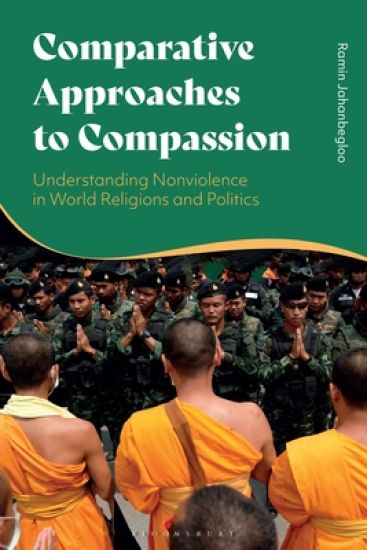
Comparative Approaches to Compassion

Comparative Approaches to Compassion

Ramin Jahanbegloo

BLOOMSBURY PUBLISHING PLC
2024
nidottu
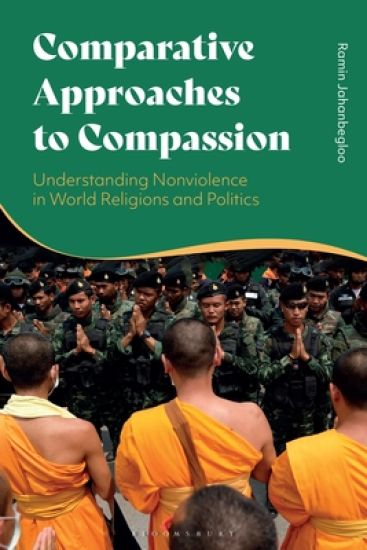
Ramin Jahanbegloo develops the concept of compassion as a practical and ethical response to the problems of today’s world. Examining the power of compassion through the lens of multiple world religions, he explores ahimsa in Buddhism, Jainism and Hinduism and neighbourly love in Christianity, before synthesizing the two concepts in the Gandhian theory of non-violence and its impact on Muslim and Christian thinkers such as Abdul Ghaffar Khan and Martin Luther King, Jr. Jahanbegloo considers the idea of a compassionate civilization based on the nonviolent democratic theory put forward by Gandhi with Swaraj, and completed by Martin Luther King, Jr. with the Beloved Community.By scrutinizing compassion in various religious and ethical traditions and exploring the relevance of homo fragilis, Jahanbegloo’s comparative approach enriches our understanding of nonviolence as a universal philosophy and practice for the 21st century. He shows that nonviolence is not only a mode of thinking and a way of life, but also a powerful strategy of social and political transformation.
Maxima Moralia

Maxima Moralia

Ramin Jahanbegloo

TAYLOR FRANCIS LTD
2023
nidottu
This book highlights the problem of one-dimensional, reductionistic life of the modern individual. An expression of crisis in our world, it discusses the imperative need to have a more comprehensive, non-reductionist life where the Other is incorporated, especially the relationship between the Other and the Self, based on virtues like love, empathy, equality, and compassion.The volume sheds light on how the world has forgone the art of living for a mutilated sense of well-being, the rise of conformity and complacency in human thought, and the lack of democratic dissent and citizenry responsibility in our contemporary societies, which is now characterized by mass immaturity, propelled by a process of thoughtlessness. It discusses how humans need to be aware of the life they lead, to think about Otherness of the Other not just as another virtue but also as a crucial element in the survival of humanity, for people to coexist with the world around them as equals. Furthermore, it advocates meaningful and thoughtful existence, in touch with the Nature we coexist with, to ensure that humanity is not robbed of its noble spirit as we live to survive in our techno-capitalist societies.An introspective read, this book will be of great interest to scholars and researchers of moral and ethical philosophy, political philosophy, and political science.
Nonviolence

Nonviolence

Ramin Jahanbegloo

Haus Publishing
2023
pokkari
A powerful book on the importance of committing to nonviolence. In this compact book, Ramin Jahanbegloo argues that the time has come for humanity to renew its political, economic, and cultural commitment to the idea of nonviolence. At the core of the work of such towering fighters against oppression as Mahatma Gandhi, Martin Luther King Jr., Nelson Mandela, the Dalai Lama, and Václav Havel, the idea of nonviolence still has much to teach us and much work to do in the ongoing fight for justice worldwide.
Gandhi and the Idea of Swaraj

Gandhi and the Idea of Swaraj

Ramin Jahanbegloo

TAYLOR FRANCIS LTD
2023
sidottu
This book examines Gandhi's idea of swaraj as an alternative to the modern concept of political authority. It also introduces the readers to Gandhi’s ideas of moral interconnectedness and empathetic pluralism. It explores the Gandhian belief that "nonviolence" as a moral and political concept is essentially the empowerment of the Other through spiritual and political realization of the self as a non-egocentric subject. Further, it highlights swaraj as an act of conscience and therefore a transformative force, essential to the harmony between spirituality and politics.The volume will be of great interest to scholars and researchers of philosophy, politics, and South Asian studies.
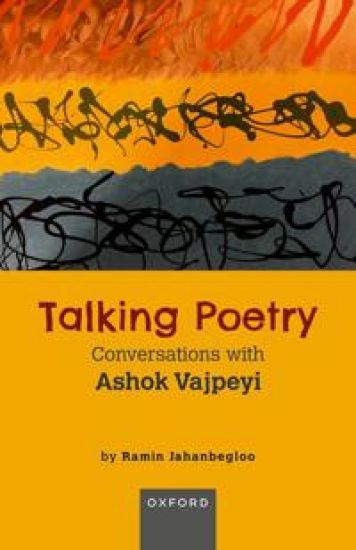
Talking Poetry

Talking Poetry

Ramin Jahanbegloo

Oxford University Press
2023
nidottu
This is an interesting book of conversations, which not only endorses the life and thoughts of Ashok Vajpeyi, but also praises poetry in general. Ashok Vajpeyi is a poet who is at home with the word. He speaks to the mortals and the divinities. He makes the mystery of the world visible to us by speaking with/of poetry. Throughout these conversations we encounter a poet who sets his own pace through poetry, music and painting. Ashok Vajpeyi's deep sense of expectation from arts is born out of his love of the world, which renders moral dignity to creativity.
Comparative Approaches to Compassion

Comparative Approaches to Compassion

Ramin Jahanbegloo

BLOOMSBURY PUBLISHING PLC
2022
sidottu
Ramin Jahanbegloo develops the concept of compassion as a practical and ethical response to the problems of today’s world. Examining the power of compassion through the lens of multiple world religions, he explores ahimsa in Buddhism, Jainism and Hinduism and neighbourly love in Christianity, before synthesizing the two concepts in the Gandhian theory of non-violence and its impact on Muslim and Christian thinkers such as Abdul Ghaffar Khan and Martin Luther King, Jr. Jahanbegloo considers the idea of a compassionate civilization based on the nonviolent democratic theory put forward by Gandhi with Swaraj, and completed by Martin Luther King, Jr. with the Beloved Community.By scrutinizing compassion in various religious and ethical traditions and exploring the relevance of homo fragilis, Jahanbegloo’s comparative approach enriches our understanding of nonviolence as a universal philosophy and practice for the 21st century. He shows that nonviolence is not only a mode of thinking and a way of life, but also a powerful strategy of social and political transformation.