Kirjojen hintavertailu. Mukana 12 595 353 kirjaa ja 12 kauppaa.

Kirjailija

Ravikumar Kurup

Kirjat ja teokset yhdessä paikassa: 2 007 kirjaa, julkaisuja vuosilta 2012-2026, suosituimpien joukossa Covid19 Porphyrinoids, Humans & Galactic Viral Quantal Computing Cloud. Vertaile teosten hintoja ja tarkista saatavuus suomalaisista kirjakaupoista.

2 007 kirjaa

Kirjojen julkaisuhaarukka 2012-2026.

Stellar Gods & Evolution - Vedic & Puranic Astrobiology

Stellar Gods & Evolution - Vedic & Puranic Astrobiology

Ravikumar Kurup; Parameswara Achutha Kurup

Lap Lambert Academic Publishing
2024
pokkari
Gravity mediates consciousness and creates matter. Hydrogen cyanide gives rise to prebiotic synthesis of lipids, proteins, carbohydrates, porphyrins and nucleic acids which can all self-assemble to form self-replicating prions, viruses, lipid organisms and carbohydrate organisms. Hydrogen cyanide acts as an interactomic molecule which produces the primitive cell or nanoarchaea. They can form prokaryotes and eukaryotes which can evolve into primates. The nanoarchaea can symbiose to form symbiotic tissue organism networks with metallic cyanide and hydrogen cyanide as neurotransmitters which can get organized to form planets and stars. The earth's orbit around the sun as well as solar flares changes the earth's geomagnetic fields contributing to global warming and evolution of life on earth. The nanoarchaea evolving out of prebiotic synthesis from hydrogen cyanide symbiosed into eukaryotic forms. The egg laying dinosaurs sequentially evolved into primate dinosaurs and primate humans. The stellar galaxies function like a biological organism in communication with the human brains. This is indicative of stellar gods and multifocal evolution of life seen in Vedic and Puranic Astrobiology.
Cholestérol - Argile - Cristaux actinidiques et origine de la vie

Cholestérol - Argile - Cristaux actinidiques et origine de la vie

Ravikumar Kurup; Parameswara Achutha Kurup

Editions Notre Savoir
2024
pokkari
Le r chauffement climatique r sultant de l'endosymbiose des arch es, de l'oxydation de l'ammoniac, de la m thanog n se, du m tabolisme des nitrates et de l'oxydation du cholest rol cr e de multiples biosph res fant mes. L'oxydation de l'ammoniac et la m thanog n se cr ent une biosph re fant me base de m thane et d'ammoniac et des organismes base de m thane et d'ammoniac. L'activit de l'oxydase du cholest rol d pendante des actinides des arch es g n re une biosph re fant me d pendante du g ne du cristal de cholest rol. Les cristaux d'argile actinidiques-cholest rol auraient g n r l'organisme isopr no de actinidique. Les cristaux d'argile auraient servi de mod le pour l'abiogen se de l'organisme isopr no de actinidique cristaux de cholest rol. Il s'agirait de l'organisme autoreproducteur non vivant originel de la Terre. Les m mes sch mas peuvent conduire l' volution de formes de vie et de non-vie autoreproductibles dans d'autres galaxies.
Colesterolo - Argilla - Cristalli attinici e origine della vita

Colesterolo - Argilla - Cristalli attinici e origine della vita

Ravikumar Kurup; Parameswara Achutha Kurup

Edizioni Sapienza
2024
pokkari
Il riscaldamento globale conseguente all'endosimbiosi arcaica, all'ossidazione dell'ammoniaca, alla metanogenesi, al metabolismo dei nitrati e all'ossidazione del colesterolo crea molteplici biosfere ombra. L'ossidazione dell'ammoniaca e la metanogenesi creano una biosfera ombra a base di metano e ammoniaca e organismi a base di metano e ammoniaca. L'attivit della colesterolo ossidasi dipendente dagli attinidi degli archei genera una biosfera ombra dipendente dal gene del cristallo di colesterolo. I cristalli di argilla attinici-colesterolo avrebbero generato l'organismo isoprenoide attinico. I cristalli di argilla avrebbero agito come modello per l'abiogenesi dell'organismo isoprenoide attinico a cristalli di colesterolo. Questo sarebbe stato l'organismo non vivente autoreplicante originario della Terra. Gli stessi modelli possono portare all'evoluzione di forme di non-vita e di vita autoreplicanti in altre galassie.
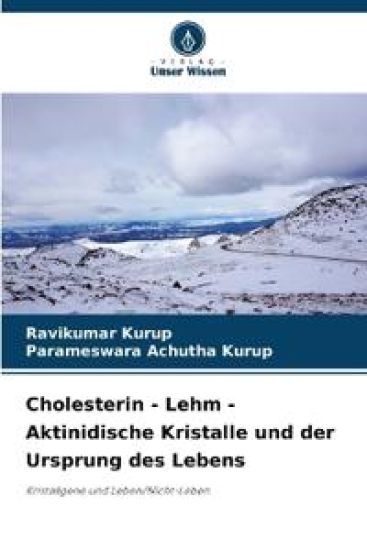
Cholesterin - Lehm - Aktinidische Kristalle und der Ursprung des Lebens

Cholesterin - Lehm - Aktinidische Kristalle und der Ursprung des Lebens

Ravikumar Kurup; Parameswara Achutha Kurup

Verlag Unser Wissen
2024
pokkari
Durch die globale Erw rmung infolge der Endosymbiose von Archaeen, der Ammoniakoxidation, der Methanogenese, des Nitratstoffwechsels und der Cholesterinoxidation entstehen mehrere Schattenbiosph ren. Ammoniakoxidation und Methanogenese schaffen eine auf Methan und Ammoniak basierende Schattenbiosph re und Organismen auf Methan- und Ammoniakbasis. Die von Archaeen abh ngige Cholesterinoxidase-Aktivit t erzeugt eine von Cholesterin-Kristallgenen abh ngige Schattenbiosph re. Die aktinidischen Cholesterol-Tonkristalle h tten den aktinidischen Isoprenoid-Organismus hervorgebracht. Die Tonkristalle h tten als Vorlage f r die Abiogenese des aktiniden Cholesterinkristall-Isoprenoid-Organismus gedient. Dies w re der urspr ngliche, sich selbst reproduzierende Organismus ohne Leben auf der Erde gewesen. Die gleichen Muster k nnen zur Evolution selbstreplizierender Nicht-Leben und Lebensformen in anderen Galaxien f hren.
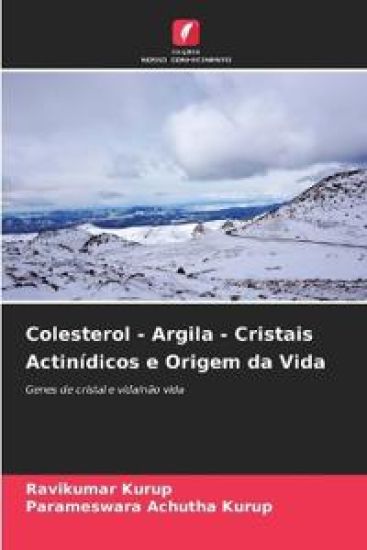
Colesterol - Argila - Cristais Actinídicos e Origem da Vida

Colesterol - Argila - Cristais Actinídicos e Origem da Vida

Ravikumar Kurup; Parameswara Achutha Kurup

Edicoes Nosso Conhecimento
2024
pokkari
O aquecimento global resultante da endossimbiose das arqueas, da oxida o do amon aco, da metanog nese, do metabolismo dos nitratos e da oxida o do colesterol cria m ltiplas biosferas sombra. A oxida o do amon aco e a metanog nese criam uma biosfera sombra base de metano e amon aco e organismos base de metano e amon aco. A atividade da colesterol oxidase dependente de actin deos arqueanos gera uma biosfera sombra dependente de genes de cristais de colesterol. Os cristais de argila actin deo-colesterol teriam gerado o organismo isopren ide actin deo. Os cristais de argila teriam actuado como um modelo para a abiog nese do organismo isopren ide de cristais de colesterol actin dico. Este teria sido o organismo original auto-replicante sem vida na Terra. Os mesmos padr es podem levar evolu o de formas de vida e de n o-vida auto-replicantes noutras gal xias
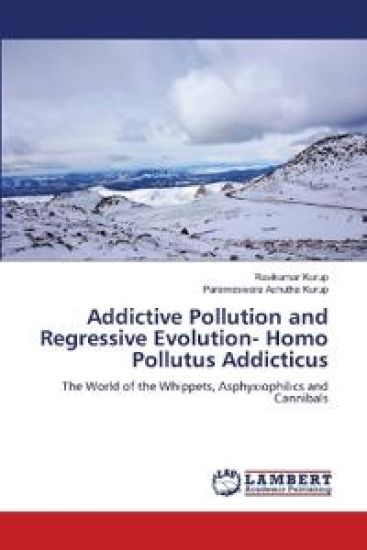
Addictive Pollution and Regressive Evolution- Homo Pollutus Addicticus

Addictive Pollution and Regressive Evolution- Homo Pollutus Addicticus

Ravikumar Kurup; Parameswara Achutha Kurup

Lap Lambert Academic Publishing
2024
pokkari
The global warming consequent to archaeal overgrowth, methanogenesis and internet mediated EMF pollution leads to heme oxygenase HO1 induction, increased porphyrin synthesis and porphyrion generation. This leads to porphyrin template mediated archaeal abiogenesis. The archaeal generation of pollutants like ammonia, nitric oxide, nitrous oxide, hydrogen sulphide, carbon monoxide, PAH, particulate matter, metal oxides and bioplastics can contribute to pollution, global warming, reductive stress and mitochondrial dysfunction. This leads on to the Warburg phenotype, sodium-potassium ATPase inhibition and Frohlich model quantal perception. The archaeal endosymbiosis leads to a transformation into homo neoneanderthalis and the hibernatory homo neofloresiensis species. The pollution addiction can be seen as an adaptive pollution as a means of species transformation and saving of civilization. This generates a world of whippets due to addiction to NO, ammonia, PAH, particulate matter leading to toxic psychosis. Global warming happens because of the pandemic of asphyxiophilia which can contribute to a shamanic-cannibalistic-hypersexual-addictive-eunuch species -the Homo pollutus addicticus.
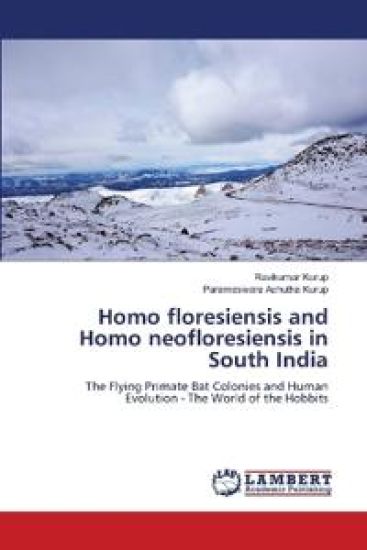
Homo floresiensis and Homo neofloresiensis in South India

Homo floresiensis and Homo neofloresiensis in South India

Ravikumar Kurup; Parameswara Achutha Kurup

Lap Lambert Academic Publishing
2024
pokkari
The Homo floresiensis evolved out of sequential evolution from Homo neanderthalis as an intermediate species between Homo neanderthalis and Homo sapiens. The homo floresiensis originated in South India, Polynesia, Australia, New Zealand, Srilanka and Indonesia after the breakup of the Lemurian land mass by tsunamis, earthquakes and volcanic eruptions. They were isolated geographically and grew up in conditions where food and water were scarce. The homo floresiensis was a homo neanderthalic adaptation and evolutionary phenotype to withstand the pressure of the environmental crisis produced by the break up of Lemuria. The homo floresiensis is a hibernatory adaptive species that evolved into homo sapiens. The homo floresiensis represents a flying primate bat colony with stem cell features. The present global warming and extremophilic conditions can lead to the generation of Homo neoneanderthalis and sequentially Homo neofloresiensis.
The Homo Sapien and Homo Sapien-Neanderthal Hybrid Syndrome

The Homo Sapien and Homo Sapien-Neanderthal Hybrid Syndrome

Ravikumar Kurup; Parameswara Achutha Kurup

Lap Lambert Academic Publishing
2024
pokkari
The flying primate hypothesis explains how a structured social bat colony can evolve into primates and homo neanderthalis. The homo neanderthalis in the setting of global warming and extremes of climate living in isolated environment without food and water adapts to form the smaller homo floresiensis species. The homo neanderthalis and homo floresiensis species having nanoarchaeal symbiosis had expansion of the cerebellum and a small cerebral cortical structure. The homo floresiensis and homo neanderthalis themselves serve as a reservoir for retroviral infections. The retroviruses from the homo floresiensis or the flying primate bat colony would have integrated into the genome of the homo floresiensis generating the homo sapien species. The homo sapien species with a large prefrontal cortex would have evolved in the sequential way from homo floresiensis. The homo neanderthalic and homo floresiensis species having evolved out of a bat colony can serve as a reservoir for viral infections can thrive in the neanderthalic and floresiensis population which are resistant to them, but can infect and exterminate the homo sapien and neanderthalic-sapien hybrid population.
Human - Endosymbiotic Chimeric Tissue Colonies Hybrids

Human - Endosymbiotic Chimeric Tissue Colonies Hybrids

Ravikumar Kurup; Parameswara Achutha Kurup

Lap Lambert Academic Publishing
2024
pokkari
The protozoans like entamoeba with its viral, archaeal & bacterial endosymbionts would have evolved into the multicellular organisms or metazoa. The evidence of such a transformation is seen in the bacterial symbionts of protozoa like entamoeba which includes legionella, listeria, mycoplasma, mycobacteria & chlamydia and viruses like covid, HIV & cytomegalo virus. The protozoan entamoeba serves as a natural reservoir for covid infections, bacterial infections and HIV infections. These can be called as chimeric infective symbiotic tissue colonies which can exist in the air, water, earth, blood and tissues. The chimeric infective symbiotic tissue colonies containing bacteria, archaea and viruses can make the symbiotic organism multidrug resistant by horizontal gene transfer. The chimeric infective symbiotic tissue organism evolves as a consequence of global warming and are new form of life. The development of antibodies against the infective chimeric symbiotic tissue organism composed of protozoa and its symbionts leads to the evolution of anti-brain antibody disease.
The Devil Syndrome - Infective Symbiotic Tissue Colonies

The Devil Syndrome - Infective Symbiotic Tissue Colonies

Ravikumar Kurup; Parameswara Achutha Kurup

Lap Lambert Academic Publishing
2024
pokkari
The protozoans like entamoeba with its viral, archaeal & bacterial endosymbionts would have evolved into the multicellular organisms or metazoa. The evidence of such a transformation is seen in the bacterial symbionts of protozoa like entamoeba which includes legionella, listeria, mycoplasma, mycobacteria & chlamydia and viruses like covid, HIV & cytomegalo virus. The protozoan entamoeba serves as a natural reservoir for covid infections, bacterial infections and HIV infections. These can be called as chimeric infective symbiotic tissue colonies which can exist in the air, water, earth, blood and tissues. The chimeric infective symbiotic tissue colonies containing bacteria, archaea and viruses can make the symbiotic organism multidrug resistant by horizontal gene transfer. The chimeric infective symbiotic tissue organism evolves as a consequence of global warming and are new form of life. The development of antibodies against the infective chimeric symbiotic tissue organism composed of protozoa and its symbionts leads to the evolution of anti-brain antibody disease - the Devil syndrome.
Archaeal Growth and Autonomous Global Warming Geological Cycles

Archaeal Growth and Autonomous Global Warming Geological Cycles

Ravikumar Kurup; Parameswara Achutha Kurup

Lap Lambert Academic Publishing
2024
pokkari
The Homo neanderthalis evolved to Homo sapiens and homo sapien hybrids - linear evolution by horizontal gene transfer. The homo neanderthalic mutations contributed to homo sapiens and homo sapien hybrids generating a mutated species. The evolution would have happened in the Lemurian or Gondwanaland land mass. Lemuria is the site of origin for evolution of the Neanderthals, sapiens & sapien-Neanderthal hybrids. This area can be Antarctikos. Similarly, the North Pole or the Arctic area can be called as Arctikos. The Antarctic and the Arctic were subjected to global warming consequent to a rise of carbon dioxide emissions 55 million years ago corresponding with the origin of Neanderthals and sapiens. The carbon dioxide formed in the planet led to a uniform warming all over the universe. There are signs of asteroidal and meteoritic hits in both the Antarctic and Arctic continent. The meteorites & asteroids contain bacteria from the intergalactic space. The meteorites & asteroids would have carried intergalactic nanoarchaea to the earth. The meteoritic & asteroidal hits would have triggered earthquakes, tsunamis and volcanic eruption in the ocean beds as well as in the polar continents.
Extracellular Vesicles and Origin of Life

Extracellular Vesicles and Origin of Life

Ravikumar Kurup; Parameswara Achutha Kurup

Lap Lambert Academic Publishing
2024
pokkari
Extracellular vesicles are lipid bilayer-delimited particles that are naturally released from endosymbiotic archaea and can regulate human cell and tissue functions as an alternate nervous system. The protozoans like entamoeba with its viral, archaeal and bacterial endosymbionts would have evolved into the multicellular organisms or metazoa. The archaeal, bacterial and protozoal extracellular vesicles containing RNA and DNA viroids can by horizontal gene transfer lead to evolution of metazoan, plants, animals and human species. The chimeric infective symbiotic tissue organism evolves as a consequence of global warming and the protozoal, bacterial, viral and archaeal symbiotic colonies are new forms of life.
Cholesterol - Clay - Actinidic Crystals and Origin of Life

Cholesterol - Clay - Actinidic Crystals and Origin of Life

Ravikumar Kurup; Parameswara Achutha Kurup

Lap Lambert Academic Publishing
2024
pokkari
Global warming consequent to archaeal endosymbiosis, ammonia oxidation, methanogenesis, nitrate metabolism and cholesterol oxidation creates multiple shadow biospheres. Ammonia oxidation and methanogenesis creates a methane and ammonia based as shadow biosphere and methane and ammonia based organisms. Archaeal actinide depended cholesterol oxidase activity generates cholesterol crystal gene dependent shadow biosphere. The actinidic-cholesterol clay crystals would have generated the actinidic isoprenoid organism. Clay crystals would have acted as a template for abiogenesis of the actinidic cholesterol crystal isoprenoid organism. This would have been the original non-life self-replicating organism in the earth. The same patterns can lead to evolution of self-replicating non-life and life forms in other galaxies.
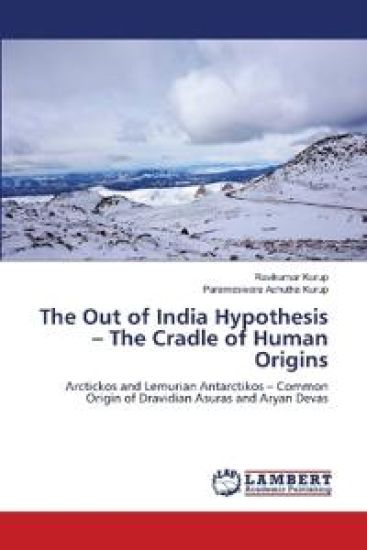
The Out of India Hypothesis - The Cradle of Human Origins

The Out of India Hypothesis - The Cradle of Human Origins

Ravikumar Kurup; Parameswara Achutha Kurup

Lap Lambert Academic Publishing
2024
pokkari
The Homo neanderthalis evolved to Homo sapiens and homo sapien hybrids - linear evolution by horizontal gene transfer. The homo neanderthalic mutations contributed to homo sapiens and homo sapien hybrids generating a mutated species. The evolution would have happened in the Lemurian or Gondwanaland land mass. Lemuria is the site of origin for evolution of the Neanderthals, sapiens & sapien-Neanderthal hybrids. This area can be Antarctikos. Similarly, the North Pole or the Arctic area can be called as Arctikos. The Antarctic and the Arctic were subjected to global warming consequent to a rise of carbon dioxide emissions 55 million years ago corresponding with the origin of Neanderthals and sapiens. The carbon dioxide formed in the planet led to a uniform warming all over the universe. There are signs of asteroidal and meteoritic hits in both the Antarctic and Arctic continent. The meteorites & asteroids contain bacteria from the intergalactic space. The meteorites & asteroids would have carried intergalactic nanoarchaea to the earth. The meteoritic & asteroidal hits would have triggered earthquakes, tsunamis and volcanic eruption in the ocean beds as well as in the polar continents.