Kirjojen hintavertailu. Mukana 12 390 323 kirjaa ja 12 kauppaa.

Kirjailija

Rémi Brague

Kirjat ja teokset yhdessä paikassa: 24 kirjaa, julkaisuja vuosilta 1978-2025, suosituimpien joukossa Le Restant: Supplement Aux Commentaires Du Menon de Platon. Vertaile teosten hintoja ja tarkista saatavuus suomalaisista kirjakaupoista.

Mukana myös kirjoitusasut: Remi Brague

24 kirjaa

Kirjojen julkaisuhaarukka 1978-2025.

Verdslig visdom

Verdslig visdom

Rémi Brague

Solum Bokvennen
2025
sidottu
I denne boken tar Rémi Brague for seg historien om menneskets tenkning og gjenforteller historien om menneskets omskiftelige forhold til universet; han undersøker de antikke og bibelske kildene og studerer middelalderens tolkninger av dem, og beskriver hvordan alt dette gikk tapt i den moderne epoken.I over to tusen år har mennesket stått oppreist og sett mot himmelen og ansett seg selv som en liten verden hvis oppgave har vært å kontemplere over de himmelske sfærene. Å strekke seg etter dygden var det samme som å imitere himmelen. På jorden kjempet mennesket mot det onde, som var et ubetydelig unntak sammenlignet med det godes overveldende dimensjon. Men dette antikke verdensbildet av å være i verden gikk under da den moderne epoken meldte sin ankomst.Universet opphørte å være en veileder for mennesket. Vi vet ikke lenger hvor vi skal grunne over vår menneskelighet. Verdens verdslige visdom er ikke lenger synlig for oss.I dag er vi nødt til å tenke over dette forholdet på nytt.
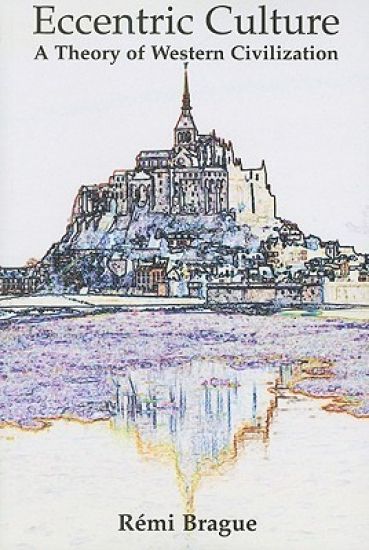
Eksentrisk kultur

Eksentrisk kultur

Rémi Brague

Solum Bokvennen
2023
sidottu
Hva er Europa? Eller mer presist: Hva er det særegne ved europeisk kultur? Bragues svar ligger i bokens tittel. Det som historisk har kjennetegnet europeisk kultur er ikke «eurosentrisme», men det motsatte: En usedvanlig åpenhet for å lære av andre, og for å betrakte sin egen kultur som sekundær. Europeisk kultur er eksentrisk. Den er ikke sentrum i sin egen verden, men kretser om forbilder fra fjerne og fremmede steder: Athen og Jerusalem. Dette er en liten bok om et stort tema, og med en aktualitet som er egnet til å overraske. Brague viser i praksis det som ellers ofte bare fremmes som en påstand: At vi trenger historien for å forstå oss selv og vår egen tid.
Curing Mad Truths

Curing Mad Truths

Rémi Brague

UNIVERSITY OF NOTRE DAME PRESS
2022
nidottu
In his first book composed in English, Rémi Brague maintains that there is a fundamental problem with modernity: we no longer consider the created world and humanity as intrinsically valuable. Curing Mad Truths, based on a number of Brague's lectures to English-speaking audiences, explores the idea that humanity must return to the Middle Ages. Not the Middle Ages of purported backwardness and barbarism, but rather a Middle Ages that understood creation—including human beings—as the product of an intelligent and benevolent God. The positive developments that have come about due to the modern project, be they health, knowledge, freedom, or peace, are not grounded in a rational project because human existence itself is no longer the good that it once was. Brague turns to our intellectual forebears of the medieval world to present a reasoned argument as to why humanity and civilizations are goods worth promoting and preserving. Curing Mad Truths will be of interest to a learned audience of philosophers, historians, and medievalists.
Zum christlichen Menschenbild

Zum christlichen Menschenbild

Rémi Brague

Springer Fachmedien Wiesbaden
2021
sidottu
Dieses Buch entfaltet das christliche Menschenbild in seinen Umrissen. Die Frage nach dem Menschen verdient es nämlich, wieder neu gestellt zu werden, weil heute der ‚Humanismus‘ von einem zerstörerischen ‚Antihumanismus‘ bedroht ist.Warum besitzt der Mensch eine Würde und mithin Rechte? Die Antwort auf diese Frage fällt sehr unterschiedlich aus. Entsprechend unbestimmt, verschwommen und vieldeutig bleibt das Lippenbekenntnis zu Menschenwürde und Menschenrechten. Wer also ist jenes Lebewesen, das wir ‚Mensch‘ nennen? Jeder Versuch einer wissenschaftlichen ‚Definition‘ führt theoretisch und praktisch zu unmenschlichen Folgen, wie zahllose Beispiele in der Geschichte des 20. Jahrhunderts auf erschreckende Weise zeigen. Das christliche Menschenbild verzichtet auf eine solche Definition und zeichnet jene Kontur eines Vorbildes, auf die hin der Mensch in Christus seine vollkommene, abgeschlossene Gestalt gefunden hat.Die anthropologischen, sozialen und politischen Folgen eines so geprägten Menschenbildes werden in diesem Buch erörtert: als Plädoyer für die Achtung der Natur des Menschen, die nicht der eigenen Verfügungsgewalt noch der Beherrschung durch Dritte in die Hand gelegt ist.
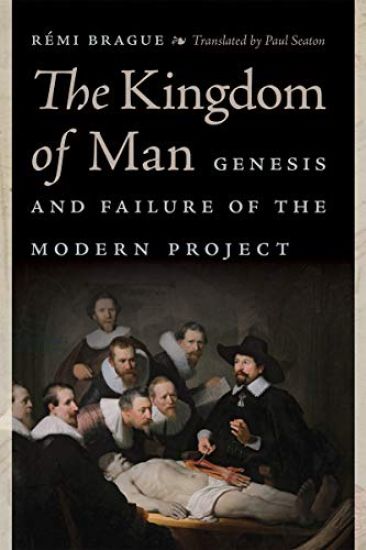
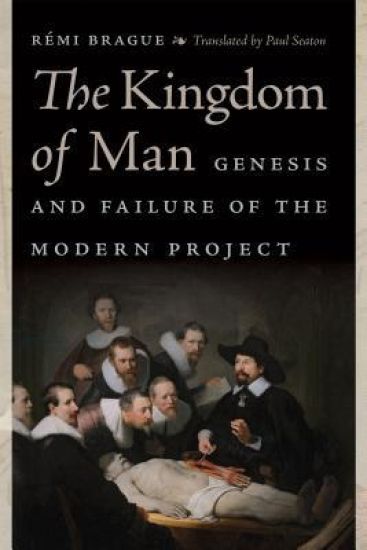
The Kingdom of Man

The Kingdom of Man

Rémi Brague

University of Notre Dame Press
2021
nidottu
Was humanity created, or do humans create themselves? In this eagerly awaited English translation of Le Règne de l'homme, the last volume of Rémi Brague's trilogy on the philosophical development of anthropology in the West, Brague argues that, with the dawn of the Enlightenment, Western societies rejected the transcendence of the past and looked instead to the progress fostered by the early modern present and the future. As scientific advances drained the cosmos of literal mystery, humanity increasingly devalued the theophilosophical mystery of being in favor of omniscience over one's own existence. Brague narrates the intellectual disappearance of the natural order, replaced by a universal chaos upon which only humanity can impose order; he cites the vivid histories of the nation-state, economic evolution into capitalism, and technology as the tools of this new dominion, taken up voluntarily by humans for their own ends rather than accepted from the deity for a divine purpose. Brague's tour de force begins with the ancient and medieval confidence in humanity as the superior creation of Nature or of God, epitomized in the biblical wish of the Creator for humans to exert stewardship over the earth. He sees the Enlightenment as a transition period, taking as a given that humankind should be masters of the world but rejecting the imposition of that duty by a deity. Before the Enlightenment, who the creator was and whom the creator dominated were clear. With the advance of modernity and banishment of the Creator, who was to be dominated? Today, Brague argues, "our humanism . . . is an anti-antihumanism, rather than a direct affirmation of the goodness of the human." He ends with a sobering question: does humankind still have the will to survive in an era of intellectual self-destruction? The Kingdom of Man will appeal to all readers interested in the history of ideas, but will be especially important to political philosophers, historical anthropologists, and theologians.
The Metamorphoses of the City of God

The Metamorphoses of the City of God

Etienne Gilson; Remi Brague

The Catholic University of America Press
2020
nidottu
Étienne Gilson (1884-1978) was a French philosopher and historian of philosophy, as well as a scholar of medieval philosophy. In 1946 he attained the distinction of being elected an ""Immortal"" (member) of the Académie française. He was nominated for the Nobel Prize in Literature in 1959 and 1964.The appearance of Gilson's Metamorphosis of the City of God, which were originally delivered as lectures at the University of Louvain, Belgium, in the Spring of 1952, coincided with the first steps toward what would become the European Union. The appearance of this English translation coincides with the upheaval of Brexit. Gilson traces the various attempts of thinkers through the centuries to describe Europe's soul and delimit its parts. The Scots, Catalonians, Flemings, and probably others may nod in agreement in Gilson's observation on how odd would be a Europe composed of the political entities that existed two and a half centuries ago. Those who think the European Union has lost its soul may not be comforted by the difficulty thinkers have had over the centuries in defining that soul. Indeed the difficulties that have thus far prevented integrating Turkey into the EU confirm Gilson's description of the conundrum involved even in distinguishing Europe's material components. And yet, the endeavor has succeeded, so that the problem of shared ideals remain inescapable. One wonders which of the thinkers in the succession studied by Gilson might grasp assent and illuminate the EU's path.
Anchors in the Heavens – The Metaphysical Infrastructure of Human Life
Imagine you suddenly find yourself in the control room of a vast technological apparatus, sometime in the future, where you are told that science has satisfied all the needs of all living humans. Furthermore, you learn, the next generation of the species will not be produced in the usual way, but instead by this machine, provided only that somebody push a little red button. The catch: you have to give a reason for pushing it. You hesitate: what do you say? Our own world is more like this scenario than we at first may be inclined to admit, not least in the fact that, mutatis mutandis, we seem to be struggling to come up with a good answer. The problem, says Rémi Brague, is fundamentally a metaphysical one. Now, mention of ‘metaphysics’ in decent society these days is likely to elicit a smile or an unimpressed shrug. If there is a shelf with that label on it in your typical bookstore you are as likely to find guides to crystals, chakras, or hemp care there as you are treatises by Aristotle, Aquinas, or Kant. And, in spite of the ongoing revival of academic interest in metaphysics, it remains a rather specialist domain, a marginal sub-discipline in departments of philosophy, be they analytical or continental in cast. If you should take it too seriously, you’ll lose your bearings in the real world, and you’ll go adrift in some ethereal sea of dreams. It is, in a word, irrelevant – right? Wrong, Brague writes. Sustained reflection on the nature of being, undertaken in the hope that something can indeed be said about it, was for millennia considered to be among the most important of intellectual pursuits, and not without reason. With his characteristic combination of erudition and wit, Brague takes us on a sweeping tour of the discipline’s varying fortunes, from its early Athenian practitioners through its Jewish, Muslim, and Christian heirs, to the chorus of critics who in the last few centuries succeeded in putting an end to its dominance. But the questions that metaphysics was asking, Brague shows, did not disappear with its demise, and so, whether implicitly or explicitly, metaphysics itself has resisted relegation to the history books. For the nature of being, and especially our relationship to it, has continued to haunt its triumphant critics. One quintessentially metaphysical claim above all, as Brague suggests, seems to have horrified them: the doctrine that all that is, insofar as it is, is good. And yet, in rejecting the “convertibility” of the “transcendentals” of being and goodness, critics of the old metaphysics – Voltaire, Kant, Schopenhauer, Nietzsche, Heidegger, Carnap, and Levinas among them – in their own ways offered metaphysical counter-claims, even as they turned increasingly anthropological in their interests. They also raised the stakes. For, whether the denial of the goodness of being can legitimately be attributed some causal responsibility for a world in which our species could rapidly and deliberately ensure its own extinction, this is the world we live in, and that denial does form the basis of the intellectual background from which we tend to begin our speculations. If we need to be able to articulate reasons for our project not to end, then we also need to rethink the rejection that we have come to take for granted. What Brague offers us here is not a narrative of decline, not a Jeremiad, not a nostalgic lament for the thought-world of a bygone era, but a sympathetic outline of some of the major tensions in the philosophical underpinnings of the modernity that we all inhabit. As such, it forms a part of his ongoing effort take modernity “more seriously than it takes itself”, to expose its hidden foundations, and to push it to its logical conclusions. In so doing, he hopes to help clarify where it is that we are going as a species, and to ensure that wherever it is, there is room for us humans in it.
Curing Mad Truths

Curing Mad Truths

Rémi Brague

University of Notre Dame Press
2019
sidottu
In his first book composed in English, Rémi Brague maintains that there is a fundamental problem with modernity: we no longer consider the created world and humanity as intrinsically valuable. Curing Mad Truths, based on a number of Brague's lectures to English-speaking audiences, explores the idea that humanity must return to the Middle Ages. Not the Middle Ages of purported backwardness and barbarism, but rather a Middle Ages that understood creation—including human beings—as the product of an intelligent and benevolent God. The positive developments that have come about due to the modern project, be they health, knowledge, freedom, or peace, are not grounded in a rational project because human existence itself is no longer the good that it once was. Brague turns to our intellectual forebears of the medieval world to present a reasoned argument as to why humanity and civilizations are goods worth promoting and preserving. Curing Mad Truths will be of interest to a learned audience of philosophers, historians, and medievalists.
The Kingdom of Man

The Kingdom of Man

Rémi Brague

University of Notre Dame Press
2018
sidottu
Was humanity created, or do humans create themselves? In this eagerly awaited English translation of Le Règne de l'homme, the last volume of Rémi Brague's trilogy on the philosophical development of anthropology in the West, Brague argues that, with the dawn of the Enlightenment, Western societies rejected the transcendence of the past and looked instead to the progress fostered by the early modern present and the future. As scientific advances drained the cosmos of literal mystery, humanity increasingly devalued the theophilosophical mystery of being in favor of omniscience over one's own existence. Brague narrates the intellectual disappearance of the natural order, replaced by a universal chaos upon which only humanity can impose order; he cites the vivid histories of the nation-state, economic evolution into capitalism, and technology as the tools of this new dominion, taken up voluntarily by humans for their own ends rather than accepted from the deity for a divine purpose. Brague's tour de force begins with the ancient and medieval confidence in humanity as the superior creation of Nature or of God, epitomized in the biblical wish of the Creator for humans to exert stewardship over the earth. He sees the Enlightenment as a transition period, taking as a given that humankind should be masters of the world but rejecting the imposition of that duty by a deity. Before the Enlightenment, who the creator was and whom the creator dominated were clear. With the advance of modernity and banishment of the Creator, who was to be dominated? Today, Brague argues, "our humanism . . . is an anti-antihumanism, rather than a direct affirmation of the goodness of the human." He ends with a sobering question: does humankind still have the will to survive in an era of intellectual self-destruction? The Kingdom of Man will appeal to all readers interested in the history of ideas, but will be especially important to political philosophers, historical anthropologists, and theologians.
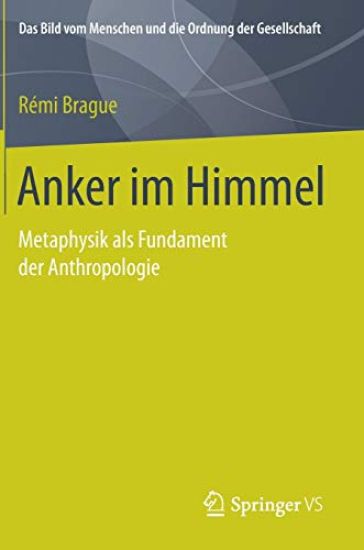
Anker im Himmel

Anker im Himmel

Rémi Brague

Springer vs
2018
sidottu
Metaphysik ist kein Phantom. Sie bewohnt kein Wolkenschloss, sondern hat ihren Platz mitten im Alltag der Menschen und ist zu einer unverzichtbaren Lebensnotwendigkeit geworden. Denn nachdem der Mensch das Projekt der Moderne in die Tat umgesetzt und sein Geschick selbst in die Hand genommen hat, kann er frei entscheiden, zu sein – oder auch nicht zu sein: Die Entscheidung über Fortbestand oder Auslöschung der Menschheit liegt in seinen Händen. Damit aber stellt sich unausweichlich die Frage nach der Rechtmäßigkeit unseres Daseins. Es genügt nicht, das Leben immer angenehmer zu machen für diejenigen, die schon auf der Welt sind – das zu tun stellt niemand in Abrede. Die Frage heute lautet sehr viel grundsätzlicher: Ist menschliches Leben ein so großes Gut, dass man selbst das Recht hat, andere in dieses Leben zu rufen? Wer behauptet, das Sein sei mehr wert als das Nichts, trifft eine metaphysische Entscheidung.Man braucht eine starke Metaphysik, um die Frage zu beantworten, ob es rechtmäßig ist, dass der Mensch auch zukünftig die Erde bevölkert.Der AutorDr. Rémi Brague ist Professor em. für Philosophie an der Paris I Panthéon-Sorbonne und der Ludwig-Maximilians-Universität München. Seine Bücher sind in 18 Sprachen übersetzt. Der HerausgeberDr. Christoph Böhr ist ao. Professor am Institut für Philosophie der Hochschule Heiligenkreuz/Wien.
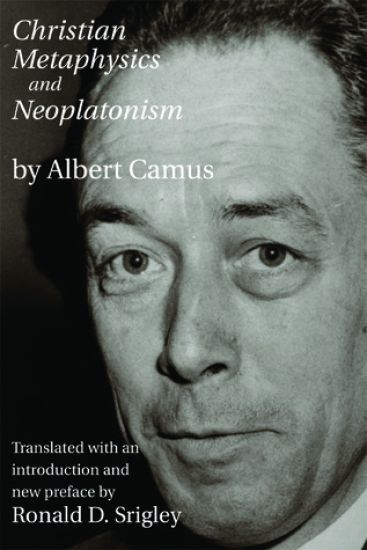
Christian Metaphysics and Neoplatonism

Christian Metaphysics and Neoplatonism

Albert Camus; Ronald Srigley; Rémi Brague

ST AUGUSTINE'S PRESS
2015
sidottu
Contemporary scholarship tends to view Albert Camus as a modern, but he himself was conscious of the past and called the transition from Hellenism to Christianity "the true and only turning point in history." For Camus, modernity was not fully comprehensible without an examination of the aspirations that were first articulated in antiquity and that later received their clearest expression in Christianity. These aspirations amounted to a fundamental reorientation of human life in politics, religion, science, and philosophy. Understanding the nature and achievement of that reorientation became the central task of "Christian Metaphysics and Neoplatonism." Primarily known through its inclusion in a French omnibus edition, it" "has remained one of Camus' least-read works, yet it marks his first attempt to understand the relationship between Greek philosophy and Christianity as he charted the movement from the Gospels through Gnosticism and Plotinus to what he calls Augustine's "second revelation" of the Christian faith. Ronald Srigley's translation of this seminal document helps illuminate these aspects of Camus' work. His freestanding English edition exposes readers to an important part of Camus' thought that is often overlooked by those concerned primarily with the book's literary value and supersedes the extant McBride translation by retaining a greater degree of literalness. Srigley has fully annotated "Christian Metaphysics" to include nearly all of Camus' original citations and has tracked down many poorly identified sources. When Camus cites an ancient primary source, whether in French translation or in the original language, Srigley substitutes a standard English translation in the interest of making his edition accessible to a wider range of readers. His introduction places the text in the context of Camus' better-known later work, explicating its relationship to those mature writings and exploring how its themes were reworked in subsequent books. Arguing that Camus was one of the great critics of modernity through his attempt to disentangle the Greeks from the Christians, Srigley clearly demonstrates the place of "Christian Metaphysics" in Camus' oeuvre. As the only stand-alone English version of this important work--and a long-overdue critical edition--his fluent translation is an essential benchmark in our understanding of Camus and his place in modern thought.
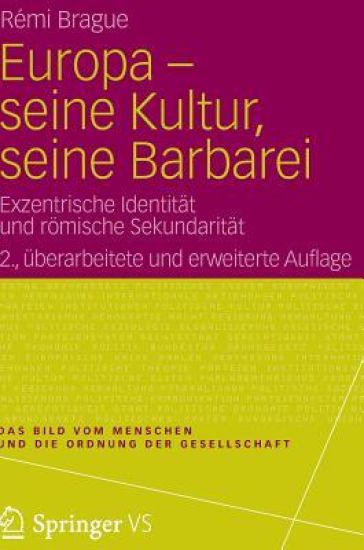
Europa - seine Kultur, seine Barbarei

Europa - seine Kultur, seine Barbarei

Rémi Brague

Vs Verlag Fur Sozialwissenschaften
2012
sidottu
Europa besitzt keine Identität im Sinne eines kulturellen oder religiösen Erbes, sondern definiert sich durch seine Spannung zwischen einer Klassik der Anderen, die es anzueignen, und einer Barbarei im Inneren, die es zu überwinden gilt. Das Besondere der europäischen Identität liegt in ihrer ‚kulturellen Zweitrangigkeit‘: in dem Wissen, nicht ursprünglich zu sein, sondern vor sich Anderes, Früheres zu haben – kulturell die griechische Antike, religiös das Judentum. ‚Römisch‘ ist die Haltung der Aneignung, der Überlieferung und der Weitergabe: Europas exzentrische Identität ist die Quelle aller Renaissancen, deren dieser Kontinent fähig gewesen ist, von der karolingischen Renaissance bis zur Renaissance des Hellenismus der deutschen Klassik. Das ‚Römertum‘ der Europäer ist zum Ursprung ihres kulturellen Reichtums geworden. Und heute stellt sich die Frage, ob wir noch ‚Römer‘ sind und sein wollen: aneignend, überliefernd, weitergebend. Wer Europa verstehen lernen will, muss zu diesem Buch, das inzwischen in dreizehn Sprachen übersetzt wurde, greifen.
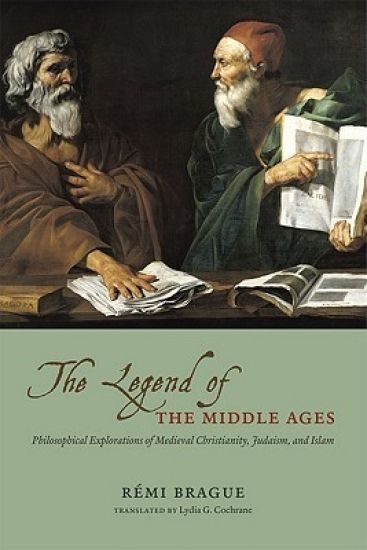
The Legend of the Middle Ages

The Legend of the Middle Ages

Remi Brague

University of Chicago Press
2011
nidottu
Through a penetrating interview and sixteen essays, this volume explores key intersections of medieval religion and philosophy. With characteristic erudition and insight, Remi Brague focuses less on individual Christian, Jewish, and Muslim thinkers than on their relationships with one another. Their disparate philosophical worlds, Brague shows, were grounded in different models of revelation that engendered divergent interpretations of the ancient Greek sources they held in common. So, despite striking similarities in their solutions to the philosophical problems they all faced, intellectuals in each theological tradition often viewed the others' ideas with skepticism, if not disdain. Brague's portrayal of this misunderstood age brings to life not only its philosophical and theological nuances, but also its true lessons for our own time.
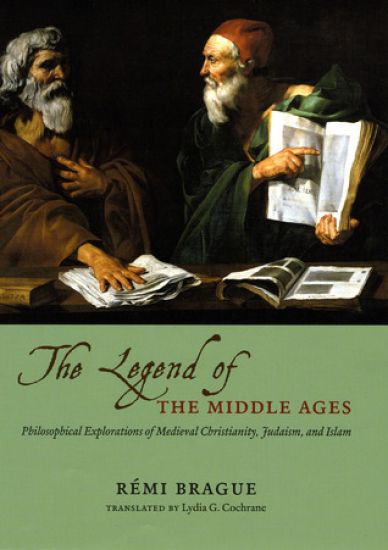
THE LEGEND OF THE MIDDLE AGES - PHILOSOPHICALEXPLORATIONS OF MEDIEVAL CHRISTIANITY, JUDAISM,AND ISLAM
Through a penetrating interview and sixteen essays, this volume explores key intersections of medieval religion and philosophy. With characteristic erudition and insight, Remi Brague focuses less on individual Christian, Jewish, and Muslim thinkers than on their relationships with one another. Their disparate philosophical worlds, Brague shows, were grounded in different models of revelation that engendered divergent interpretations of the ancient Greek sources they held in common. So, despite striking similarities in their solutions to the philosophical problems they all faced, intellectuals in each theological tradition often viewed the others' ideas with skepticism, if not disdain. Brague's portrayal of this misunderstood age brings to life not only its philosophical and theological nuances, but also its true lessons for our own time.