Kirjojen hintavertailu. Mukana 12 390 323 kirjaa ja 12 kauppaa.

Kirjailija

Richard A. Posner

Kirjat ja teokset yhdessä paikassa: 50 kirjaa, julkaisuja vuosilta 1983-2019, suosituimpien joukossa The Quotable Judge Posner. Vertaile teosten hintoja ja tarkista saatavuus suomalaisista kirjakaupoista.

Mukana myös kirjoitusasut: Richard A Posner

50 kirjaa

Kirjojen julkaisuhaarukka 1983-2019.

Overcoming Law

Overcoming Law

Richard A. Posner

Harvard University Press
1996
nidottu
Legal theory must become more factual and empirical and less conceptual and polemical, Richard Posner argues in this wide-ranging new book. The topics covered include the structure and behavior of the legal profession; constitutional theory; gender, sex, and race theories; interdisciplinary approaches to law; the nature of legal reasoning; and legal pragmatism. Posner analyzes, in witty and passionate prose, schools of thought as different as social constructionism and institutional economics, and scholars and judges as different as Bruce Ackerman, Robert Bork, Ronald Dworkin, Catharine MacKinnon, Richard Rorty, and Patricia Williams. He also engages challenging issues in legal theory that range from the motivations and behavior of judges and the role of rhetoric and analogy in law to the rationale for privacy and blackmail law and the regulation of employment contracts. Although written by a sitting judge, the book does not avoid controversy; it contains frank appraisals of radical feminist and race theories, the behavior of the German and British judiciaries in wartime, and the excesses of social constructionist theories of sexual behavior.Throughout, the book is unified by Posner's distinctive stance, which is pragmatist in philosophy, economic in methodology, and liberal (in the sense of John Stuart Mill's liberalism) in politics. Brilliantly written, eschewing jargon and technicalities, it will make a major contribution to the debate about the role of law in our society.
Corporate Bankruptcy

Corporate Bankruptcy

Richard A. Posner

Cambridge University Press
1996
pokkari
This collection is the first comprehensive selection of readings focusing on corporate bankruptcy. Its main purpose is to explore the nature and efficiency of corporate reorganisation using interdisciplinary approaches drawn from law, economics, business, and finance. Substantive areas covered include the role of credit, creditors’ implicit bargains, non-bargaining features of bankruptcy, workouts of agreements, alternatives to bankruptcy, and proceedings in countries other than the United States, including the United Kingdom, Europe, and Japan.
Corporate Bankruptcy

Corporate Bankruptcy

Richard A. Posner

Cambridge University Press
1996
sidottu
This collection is the first comprehensive selection of readings focusing on corporate bankruptcy. Its main purpose is to explore the nature and efficiency of corporate reorganisation using interdisciplinary approaches drawn from law, economics, business, and finance. Substantive areas covered include the role of credit, creditors’ implicit bargains, non-bargaining features of bankruptcy, workouts of agreements, alternatives to bankruptcy, and proceedings in countries other than the United States, including the United Kingdom, Europe, and Japan.
Aging and Old Age

Aging and Old Age

Richard A. Posner

University of Chicago Press
1995
sidottu
Are the elderly posing a threat to America's political system with their enormous clout? Are they stretching resources to the breaking point with their growing demands for care? Posner explodes the myth that the United States could be on the brink of gerontological disaster. This study offers insight into a range of social and political issues relating to the elderly, such as health care, crime, social security and discrimination. From the dread of death to the inordinate law-abidingness of the old, from their loquacity to their penny-pinching, Posner paints a portrait of the millions of elderly people in the United States. He explores issues such as age discrimination in employment, creativity and leadership as functions of age, and the changing social status of the elderly. Why are old people, presumably with less to lose, more unwilling to take risks than young people? Why don't the elderly in the United States command the respect and affection they once did and still do in other countries? How does aging affect driving and criminal records? And how does aging relate to creativity across different careers? Observing that people change both physically and cognitively as they age, Posner suggests that each of us has, in succession, two separate selves - younger and older - with different abilities, interests and behaviours. This study aims to consolidate a rethinking of the role of the elderly in public and private life.
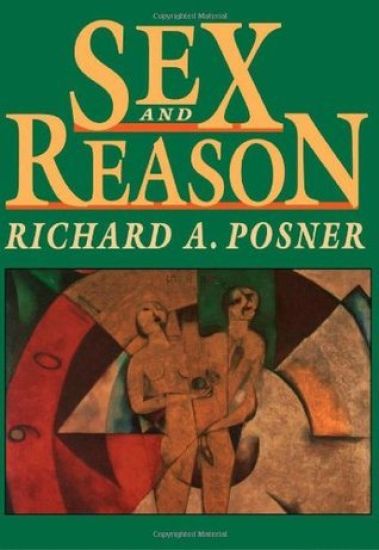
Sex and Reason

Sex and Reason

Richard A. Posner

Harvard University Press
1994
nidottu
Sexual drives are rooted in biology, but we don’t act on them blindly. Indeed, as the eminently readable judge and legal scholar Richard Posner shows, we make quite rational choices about sex, based on the costs and benefits perceived.Drawing on the fields of biology, law, history, religion, and economics, this sweeping study examines societies from ancient Greece to today’s Sweden and issues from masturbation, incest taboos, date rape, and gay marriage to Baby M. The first comprehensive approach to sexuality and its social controls, Posner’s rational choice theory surprises, explains, predicts, and totally absorbs.
Cardozo

Cardozo

Richard A. Posner

University of Chicago Press
1993
nidottu
What makes a great judge? How are reputations forged? Why do some reputations endure, while others crumble? And how can we know whether a reputation is fairly deserved? In this ambitious book, Richard Posner confronts these questions in the case of Benjamin Cardozo. The result is both a revealing portrait of one of the most influential legal minds of our century and a model for a new kind of study--a balanced, objective, critical assessment of a judicial career. "The present compact and unflaggingly interesting volume ...is a full-bodied scholarly biography...It is illuminating in itself, and will serve as a significant contribution."--Paul A. Freund, New York Times Book Review
The Problems of Jurisprudence

The Problems of Jurisprudence

Richard A. Posner

Harvard University Press
1993
nidottu
In this book, one of our country’s most distinguished scholar-judges shares with us his vision of the law. For the past two thousand years, the philosophy of law has been dominated by two rival doctrines. One contends that law is more than politics and yields, in the hands of skillful judges, correct answers to even the most difficult legal questions; the other contends that law is politics through and through and that judges wield essentially arbitrary powers. Rejecting these doctrines as too metaphysical in the first instance and too nihilistic in the second, Richard Posner argues for a pragmatic jurisprudence, one that eschews formalism in favor of the factual and the empirical. Laws, he argues, are not abstract, sacred entities, but socially determined goads for shaping behavior to conform with society’s values.Examining how judges go about making difficult decisions, Posner argues that they cannot rely on either logic or science, but must fall back on a grab bag of informal methods of reasoning that owe less than one might think to legal training and experience. Indeed, he reminds us, the greatest figures in American law have transcended the traditional conceptions of the lawyer’s craft. Robert Jackson did not attend law school and Benjamin Cardozo left before getting a degree. Holmes was neither the most successful of lawyers nor the most lawyerly of judges. Citing these examples, Posner makes a plea for a law that frees itself from excessive insularity and takes all knowledge, practical and theoretical, as grist for its mill.The pragmatism that Posner espouses implies looking at problems concretely, experimentally, without illusions, with an emphasis on keeping diverse paths of inquiry open, and, above all, with the insistence that social thought and action be evaluated as instruments to desired human goals rather than as ends in themselves. In making his arguments, he discusses notable figures in jurisprudence from Antigone to Ronald Dworkin as well as recent movements ranging from law and economics to civic republicanism, and feminism to libertarianism. All are subjected to Posner’s stringent analysis in a fresh and candid examination of some of the deepest problems presented by the enterprise of law.
Private Choices and Public Health

Private Choices and Public Health

Tomas J. Philipson; Richard A. Posner

Harvard University Press
1993
sidottu
Like other dangerous but pleasurable activities, such as downhill skiing and mountain climbing, engaging in unprotected sex implicitly involves the weighing of costs and benefits. Recognizing that the transmission of the AIDS virus is a consequence of private choices—rational and often informed—to engage in risky conduct, the authors employ tools of economic analysis to reassess the orthodox approach to AIDS by the public health community.Standard predictions of the spread of AIDS, the authors argue, are questionable because they ignore rational behavioral response to the risk of infection. For the same reason, customary recommended public health measures, such as extensive testing for the AIDS virus, not only may be ineffective in controlling the spread of the disease but may actually cause it to spread more rapidly. The authors examine regulatory measures and proposals such as mandatory testing, criminal punishments, and immigration controls, as well as the subsidization of AIDS education and medical research, the social and fiscal costs of AIDS, the political economy of the government's response, and the interrelation of AIDS and fertility risk.Neither liberal nor conservative, yet on the whole skeptical about governmental involvement in the epidemic, this book is certain to be controversial, but its injection of hard-headed economic thinking into the AIDS debate is long overdue. Although Private Choices and Public Health is accessible to the interested general reader, it will also capture the attention of economists—especially those involved in health issues—epidemiologists, public health workers, lawyers, and specialists in sexual behavior and drug addiction.
The Economic Structure of Tort Law

The Economic Structure of Tort Law

William M Landes; Richard a Posner

Harvard University Press
1987
sidottu
Written by a lawyer and an economist, this is the first full-length economic study of tort law--the body of law that governs liability for accidents and for intentional wrongs such as battery and defamation. Landes and Posner propose that tort law is best understood as a system for achieving an efficient allocation of resources to safety--that, on the whole, rules and doctrines of tort law encourage the optimal investment in safety by potential injurers and potential victims. The book contains both a comprehensive description of the major doctrines of tort law and a series of formal economic models used to explore the economic properties of these doctrines. All the formal models are translated into simple commonsense terms so that the "math less" reader can follow the text without difficulty; legal jargon is also avoided, for the sake of economists and other readers not trained in the law. Although the primary focus is on explaining existing doctrines rather than on exploring their implementation by juries, insurance adjusters, and other "real world" actors, the book has obvious pertinence to the ongoing controversies over damage awards, insurance rates and availability, and reform of tort law-in fact it is an essential prerequisite to sound reform. Among other timely topics, the authors discuss punitive damage awards in products liability cases, the evolution of products liability law, and the problem of liability for "mass disaster" torts, such as might be produced by a nuclear accident. More generally, this book is an important contribution to the "law and economics" movement, the most exciting and controversial development in modern legal education and scholarship, and will become an obligatory reference for all who are concerned with the study of tort law.
The Economics of Justice

The Economics of Justice

Richard A. Posner

Harvard University Press
1983
nidottu
Richard A. Posner is probably the leading scholar in the rapidly growing field of the economics of law; he is also an extremely lucid writer. In this book, he applies economic theory to four areas of interest to students of social and legal institutions: the theory of justice, primitive and ancient social and legal institutions, the law and economics of privacy and reputation, and the law and economics of racial discrimination.The book is designed to display the power of economics to organize and illuminate diverse fields in the study of nonmarket behavior and institutions. A central theme is the importance of uncertainty to an understanding of social and legal institutions. Another major theme is that the logic of the law, in many ways but not all, appears to be an economic one: that judges, for example, in interpreting the common law, act as if they were trying to maximize economic welfare.Part I examines the deficiencies of utilitarianism as both a positive and a normative basis of understanding law, ethics, and social institutions, and suggests in its place the economist’s concept of “wealth maximization.”Part II, an examination of the social and legal institutions of archaic societies, notably that of ancient Greece and primitive societies, argues that economic analysis holds the key to understanding such diverse features of these societies as reciprocal gift-giving, blood guilt, marriage customs, liability rules, and the prestige accorded to generosity. Many topics relevant to modern social and philosophical debate, including the origin of the state and the retributive theory of punishment, are addressed.Parts III and IV deal with more contemporary social and jurisprudential questions. Part III is an economic analysis of privacy and the statutory and common law rules that protect privacy and related interests—rules that include the tort law of privacy, assault and battery, and defamation. Finally, Part IV examines, again from an economic standpoint, the controversial areas of racial and sexual discrimination, with special reference to affirmative action. Both Part III and Part IV develop as a sub-theme the issue of proper standards of constitutional adjudication by the Supreme Court.