Kirjojen hintavertailu. Mukana 12 390 323 kirjaa ja 12 kauppaa.

Kirjailija

Richard J. Evans

Kirjat ja teokset yhdessä paikassa: 56 kirjaa, julkaisuja vuosilta 1996-2025, suosituimpien joukossa Altered Pasts. Vertaile teosten hintoja ja tarkista saatavuus suomalaisista kirjakaupoista.

Mukana myös kirjoitusasut: Richard J Evans

56 kirjaa

Kirjojen julkaisuhaarukka 1996-2025.

Altered Pasts

Altered Pasts

Richard J Evans; Hedva Ben-Israel

Brandeis University Press
2014
sidottu
A bullet misses its target in Sarajevo, a would-be Austrian painter gets into the Viennese academy, Lord Halifax becomes British prime minister in 1940 instead of Churchill: seemingly minor twists of fate on which world-shaking events might have hinged. Alternative history has long been the stuff of parlor games, war-gaming, and science fiction, but over the past few decades it has become a popular stomping ground for serious historians. The historian Richard J. Evans now turns a critical, slightly jaundiced eye on a subject typically the purview of armchair historians. The book's main concern is examining the intellectual fallout from historical counterfactuals, which the author defines as "alternative versions of the past in which one alteration in the timeline leads to a different outcome from the one we know actually occurred." What if Britain had stood at the sidelines during the First World War? What if the Wehrmacht had taken Moscow? The author offers an engaging and insightful introduction to the genre, while discussing the reasons for its revival in popularity, the role of historical determinism, and the often hidden agendas of the counterfactual historian. Most important, Evans takes counterfactual history seriously, looking at the insights, pitfalls, and intellectual implications of changing one thread in the weave of history. A wonderful critical introduction to an often-overlooked genre for scholars and casual readers of history alike. Hardcover is un-jacketed.
Altered Pasts

Altered Pasts

Richard J Evans; Hedva Ben-Israel

Brandeis University Press
2014
pokkari
A bullet misses its target in Sarajevo, a would-be Austrian painter gets into the Viennese academy, Lord Halifax becomes British prime minister in 1940 instead of Churchill: seemingly minor twists of fate on which world-shaking events might have hinged. Alternative history has long been the stuff of parlor games, war-gaming, and science fiction, but over the past few decades it has become a popular stomping ground for serious historians. The historian Richard J. Evans now turns a critical, slightly jaundiced eye on a subject typically the purview of armchair historians. The book's main concern is examining the intellectual fallout from historical counterfactuals, which the author defines as "alternative versions of the past in which one alteration in the timeline leads to a different outcome from the one we know actually occurred." What if Britain had stood at the sidelines during the First World War? What if the Wehrmacht had taken Moscow? The author offers an engaging and insightful introduction to the genre, while discussing the reasons for its revival in popularity, the role of historical determinism, and the often hidden agendas of the counterfactual historian. Most important, Evans takes counterfactual history seriously, looking at the insights, pitfalls, and intellectual implications of changing one thread in the weave of history. A wonderful critical introduction to an often-overlooked genre for scholars and casual readers of history alike.
Politik och ideologier : perspektiv från Engelbergsseminariet 2011

Politik och ideologier : perspektiv från Engelbergsseminariet 2011

Ulrike Ackermann; Scott Atran; James Bartolomew; Michael Bentley; Paul Berman; Vernon Bogdanor; Nick Boles; Robert Cooper; Stephan Eisel; Richard J Evans; Michael Freeden; David Frum; Dick Harrison; Anna Jardfeldt; Oliver Kamm; Robert D Kaplan; John Keane; Johan Lagerkvist; Mark Leonard; John Lloyd; Hisham Melhem; Richard Miles; Kenneth Minogue; Minxin Pei; Malise Ruthven; Roger Scruton; Per Schlingman; Nathan Shachar; Robert J Shapiro; Maria Wetterstrand

Bokförlaget Atlantis
2012
sidottu
Ideologiernas död har förutspåtts ett flertal gånger under åren, men gång på gång har vi också sett gamla ideologier återvända under nya beteckningar. I denna bok behandlar vi både nuet och det förflutna. Vi belyser en del av de politiska idéer och system i historien som fortsätter att utöva inflytande på samtiden. Vi granskar också den auktoritära statskapitalismen, som i fallet Kina, och ställer frågan om den är hållbar. Om så är fallet, hur kommer den att inverka på världen? Kommer den att bli förebilden, precis som liberal demokrati under lång tid har varit det för många människor och nationer? Kommer islamism, främlings- och invandrarfientliga partier och andra rörelser i marginalen av det politiska och ideologiska spektrumet i Europa, USA och den islamiska världen att befästa den rådande ordningen eller undergräva tilltron till den? Vilka är globaliseringens konsekvenser för politik och ideologi? Kommer svaret att bli ett världsparlament, en världsomfattande miljörörelse eller olika strömningar med religion som gemensam nämnare? Eller kommer vi kanske i stället att få se ett annat gammalt spöke återvända: nationalismen? Boken ingår i serien Engelsbergsseminarierna och utges i samarbete med Bokförlaget Atlantis och Axel och Margaret Ax:son Johnsons stiftelse för almännyttiga ändamål.
Nation, stat och imperium : tillhörighet i en globaliserad värld

Nation, stat och imperium : tillhörighet i en globaliserad värld

Philip Bobbitt; Gillian Clark; Christopher Coker; Carlos Escudé; Richard J. Evans; Jonathan Fenby; Jessica Frazier; David Goodhart; Freddy Gray; Steven Grosby; Janne Haaland Matláry; Tom Holland; Lawrence James; Jeremy Jennings; Josef Joffe; Rob Johnson; Robin Lane Fox; Charles S. Maier; Tim Marshall; Iain Martin; Simon Mayall; Lucy Riall; Larry Siedentop; Lars Trägårdh; Maurizio Viroli; Peter H. Wilson; Harvey Whitehouse; Martina Winkelhofer

Bokförlaget Stolpe
2021
sidottu
Med det kalla krigets slut och globaliseringens segertåg trodde många att nationalism hörde till historien. Men det visade sig vara tvärtom. Idag ser vi hur nationalismen sprids över hela världen. Samtidigt växer sig populistiska och anti-demokratiska rörelser starka. Att höra hemma någonstans tycks bli allt viktigare i en tid av ekonomisk och social osäkerhet. I en globaliserad värld förknippas därför identitet, medborgarskap och tillhörighet med födelseort och en fast plats att bo på. Essäerna i denna antologi är baserade på Engelsbergsseminariet 2017 där olika former av identitet knutna till olika samhällsbildningar granskades. Hur uppstår en nation? Hur skapas enighet i ett imperium med en mångfald av folk?Huvudredaktör för denna illustrerade antologi är Kurt Almqvist.
The Pursuit of Power

The Pursuit of Power

Richard J. Evans

Penguin Books Ltd
2017
pokkari
'A scintillating, encyclopaedic history, rich in detail from the arcane to the familiar... a veritable tour de force' Richard Overy, New Statesman'Transnational history at its finest ... .. social, political and cultural themes swirl together in one great canvas of immense detail and beauty' Gerard DeGroot, The Times'Dazzlingly erudite and entertaining' Dominic Sandbrook, The Sunday TimesA masterpiece which brings to life an extraordinarly turbulent and dramatic era of revolutionary change.The Pursuit of Power draws on a lifetime of thinking about nineteenth-century Europe to create an extraordinarily rich, surprising and entertaining panorama of a continent undergoing drastic transformation. The book aims to reignite the sense of wonder that permeated this remarkable era, as rulers and ruled navigated overwhelming cultural, political and technological changes. It was a time where what was seen as modern with amazing speed appeared old-fashioned, where huge cities sprang up in a generation, new European countries were created and where, for the first time, humans could communicate almost instantly over thousands of miles. In the period bounded by the Battle of Waterloo and the outbreak of World War I, Europe dominated the rest of the world as never before or since: this book breaks new ground by showing how the continent shaped, and was shaped by, its interactions with other parts of the globe.Richard Evans explores fully the revolutions, empire-building and wars that marked the nineteenth century, but the book is about so much more, whether it is illness, serfdom, religion or philosophy. The Pursuit of Power is a work by a historian at the height of his powers: essential for anyone trying to understand Europe, then or now.
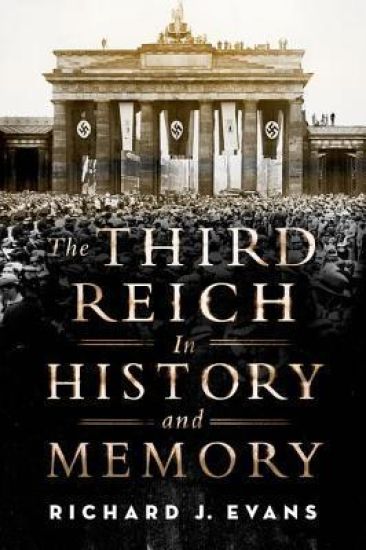
Third Reich in History and Memory

Third Reich in History and Memory

Richard J Evans

Oxford University Press Inc
2015
sidottu
the seventy years since the demise of the Third Reich, there has been a significant transformation in the ways in which the modern world understands Nazism. In this brilliant and eye-opening collection, Richard J. Evans, the acclaimed author of the Third Reich trilogy, offers a critical commentary on that transformation, exploring how major changes in perspective have informed research and writing on the Third Reich in recent years. Drawing on his most notable writings from the last two decades, Evans reveals the shifting perspectives on Nazism's rise to political power, its economic intricacies, and its subterranean extension into postwar Germany. Evans considers how the Third Reich is increasingly viewed in a broader international context, as part of the age of imperialism; discusses the growing emphasis on the larger economic and cultural circumstances of the era; and emphasizes the development of research into Nazi society, particularly in the understanding of Nazi Germany as a political system based on popular approval and consent. Exploring the complex relationship between memory and history, Evans also points out the places where the growing need to confront the misdeeds of Nazism and expose the complicity of those who participated has led to crude and sweeping condemnation, when instead historians should be making careful distinctions. Written with Evans' sharp-eyed insight and characteristically compelling style, these essays offer a summation of the collective cultural memory of Nazism in the present, and suggest the degree to which memory must be subjected to the close scrutiny of history.
The Third Reich at War

The Third Reich at War

Richard J. Evans

Penguin Books Ltd
2009
pokkari
The final book in his acclaimed trilogy on the rise and fall of Nazi Germany, Richard J. Evans's The Third Reich at War: How the Nazis Led Germany from Conquest to Disaster shows how Germany rushed headlong into destroying itself, shattering an entire continent. In 1939 Hitler mobilized Germany into all-out war. Richard Evans's astonishing, acclaimed history conjures up a whole society plunged into conflict - from generals and front-line soldiers to Hitler Youth activists and middle-class housewives - tracing events from the invasion of Poland and the Battle of Stalingrad to Hitler's plans for genocide and his eventual suicide. 'Masterly ... will surely be the standard history for many years to come ... This is a warning for the future, as much as a judgement on the past' Richard Overy, Daily Telegraph 'We all know how the story ends ... but Richard Evans brings it masterfully home ... magnificent' Peter Preston, Observer 'A chilling, brilliant read' Dominic Sandbrook, Sunday Telegraph Books of the Year 'It is hard to do justice to the humanity and scholarly range of The Third Reich at War ... triumphant ... a masterful historical narrative and the most comprehensive account of Nazi Germany' Nicholas Stargardt, The Times Literary Supplement 'It gives the reader persuasive answers to questions asked for so long, that will continue to be asked, about this most violent and inexplicable of regimes' Mark Mazower, Guardian Sir Richard J. Evans is Professor of Modern History at Cambridge University. His previous books include In Defence of History, Telling Lies about Hitler and the companions to this title, The Coming of the Third Reich and The Third Reich in Power.
The Third Reich in Power

The Third Reich in Power

Richard J. Evans

PENGUIN BOOKS
2006
nidottu
Documents the radical and rapid transformation of Germany in its first year under Nazi rule, exploring how virtually every area of life, from the arts and religion to education and literature, was reordered to comply with the regime's preparations for the war, in an account that also describes the increasing brutality that was suffered by marginalized groups. Reprint. 40,000 first printing.
The Third Reich in Power, 1933 - 1939

The Third Reich in Power, 1933 - 1939

Richard J. Evans

Penguin Books Ltd
2006
pokkari
The second book in his acclaimed trilogy on the rise and fall of Nazi Germany, Richard J. Evans' The Third Reich in Power: How the Nazis Won Over the Hearts and Minds of a Nation explores how Hitler turned Germany from a vibrant democracy into a one-party state. Before Hitler seized power in 1933, Germany had been famous for its sophistication and complexity. So how was it possible for a group of ideological obsessives to re-mould it into a one-party state directed at war and race hate? How did the Nazis win over the hearts and minds of Germany's citizens, twist science, religion and culture, and transform the country's politics to achieve total dominance so quickly? From the Nuremberg Laws to the Olympic Games, Kristallnacht to the Hitler Youth, this gripping account shows how a whole population became enmeshed in a dictatorship that was consumed by hatred and driven by war. 'Impressive ... perceptive ... humane' Ian Kershaw 'Excellent ... powerful ... it makes an indelible impression' Robert Service, Sunday Times 'Likely to be the standard work for some years to come' Spectator Books of the Year 'A rich and detailed description of just what the Third Reich did in every compartment of the state and every corner of society ... Evans's magisterial study should be on our shelves for a long time to come' Economist 'Written with great style and human sympathy' Daily Telegraph Books of the Year 'Evans brilliantly conveys how the Fuhrer reignited Germans' pride as he led them to catastrophe' Neal Ascherson, Observer Sir Richard J. Evans is Professor of Modern History at Cambridge University. His previous books include In Defence of History, Telling Lies about Hitler and the companions to this title, The Coming of the Third Reich and The Third Reich at War.
Death in Hamburg

Death in Hamburg

Richard J. Evans

Penguin Putnam Inc
2005
pokkari
'The terrible cholera epidemic of 1892' offers a wealth of insights into the inner life of a great European city at the height of the industrial age. Why were nearly 10,000 people killed in six weeks in Hamburg, whilst most of Europe was left almost unscathed? As Richard J.Evans explains, it was largely because the town was a unique anomaly: a 'free city' within Germany governed by local notables, who believed in the 'English' ideals of laissez-faire. Their failure to supply clean water, fresh air and pure food played a major role in the catastrophe. Their medical theories, influenced by political and economic interest, only made matters worse. The whole story of 'the cholera years' is tragically revealing of the age's social inequalities and administrative incompetence; it also offers some disquieting parallels with today's attitudes to AIDS.
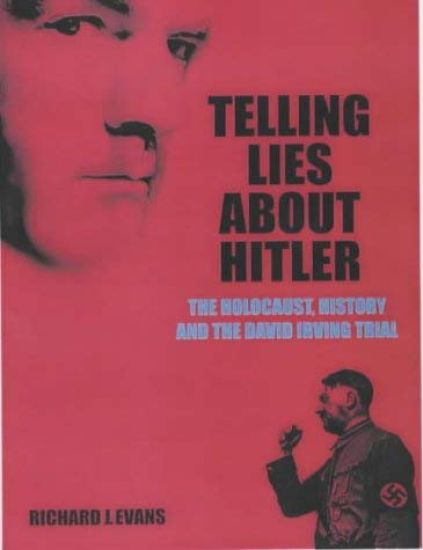
Telling Lies About Hitler

Telling Lies About Hitler

Richard J Evans

Verso Books
2002
nidottu
In April 2000 a High Court judge branded the writer David Irving a racist, an antisemite, a Holocaust denier, and a falsifier of history. The key expert witness against Irving was the Cambridge historian Richard J. Evans who describes here, in a book which several publishers have been intimidated to withdrawing, his involvement in the case. Recounting his discovery of Irving's connections with far right Holocaust deniers in the United States and of how Irving falsified the documentary evidence on the Second World War, Evans reflects generally and eloquently on the interaction of historical and legal rules of evidence.Evans argues that the Irving trial does for the twenty-first century what the Eichmann trial did for the second half of the twentieth. It vindicates history's ability to come to reasoned conclusions on the basis of a careful examination of the evidence, even when eyewitnesses and survivors are no longer around to tell the tale.
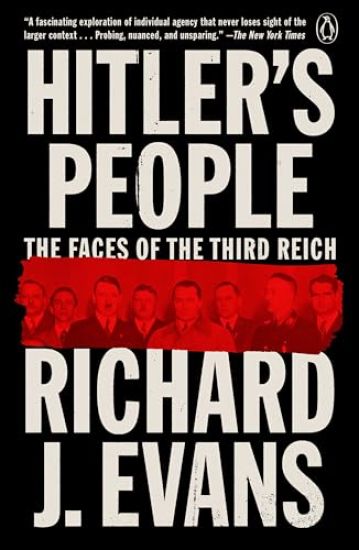
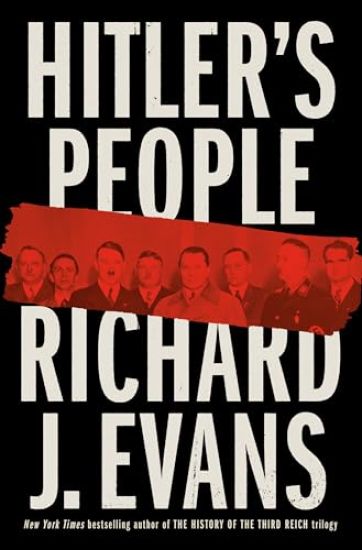
Hitler's People: The Faces of the Third Reich
Named a Best Book of the Year by Kirkus Reviews and Air Mail "A fascinating and instructive book . . . elegantly written and perceptive." --Wall Street Journal "Kaleidoscopic . . . A fascinating exploration of individual agency that never loses sight of the larger context . . . Just the kind of probing, nuanced and unsparing study to help us think things through." --The New York Times Through a connected set of biographical portraits of key Nazi figures that follows power as it radiated from Hitler to the inner and outer circles of the regime's leadership, one of our greatest historians answers the enduring question: How does a society come to carry out a program of unspeakable evil? Richard J. Evans, author of the acclaimed Third Reich trilogy and more than a dozen other volumes on modern Europe, is our preeminent scholar of Nazi Ger­many. Having spent half a century searching for the truths behind one of the most horrifying episodes in human history, in Hitler's People he brings us back to the original site of the Nazi movement--namely, the lives of its most important and representative members. Working in concentric circles out from Hitler and his closest allies, Hitler's People forms a typological framework of German society under Nazi rule from the top down. With a novelist's eye for detail, Evans explains the Third Reich through the personal characteristics and professional ambitions of its members, from its most notorious deputies--such as Goebbels, the regime's propagandist, and Himmler, the Holocaust's chief architect--to the crucial enforcers and instruments of the Nazi agenda that history has largely forgotten, such as the schoolteacher Julius Streicher or the actress and film director Leni Riefenstahl. Drawing on a wealth of recently unearthed historical sources, Hitler's People lays bare the characters whose choices caused the deaths of millions. Nearly a century after Hitler's rise, the leading nations of the west are once again being torn apart by an untamed will to power. By telling the stories of these infamous individuals as human lives, Evans asks us to grapple with the compli­cated nature of agency and complicity, showing us that the distinctions between individual and collective responsibility--and even between pathological evil and rational choice--are never easily drawn.
Hitler's People

Hitler's People

Richard J. Evans

PENGUIN BOOKS LTD
2025
pokkari
Why did so many Germans take part in the crimes of Nazi Germany? How did they come to support Hitler and follow him almost to the very end? For too long, the Nazis have been presented as little more than psychopaths or criminals. In his major new work, renowned historian Richard J. Evans makes use of a mass of recently unearthed new evidence to strip away the veneer of myth and legend from the faces of the Third Reich and present a more realistic view of Nazi perpetrators as human beings who were disturbingly like us.Evans offers rounded, fresh and often startling new portraits of the men and women who created and served Nazi Germany, beginning with Hitler himself and going on to encompass leading figures like Göring, Goebbels and Himmler, enforcers of Hitler’s orders such as Eichmann and Heydrich, propagandists like Leni Riefenstahl, low-level perpetrators such as the notorious Irma Grese and unknown sympathizers and fellow-travellers who helped the regime in myriad ways.Hitler’s People is a chilling, brilliantly written work which allows the reader to understand the texture and values of the Third Reich and just how far individuals will go when so many normal moral constraints have disappeared.
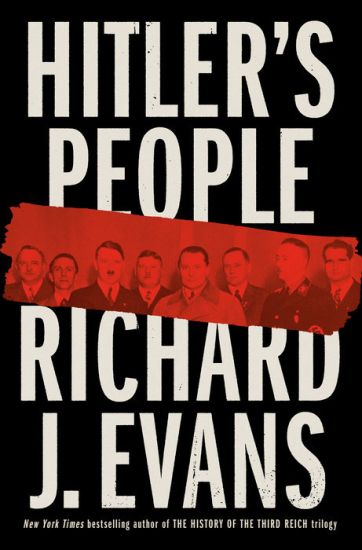
Hitler's People

Hitler's People

Richard J. Evans

PENGUIN BOOKS LTD
2024
sidottu
THE SUNDAY TIMES TOP TEN BESTSELLER‘Elegantly written and powerfully argued … it ranks among the best works on this terrible period’ Sunday TimesA biographical study of Hitler's inner circle offers a new way to understand the horrors of the Nazi regimeWhy did so many Germans take part in the crimes of Nazi Germany? How did they come to support Hitler and follow him almost to the very end? For too long, the Nazis have been presented as little more than psychopaths or criminals. In his major new work, renowned historian Richard J. Evans makes use of a mass of recently unearthed new evidence to strip away the veneer of myth and legend from the faces of the Third Reich and present a more realistic view of Nazi perpetrators as human beings who were disturbingly like us.Evans offers rounded, fresh and often startling new portraits of the men and women who created and served Nazi Germany, beginning with Hitler himself and going on to encompass leading figures like Göring, Goebbels and Himmler, enforcers of Hitler’s orders such as Eichmann and Heydrich, propagandists like Leni Riefenstahl, low-level perpetrators such as the notorious Irma Grese and unknown sympathizers and fellow-travellers who helped the regime in myriad ways.Hitler’s People is a chilling, brilliantly written work which allows the reader to understand the texture and values of the Third Reich and just how far individuals will go when so many normal moral constraints have disappeared.
Hitler's People: The Faces of the Third Reich
Named a Best Book of the Year by Kirkus Reviews and Air Mail "A fascinating and instructive book . . . elegantly written and perceptive." --Wall Street Journal "Kaleidoscopic . . . A fascinating exploration of individual agency that never loses sight of the larger context . . . Just the kind of probing, nuanced and unsparing study to help us think things through." --The New York Times Through a connected set of biographical portraits of key Nazi figures that follows power as it radiated out from Hitler to the inner and outer circles of the regime's leadership, one of our greatest historians answers the enduring question, how does a society come to carry out a program of unspeakable evil? Richard Evans, author of the acclaimed The Third Reich Trilogy and over two dozen other volumes on modern Europe, is our preeminent scholar of Nazi Germany. Having spent half a century searching for the truths behind one of the most horrifying episodes in human history, in Hitler's People, he brings us back to the original site of the Nazi movement: namely, the lives of its most important members. Working in concentric circles out from Hitler and his closest allies, Evans forms a typological framework of Germany society under Nazi rule from the top down. With a novelist's eye for detail, Evans explains the Third Reich through the personal failings and professional ambitions of its members, from its most notorious deputies--like Goebbels, the regime's propagandist, and Himmler, the Holocaust's chief architect--to the crucial enforcers and instruments of the Nazi agenda that history has largely forgotten--like the schoolteacher Julius Streicher and the actress Leni Riefenstahl. Drawing on a wealth of recently unearthed historical sources, Hitler's People lays bare the inner and outer lives of the characters whose choices led to the deaths of millions. Nearly a century after Hitler's rise, the leading nations of the West are once again being torn apart by a will to power. By telling the stories of these infamous lives as human lives, Evans asks us to grapple with the complicated nature of complicity, showing us that the distinctions between individual and collective responsibility--and even between pathological evil and rational choice--are never easily drawn.
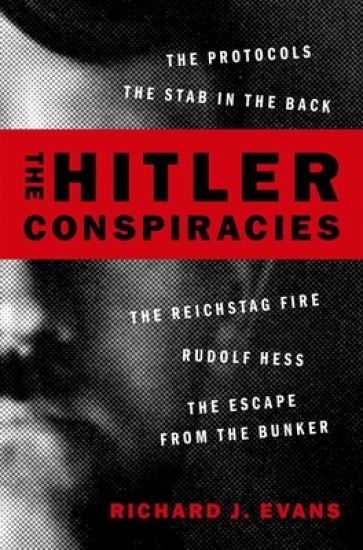
The Hitler Conspiracies: The Protocols - The Stab in the Back - The Reichstag Fire - Rudolf Hess - The Escape from the Bunker
The idea that historical events, catastrophes in particular, didn't happen on their own but were driven by the hidden machinations of malign influences has deep roots. The appeal is clear: we can ascribe these events not to human shortsightedness or frailty, or to the contingencies of fate and circumstance, but to unseen forces. Conspiracy theories and paranoia go hand in hand. Something, or someone, is trying to control our lives and to regain that control we need to expose the truth. Conspiracy theories have lately proliferated, powered by the Internet and social media, as well as by the declining influence of the traditional gatekeepers of facts and information. In his new book, Richard J. Evans, one of the world's leading historians of the Third Reich, explores this new golden age of conspiracy theories and what underlies it. To do that, he focuses on five of the most enduring conspiracies theories of the Nazi period, including those that fueled Hitler's rise in the first place. Hence he reexamines the notorious anti-Semitic forgery The Protocols of the Elders of Zion; the "stab-in-the-back" myth about the of the role of Jews in Germany's loss in World War One; and the 1933 burning of the Reichstag, which the Nazis used to solidify their grip on power. Evans also delves into the multiple rumors regarding the ill-fated and mysterious 1941 flight to England by Rudolf Hess, Deputy Leader of the Nazi Party, and his death in Spandau prison in 1987. Lastly, he turns to the recurrent rumor that Hitler somehow managed to escape from Berlin in 1945 and live out his days in Argentina. The Hitler Conspiracies is a book about fantasies and fictions, fabrications and falsifications. A distinguished work of history by one of the world's most distinguished historians, it offers equally a hard look at our own troubled times, a "post-truth" era in which "alternative facts" have gained new standing.
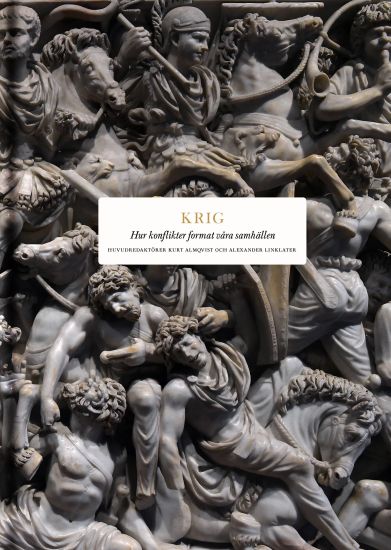
Krig : hur konflikter format våra samhällen

Krig : hur konflikter format våra samhällen

Alexey Arbatov; David J. Betz; Philip Bobbitt; Christopher Coker; Rolf Ekéus; Richard J. Evans; Gregory Feifer; Lawrence Freedman; Janne Haaland Matláry; Dick Harrison; Tom Holland; Rob Johnson; Frederick Kagan; Kimberly Kagan; Elisabeth Kendall; Fredrik Logevall; Rana Mitter; Peter Pomerantsev; Andrew Preston; Malise Ruthven; Charly Salonius-Pasternak; Hew Strachan; Nathan Shachar; Lilia Shevtsova; Jessica Stern; Pascal Vennesson

Bokförlaget Stolpe
2022
sidottu
Det påstås att ungefär 14 500 krig har utkämpats sedan år 3 500 f.Kr. Mänskligheten har bara erfarit 300 år av fred på jorden. Under 1900-talet dödades fler människor i krig än något tidigare sekel. Relativt sett dödar vi dock varandra mer sällan. Håller vi gradvis på att bli mer fredliga? Oavsett hur många som dödas, och med vilken metod, kan vi vara säkra på att krig kommer att fortsätta utkämpas. Ligger orsakerna till krig i samhället eller i biologin, i tävlan om ekonomiska resurser eller sexuella, i historiska omständigheter eller i en universell våldsinstinkt? Allt sedan antiken fram till dagens terrorism har krig varit förstörare och skapare av stater och civilisationer. Essäerna i denna antologi har sitt ursprung i det internationellt välrenommerade Engelsbergsseminariet 2015 och är skrivna av historiker, journalister, tänkare, forskare och författare från hela världen. Huvudredaktörer är Kurt Almqvist och Alexander Linklater.