Kirjojen hintavertailu. Mukana 12 390 323 kirjaa ja 12 kauppaa.

Kirjailija

Richard Rorty

Kirjat ja teokset yhdessä paikassa: 44 kirjaa, julkaisuja vuosilta 1982-2025, suosituimpien joukossa Filosoofia ja looduse peegel. Vertaile teosten hintoja ja tarkista saatavuus suomalaisista kirjakaupoista.

44 kirjaa

Kirjojen julkaisuhaarukka 1982-2025.

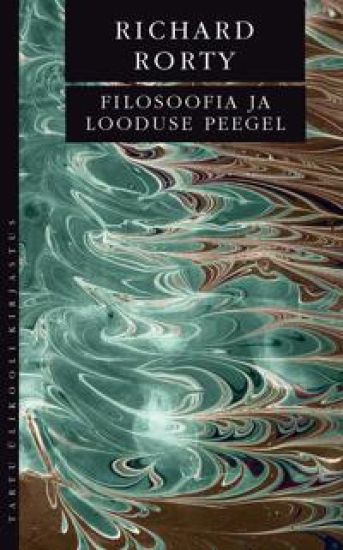
Filosoofia ja looduse peegel

Filosoofia ja looduse peegel

Henrik Sova; Richard Rorty

Tartu ülikooli kirjastus
2025
nidottu
Richard Rorty (1931-2007) oli üks mõjukamaid 20. sajandi ameerika filosoofe ja tema esikteos "Filosoofia ja looduse peegel" on tõenäoliselt ta mõjukaim raamat, millel oli omal ajal kutseliste filosoofide seas samas teatav kurikuulsuski. Nimelt külvab see kahtlusi just tolle rolli suhtes, mille poole filosoofia kui eriala vähemalt Kantist peale on püüelnud. Filosoofia on pidanud enda asjaks olla teadmisväidete kinnitamisel või tagasilükkamisel nii-öelda viimane kohtuaste, uurides seda, kuidas inimvaim kõige üldisemas mõttes loodust peegeldab. Rorty näitab aga, kuidas seda võimaldavad arusaamad vaimust pole enamat kui võrdlemisi hiljutised keelelised sattumused; kuidas mingit keelelistest sattumustest puutumata teadmiste vundamenti ei leidugi; ning kuidas 20. sajandil kerkinud lootused leida seda inimpsühholoogiat või -keelt uurides on seega samuti asjatud. Seda kõike teeb ta hoogsa mõtteloo saatel, mis viib Aristotelesest Locke'i ja Descartes'ini, seejärel Kantini, sealt analüütilise filosoofia suurkujude Quine'i, Sellarsi ja Davidsonini ning viimaks analüütilisest filosoofiast välja Kuhni ja Gadameri juurde. Ringkäigu lõpuks hakkab kuju võtma uutmoodi pragmatistlik hoiak maailma ja mõtlemise suhtes, mis varasemast pragmatistliku filosoofia traditsioonist siiski olulistel viisidel lahkneb. Rorty staatust filosoofias ning "Filosoofia ja looduse peegli" mõttekäike selgitab pragmatistlikust vaatevinklist Henrik Sova järelsõna.
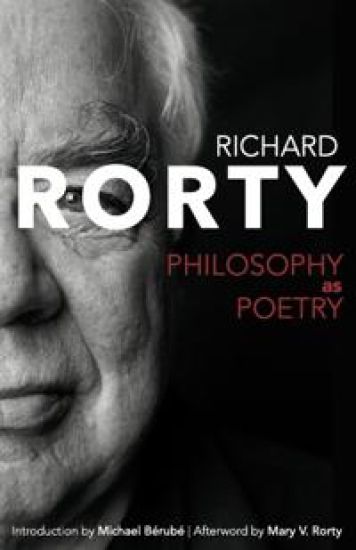
Philosophy As Poetry

Philosophy As Poetry

Richard Rorty; Mary Varney Rorty

UNIVERSITY OF VIRGINIA PRESS
2025
pokkari
Undeniably iconoclastic, and doggedly practical where others were abstract, the late Richard Rorty was described by some as a philosopher with no philosophy. Rorty was skeptical of systems claiming to have answers, seeing scientific and aesthetic schools as vocabularies rather than as indispensable paths to truth. But his work displays a profound awareness of philosophical tradition and an urgent concern for how we create a society. As Michael BÉrubÉ writes in his introduction to this new volume, Rorty looked upon philosophy as "a creative enterprise of dreaming up new and more humane ways to live." Drawn from Rorty’s acclaimed 2004 Page-Barbour lectures, Philosophy as Poetry distills many of the central ideas in his work. Rorty begins by addressing poetry and philosophy, which are often seen as contradictory pursuits. He offers a view of philosophy as a poem, beginning with the ancient Greeks and rewritten by succeeding generations of philosophers seeking to improve it. He goes on to examine analytic philosophy and the rejection by some philosophers, notably Wittgenstein, of the notion of philosophical problems that have solutions. The book concludes with an invigorating suspension of intellectual borders as Rorty focuses on the romantic tradition and relates it to philosophic thought. This book makes an ideal starting place for anyone looking for an introduction to Rorty’s thought and his contribution to our sense of an American pragmatism, as well as an understanding of his influence and the controversy that attended his work.
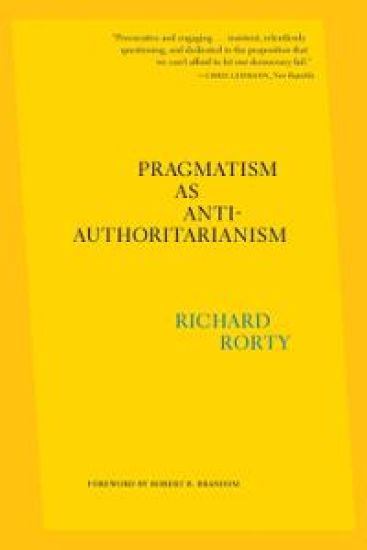
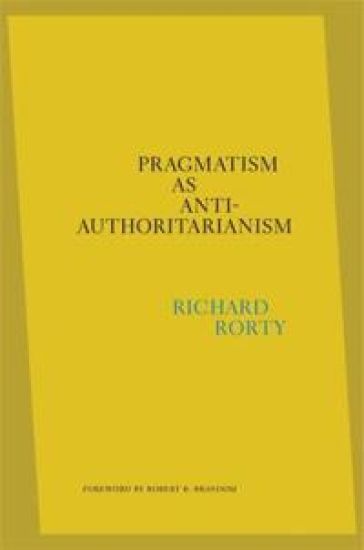
Pragmatism as Anti-Authoritarianism

Pragmatism as Anti-Authoritarianism

Richard Rorty; Robert B. Brandom

HARVARD UNIVERSITY PRESS
2024
nidottu
“Provocative and engaging…The array of urgent questions and crises facing our democracy makes one miss Richard Rorty’s voice: insistent, relentlessly questioning, and dedicated to the proposition that we can’t afford to let our democracy fail.”—Chris Lehmann, New Republic“Richard Rorty was the most iconoclastic and dramatic philosopher of the last half-century. In this final book, his unique literary style, singular intellectual zest, and demythologizing defiance of official philosophy are on full display.”—Cornel West“Coherent, often brilliant, and it presents a clear and timely case for political pragmatism.”—Jonathan Rée, Prospect“Today, there are few philosophers left whose thoughts are inspired by a unifying vision; there are even fewer who can articulate such a view in terms of such a ravishing flow of provocative, but sharp and differentiated, arguments.”—Jürgen HabermasRichard Rorty’s final masterwork offers his culminating thoughts on the influential version of pragmatism he began to articulate decades ago in his groundbreaking Philosophy and the Mirror of Nature. He identifies anti-authoritarianism as the principal impulse and virtue of pragmatism. Anti-authoritarianism, in this view, means acknowledging that our cultural inheritance is always open to revision because no authority exists to ascertain the truth, once and for all. If we cannot rely on the unshakable certainties of God or nature, then all we have left to go on—and argue with—are the opinions and ideas of our fellow humans. The test of these ideas, Rorty suggests, is relatively simple: Do they work? Do they produce the peace, freedom, and happiness we desire? To achieve this enlightened pragmatism is not easy, though. Pragmatism demands trust. It demands that we think and care about what others think and care about, and that we account for their doubts of and objections to our own beliefs.No book offers a more accessible account of pragmatism, just as no philosopher has more eloquently challenged the hidebound traditions arrayed against the goals of social justice.
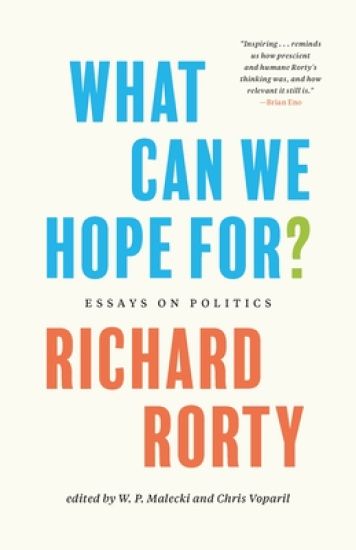
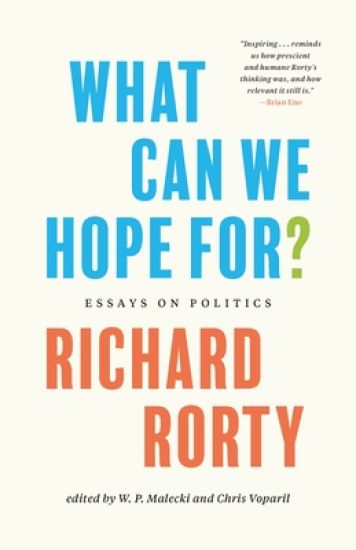
What Can We Hope For?

What Can We Hope For?

Richard Rorty; Saskia Sassen

PRINCETON UNIVERSITY PRESS
2023
pokkari
Prescient essays about the state of our politics from the philosopher who predicted that a populist demagogue would become president of the United StatesRichard Rorty, one of the most influential intellectuals of recent decades, is perhaps best known today as the philosopher who, almost two decades before the 2016 U.S. presidential election, warned of the rise of a Trumpian strongman in America. What Can We Hope For? gathers nineteen of Rorty’s essays on American and global politics, including four previously unpublished and many lesser-known and hard-to-find pieces.In these provocative and compelling essays, Rorty confronts the critical challenges democracies face at home and abroad, including populism, growing economic inequality, and overpopulation and environmental devastation. In response, he offers optimistic and realistic ideas about how to address these crises. He outlines strategies for fostering social hope and building an inclusive global community of trust, and urges us to put our faith in trade unions, universities, bottom-up social campaigns, and bold political visions that thwart ideological pieties.Driven by Rorty’s sense of emergency about our collective future, What Can We Hope For? is filled with striking diagnoses of today’s political crises and creative proposals for solving them.
What Can We Hope For?

What Can We Hope For?

Richard Rorty; Saskia Sassen

PRINCETON UNIVERSITY PRESS
2022
sidottu
Prescient essays about the state of our politics from the philosopher who predicted that a populist demagogue would become president of the United StatesRichard Rorty, one of the most influential intellectuals of recent decades, is perhaps best known today as the philosopher who, almost two decades before the 2016 U.S. presidential election, warned of the rise of a Trumpian strongman in America. What Can We Hope For? gathers nineteen of Rorty’s essays on American and global politics, including four previously unpublished and many lesser-known and hard-to-find pieces.In these provocative and compelling essays, Rorty confronts the critical challenges democracies face at home and abroad, including populism, growing economic inequality, and overpopulation and environmental devastation. In response, he offers optimistic and realistic ideas about how to address these crises. He outlines strategies for fostering social hope and building an inclusive global community of trust, and urges us to put our faith in trade unions, universities, bottom-up social campaigns, and bold political visions that thwart ideological pieties.Driven by Rorty’s sense of emergency about our collective future, What Can We Hope For? is filled with striking diagnoses of today’s political crises and creative proposals for solving them.
Pragmatism as Anti-Authoritarianism

Pragmatism as Anti-Authoritarianism

Richard Rorty; Robert B. Brandom

The Belknap Press
2021
sidottu
The last book by the eminent American philosopher and public intellectual Richard Rorty, providing the definitive statement of his mature philosophical and political views.Richard Rorty’s Pragmatism as Anti-Authoritarianism is a last statement by one of America’s foremost philosophers. Here Rorty offers his culminating thoughts on the influential version of pragmatism he began to articulate decades ago in his groundbreaking Philosophy and the Mirror of Nature.Marking a new stage in the evolution of his thought, Rorty’s final masterwork identifies anti-authoritarianism as the principal impulse and virtue of pragmatism. Anti-authoritarianism, on this view, means acknowledging that our cultural inheritance is always open to revision because no authority exists to ascertain the truth, once and for all. If we cannot rely on the unshakable certainties of God or nature, then all we have left to go on—and argue with—are the opinions and ideas of our fellow humans. The test of these ideas, Rorty suggests, is relatively simple: Do they work? Do they produce the peace, freedom, and happiness we desire? To achieve this enlightened pragmatism is not easy, though. Pragmatism demands trust. Pragmatism demands that we think and care about what others think and care about, which further requires that we account for others’ doubts of and objections to our own beliefs. After all, our own beliefs are as contestable as anyone else’s.A supple mind who draws on theorists from John Stuart Mill to Annette Baier, Rorty nonetheless is always an apostle of the concrete. No book offers a more accessible account of Rorty’s utopia of pragmatism, just as no philosopher has more eloquently challenged the hidebound traditions arrayed against the goals of social justice.
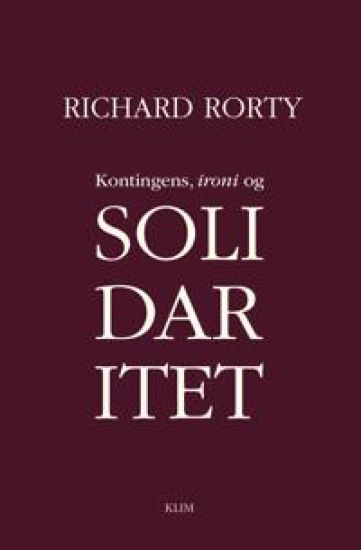
Kontingens, ironi og solidaritet

Kontingens, ironi og solidaritet

Richard Rorty

Forlaget Klim
2021
nidottu
Richard Rorty var blandt de mest fremtrædende og indflydelsesrige amerikanske filosoffer i det 20. århundrede. Han fremstår i dag som den vigtigste repræsentant for den såkaldte neopragmatisme, der fra 1980’erne revitaliserede den traditionelle pragmatisme fra begyndelsen af århundredet ved at kombinere den med indsigter fra blandt andet hermeneutik, postmodernisme og dekonstruktion'Kontingens, ironi og solidaritet' er Rortys hovedværk fra 1989. Heri forlader han – inspireret af bl.a. Heidegger, Wittgenstein og Derrida – endegyldigt forestillingen om sproget som en sand afspejling af verden. Filosofi kan og skal ikke være streng videnskab. Og filosofiske begrundelser og moralteori er ikke vejen til en bedre verden. Hos Rorty placeres håbet snarere i litteraturen, som kan gøre os opmærksomme på lidelse, som vi før var uvidende om. I mødet med de store romaner – fx Orwells og Nabokovs – udvides vores empati, og der skabes sensibilitet over for den lidelse, andre mennesker og vi selv forvolder. Som borgere i de moderne demokratier anbefales vi af Rorty at indse kontingensen som et vilkår og leve vore liv som liberale og solidariske ironikere.Bogen er forsynet med et kyndigt efterskrift ved Hans Henrik Hjermitslev.
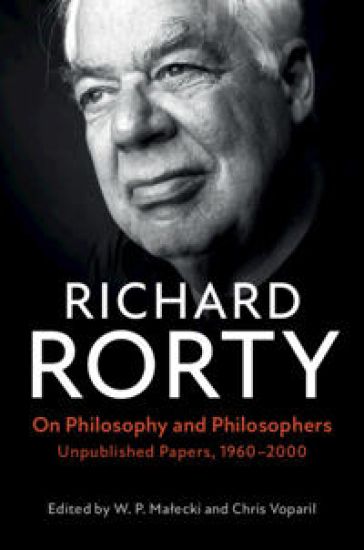
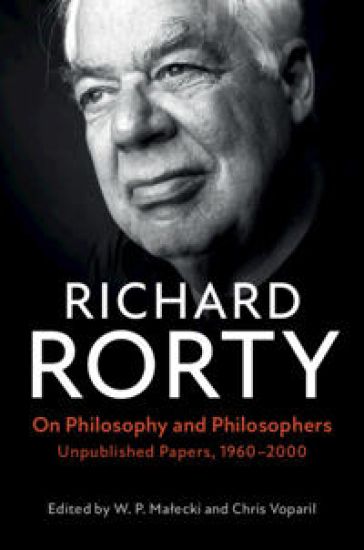
On Philosophy and Philosophers

On Philosophy and Philosophers

Richard Rorty

Cambridge University Press
2020
pokkari
On Philosophy and Philosophers is a volume of unpublished philosophical papers by Richard Rorty, a central figure in late-twentieth-century intellectual debates and a primary force behind the resurgence of American pragmatism. The first collection of new work to appear since his death in 2007, these previously unseen papers advance novel views on metaphysics, ethics, epistemology, philosophical semantics and the social role of philosophy, critically engaging canonical and contemporary figures from Plato and Kant to Kripke and Brandom. This book's diverse offerings, which include technical essays written for specialists and popular lectures, refine our understanding of Rorty's perspective and demonstrate the ongoing relevance of the iconoclastic American philosopher's ground-breaking thought. An introduction by the editors highlights the papers' original insights and contributions to contemporary debates.
On Philosophy and Philosophers

On Philosophy and Philosophers

Richard Rorty

Cambridge University Press
2020
sidottu
On Philosophy and Philosophers is a volume of unpublished philosophical papers by Richard Rorty, a central figure in late-twentieth-century intellectual debates and a primary force behind the resurgence of American pragmatism. The first collection of new work to appear since his death in 2007, these previously unseen papers advance novel views on metaphysics, ethics, epistemology, philosophical semantics and the social role of philosophy, critically engaging canonical and contemporary figures from Plato and Kant to Kripke and Brandom. This book's diverse offerings, which include technical essays written for specialists and popular lectures, refine our understanding of Rorty's perspective and demonstrate the ongoing relevance of the iconoclastic American philosopher's ground-breaking thought. An introduction by the editors highlights the papers' original insights and contributions to contemporary debates.
Fronesis 3-4. Konflikt

Fronesis 3-4. Konflikt

Per Albin Hansson; Antonio Negri; Floya Anthias; Iris Marion Young; Chantal Mouffe; Richard Rorty; Nira Yuval-Davis; Slavoj Zizek; Yvonne Hirdman

Fronesis
2018
nidottu
Vi lever i en tid då den politiska samstämmigheten har gjorts till dygd inom politiken. Under 1990- och 2000-talet lämnade många socialdemokratiska partier den polariserande vänsterpositionen till förmån för det harmoniska mittenfältet. Samtidigt är det just frånvaron av politiska konflikter och reella alternativ som har banat väg för ytterhögerns framgångar. Och med den ekonomiska globaliseringen minskar kapitalets behov av att söka samförstånd med såväl stat som fackföreningsrörelse. I Fronesis nr 3–4 uppmärksammas politikens nödvändiga konfliktdimension. Innehåll i Fronesis nr 3-4 (192 sidor): Thomas Tidholm: Den politiska situationen Anders Kalat och Cecilia von Otter: Politik är antagonism Anders Kalat och Camilla Lundberg: Politisk identitet och antagonism: klass, kön och etnicitet Chantal Mouffe: Hegemoni och nya politiska subjekt: med sikte mot ett nytt demokratibegrepp Floya Anthias och Nira Yuval-Davis: Att sätta feminismen i sin kontext – genusmässiga, etniska och klassmässiga skiljelinjer Slavoj Zizek: Mångkulturalismen eller den multinationella kapitalismens kulturella logik Klas Gustavsson: Negri, Sinisi och den politiska ekonomin John Sinisi: Hobbes skugga Antonio Negri: Keynes och den kapitalistiska teorin om staten Yvonne Hirdman: Ett småberusat middagstal Per-Albin Hansson: Kvinnokraften LO:s kongress 1936 (protokoll): Saltsjöbadsförhandlingarna och samförståndet Iris Young: Uppror i det välfärdskapitalistiska samhället Linnea Nilsson: En politik utan antagonismer? Perry Anderson: En kommentar: Makt, politik och upplysningen Helen Wilkinson: Fortfarande det Andra könet Richard Rorty: Tillbaka till klasspolitiken
Filosofi som poesi

Filosofi som poesi

Richard Rorty

Cappelen Damm akademisk
2018
nidottu
I den nye rekken av Cappelens upopulære skrifter kommer FILOSOFI SOM POESI av Richard Rorty som nr. 71. Den amerikanske pragmatisten Richard Rorty (1931–2007) ble ofte ansett som en fiende av sitt eget fag, filosofien, fordi han ville overskride dette fagets tradisjonelle syn på seg selv.Denne boken består av tre forelesninger som gir en fortettet fremstilling av sentrale aspekter ved Rortys forfatterskap, og særlig hans ambisjon om å forkaste filosofiens tradisjonelle selvforståelse. Filosofene har ofte fremstilt seg selv som kunnskapens yppersteprester, mener Rorty, som en slags portvoktere til de grunnleggende sannhetene som all annen kunnskap angivelig hviler på. Etter Rortys syn er dette feilslått fordi sannhet simpelthen er «det våre likemenn lar oss komme unna med».Vi bør slutte å forestille oss at omgivelsene er et puslespill som venter på å legges av oss mennesker, mener Rorty i denne boken. Verden har ingen foretrukken beskrivelse av seg selv. Når vi innser dette kan vi sette forestillingsevnen fri, og frembringe nye – og derfor rare – måter å se ting på. Som Rorty skriver: «Ingen forestillingsevne, intet språk. Ingen språklig endring, ingen moralsk eller intellektuell utvikling.»
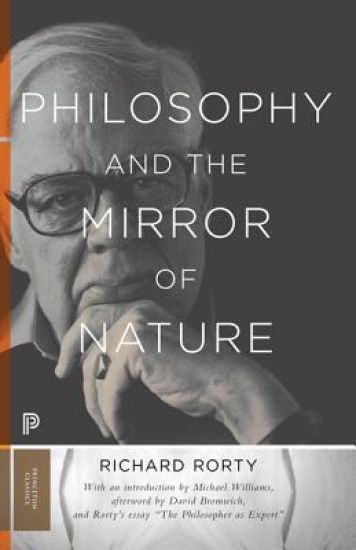
Philosophy and the Mirror of Nature

Philosophy and the Mirror of Nature

Richard Rorty; David Bromwich

Princeton University Press
2017
pokkari
When it first appeared in 1979, Philosophy and the Mirror of Nature hit the philosophical world like a bombshell. In it, Richard Rorty argued that, beginning in the seventeenth century, philosophers developed an unhealthy obsession with the notion of representation: comparing the mind to a mirror that reflects reality. Rorty's book is a powerful critique of this imagery and the tradition of thought that it spawned. Today, the book remains a must-read and stands as a classic of twentieth-century philosophy. Its influence on the academy, both within philosophy and across a wide array of disciplines, continues unabated. This edition includes new essays by philosopher Michael Williams and literary scholar David Bromwich, as well as Rorty's previously unpublished essay "The Philosopher as Expert."
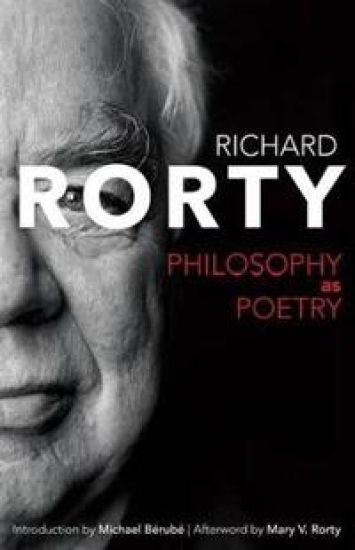
Philosophy As Poetry

Philosophy As Poetry

Richard Rorty; Mary V. Rorty

University of Virginia Press
2016
sidottu
Undeniably iconoclastic, and doggedly practical where others were abstract, the late Richard Rorty was described by some as a philosopher with no philosophy. Rorty was skeptical of systems claiming to have answers, seeing scientific and aesthetic schools as vocabularies rather than as indispensable paths to truth. But his work displays a profound awareness of philosophical tradition and an urgent concern for how we create a society. As Michael Bérubé writes in his introduction to this new volume, Rorty looked upon philosophy as ""a creative enterprise of dreaming up new and more humane ways to live.""Drawn from Rorty’s acclaimed 2004 Page-Barbour lectures, Philosophy as Poetry distills many of the central ideas in his work. Rorty begins by addressing poetry and philosophy, which are often seen as contradictory pursuits. He offers a view of philosophy as a poem, beginning with the ancient Greeks and rewritten by succeeding generations of philosophers seeking to improve it. He goes on to examine analytic philosophy and the rejection by some philosophers, notably Wittgenstein, of the notion of philosophical problems that have solutions. The book concludes with an invigorating suspension of intellectual borders as Rorty focuses on the romantic tradition and relates it to philosophic thought.This book makes an ideal starting place for anyone looking for an introduction to Rorty’s thought and his contribution to our sense of an American pragmatism, as well as an understanding of his influence and the controversy that attended his work.
Filosofi og socialt håb

Filosofi og socialt håb

Richard Rorty

Forlaget Klim
2016
nidottu
Richard Rorty (1930-2007) var en af de mest provokerende skikkelser i nyere tids filosofi. I disse veloplagte essays, artikler og forelæsninger fra 1990’erne præsenteres en bred vifte af hans filosofiske, politiske og kulturelle overbevisninger. Rortys forfatterskab blev til i et opgør dels med den analytiske tradition, han selv kom ud af, og dels med platonisk og kantiansk filosofi. Siden Platon har filosofien grundlæggende forsøgt at nå frem til sand erkendelse ved at trænge bag om tilsynekomsterne til en underliggende virkelighed. Men for Rorty handler det ikke om, hvorvidt vores forestillinger stemmer overens med en fundamental virkelighed, men om hvorvidt de kan bidrage til at udføre praktiske formål og skabe et mere egalitært og demokratisk samfund. I den pragmatiske ånd fra John Dewey forsøges det platoniske mål om at kopiere virkeligheden bedre og bedre erstattet med et socialt håb om at skabe en bedre fremtid bestående af et globalt, kosmopolitisk, demokratisk, egalitært, klasseløst verdenssamfund. Bogen er forsynet med et efterskrift af Michael Vernersen, som også har oversat.
What's the Use of Truth?

What's the Use of Truth?

Richard Rorty; Pascal Engel

Columbia University Press
2016
pokkari
What is truth? What value should we see in or attribute to it? The war over the meaning and utility of truth is at the center of contemporary philosophical debate, and its arguments have rocked the foundations of philosophical practice. In this book, the American pragmatist Richard Rorty and the French analytic philosopher Pascal Engel present their radically different perspectives on truth and its correspondence to reality. Rorty doubts that the notion of truth can be of any practical use and points to the preconceptions that lie behind truth in both the intellectual and social spheres. Engel prefers a realist conception, defending the relevance and value of truth as a norm of belief and inquiry in both science and the public domain. Rorty finds more danger in using the notion of truth than in getting rid of it. Engel thinks it is important to hold on to the idea that truth is an accurate representation of reality. In Rorty's view, epistemology is an artificial construct meant to restore a function to philosophy usurped by the success of empirical science. Epistemology and ontology are false problems, and with their demise goes the Cartesian dualism of subject and object and the ancient problematic of appearance and reality. Conventional "philosophical problems," Rorty asserts, are just symptoms of the professionalism that has disfigured the discipline since the time of Kant. Engel, however, is by no means as complacent as Rorty in heralding the "end of truth," and he wages a fierce campaign against the "veriphobes" who deny its value. What's the Use of Truth? is a rare opportunity to experience each side of this impassioned debate clearly and concisely. It is a subject that has profound implications not only for philosophical inquiry but also for the future study of all aspects of our culture.
Mind, Language, and Metaphilosophy

Mind, Language, and Metaphilosophy

Richard Rorty

Cambridge University Press
2014
pokkari
This volume presents a selection of the philosophical essays which Richard Rorty wrote during the first decade of his career, and complements four previous volumes of his papers published by Cambridge University Press. In this long neglected body of work, which many leading philosophers still consider to be his best, Rorty develops his views on the nature and scope of philosophy in a manner which supplements and elucidates his definitive statement on these matters in Philosophy and the Mirror of Nature. He also develops his groundbreaking version of eliminative materialism, a label first coined to describe his position, and sets out original views on various central topics in the philosophy of language, concerning private language, indeterminacy, and verificationalism. A substantial introduction examines Rorty's philosophical development from 1961 to 1972. The volume completes our understanding of Rorty's intellectual trajectory and offers lucid statements of positions which retain their relevance to current debates.
Mind, Language, and Metaphilosophy

Mind, Language, and Metaphilosophy

Richard Rorty

Cambridge University Press
2014
sidottu
This volume presents a selection of the philosophical essays which Richard Rorty wrote during the first decade of his career, and complements four previous volumes of his papers published by Cambridge University Press. In this long neglected body of work, which many leading philosophers still consider to be his best, Rorty develops his views on the nature and scope of philosophy in a manner which supplements and elucidates his definitive statement on these matters in Philosophy and the Mirror of Nature. He also develops his groundbreaking version of eliminative materialism, a label first coined to describe his position, and sets out original views on various central topics in the philosophy of language, concerning private language, indeterminacy, and verificationalism. A substantial introduction examines Rorty's philosophical development from 1961 to 1972. The volume completes our understanding of Rorty's intellectual trajectory and offers lucid statements of positions which retain their relevance to current debates.