Kirjojen hintavertailu. Mukana 12 595 353 kirjaa ja 12 kauppaa.

Kirjailija

Robert Browning

Kirjat ja teokset yhdessä paikassa: 638 kirjaa, julkaisuja vuosilta 1899-2026, suosituimpien joukossa Saul. Vertaile teosten hintoja ja tarkista saatavuus suomalaisista kirjakaupoista.

638 kirjaa

Kirjojen julkaisuhaarukka 1899-2026.

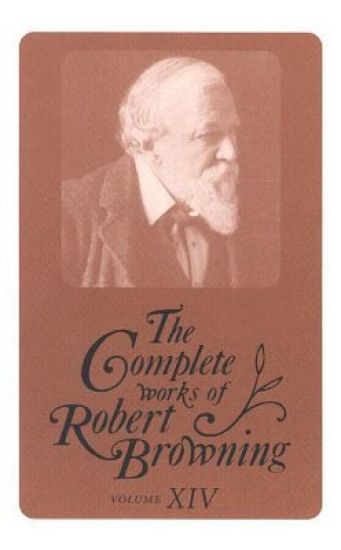
The Complete Works of Robert Browning, Volume XIV

The Complete Works of Robert Browning, Volume XIV

Robert Browning

Ohio University Press
2003
sidottu
In seventeen volumes, copublished with Baylor University, this acclaimed series features annotated texts of all of Robert Browning's known writing. The series encompasses autobiography as well as influences bearing on Browning's life and career and aspects of Victorian thought and culture. Volume XIV of The Complete Works of Robert Browning records a transition in the poet's career. With The Agamemnon of Aeschylus (1877), Browning ended his experiments with classical sources, creating his "transcript" — not quite a translation — of the Greek original and providing an intriguing explanation for his approach. La Saisiaz, the deeply personal expression of Browning's shock at the sudden death of a dear friend, was published in 1878 with The Two Poets of Croisic, an extended ironic meditation on literary fame. Browning's collection of six poems under the title Dramatic Idyls (1879) marks the poet's return to the dramatic forms he perfected in Men and Women and Dramatis Personae, and a revival of his interest in the psychology of motives. As always in this acclaimed series, a complete record of textual variants is provided, as well as extensive explanatory notes.
The Poetical Works of Robert Browning: Volume VIII. The Ring and the Book, Books V-VIII
In old age, Browning always referred people to The Ring and the Book as his finest achievement. This is the second of the three volumes of the Oxford edition presenting this great Italian murder-story, including the monologues of the villain, the aristocrat Guido Franceschini, Pompilia his abused wife, and Caponsacchi, the priest who tries to rescue her from death. The commentary, at the bottom of each page, elucidates Browning's creative and sometimes challenging use of language with reference to his correspondence, his historical sources, and his own rich experience of Italy. Previously unidentified allusions are fully explained, and a newly discovered source from a seventeenth-century Italian chronicle is presented for the first time (in Appendix B), allowing further insight into Browning's engagement with history. The copy text of 1888-9 has numerous emendations to its punctuation, both those authorized by the poet in the last year of his life and those resulting from corrected compositors' errors, and these, combined with fourteen emendations to substantives, produce a text as near as possible to Browning's final intentions.
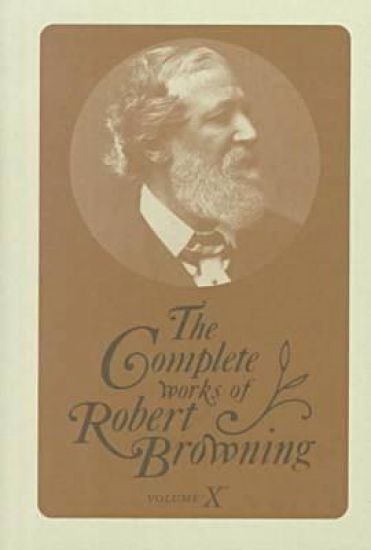
The Complete Works of Robert Browning, Volume X

The Complete Works of Robert Browning, Volume X

Robert Browning

Ohio University Press
1999
sidottu
In seventeen volumes, copublished with Baylor University, this acclaimed series features annotated texts of all of Robert Browning's known writing. The series encompasses autobiography as well as influences bearing on Browning's life and career and aspects of Victorian thought and culture. The Complete Works of Robert Browning, Volume X contains critical editions of Balaustion's Adventure: Including a Transcript from Euripides and Prince Hohenstiel-Schwangau, Saviour of Society. Both published in 1871, these two long poems take up a pair of subjects that held enduring fascination for Robert and Elizabeth Barrett Browning: classical Greek literature and the career of Napoleon III, Emperor of France. Balaustion's Adventure, which the poet characterized as merely a "May-month amusement," was surprisingly successful with the reading public that paid more attention to Browning after the triumph of The Ring and the Book in 1868–69. His first poem since the publication of that masterpiece, Balaustion's Adventure creates a charming and brave narrator who recalls in vivid detail a performance of Euripides' play Alcestis. Browning began a poem on Louis Napoleon in 1860, but not until after the fall of the Second Empire in 1870 did he attempt a full-scale portrait of the French emperor. As an exercise in self-justification, Prince Hohenstiel-Schwangau falls into a familiar sub-genre of Browning's dramatic monologues. The most intriguing aspect of the poem lies in its biographical importance: the character and career of Napoleon III was a topic of sustained, sharp disagreement between Robert and Elizabeth Browning. As always in this acclaimed series, a complete record of textual variants is provided, as well as extensive explanatory notes.
The Poetical Works of Robert Browning: Volume VII. The Ring and the Book, Books I-IV
Henry James described Browning's extended dramatic poem The Ring and the Book, over 20,000 lines in length, as `a great living thing', `a proportioned monstrous magnificence'. The story was developed from some old legal documents discovered by Browning concerning an actual murder which took place in Rome in 1698, and its writing was his major preoccupation in the 1860s, the early years of his widowerhood in London. This volume gives us the first third of the poems, Books I to IV. The Introduction draws on unpublished letters, journals, and working papers not examined by previous editors, to illuminate how the poem was conceived and researched, the range of people the poet consulted, and the five-year period of composition. The poem's complex publishing history is disentangled in the Text part of the Introduction, including a discussion of the corrections and revisions Browning made on sheets from volumes I, III, and IV of the second edition, which he later forgot and which never appeared in print. Appendix E gives these important variants in full. The annotation presents new contextual matter, including unpublished letters relating to `Lyric Love', Browning's famous invocation to his dead wife. The appendices give the original Italian text of Browning's second source, `Morte dell'Uxoricida Guido Franceschini Decapitato'; two previously unpublished autograph chronologies in which the poet worked out historical details of his story; and a new account of the biographical significance of the `Ring' image. The editors have made six substantive emendations to the text, ranging from inaccuracies in the original typesetting to changes made by Browning after publication. The evolution of the text from manuscript to copy text is also discussed, and an appendix is devoted to a set of corrected proofs preserved at Yale, a textual evolutionary dead end of great interest and significance.
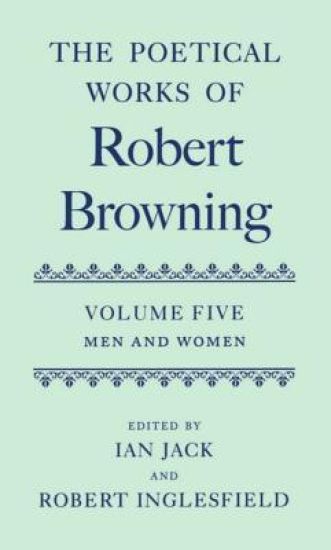
The Poetical Works of Robert Browning: Volume V. Men and Women
This is the first full scholarly edition of Browning's greatest and perhaps best-known collection of short poems, Men and Women. A comprehensive introduction shows how new research by Ian Jack an Robert Inglesfield has unearthed material which throws fresh light on the composition and dates of such famous pieces as 'Fra Lippo Lippi', 'Childe Roland to the Dark Tower Came', and 'One Word More: To E.B.B.'. This edition uses a critical text based on that of Browning's final collection, and has detailed introductions to the individual poems. It is the fifth volume in the highly praised Political Works of Robert Browning.
The Poetical Works of Robert Browning: Volume IV
`Browning really comes back to life in the marvellous third volume of the new Oxford Browning', wrote John Bayley, choosing it as one of his Books of the Year for 1988. While Volume III included six of the eight Bells and Pomegranates pamphlets, the present volume completes the series and includes the most remarkable of all, Dramatic Romances and Lyrics. Here we find `Pictor Ignotus', `The Lost Leader', `The Bishop orders his Tomb', `The Laboratory', `The Boy and the Angel', and the first part of `Saul'. Also included are Christmas-Eve and Easter-Day and the essay on Shelley. As the Times Literary Supplement reviewer of the earlier volumes commented, `readers of a poet like this need all the help they can get; and Jack and Smith have provided it in abundance.' Each poem is fully annotated, and accompanied by a detailed introduction which provides information on the chronology of composition and on Browning's sources.
The Complete Works of Robert Browning, Volume I

The Complete Works of Robert Browning, Volume I

Robert Browning

Ohio University Press
1969
sidottu
In seventeen volumes, copublished with Baylor University, this acclaimed series features annotated texts of all of Robert Browning's known writing. The series encompasses autobiography as well as influences bearing on Browning's life and career and aspects of Victorian thought and culture. Volume I contains two dramatic poems, Pauline; A Fragment of a Confession and Paracelsus, along with a sonnet, "Eyes Calm Beside Thee." Pauline was written in 1832 and published in March 1833, London: Saunders and Otley, Conduit Street. Browning's principal source material for Paracelsus was Frederick Bitiskius's edition of the works of Paracelsus, the early Renaissance alchemist, mystic, and physician; as well as the article on Paracelsus in the Biographie Universelle. E. D. H. Johnson wrote that in Paracelsus, "Browning first attacks the problem of communication, while still insisting on the primacy of the intuitions over the rational intellect. Paracelsus is a study of intellectual pride and its humbling." As always in this acclaimed series, a complete record of textual variants is provided, as well as extensive explanatory notes.