

Kirjailija
Robert Graves
Kirjat ja teokset yhdessä paikassa: 114 kirjaa, julkaisuja vuosilta 1958-2026, suosituimpien joukossa I, Claudius. Vertaile teosten hintoja ja tarkista saatavuus suomalaisista kirjakaupoista.
114 kirjaa
Kirjojen julkaisuhaarukka 1958-2026.
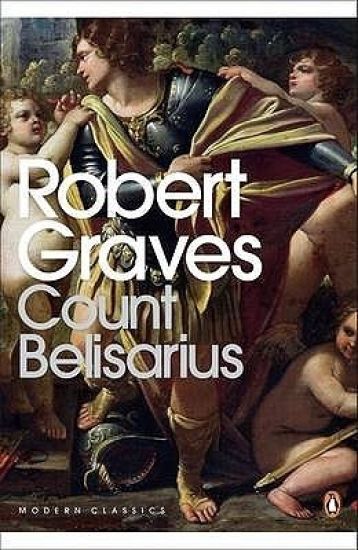
The sixth century was not a peaceful time for the Roman empire. Invaders threatened on all fronties, but they grew to respect and fear the name of Belisarius, the Emperor Justinian's greatest general. With this book Robert Graves again demonstrates his command of a vast historical subject, creating a startling and vivid picture of a decadent era.
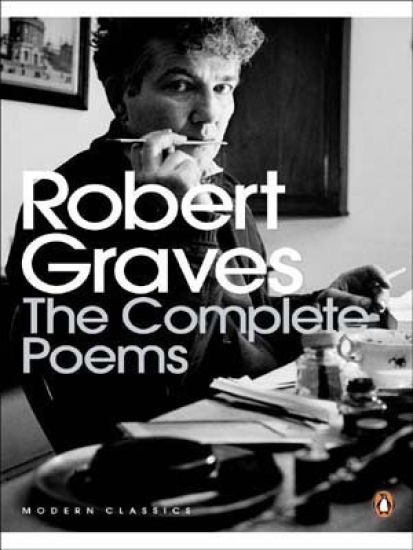
Graves described poetry as his ruling passion, and for him love was 'the main theme and origin of true poems'. He created a rich mythology where love, fear, fantasy and the supernatural play an essential role. Intimate yet universal, passionate yet precise, their brilliant alchemy of realism and magic made Graves's poems some of the finest of the last century. In this edition the poems appear without critical apparatus or commentary. The volume represents in its purest form the achievement of Graves's seventy productive years.
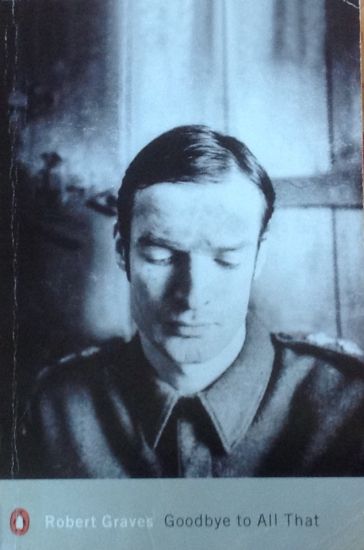
Presents an account of the author's life up until that 'bitter leave-taking': from his childhood and desperately unhappy school days at Charterhouse, to his time serving as a young officer in the First World War that was to haunt him throughout his life.
A work first published in 1948 in which Graves argues that the language of poetic myth current in the Mediterranean and Northern Europe was a magical language bound up with popular religious ceremonies in honour of the Moon-goddess, or Muse - some dating from the Old Stone Age.

A modern classic of historical fiction written in the form of Claudius's autobiography. Claudius the God is the second part of Robert Graves's two-part account of the life of Tiberius Claudius, "the cripple, the stammerer, the fool of the family" who became Emperor of Rome in spite of himself in 41 A.D. With the same crystalline brilliance that characterizes its classic antecedent, Claudius the God evokes the vitality, splendor, and decadence of Imperial Rome at the beginning of its decline. It is not only a superb re-creation of a colorful moment in history but, through the eyes of the bemused and wry emperor, a compelling and ironic account of human nature as well.
I, Claudius: From the Autobiography of Tiberius Claudius, Born 10 B.C., Murdered and Deified A.D. 54
Robert Graves
VINTAGE
1989
nidottu
A modern classic of historical fiction written in the form of Claudius's autobiography. Tiberius Claudius Drusus Nero Germanicus lived from 10 B.C. to 54 A.D. Despised as a weakling and dismissed as an idiot because of his physical infirmities, Claudius survived the intrigues and poisonings that marked the reigns of Augustus, Tiberius, and the mad Caligula to become emperor of Rome in 41 A.D. The first part of Robert Graves's two-part account of the life of Tiberius Claudius, I, Claudius stands as a landmark historical novel of the 20th century from one of its great writers.
Dramatizes the life and times of Jesus Christ as seen through the eyes of a first century Alexandrian scholar


With impressive literary power, the acclaimed historical novelist and critic Robert Graves tells the story of the tragic and eventful life of Marie Powell, who, at the age of sixteen, was pushed into marrying the man who was England's greatest epic poet--and knew it--John Milton. "A thumping good read." --E.M. Forster At the age of sixteen, Mary Powell marries poet John Milton. Their marriage, which plays out during the English Civil War, is not one of love, but rather a practical arrangement that proves to be a devastating mismatch of temperaments and convictions. Her Royalist sympathies and his ardent parliamentarianism, her independence, and his austere way of life, 1640s England is a hotbed of clashing ideologies and so too is this marriage. The story, which unfolds in Marie's sensitive and searching journals, is a scathing portrait of one of England's most famous poets, a story of literary ambition and masculine egoism, and, like all of Graves' historical novels, a monumental achievement of closely watched history. One the one hand, this is a tender story of the romance Marie Powell found outside the walls of her tyrannical husband's house. On the other it is also a brilliant account of one of the most breathtaking epochs in English history, when that kingdom was ravaged by a bloody civil war and the tides of fortune swayed from one to the other side of the opposing camps--the King against his parliament, tyranny against freedom--culminating in the dramatic execution of Charles I, and the establishment of a republic.

Clinical Lectures Delivered During the Sessions of 1834-5 and 1836-7
Robert Graves
Antigonos Verlag
2025
nidottu
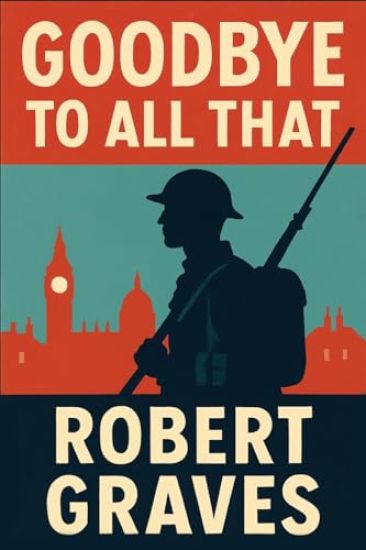
A searing farewell to innocence, Goodbye to All That is Robert Graves's unflinching, unforgettable memoir of youth, war, and disillusionment. Written in the aftermath of World War I, this literary classic begins with Graves's idyllic childhood in Victorian England and follows him through the brutal trenches of the Western Front, where he served as a young officer. With clarity and biting wit, Graves exposes the absurdities of military life, the horrors of modern warfare, and the cultural collapse that followed in its wake. But this is more than just a war memoir. It's a generational reckoning. A portrait of a world coming apart-and a man walking away from it. With disarming honesty, Graves dissects his friendships (including with fellow poet Siegfried Sassoon), his shattered ideals, and his permanent break from the England he once called home. Goodbye to All That is one of the most powerful, candid, and beautifully written accounts of the First World War-and the end of an era.
A searing farewell to innocence, Goodbye to All That is Robert Graves's unflinching, unforgettable memoir of youth, war, and disillusionment. Written in the aftermath of World War I, this literary classic begins with Graves's idyllic childhood in Victorian England and follows him through the brutal trenches of the Western Front, where he served as a young officer. With clarity and biting wit, Graves exposes the absurdities of military life, the horrors of modern warfare, and the cultural collapse that followed in its wake. But this is more than just a war memoir. It's a generational reckoning. A portrait of a world coming apart-and a man walking away from it. With disarming honesty, Graves dissects his friendships (including with fellow poet Siegfried Sassoon), his shattered ideals, and his permanent break from the England he once called home. Goodbye to All That is one of the most powerful, candid, and beautifully written accounts of the First World War-and the end of an era.

Robert Graves continues the fictionalized account of the adventures of Sergeant Roger Lamb, an Irish soldier who fought for the British during the American Revolutionary War. Featuring a new introduction by Madison Smartt Bell. Sergeant Roger Lamb is in a prison camp near Boston with 3,000 other soldiers in General Johnny Burgoyne's army who surrendered at the Battle of Saratoga. Lamb is a non-commissioned officer in the British Army who served in America during the American War of Independence. But the American Congress refuses to ratify a repatriation agreement and Lamb plans an escape. He manages to make his way through General Washington's lines and rejoins Cornwallis in the Carolinas, fighting with him until Yorktown. Then he makes another remarkable escape to rejoin the British in New York. The second in a two-book series, this account is inspired by the real-life Sergeant Lamb's personal memoirs. Renowned poet, classicist, and novelist Robert Graves traces the sergeant's harrowing time in military service, providing a compelling, only barely fictionalized eyewitness account of a crucial point in American history.

The renowned poet, classicist, and novelist Robert Graves "recounts, in faithful and nicely atmospheric detail" the story of a British soldier during the American Revolution (The Philadelphia Inquirer). Featuring a new introduction by Madison Smartt Bell. A historical novel of the early years of the American Revolution based on the adventures of Sergeant Roger Lamb, a Dublin man, in the service of His Majesty's Army. It begins with Lamb's early days in Dublin and ends with his arrival in Boston as a member of the regiment taken prisoner after Burgoyne's surrender at Saratoga. The first in a two-book series, Sergeant Lamb's America is based on historical research, describing events and figures from the British perspective during the American War of Independence. Sergeant Lamb is engaging, personable, and exudes basic decency of character as he recounts the British defeat and the capture of his unit at the Battle of Saratoga in a voice that's both funny, insightful, and wise. "It is a historical novel for which one has a very real respect." --The New York Times