

Kirjailija
Robert M Ellis
Kirjat ja teokset yhdessä paikassa: 25 kirjaa, julkaisuja vuosilta 2011-2026, suosituimpien joukossa Bias and the Middle Way. Vertaile teosten hintoja ja tarkista saatavuus suomalaisista kirjakaupoista.
Mukana myös kirjoitusasut: Robert M. Ellis
25 kirjaa
Kirjojen julkaisuhaarukka 2011-2026.

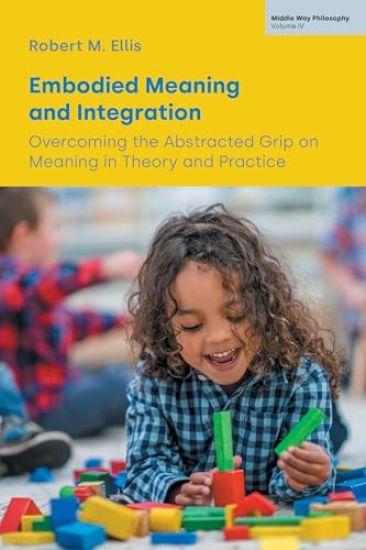
Embodied meaning is a new approach to understanding the significance of all symbols, including those of language, as association in human experience. It has been developed since the 1980's, but its full practical significance has rarely been applied, nor have the full challenges that it presents to entrenched assumptions been followed through. Robert M. Ellis here develops a detailed multi-disciplinary account of the role of embodied meaning in the Middle Way as a practical path. This includes criticisms of some ways that embodied meaning has been confused with belief. At the heart of his practical case for the applying embodied meaning in our lives are the concepts of fragmentation and integration of meaning. A variety of practices, including the arts, enable us to develop our meaning resources, both 'cognitively' and 'emotionally', and thus create the imaginative conditions for provisionality of belief.
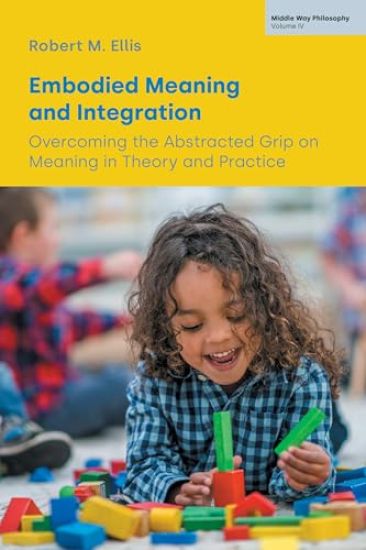
Embodied meaning is a new approach to understanding the significance of all symbols, including those of language, as association in human experience. It has been developed since the 1980's, but its full practical significance has rarely been applied, nor have the full challenges that it presents to entrenched assumptions been followed through. Robert M. Ellis here develops a detailed multi-disciplinary account of the role of embodied meaning in the Middle Way as a practical path. This includes criticisms of some ways that embodied meaning has been confused with belief. At the heart of his practical case for the applying embodied meaning in our lives are the concepts of fragmentation and integration of meaning. A variety of practices, including the arts, enable us to develop our meaning resources, both 'cognitively' and 'emotionally', and thus create the imaginative conditions for provisionality of belief.

Systemic history is an approach to explaining the past, that tries to maximize our understanding of context. Unlike most history, it does not do this by just narrating a chain of causal relationships for a given group through time. Instead, it shows how simpler systems become more complex over time through the interaction of reinforcing and balancing feedback loops. Systemic history offers the best way of understanding the processes that shape the Middle Way, because the Middle Way involves improving responses to complexity, rather than falling back on shortcut simplifications (absolutizations). This book examines the history of the Middle Way in four inter-related ways: as the biological development of organisms in relation to reinforcing or balancing feedback loops, as the psychological development of individual humans during a lifetime, as a succession of reinforcing and balancing feedback tendencies in human culture through history, and as a successive development of integrative practice. This shows how the Middle Way is a path distinctive to the human response to complexity, but nevertheless one rooted in the wider processes of all life. In the process it provides a detailed exploration of the relationship between the Middle Way and systems theory, biology, developmental psychology, and world history.
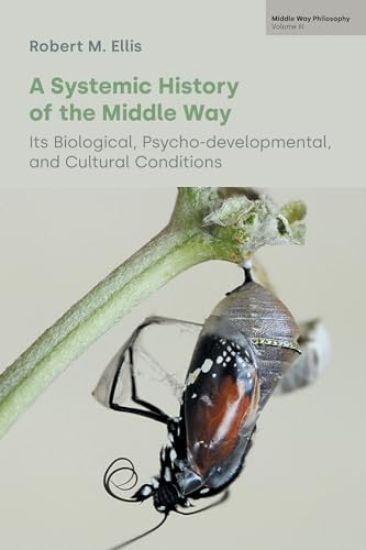
Systemic history is an approach to explaining the past, that tries to maximize our understanding of context. Unlike most history, it does not do this by just narrating a chain of causal relationships for a given group through time. Instead, it shows how simpler systems become more complex over time through the interaction of reinforcing and balancing feedback loops. Systemic history offers the best way of understanding the processes that shape the Middle Way, because the Middle Way involves improving responses to complexity, rather than falling back on shortcut simplifications (absolutizations). This book examines the history of the Middle Way in four inter-related ways: as the biological development of organisms in relation to reinforcing or balancing feedback loops, as the psychological development of individual humans during a lifetime, as a succession of reinforcing and balancing feedback tendencies in human culture through history, and as a successive development of integrative practice. This shows how the Middle Way is a path distinctive to the human response to complexity, but nevertheless one rooted in the wider processes of all life. In the process it provides a detailed exploration of the relationship between the Middle Way and systems theory, biology, developmental psychology, and world history.

This second book in the ‘Middle Way Philosophy’ series develops five general principles that are distinctive to the universal Middle Way as a practical response to absolutization. These begin with the consistent acknowledgement of human uncertainty (scepticism), and follow through with openness to alternative possibilities (provisionality), the importance of judging things as a matter of degree (incrementality), the clear rejection of polarised absolute claims (agnosticism) and the cultivation of cognitive and emotional states that will help us resolve conflict (integration). These are discussed not only in theory, but with links to the wide range of established human practices that can help us to follow them. Like all of Robert M. Ellis’s work, this book is highly inter-disciplinary, drawing on philosophical argument, psychological models and values that prioritize practical application.

This second book in the ‘Middle Way Philosophy’ series develops five general principles that are distinctive to the universal Middle Way as a practical response to absolutization. These begin with the consistent acknowledgement of human uncertainty (scepticism), and follow through with openness to alternative possibilities (provisionality), the importance of judging things as a matter of degree (incrementality), the clear rejection of polarised absolute claims (agnosticism) and the cultivation of cognitive and emotional states that will help us resolve conflict (integration). These are discussed not only in theory, but with links to the wide range of established human practices that can help us to follow them. Like all of Robert M. Ellis’s work, this book is highly inter-disciplinary, drawing on philosophical argument, psychological models and values that prioritize practical application.
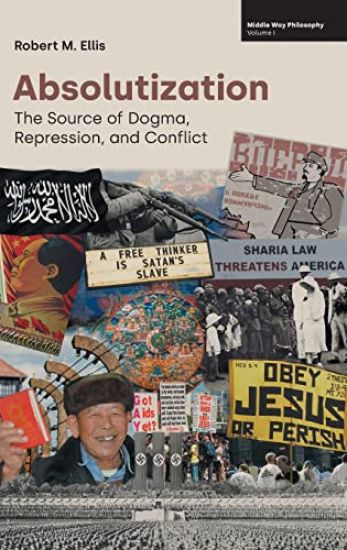
What do dogma, repression, and conflict have in common? They all result from human judgement blocked from wider understanding by a false assumption of completeness. This book puts forward a theory of absolutization, bringing together a multi-disciplinary understanding of this central flaw in human judgement, and what we can do about it. This approach, drawing on Buddhist thought and practice, philosophy, psychology, neuroscience, embodied meaning and systems theory, offers a rigorous introduction to absolutization as the central problem addressed in Middle Way Philosophy, which is a synthetic approach developed by the author over more than twenty years in a series of books. It challenges disciplinary boundaries as well as offering a substantial framework for practical application.
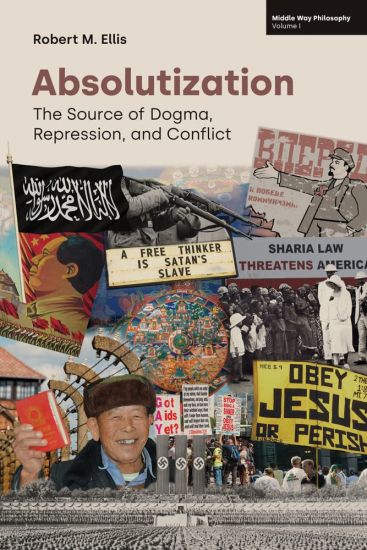
What do dogma, repression, and conflict have in common? They all result from human judgement blocked from wider understanding by a false assumption of completeness. This book puts forward a theory of absolutization, bringing together a multi-disciplinary understanding of this central flaw in human judgement, and what we can do about it. This approach, drawing on Buddhist thought and practice, philosophy, psychology, neuroscience, embodied meaning and systems theory, offers a rigorous introduction to absolutization as the central problem addressed in Middle Way Philosophy, which is a synthetic approach developed by the author over more than twenty years in a series of books. It challenges disciplinary boundaries as well as offering a substantial framework for practical application.
The Jungian concept of archetypes is of immense value for critically distinguishing what is potentially of universal practical value in religious and other cultural traditions, and separating this from the dogmatic elements. However, Jung encumbered the concept of archetypes with debatable constructions like the 'collective unconscious' that are unnecessary for understanding their practical function. This book puts forward a far-reaching new theory of archetypes that is functional without being reductive. At the centre of this is the idea that archetypes are adaptations to help us maintain inspiration over time. Humans are such distractable beings that they need constant reminders to maintain integration with their most sustainable intentions: reminders using the profound power of symbol linked to embodied experience. This multi-disciplinary book weaves together religious studies, ethical philosophy, the psychology of bias, the neuroscience of brain lateralisation, the linguistics of embodied meaning, the feedback loops of systems theory, with a lifetime's experience of Buddhist practice and appreciation of symbolism in the arts: all with the aim of producing a fresh understanding of the role of archetypes in religion and beyond, that can also be directly applied in practice.
The Jungian concept of archetypes is of immense value for critically distinguishing what is potentially of universal practical value in religious and other cultural traditions, and separating this from the dogmatic elements. However, Jung encumbered the concept of archetypes with debatable constructions like the 'collective unconscious' that are unnecessary for understanding their practical function. This book puts forward a far-reaching new theory of archetypes that is functional without being reductive. At the centre of this is the idea that archetypes are adaptations to help us maintain inspiration over time. Humans are such distractable beings that they need constant reminders to maintain integration with their most sustainable intentions: reminders using the profound power of symbol linked to embodied experience. This multi-disciplinary book weaves together religious studies, ethical philosophy, the psychology of bias, the neuroscience of brain lateralisation, the linguistics of embodied meaning, the feedback loops of systems theory, with a lifetime's experience of Buddhist practice and appreciation of symbolism in the arts: all with the aim of producing a fresh understanding of the role of archetypes in religion and beyond, that can also be directly applied in practice.

Sangharakshita (1925-2018) was a Buddhist writer and teacher, founder of the Triratna Buddhist Order and Community (previously FWBO). Apart from his practical achievements, Sangharakshita was an original thinker on the adaptation of Buddhism to modern conditions, an autodidact whose intellectual creativity was stimulated by both cross-cultural experience and practical contingency. His thinking is little known or appreciated outside the movement he founded, but over-dominant within it. This means that there is a shortage of balanced critical discussion of his work that finds any middle way between hagiography and dismissal. Sangharakshita has also been an object of controversy in recent years, but his more controversial views and actions need to be seen in proportion to the whole of his thinking. This book surveys Sangharakshita's most important and original ideas with an eye that combines appreciation and critical awareness in equal measure. It celebrates Sangharakshita's pioneering syntheses of Buddhist and Western ideas, but warns against the inconsistencies and dogmas that are also found in Sangharakshita's work - dogmas whose negative practical effects can also be traced.

Sangharakshita (1925-2018) was a Buddhist writer and teacher, founder of the Triratna Buddhist Order and Community (previously FWBO). Apart from his practical achievements, Sangharakshita was an original thinker on the adaptation of Buddhism to modern conditions, an autodidact whose intellectual creativity was stimulated by both cross-cultural experience and practical contingency. His thinking is little known or appreciated outside the movement he founded, but over-dominant within it. This means that there is a shortage of balanced critical discussion of his work that finds any middle way between hagiography and dismissal. Sangharakshita has also been an object of controversy in recent years, but his more controversial views and actions need to be seen in proportion to the whole of his thinking. This book surveys Sangharakshita's most important and original ideas with an eye that combines appreciation and critical awareness in equal measure. It celebrates Sangharakshita's pioneering syntheses of Buddhist and Western ideas, but warns against the inconsistencies and dogmas that are also found in Sangharakshita's work - dogmas whose negative practical effects can also be traced.

The Middle Way was first taught explicitly by the Buddha. It is the first teaching offered by the Buddha in his first address, and the basis of his practical method in meditation, ethics, and wisdom. It is often mentioned in connection with Buddhist teachings, yet the full case for its importance has not yet been made. This book aims to make that case. The Middle Way can be understood from the Buddha's life as well as his teachings. His early life follows a symbolic quest through the extremes of the Palace and the Forest, followed by the discovery of the Middle Way. His similes, such as the raft, the lute-strings, the arrow, and the blind people with the elephant are not just allegories of Buddhist teachings, but relate closely to the universal human experience of balanced judgement. This book also has a critical case. Although it has transmitted the Middle Way, the Buddhist tradition has also often ignored or distorted it. The Middle Way is experiential, authentic and creative, and thus threatening to the power of a tradition that has instead emphasised the Buddha's authority as a source of abstract, absolute revelation. The Buddha's Middle Waya aims to differentiate the universal Middle Way from Buddhist tradition.

The Middle Way was first taught explicitly by the Buddha. It is the first teaching offered by the Buddha in his first address, and the basis of his practical method in meditation, ethics, and wisdom. It is often mentioned in connection with Buddhist teachings, yet the full case for its importance has not yet been made. This book aims to make that case. The Middle Way can be understood from the Buddha's life as well as his teachings. His early life follows a symbolic quest through the extremes of the Palace and the Forest, followed by the discovery of the Middle Way. His similes, such as the raft, the lute-strings, the arrow, and the blind people with the elephant are not just allegories of Buddhist teachings, but relate closely to the universal human experience of balanced judgement. This book also has a critical case. Although it has transmitted the Middle Way, the Buddhist tradition has also often ignored or distorted it. The Middle Way is experiential, authentic and creative, and thus threatening to the power of a tradition that has instead emphasised the Buddha's authority as a source of abstract, absolute revelation. The Buddha's Middle Waya aims to differentiate the universal Middle Way from Buddhist tradition.
The Middle Way is the practical principle of avoiding both positive and negative absolutes, so as to develop provisional beliefs accessible to experience. Although inspired initially by the Buddha’s Middle Way, in Middle Way Philosophy Robert M. Ellis has developed it as a critical universalism: a way of separating the helpful from the unhelpful elements of any tradition. In this book, the Middle Way is applied to the Christian tradition in order to argue for a meaningful and positive interpretation of it, without the absolute beliefs that many assume to be essential to Christianity. Faith as an embodied, provisional confidence is distinguished from dogmatic belief. Recent developments in embodied meaning, brain lateralization from neuroscience, Jungian archetypes and the Jungian model of psychological integration are drawn on to support an account of how Christian faith is not only possible without `belief’ in God or Christ, but indeed puts us in a better position to access inspiration, moral purpose, responsibility and the basis of peace.
'Parables of the Middle Way' combines fiction and commentary to provide various imaginative ways into the core themes of Middle Way Philosophy already developed in Robert M Ellis's other books. The stories are either original, or adapted from a range of sources: philosophical, Buddhist and Christian. They include the story of a ship caught in a strait between two intractably opposed ports, an inside-out version of Plato's cave, a set of variations of the Good Samaritan suggesting all the other ways of doing good, and the early life of the Buddha transposed to eighteenth century England. Robert M. Ellis is the founder of the Middle Way Society, author of 'Migglism' and of the 'Middle Way Philosophy' series. He has a Ph.D. in Philosophy as well as a long-standing interest in fiction, and is devoted to developing new and more adequate ways of thinking that can be applied in practice.
'Migglism' is a short term for Middle Way Philosophy, a practical philosophical approach developed by Robert M. Ellis in a Ph.D. thesis and a series of books. Middle Way Philosophy brings together insights from Buddhism, philosophy and psychology to offer a framework of thinking for a range of integrative practices. This book introduces these ideas in an accessible way. 'The Middle Way' is not a compromise, but a process of navigating between dogmatic extremes. By avoiding either positive or negative claims that go beyond experience, we can find a new way of thinking, valuing and practising. Approved by the Middle Way Society. "The middle is the chaotic and confusing place between the extremes. While the extremes are simpler and more attractive, it is in the mess in the middle where the interesting and creative activities occur - it is where we should be. Robert sets out a foundation for a way of thinking about the middle ground as a place to move towards." Ed Catmull, President of Pixar.
Truth on the Edge: A Brief Western Philosophy of the Middle Way
Robert M. Ellis
Lulu.com
2011
pokkari
Truth on the Edge is an introduction to a new philosophy of objectivity, inspired by the Buddha's Middle Way but worked out in entirely Western terms. Robert M. Ellis's philosophy of the Middle Way was originally developed as a Ph.D. thesis, A Theory of Moral Objectivity, but this book is intended as a more accessible introduction to this philosophy. The key theme is the idea that we are not justified in making any claims about truth, whether moral or scientific, but the idea of truth is still meaningful. Instead of either making or denying metaphysical claims about truth, we need to think in terms of incrementally objective justification within experience. The book follows through the implications of this argument in relation to psychological integration, responsibility, ethics, science, religion and politics, and finally applies the Middle Way to contemporary problems such as Global Warming and the World Food Crisis.