Kirjojen hintavertailu. Mukana 12 390 323 kirjaa ja 12 kauppaa.

Kirjailija

Robert Martin

Kirjat ja teokset yhdessä paikassa: 71 kirjaa, julkaisuja vuosilta 1978-2025, suosituimpien joukossa The Tiny Roar. Vertaile teosten hintoja ja tarkista saatavuus suomalaisista kirjakaupoista.

Mukana myös kirjoitusasut: Robert-Martin

71 kirjaa

Kirjojen julkaisuhaarukka 1978-2025.

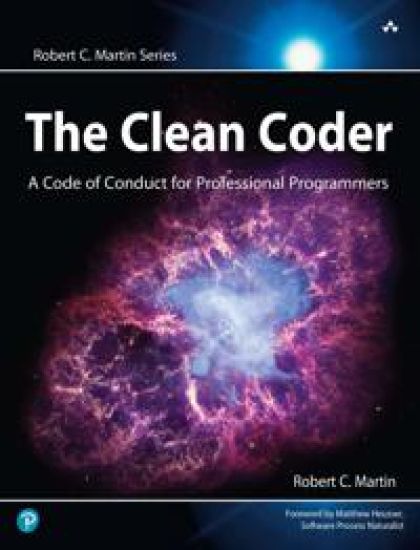
Clean Coder, The

Clean Coder, The

Robert Martin

Pearson
2011
nidottu
Programmers who endure and succeed amidst swirling uncertainty and nonstop pressure share a common attribute: They care deeply about the practice of creating software. They treat it as a craft. They are professionals. In The Clean Coder: A Code of Conduct for Professional Programmers, legendary software expert Robert C. Martin introduces the disciplines, techniques, tools, and practices of true software craftsmanship. This book is packed with practical advice–about everything from estimating and coding to refactoring and testing. It covers much more than technique: It is about attitude. Martin shows how to approach software development with honor, self-respect, and pride; work well and work clean; communicate and estimate faithfully; face difficult decisions with clarity and honesty; and understand that deep knowledge comes with a responsibility to act. Readers will learn What it means to behave as a true software craftsmanHow to deal with conflict, tight schedules, and unreasonable managersHow to get into the flow of coding, and get past writer’s blockHow to handle unrelenting pressure and avoid burnoutHow to combine enduring attitudes with new development paradigmsHow to manage your time, and avoid blind alleys, marshes, bogs, and swampsHow to foster environments where programmers and teams can thriveWhen to say “No”–and how to say itWhen to say “Yes”–and what yes really means Great software is something to marvel at: powerful, elegant, functional, a pleasure to work with as both a developer and as a user. Great software isn’t written by machines. It is written by professionals with an unshakable commitment to craftsmanship. The Clean Coder will help you become one of them–and earn the pride and fulfillment that they alone possess.

Aromatic Hydroxyketones: Preparation and Physical Properties

Aromatic Hydroxyketones: Preparation and Physical Properties

Robert Martin

Springer-Verlag New York Inc.
2011
sidottu
"Aromatic Hyroxyketones: Preparation and Physical Properties" is a revised, new edition 4-volume handbook set which provides detailed information on physical properties and syntheses on a wide range of hydroxyketones. Each entry includes characterization data such as the Chemical Abstracts Service Registry Number (CAS RN), molecule name, molecular formula, and molecular weight. The handbooks are presented in dictionary style, with a logical classification of the ketones, making the information easily available for consultation. This handbook set provides 6000 hydroxyketone entries and includes approximately 6000 references. Volume 1: Hydroxybenzophenones Hydroxybenzophenones are most useful synthetic intermediates in the chemical industry, for example in pharmaceuticals, dyes, fragrances, agrochemicals, explosives and plastics. The first volume of this set is particularly intended for engineers in chemical synthesis and academics as well as industrial researchers from various branches of chemistry. Volume 2 and 3: Hydroxyacetophenones Hydroxyacetophenones constitute the starting material for a wide variety of syntheses in organic chemistry. They are versatile building blocks serving many different applications, such as especially polymers, pharmaceuticals and fine chemicals. These two volumes constitute a useful tool for chemists and pharmacists in general. Volume 4: Hydroxypropiophenones, Hydroxyisobutyrophenones, Hydroxypivalophenones and Derivatives Hydroxypropiophenones, Hydroxyisobutyrophenones, Hydroxypivalophenones and Derivatives constitute the starting material for a wide variety of syntheses in organic chemistry. They are versatile building blocks serving many different applications: pharmaceuticals, fine chemicals and polymers. This volume is a great book of reference on hydroxypropiophenones, hydroxyisobutyrophenones, hydroxypivalophenones and their methyl ethers which also mentions some uses of these ketones. It is a powerful synthesis tool for researchers or industrial producers and provides a wide choice of hydroxyketones.
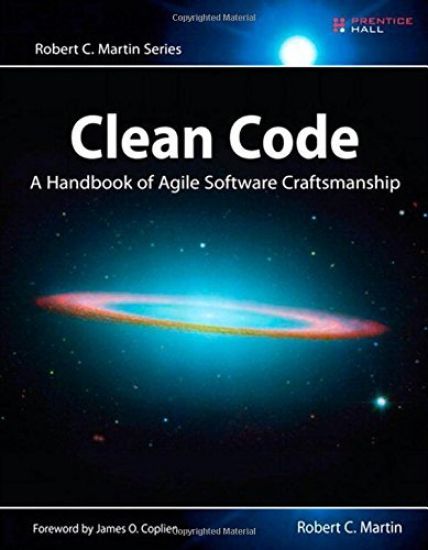
Clean Code

Clean Code

Robert Martin

Pearson
2008
nidottu
Even bad code can function. But if code isn’t clean, it can bring a development organization to its knees. Every year, countless hours and significant resources are lost because of poorly written code. But it doesn’t have to be that way. Noted software expert Robert C. Martin presents a revolutionary paradigm with Clean Code: A Handbook of Agile Software Craftsmanship. Martin has teamed up with his colleagues from Object Mentor to distill their best agile practice of cleaning code “on the fly” into a book that will instill within you the values of a software craftsman and make you a better programmer—but only if you work at it. What kind of work will you be doing? You’ll be reading code—lots of code. And you will be challenged to think about what’s right about that code, and what’s wrong with it. More importantly, you will be challenged to reassess your professional values and your commitment to your craft. Clean Code is divided into three parts. The first describes the principles, patterns, and practices of writing clean code. The second part consists of several case studies of increasing complexity. Each case study is an exercise in cleaning up code—of transforming a code base that has some problems into one that is sound and efficient. The third part is the payoff: a single chapter containing a list of heuristics and “smells” gathered while creating the case studies. The result is a knowledge base that describes the way we think when we write, read, and clean code. Readers will come away from this book understanding How to tell the difference between good and bad codeHow to write good code and how to transform bad code into good codeHow to create good names, good functions, good objects, and good classesHow to format code for maximum readabilityHow to implement complete error handling without obscuring code logicHow to unit test and practice test-driven developmentThis book is a must for any developer, software engineer, project manager, team lead, or systems analyst with an interest in producing better code.
Agile Principles, Patterns, and Practices in C#

Agile Principles, Patterns, and Practices in C#

Robert Martin; Micah Martin

Pearson
2006
sidottu
With the award-winning book Agile Software Development: Principles, Patterns, and Practices, Robert C. Martin helped bring Agile principles to tens of thousands of Java and C++ programmers. Now .NET programmers have a definitive guide to agile methods with this completely updated volume from Robert C. Martin and Micah Martin, Agile Principles, Patterns, and Practices in C#. This book presents a series of case studies illustrating the fundamentals of Agile development and Agile design, and moves quickly from UML models to real C# code. The introductory chapters lay out the basics of the agile movement, while the later chapters show proven techniques in action. The book includes many source code examples that are also available for download from the authors’ Web site. Readers will come away from this book understanding Agile principles, and the fourteen practices of Extreme ProgrammingSpiking, splitting, velocity, and planning iterations and releasesTest-driven development, test-first design, and acceptance testingRefactoring with unit testingPair programmingAgile design and design smellsThe five types of UML diagrams and how to use them effectivelyObject-oriented package design and design patternsHow to put all of it together for a real-world project Whether you are a C# programmer or a Visual Basic or Java programmer learning C#, a software development manager, or a business analyst, Agile Principles, Patterns, and Practices in C# is the first book you should read to understand agile software and how it applies to programming in the .NET Framework.
Agile Software Development, Principles, Patterns, and Practices
Written by a software developer for software developers, this book is a unique collection of the latest software development methods. The author includes OOD, UML, Design Patterns, Agile and XP methods with a detailed description of a complete software design for reusable programs in C++ and Java. Using a practical, problem-solving approach, it shows how to develop an object-oriented application—from the early stages of analysis, through the low-level design and into the implementation. Walks readers through the designer's thoughts — showing the errors, blind alleys, and creative insights that occur throughout the software design process. The book covers: Statics and Dynamics; Principles of Class Design; Complexity Management; Principles of Package Design; Analysis and Design; Patterns and Paradigm Crossings. Explains the principles of OOD, one by one, and then demonstrates them with numerous examples, completely worked-through designs, and case studies. Covers traps, pitfalls, and work arounds in the application of C++ and OOD and then shows how Agile methods can be used. Discusses the methods for designing and developing big software in detail. Features a three-chapter, in-depth, single case study of a building security system. For Software Engineers, Programmers, and Analysts who want to understand how to design object oriented software with state of the art methods.
Carnegie Denied

Carnegie Denied

Robert Martin

Praeger Publishers Inc
1993
sidottu
Andrew Carnegie was the foremost supporter of public library construction to the point that Carnegie Library became a cliche, synonymous with the public library, especially in small towns. Yet some communities that asked for Carnegie's funds to build a library later took public action to decline the funds. Because he was viewed as a robber baron, it has been assumed that these refusals were motivated by a desire not to take tainted money. This work documents that this was rarely the case. Indeed, there were many reasons for opposition to the Carnegie library grants. In some cases, local authorities remained unconvinced of the need for a public library. Some communities were under legal or financial restrictions that prevented them from taxing themselves in support of the library. In some, there was simply opposition to increasing the tax burden; in others the opposition focused on the perception that Carnegie was building memorials to himself. Experienced historians were commissioned to conduct thorough studies of regional clusters. The authors made the broadest possible use of primary sources, including public archives, manuscript collections, local newspaper accounts, and the records of the Carnegie Corporation in the Library of Congress. Of particular relevance were the files of the Carnegie Library Correspondence, documenting most of the history of first, Andrew Carnegie's--and later, the Carnegie Corporation's--program to fund library construction programs.