Kirjojen hintavertailu. Mukana 12 390 323 kirjaa ja 12 kauppaa.
Kirjailija
Robert Stawell Ball
Kirjat ja teokset yhdessä paikassa: 36 kirjaa, julkaisuja vuosilta 1889-2025, suosituimpien joukossa Great Astronomers. Vertaile teosten hintoja ja tarkista saatavuus suomalaisista kirjakaupoista.
An Atlas of Astronomy - A Series of Seventy-Two- Plates is an unchanged, high-quality reprint of the original edition of 1892. Hansebooks is editor of the literature on different topic areas such as research and science, travel and expeditions, cooking and nutrition, medicine, and other genres. As a publisher we focus on the preservation of historical literature. Many works of historical writers and scientists are available today as antiques only. Hansebooks newly publishes these books and contributes to the preservation of literature which has become rare and historical knowledge for the future.
Sir Isaac Newton (1642-1726) was an English physicist, mathematician, astronomer, natural philosopher, alchemist and theologian who has been considered by many to be the greatest and most influential scientist who ever lived. His monograph Philosophi Naturalis Principia Mathematica, published in 1687, laid the foundations for most of classical mechanics. In this work, Newton described universal gravitation and the three laws of motion, which dominated the scientific view of the physical universe for the next three centuries. Newton showed that the motion of objects on Earth and that of celestial bodies is governed by the same set of natural laws: by demonstrating the consistency between Kepler's laws of planetary motion and his theory of gravitation he removed the last doubts about heliocentrism and advanced the scientific revolution. The Principia is generally considered to be one of the most important scientific books ever written, both due to the specific physical laws the work successfully described, and for its style, which assisted in setting standards for scientific publication down to the present time. (http: //en.wikipedia.org/wiki/Isaac_newton) This eBook is taken from a chapter in Sir Robert Stawell Ball's Great Astronomers (2nd edition, 1907).
Galileo Galilei (1564-1642) was an Italian physicist, mathematician, astronomer, and philosopher who played a major role in the Scientific Revolution. His achievements include improvements to the telescope and consequent astronomical observations and support for Copernicanism, which held that the Earth is not the center of the universe and that the Earth and planets revolve around the Sun. Galileo has been called the father of modern observational astronomy, the father of modern physics, and the father of modern science. This eBook tells the life story of Galileo, from a chapter in Great Astronomers by Sir Richard S. Ball (2nd edition, 1907). It begins: "Among the ranks of the great astronomers it would be difficult to find one whose life presents more interesting features and remarkable vicissitudes than does that of Galileo. We may consider him as the patient investigator and brilliant discoverer. We may consider him in his private relations, especially to his daughter, Sister Maria Celeste, a woman of very remarkable character; and we have also the pathetic drama at the close of Galileo's life, when the philosopher drew down upon himself the thunders of the Inquisition." The book explains Galileo's work and theories, along with a narrative of his personal troubles because of his science. The Catholic Church held that Galileo's theory was heretical, contrary to holy scripture. He was ordered never to speak of it, but he defied that order and was tried before the Inquisition again for heresy and defiance of a Papal decree. "...With his hands on the Gospels, Galileo was made to curse and detest the false opinion that the sun was the centre of the universe and immovable, and that the earth was not the centre of the same, and that it moved. He swore that for the future he will never say nor write such things as may bring him under suspicion, and that if he does so he submits to all the pains and penalties of the sacred canons." He was ordered to be secluded for the rest of his life and not to speak of his theory again. The book ends with this sad story of science versus dogma.
Sir Isaac Newton (1642-1726) was an English physicist, mathematician, astronomer, natural philosopher, alchemist and theologian who has been considered by many to be the greatest and most influential scientist who ever lived. His monograph Philosophi Naturalis Principia Mathematica, published in 1687, laid the foundations for most of classical mechanics. In this work, Newton described universal gravitation and the three laws of motion, which dominated the scientific view of the physical universe for the next three centuries. Newton showed that the motion of objects on Earth and that of celestial bodies is governed by the same set of natural laws: by demonstrating the consistency between Kepler's laws of planetary motion and his theory of gravitation he removed the last doubts about heliocentrism and advanced the scientific revolution. The Principia is generally considered to be one of the most important scientific books ever written, both due to the specific physical laws the work successfully described, and for its style, which assisted in setting standards for scientific publication down to the present time. This eBook is taken from a chapter in Sir Robert Stawell Ball's Great Astronomers (2nd edition, 1907).
Galileo Galilei (1564-1642) was an Italian physicist, mathematician, astronomer, and philosopher who played a major role in the Scientific Revolution. His achievements include improvements to the telescope and consequent astronomical observations and support for Copernicanism, which held that the Earth is not the center of the universe and that the Earth and planets revolve around the Sun. Galileo has been called the father of modern observational astronomy, the father of modern physics, and the father of modern science. This eBook tells the life story of Galileo, from a chapter in Great Astronomers by Sir Richard S. Ball (2nd edition, 1907). It begins: "Among the ranks of the great astronomers it would be difficult to find one whose life presents more interesting features and remarkable vicissitudes than does that of Galileo. We may consider him as the patient investigator and brilliant discoverer. We may consider him in his private relations, especially to his daughter, Sister Maria Celeste, a woman of very remarkable character; and we have also the pathetic drama at the close of Galileo's life, when the philosopher drew down upon himself the thunders of the Inquisition." The book explains Galileo's work and theories, along with a narrative of his personal troubles because of his science. The Catholic Church held that Galileo's theory was heretical, contrary to holy scripture. He was ordered never to speak of it, but he defied that order and was tried before the Inquisition again for heresy and defiance of a Papal decree. "...With his hands on the Gospels, Galileo was made to curse and detest the false opinion that the sun was the centre of the universe and immovable, and that the earth was not the centre of the same, and that it moved. He swore that for the future he will never say nor write such things as may bring him under suspicion, and that if he does so he submits to all the pains and penalties of the sacred canons." He was ordered to be secluded for the rest of his life and not to speak of his theory again. The book ends with this sad story of science versus dogma
Sir Isaac Newton (1642-1726) was an English physicist, mathematician, astronomer, natural philosopher, alchemist and theologian who has been considered by many to be the greatest and most influential scientist who ever lived. His monograph Philosophi Naturalis Principia Mathematica, published in 1687, laid the foundations for most of classical mechanics. In this work, Newton described universal gravitation and the three laws of motion, which dominated the scientific view of the physical universe for the next three centuries. Newton showed that the motion of objects on Earth and that of celestial bodies is governed by the same set of natural laws: by demonstrating the consistency between Kepler's laws of planetary motion and his theory of gravitation he removed the last doubts about heliocentrism and advanced the scientific revolution. The Principia is generally considered to be one of the most important scientific books ever written, both due to the specific physical laws the work successfully described, and for its style, which assisted in setting standards for scientific publication down to the present time. (http: //en.wikipedia.org/wiki/Isaac_newton) This eBook is taken from a chapter in Sir Robert Stawell Ball's Great Astronomers (2nd edition, 1907).
Sir William Rowan Hamilton (1805-1865) was an Irish physicist, astronomer, and mathematician who made important contributions to mechanics, optics, and algebra. As a teenager, he mastered parts of Newton's Principia and studied Laplace's celestial mechanics treatise. When barely 22, Hamilton became a professor of astronomy at University of Dublin, however he was more interested in theoretical rather than practical astronomy. His studies of mechanical and optical systems led him to discover new mathematical concepts and techniques. His greatest contribution is perhaps the reformulation of Newtonian mechanics, now called Hamiltonian mechanics. This work has proven central to the modern study of classical field theories such as electromagnetism, and to the development of quantum mechanics.
Get to know twelve great minds in the field of astronomy through this in depth profile of their lives. This edition covers: Edmond Halley, James Bradley, Johannes Kepler, John Flamsteed, Pierre-Simon Laplace, William Herschel, William Parsons(3rd Earl of Rosse), William Rowan Hamilton, Galileo Galilei, Isaac Newton, Nicolaus Copernicus and Tycho Brahe.
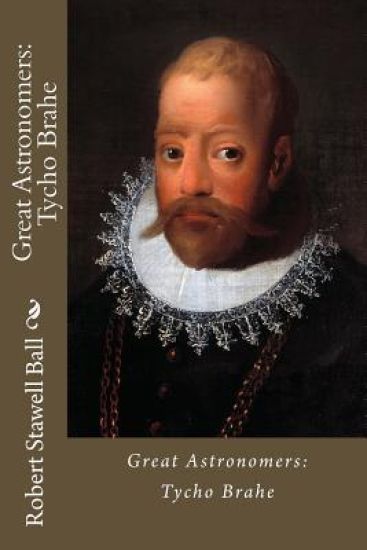
This is the chapter on 16th century Danish astronomer Tycho Brahe from Sir Robert S. Ball's Great Astronomers, second edition, which begins: "The most picturesque figure in the history of astronomy ... Tycho Brahe was alike notable for his astronomical genius and for the extraordinary vehemence of a character which was by no means perfect. His romantic career as a philosopher, and his taste for splendour as a Danish noble, his ardent friendships and his furious quarrels, make him an ideal subject for a biographer, while the magnificent astronomical work which he accomplished has given him imperishable fame. ...
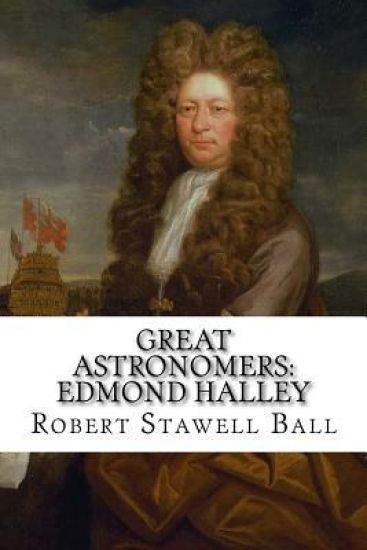
Edmond Halley, (1656-1742) was an English astronomer, geophysicist, mathematician, meteorologist, and physicist who is best known for computing the orbit of the eponymous Halley's Comet. He was the second Astronomer Royal in Britain, following in the footsteps of John Flamsteed. Halley became a close friend of Isaac Newton. He encouraged Newton to publish his discoveries, his "Principia," but when the Royal Society had no money to pay for the publication, Halley paid for and accomplished the publishing himself.
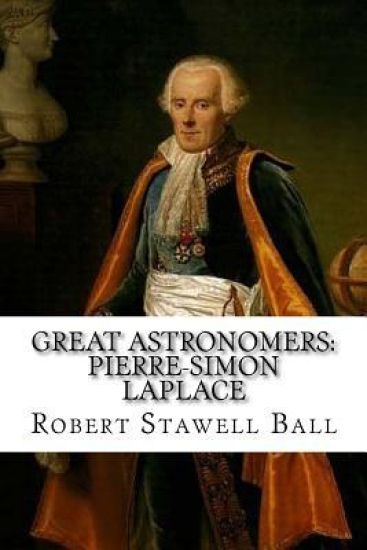
Pierre-Simon, Marquis de Laplace (1749-1827), was a French mathematician and astronomer, sometimes referred to as the French Newton. His work was pivotal to the mathematical development of astronomy, physics, and statistics. He possessed a phenomenal mathematical ability, superior to that of any of his contemporaries. Laplace summarized and extended the work of his predecessors in his five-volume M canique C leste (Celestial Mechanics) (1799-1825). This work elevated the geometric study of classical mechanics to one based on calculus, opening up a broader range of problems.