Kirjojen hintavertailu. Mukana 12 166 269 kirjaa ja 12 kauppaa.

Kirjailija

Rodney Stark

Kirjat ja teokset yhdessä paikassa: 33 kirjaa, julkaisuja vuosilta 1970-2024, suosituimpien joukossa Religion, Deviance, and Social Control. Vertaile teosten hintoja ja tarkista saatavuus suomalaisista kirjakaupoista.

33 kirjaa

Kirjojen julkaisuhaarukka 1970-2024.

Religion, Deviance, and Social Control

Religion, Deviance, and Social Control

Rodney Stark; William Sims Bainbridge

Routledge
1997
sidottu
Does religion have the power to regulate human behavior? If so, under what conditions can it prevent crime, delinquency, suicide, alcoholism, drug abuse, or joining cults? Despite the fact that ordinary citizens assume religion deters deviant behavior, there has been little systematic scientific research on these crucial questions. This book is the first comprehensive analysis, drawing on a wide range of historical and contemporary data, and written in a style that will appeal to readers from many intellectual backgrounds.
Religion, Deviance, and Social Control

Religion, Deviance, and Social Control

Rodney Stark; William Sims Bainbridge

Routledge
1997
nidottu
Does religion have the power to regulate human behavior? If so, under what conditions can it prevent crime, delinquency, suicide, alcoholism, drug abuse, or joining cults? Despite the fact that ordinary citizens assume religion deters deviant behavior, there has been little systematic scientific research on these crucial questions. This book is the first comprehensive analysis, drawing on a wide range of historical and contemporary data, and written in a style that will appeal to readers from many intellectual backgrounds.
A Theory of Religion

A Theory of Religion

Rodney Stark; William Bainbridge

Rutgers University Press
1996
nidottu
In this unique text, Stark and Bainbridge begin with basic statements about human nature and, employing the principles of logic and philosophy, build toward increasingly complex propositions about societies and their religious institutions. They provide a rigorous yet flexible sociological theory of religion as well as a general sociological model for deriving macrolevel theory from microlevel evidence.
The Future of Religion

The Future of Religion

Rodney Stark; William Sims Bainbridge

University of California Press
1986
pokkari
Religion is alive and well in the modern world, and the social-scientific study of religion is undergoing a renaissance. For much of this century, respected social theorists predicted the death of religion as inevitable consequence of science, education, and modern economics. But they were wrong. Stark and Bainbridge set out to explain the survival of religion. Using information derived from numerous surveys, censuses, historical case studies, and ethnographic field expeditions, they chart the full sweep of contemporary religion from the traditional denominations to the most fervent cults. This wealth of information is located within a coherent theoretical framework that examines religion as a social response to human needs, both the general needs shared by all and the desires specific to those who are denied the economic rewards or prestige enjoyed by the privileged. By explaining the forms taken by religions today, Stark and Bainbridge allow us to understand its persistence in a secular age and its prospects for the future.
Myter och sanningar : om katolska kyrkans historia
Ingen väntar sig väl att höra att spanska inkvisitionen var en ganska fredlig inrättning, som bl.a. försvarade judar och satte stopp för häxförföljelser? – Nej, faktum är att författaren till denna bok själv avfärdade påståendet som historierevisionism när han först stötte på det. Men hans egen forskarbana som religionssociolog tvingade honom att ompröva sina fördomar kring detta ämne, liksom kring många andra populära föreställningar om den katolska kyrkans roll i historien. Denna omprövning innebar att Stark på allvar började ifrågasätta schablonbilderna av så vitt skilda fenomen som de medeltida korstågen och kristen antisemitism, den katolska hållningen till slaveri och despotism och den tidiga kyrkans förhållande till hedendom och alternativa evangelier. Svaren tedde sig ofta överraskande – kanske rentav provocerande. Till slut samlade han sina studier i denna populärt hållna bok, skriven med glad frenesi och utan kristet-apologetisk avsikt. Denna svenska utgåva ger en ny publik chansen att göra upp med många myter, faktoider och tendentiösa föreställningar som vi måhända håller för sanna och som präglar vår bild av historien och av oss själva. RODNEY M. STARK (1934–2022) var verksam vid bland annat University of Washington och Baylor University. År 2005 blev han teologie hedersdoktor vid Lunds universitet. Av de över trettio böcker som Stark hann skriva under sitt liv är nog den mest kända »The Rise of Christianity« (1996), där han utifrån moderna sociologiska perspektiv försöker förklara varför den tidiga kristendomen var så framgångsrik.
The Rise of Christianity

The Rise of Christianity

Rodney Stark

PRINCETON UNIVERSITY PRESS
2023
pokkari
A landmark reinterpretation of why Christianity became the dominant faith of the WestThe idea that Christianity started as a clandestine movement among the poor is a widely accepted notion. Yet it is one of many myths that must be discarded if we are to understand just how a tiny messianic movement on the edge of the Roman Empire became the dominant faith of Western civilization. In a fast-paced, highly readable book that addresses beliefs as well as historical facts, Rodney Stark brings a sociologist's perspective to bear on the puzzle behind the success of early Christianity. He comes equipped not only with the logic and methods of social science but also with insights gathered firsthand into why people convert and how new religious groups recruit members. He digs deep into the historical evidence on many issues—such as the social background of converts, the mission to the Jews, the status of women in the church, the role of martyrdom—to provide a vivid and unconventional account of early Christianity.The author plots the most plausible curve of Christian growth from the year 40 to 300. By the time of Constantine, Christianity had become a considerable force, with growth patterns very similar to those of modern-day successful religious movements. An unusual number of Christian converts, for example, came from the educated, cosmopolitan classes. Because it offered a new perspective on familiar concepts and was not linked to ethnicity, Christianity had a large following among persons seeking to assimilate into the dominant culture, mainly Hellenized Jews. The oversupply of women in Christian communities—due partly to the respect and protection they received—led to intermarriages with pagans, hence more conversions, and to a high fertility rate. Stark points out, too, the role played by selflessness and faith. Amidst the epidemics, fires, and other disasters that beleaguered Greco-Roman cities, Christian communities were a stronghold of mutual aid, which resulted in a survival rate far greater than that of the pagans. In the meantime, voluntary martyrdom, especially a generation after the death of Christ, reinforced the commitment of the Christian rank and file. What Stark ultimately offers is a multifaceted portrait of early Christianity, one that appeals to practical reasoning, historical curiosity, and personal reflection.
Why God?

Why God?

Rodney Stark

TEMPLETON FOUNDATION PRESS,U.S.
2018
pokkari
Why is it that the majority of people, from all socio-economic, education, and ethnic backgrounds, ascribe to some sort of faith? What draws us to religion? What pushes us away? And what exactly is religion anyway? Defining religion over the past century has, ironically, led to theories that exclude belief in God, proposing that all systems of thought concerning the meaning of life are religions. Of course, this makes it impossible to distinguish the village priest from the village atheist, or Communism from Catholicism. Worse yet, it makes all religious behavior irrational, presuming that, for example, people knowingly pray to an empty sky. Renowned sociologist of religion Rodney Stark offers a comprehensive, decisive, God-centered theory of religion in his book, Why God: Explaining Religious Phenomena. While his intent is not to insist that God exists, Stark limits religions to systems of thought based on belief in supernatural beings-to Gods. With this God-focused theory, Stark explores the entire range of religious topics, including the rise of monotheism, the discovery of sin, causes of religious hostility and conflict, and the role of revelations. Each chapter of Why God? builds a comprehensive framework, starting with the foundations of human motivations and ending with an explanation of why most people are religious. Stark ultimately settles what religion is, what it does, and why it is a universal feature of human societies.Why God? is a much needed guide for anyone who wants a thorough understanding of religion and our relationship to it, as well as a firm refutation to those who think religion can exist without the divine.
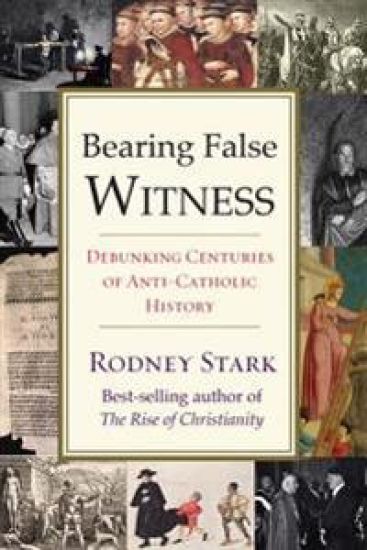
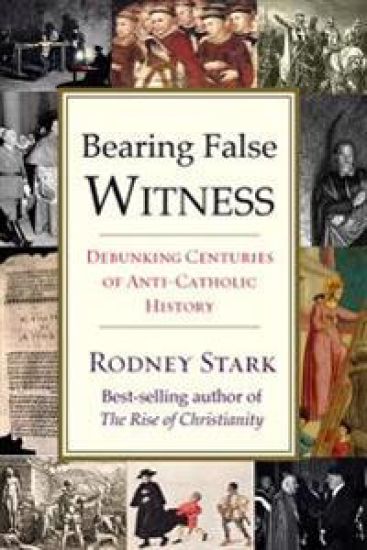
Bearing False Witness

Bearing False Witness

Rodney Stark

TEMPLETON FOUNDATION PRESS,U.S.
2017
pokkari
As we all know and as many of our well-established textbooks have argued for decades, the Inquisition was one of the most frightening and bloody chapters in Western history; Pope Pius XII was anti-Semitic and rightfully called “Hitler’s Pope,” the Dark Ages were stunting the progress of knowledge to be redeemed only by the secular spirit of the Enlightenment. The religious Crusades were an early example of the rapacious Western thirst for riches and power. But what if these long held beliefs were all wrong? In this stunning, powerful, and ultimately persuasive book, Rodney Stark, one of the most highly regarded sociologists of religion and bestselling author of The Rise of Christianity (HarperSanFrancisco 1997), argues that some of our most firmly held ideas about history, ideas that paint the Catholic Church in the least favorable light are, in fact, fiction. Why have we held these wrongheaded ideas so firmly and for so long? And if our beliefs are wrong, what is the truth? In each chapter, Stark takes on a well-established anti-Catholic myth, gives a fascinating history of how each myth became conventional wisdom and presents a startling picture of the real truth. For example, instead of the Spanish Inquisition being an anomaly of torture and murder of innocent people persecuted for “imaginary” crimes such as witchcraft and blasphemy, Stark argues that not only did the Spanish Inquisition spill very little blood, but it was a major force in support of moderation and justice. Stark dispels the myth of Pope Pius XII being apathetic or even helpful to the Nazi movement, such as to merit the title “Hitler’s Pope,” and instead shows that the campaign to link Pope Pius XII to Hitler was initiated by the Soviet Union, presumably in hopes of neutralizing the Vatican in post-World War II affairs. Many praised Pope Pius XIIs vigorous and devoted efforts to saving Jewish lives during the war. Instead of understanding the Dark Ages as a millennium of ignorance and backwardness inspired by the Catholic Church’s power, Stark argues that the whole notion of the “Dark Ages” was an act of pride perpetuated by anti-religious intellectuals who were determined to claim that theirs was the era of “Enlightenment.” In the end, readers of Bearing False Witness will have a more accurate history of the Catholic Church and will also understand why it became unfairly maligned for so long. Bearing False Witness is a compelling and sobering account of how egotism and ideology often work together to give us a false truth.
Reformation Myths

Reformation Myths

Rodney Stark

SPCK Publishing
2017
pokkari
What has the Reformation ever done for us? A lot less than you might think, as Rodney Stark shows in this enlightening and entertaining antidote to recent books about the rise of Protestantism and its legacy. ‘Rodney Stark takes no prisoners as he charges through five hundred years of history, upsetting apple carts left and right. Almost everything you thought you knew about the Reformation turns out to be a false narrative. . . In future, anyone who makes sweeping claims about the benefits of Protestantism ought to check their assumptions against Stark’s research first.’ Clifford Longley, author and journalist ‘Stark brings the insights of a distinguished sociologist of religion to bear on a range of inherited assumptions about the impact of the Reformation . . . The result makes for salutary reading in this year of commemoration and (not always justified) celebration.’ Peter Marshall, Professor of History, University of Warwick ‘Stark changed the way we think about the early Church and this book may change the way you think about Protestantism . . . Reformation Myths cuts through pious certainties and challenges us to think again about our cultural history.’ Linda Woodhead MBE DD, Professor of Sociology of Religion, Lancaster University
Why God?

Why God?

Rodney Stark

TEMPLETON FOUNDATION PRESS,U.S.
2017
sidottu
Why is it that the majority of people, from all socio-economic, education, and ethnic backgrounds, ascribe to some sort of faith? What draws us to religion? What pushes us away? And what exactly is religion anyway? Defining religion over the past century has, ironically, led to theories that exclude belief in God, proposing that all systems of thought concerning the meaning of life are religions. Of course, this makes it impossible to distinguish the village priest from the village atheist, or Communism from Catholicism. Worse yet, it makes all religious behavior irrational, presuming that, for example, people knowingly pray to an empty sky. Renowned sociologist of religion Rodney Stark offers a comprehensive, decisive, God-centered theory of religion in his book, Why God: Explaining Religious Phenomena. While his intent is not to insist that God exists, Stark limits religions to systems of thought based on belief in supernatural beings-to Gods. With this God-focused theory, Stark explores the entire range of religious topics, including the rise of monotheism, the discovery of sin, causes of religious hostility and conflict, and the role of revelations. Each chapter of Why God? builds a comprehensive framework, starting with the foundations of human motivations and ending with an explanation of why most people are religious. Stark ultimately settles what religion is, what it does, and why it is a universal feature of human societies.Why God? is a much needed guide for anyone who wants a thorough understanding of religion and our relationship to it, as well as a firm refutation to those who think religion can exist without the divine.
Bearing False Witness

Bearing False Witness

Rodney Stark

SPCK Publishing
2017
pokkari
The following historical statements all appear in well-established textbooks, and have become part of our common culture. Which of them would you say are true? * The Catholic Church incited and actively colluded in nearly two millennia of anti-Semitic violence, and Pope Pius XII is still rightfully known as ‘Hitler’s Pope’. * Only recently have we become aware of ancient and remarkably enlightened Christian gospels, which narrow-minded Catholic authorities tried to suppress. * Once in power as the official Church of Rome, Christians quickly and brutally persecuted paganism out of existence. * The fall of Rome and the ascendancy of the Church precipitated Europe’s decline into a millennium of ignorance and backwardness, which lasted until the Renaissance. * Initiated by the pope, the Crusades were but the first bloody chapter in the history of unprovoked and brutal Christian colonialism. * The Spanish Inquisition tortured and murdered huge numbers of innocent people for ‘imaginary’ crimes, such as witchcraft and blasphemy. * The Catholic Church persecuted and tried to suppress scientists such as Galileo, and the Scientific ‘Revolution’ therefore occurred mainly in more tolerant Protestant societies. * Being entirely comfortable with slavery, the Catholic Church did nothing to oppose its introduction in the New World, or to make it more humane. * Until very recently, Catholicism’s hierarchical view of the ideal state has resulted in its bitter resistance to all efforts to establish more liberal governments and its eager support for right-wing dictators. * It was the Protestant Reformation that broke the repressive Catholic grip on progress and ushered in capitalism, religious freedom and the modern world. In this powerful and persuasive book Rodney Stark subjects these and other widely-held beliefs to a rigorous historical assessment. He gives a compelling account of how each of them became accepted as the conventional wisdom, how egotism and ideology often worked together to create false or highly distorted pictures of people and events, and how we need to work hard to recover the truth if we’re to undo the cultural damage that centuries of anti-Catholic history has done.
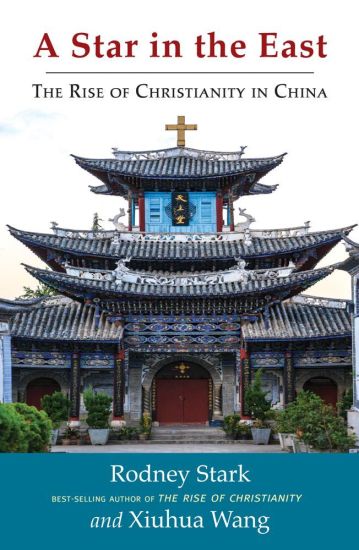
A Star in the East

A Star in the East

Rodney Stark; Xiuhua Wang

TEMPLETON FOUNDATION PRESS,U.S.
2016
pokkari
What is the state of Christianity in China? Some scholars say that China is invulnerable to religion. In contrast, others say that past efforts of missionaries have failed, writing off those converted as nothing more than “rice Christians” or cynical souls who had frequented the missions for the benefits they provided. Some wonder if the Cultural Revolution extinguished any chances of Christianity in China. Rodney Stark and Xiuhua Wang offer a different perspective, arguing that Christianity is alive, well, and on the rise. Stark approaches the topic from an extensive research background in Christianity and Chinese history, and Wang provides an inside look at Christianity and its place in her home country of China. Both authors cover the history of religion in China, disproving older theories concerning the number of Christians and the kinds of Christians that have emerged in the past 155 years. Stark and Wang claim that when just considering the visible Christians-those not part of underground churches-thousands of Chinese are still converted to Christianity daily, and forty new churches are opening each week. A Star in the East draws on two major national surveys to sketch a close-up of religion in China. A reliable estimate is that by 2007 there were approximately 60 million Christians in China. If the current growth rate were to hold until 2030, there would be more Christians in China-about 295 million-than in any other nation. This trend has significant implications, not just for China but for the greater world order. It is probable that Chinese Christianity will splinter into denominations, likely leading to the same political, social, and economic ramifications seen in the West today. Whether you’re new to studying Christianity in China or whether this has been your area of interest for years, A Star in the East provides a reliable, thought-provoking, and engaging account of the resilience of the Christian faith in China and the implications it has for the future.
Bearing False Witness

Bearing False Witness

Rodney Stark

TEMPLETON FOUNDATION PRESS,U.S.
2016
sidottu
As we all know and as many of our well-established textbooks have argued for decades, the Inquisition was one of the most frightening and bloody chapters in Western history; Pope Pius XII was anti-Semitic and rightfully called “Hitler’s Pope,” the Dark Ages were stunting the progress of knowledge to be redeemed only by the secular spirit of the Enlightenment. The religious Crusades were an early example of the rapacious Western thirst for riches and power. But what if these long held beliefs were all wrong? In this stunning, powerful, and ultimately persuasive book, Rodney Stark, one of the most highly regarded sociologists of religion and bestselling author of The Rise of Christianity (HarperSanFrancisco 1997), argues that some of our most firmly held ideas about history, ideas that paint the Catholic Church in the least favorable light are, in fact, fiction. Why have we held these wrongheaded ideas so firmly and for so long? And if our beliefs are wrong, what is the truth? In each chapter, Stark takes on a well-established anti-Catholic myth, gives a fascinating history of how each myth became conventional wisdom and presents a startling picture of the real truth. For example, instead of the Spanish Inquisition being an anomaly of torture and murder of innocent people persecuted for “imaginary” crimes such as witchcraft and blasphemy, Stark argues that not only did the Spanish Inquisition spill very little blood, but it was a major force in support of moderation and justice. Stark dispels the myth of Pope Pius XII being apathetic or even helpful to the Nazi movement, such as to merit the title “Hitler’s Pope,” and instead shows that the campaign to link Pope Pius XII to Hitler was initiated by the Soviet Union, presumably in hopes of neutralizing the Vatican in post-World War II affairs. Many praised Pope Pius XIIs vigorous and devoted efforts to saving Jewish lives during the war. Instead of understanding the Dark Ages as a millennium of ignorance and backwardness inspired by the Catholic Church’s power, Stark argues that the whole notion of the “Dark Ages” was an act of pride perpetuated by anti-religious intellectuals who were determined to claim that theirs was the era of “Enlightenment.” In the end, readers of Bearing False Witness will have a more accurate history of the Catholic Church and will also understand why it became unfairly maligned for so long. Bearing False Witness is a compelling and sobering account of how egotism and ideology often work together to give us a false truth.
Sociology of Religion

Sociology of Religion

Rodney Stark; Paul Froese

Baylor University Press
2015
nidottu
For the last five decades, Rodney Stark has been one of sociology's most prolific and important scholars of religion. The theoretical depth, the scientific rigor, and the clarity of style manifested in Stark's oeuvre—over 30 books and 140 articles—have made his work the standard texts. Stark's research career encompasses a wide spectrum of the necessary topics in sociology of religion. He has applied groundbreaking theory and method to issues of secularization, religion and society, religious movements, social theory, and the history of religion. Sociology of Religion: A Rodney Stark Reader mirrors Stark's influential career by highlighting these very topics. In this anthology, Stark's significant articles are not only, for the first time, collected together but also clearly organized according to the thematic trajectory of Stark's carefully developed theory of religion. This volume is the essential reader for any scholar, teacher, or student encountering the work of one of this century's most compelling sociologists.
A Star in the East

A Star in the East

Rodney Stark; Xiuhua Wang

TEMPLETON FOUNDATION PRESS,U.S.
2015
sidottu
What is the state of Christianity in China? Some scholars say that China is invulnerable to religion. In contrast, others say that past efforts of missionaries have failed, writing off those converted as nothing more than “rice Christians” or cynical souls who had frequented the missions for the benefits they provided. Some wonder if the Cultural Revolution extinguished any chances of Christianity in China. Rodney Stark and Xiuhua Wang offer a different perspective, arguing that Christianity is alive, well, and on the rise. Stark approaches the topic from an extensive research background in Christianity and Chinese history, and Wang provides an inside look at Christianity and its place in her home country of China. Both authors cover the history of religion in China, disproving older theories concerning the number of Christians and the kinds of Christians that have emerged in the past 155 years. Stark and Wang claim that when just considering the visible Christians-those not part of underground churches-thousands of Chinese are still converted to Christianity daily, and forty new churches are opening each week. A Star in the East draws on two major national surveys to sketch a close-up of religion in China. A reliable estimate is that by 2007 there were approximately 60 million Christians in China. If the current growth rate were to hold until 2030, there would be more Christians in China-about 295 million-than in any other nation. This trend has significant implications, not just for China but for the greater world order. It is probable that Chinese Christianity will splinter into denominations, likely leading to the same political, social, and economic ramifications seen in the West today. Whether you’re new to studying Christianity in China or whether this has been your area of interest for years, A Star in the East provides a reliable, thought-provoking, and engaging account of the resilience of the Christian faith in China and the implications it has for the future.
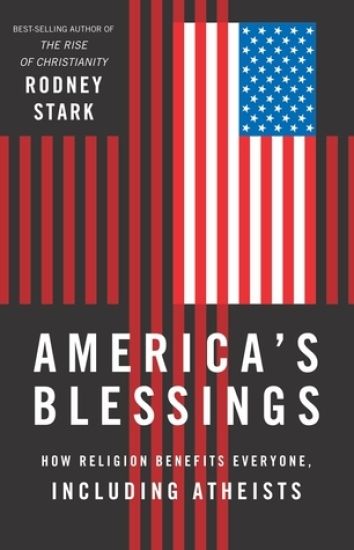
America's Blessings

America's Blessings

Rodney Stark

TEMPLETON FOUNDATION PRESS,U.S.
2013
pokkari
A few years ago, a debate between atheists and religious believers spilled out from the halls of academia and the pews of America’s churches and into the public spotlight. A crop of atheist manifestos led the charge, surmounting and holding the tops of the nonfiction bestseller lists. This debate brought on an outpouring of religious rebuttals as both sides exchanged spirited volleys, accusations were leveled; myths, stereotypes, and strawmen arguments were perpetuated; and bitter hostility filled the air. Today many of these misconceptions and myths linger on, along with the generally acrimonious spirit of the debate. In America’s Blessings, distinguished researcher Rodney Stark seeks to clear the air of this hostility and debunk many of the debate’s most widely perpetuated misconceptions by drawing from an expansive pool of sociological findings. Stark rises above the fray and focuses exclusively on facts by examining the measurable effects of religious faith and practice on American society. His results may surprise many atheists and believers alike. Starting with a historical overview, Stark traces America’s religious roots from the country’s founding to the present day, showing that religiosity in America has never been consistent, static, or monolithic. Interestingly, he finds that religious practice is now more prevalent than ever in America, despite any claims to the contrary. From here, Stark devotes whole chapters to unpacking the latest research on how religion affects the different facets of modern American life, including crime, family life, sexuality, mental and physical health, sophistication, charity, and overall prosperity. The cumulative effect is that when translated into comparisons with western European nations, the United States comes out on top again and again. Thanks in no small part to America’s rich religious culture, the nation has far lower crime rates, much higher levels of charitable giving, better health, stronger marriages, and less suicide, to note only a few of the benefits. In the final chapter, Stark assesses the financial impact of these religious realities. It turns out that belief benefits the American economy-and all 300 million citizens, believers, and nonbelievers alike-by a conservative estimate of $2.6 trillion a year. Despite the atheist outcry against religion, the remarkable conclusion is clear: all Americans, from the most religious among us to our secular neighbors, really ought to count our blessings.
The Triumph of Christianity

The Triumph of Christianity

Rodney Stark

HarperOne
2012
nidottu
Celebrated religious and social historian Rodney Starktraces the extraordinary rise of Christianity through its most pivotal andcontroversial moments to offer fresh perspective on the history of the world'slargest religion. In The Triumph of Christianity, the author of God'sBattalions and The Rise of Christianity gathers and refines decadesof powerful research and discovery into one concentrated, concise, and highlyreadable volume that explores Christianity's most crucial episodes. The uniqueformat of Triumph of Christianity allows Stark to avoid densechronologies and difficult back stories, bringing readers right to the heart ofChristian history's most vital controversies and enduring lessons.