Kirjojen hintavertailu. Mukana 12 390 323 kirjaa ja 12 kauppaa.

Kirjailija

Roy Porter

Kirjat ja teokset yhdessä paikassa: 35 kirjaa, julkaisuja vuosilta 1989-2022, suosituimpien joukossa Flesh in the Age of Reason. Vertaile teosten hintoja ja tarkista saatavuus suomalaisista kirjakaupoista.

35 kirjaa

Kirjojen julkaisuhaarukka 1989-2022.

Hysteria Beyond Freud

Hysteria Beyond Freud

Sander L. Gilman; Helen King; Roy Porter; G. S. Rousseau; Elaine Showalter

University of California Press
2022
pokkari
"She's hysterical." For centuries, the term "hysteria" has been used by physicians and laymen to diagnose and dismiss the extreme emotionality and mysterious physical disorders presumed to bedevil others—especially women. How did this medical concept assume its power? What cultural purposes does it serve? Why do different centuries and different circumstances produce different kinds of hysteria? These are among the questions pursued in this absorbing, erudite reevaluation of the history of hysteria. The widely respected authors draw upon the insights of social and cultural history, rather than Freudian psychoanalysis, to examine the ways in which hysteria has been conceived by doctors and patients, writers and artists, in Europe and North America, from antiquity to the early years of the twentieth century. In so doing, they show that a history of hysteria is a history of how we understand the mind. This title is part of UC Press's Voices Revived program, which commemorates University of California Press’s mission to seek out and cultivate the brightest minds and give them voice, reach, and impact. Drawing on a backlist dating to 1893, Voices Revived makes high-quality, peer-reviewed scholarship accessible once again using print-on-demand technology. This title was originally published in 1993.

Hysteria Beyond Freud

Hysteria Beyond Freud

Sander L. Gilman; Helen King; Roy Porter; G. S. Rousseau; Elaine Showalter

University of California Press
2022
sidottu
"She's hysterical." For centuries, the term "hysteria" has been used by physicians and laymen to diagnose and dismiss the extreme emotionality and mysterious physical disorders presumed to bedevil others—especially women. How did this medical concept assume its power? What cultural purposes does it serve? Why do different centuries and different circumstances produce different kinds of hysteria? These are among the questions pursued in this absorbing, erudite reevaluation of the history of hysteria. The widely respected authors draw upon the insights of social and cultural history, rather than Freudian psychoanalysis, to examine the ways in which hysteria has been conceived by doctors and patients, writers and artists, in Europe and North America, from antiquity to the early years of the twentieth century. In so doing, they show that a history of hysteria is a history of how we understand the mind. This title is part of UC Press's Voices Revived program, which commemorates University of California Press’s mission to seek out and cultivate the brightest minds and give them voice, reach, and impact. Drawing on a backlist dating to 1893, Voices Revived makes high-quality, peer-reviewed scholarship accessible once again using print-on-demand technology. This title was originally published in 1993.
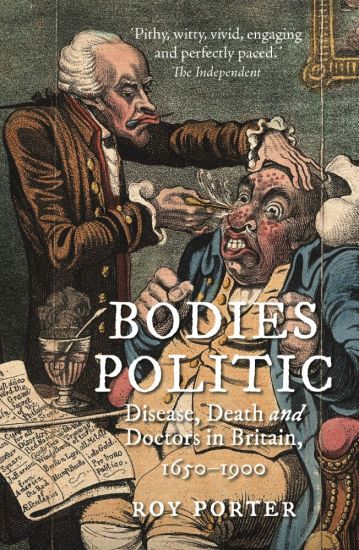
Bodies Politic

Bodies Politic

Roy Porter

Reaktion Books
2021
nidottu
In this historical tour de force, now available in B-format paperback, Roy Porter takes a critical look at representations of the body in health, disease and death in Britain from the mid-seventeenth to the twentieth century. Porter argues that great symbolic weight was attached to contrasting conceptions of the healthy and diseased body, and that such ideas were mapped onto antithetical notions of the good and the bad, the beautiful and the ugly. With these images in mind, he explores aspects of being ill alongside the practice of medicine, paying special attention to self-presentations by physicians, surgeons and quacks, and to changes in practitioners’ public identities over time. Porter also examines the wider symbolic meanings of disease and doctoring and the ‘body politic’. Porter’s book is packed with outrageous and amusing anecdotes portraying diseased bodies and medical practitioners alike.
Medical Fringe and Medical Orthodoxy 1750-1850

Medical Fringe and Medical Orthodoxy 1750-1850

W. F. Bynum; Roy Porter

Routledge
2020
nidottu
First published in 1987. Even as the professionalism of medicine progressed, many sufferers continued to rely on what would now be termed "fringe" practitioners – quacks, backstreet surgeons, bone-setters, Thomsonian botanists, holists and naturalists. Many types of fringe medicine were popular in particular circles or reflected the political or religious preoccupations of their practitioners. Anti-establishment radicals might favour natural medicine, Christian Scientists would reject the medical aid, "Physical Puritans" would concentrate on homeopathy, hydropathy and vegetarianism to create health rather than counter disease. Some diseases, particularly venereal ones, allowed practitioners to play unscrupulously on the guilt of their patients. The end of the period saw professionalism establish itself in many areas, for example with the foundation in 1852 of the Pharmaceutical Society, and conflicts of fringe and orthodoxy became the fiercer. The essays collected in this volume all present new research on this fascinating and diverse period in the history of medicine.
Medical Fringe and Medical Orthodoxy 1750-1850

Medical Fringe and Medical Orthodoxy 1750-1850

W. F. Bynum; Roy Porter

Routledge
2018
sidottu
First published in 1987. Even as the professionalism of medicine progressed, many sufferers continued to rely on what would now be termed "fringe" practitioners – quacks, backstreet surgeons, bone-setters, Thomsonian botanists, holists and naturalists. Many types of fringe medicine were popular in particular circles or reflected the political or religious preoccupations of their practitioners. Anti-establishment radicals might favour natural medicine, Christian Scientists would reject the medical aid, "Physical Puritans" would concentrate on homeopathy, hydropathy and vegetarianism to create health rather than counter disease. Some diseases, particularly venereal ones, allowed practitioners to play unscrupulously on the guilt of their patients. The end of the period saw professionalism establish itself in many areas, for example with the foundation in 1852 of the Pharmaceutical Society, and conflicts of fringe and orthodoxy became the fiercer. The essays collected in this volume all present new research on this fascinating and diverse period in the history of medicine.
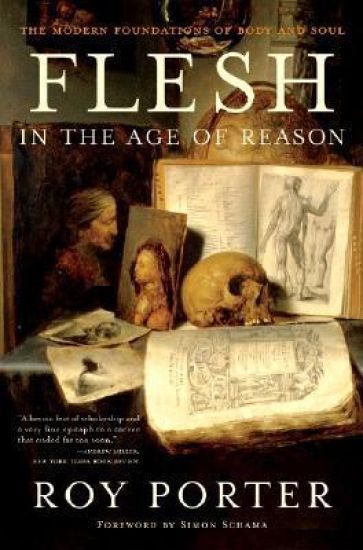
Flesh In The Age Of Reason

Flesh In The Age Of Reason

Roy Porter

WW Norton Co
2018
pokkari
A professor of social history shares a lifetime of insights into the metaphysics of the body by retracing the emergence of a renaissance understanding of the body and the fading notion of a soul contained within it. Reprint. 15,000 first printing.
Doctor of Society

Doctor of Society

Roy Porter

Routledge
2018
nidottu
First published in 1992, this book explores how we come to hold our present attitudes towards health, sickness and the medical profession. Roy Porter argues that the outlook of the age of Enlightenment was crucially important in the creation of modern thinking about disease, doctors and society. To illustrate this viewpoint, he focuses on Thomas Beddoes, a prominent doctor of the eighteenth century and examines his challenging, pugnacious, radical and often amusing views on a wide range of issues concerning the place of illness and medicine in society. Many modern debates in medicine continue to echo the topics which Beddoes himself discussed in his ever-trenchant and provocative manner. This book will be of interest to those studying the history of medicine, social history and the Enlightenment.
Doctor of Society

Doctor of Society

Roy Porter

Routledge
2016
sidottu
First published in 1992, this book explores how we come to hold our present attitudes towards health, sickness and the medical profession. Roy Porter argues that the outlook of the age of Enlightenment was crucially important in the creation of modern thinking about disease, doctors and society. To illustrate this viewpoint, he focuses on Thomas Beddoes, a prominent doctor of the eighteenth century and examines his challenging, pugnacious, radical and often amusing views on a wide range of issues concerning the place of illness and medicine in society. Many modern debates in medicine continue to echo the topics which Beddoes himself discussed in his ever-trenchant and provocative manner. This book will be of interest to those studying the history of medicine, social history and the Enlightenment.
The History of Bethlem

The History of Bethlem

Jonathan Andrews; Asa Briggs; Roy Porter; Penny Tucker; Keir Waddington

Routledge
2013
nidottu
Bethlem Hospital, popularly known as "Bedlam", is a unique institution. Now seven hundred and fifty years old, it has been continuously involved in the care of the mentally ill in London since at least the 1400s. As such it has a strong claim to be the oldest foundation in Europe with an unbroken history of sheltering and treating the mentally disturbed. During this time, Bethlem has transcended locality to become not only a national and international institution, but in many ways, a cultural and literary myth.The History of Bethlem is a scholarly history of this key establishment by distinguished authors, including Asa Briggs and Roy Porter. Based upon extensive research of the hospital's archives, the book looks at Bethlem's role within the caring institutions of London and Britain, and provides a long overdue re-evaluation of its place in the history of psychiatry.
The Making of Geology

The Making of Geology

Roy Porter

Cambridge University Press
2008
pokkari
Between the mid-seventeenth century and the early nineteenth century there developed in Britain a range of empirical and increasingly secular sciences concerned with the earth. This book presents a detailed account of how this development led to the creation of a complex socio-intellectual fabric of methods, ambitions, facts and ideas which took on the nature of a distinctive, self-sustaining discipline: 'geology'. During this period the criteria for a proper science of the earth were continually reassessed and the earth as an object of science was radically reinterpreted. In his account of this transformation, Dr Porter treats science as an integral but distinct part of the spectrum of man's intellectual and social activities. His account thus illuminates the nature of science and scientific knowledge as a dynamic intellectual, social and cultural enterprise. The book will be of interest not only to historians and philosophers of science but also to social historians and geologists.
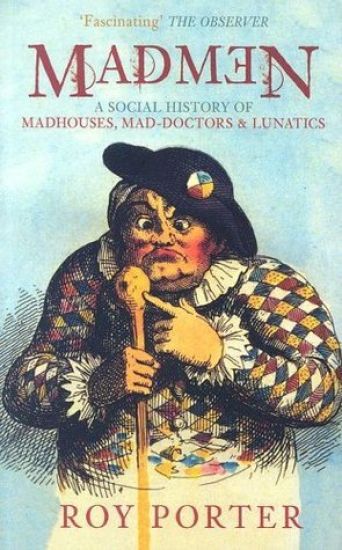
Madmen

Madmen

Roy Porter

The History Press Ltd
2006
nidottu
What was it like to be insane in the Georgian England of Mary Wollstonecraft and Coleridge (himself afflicted with madness?) How were our eighteenth-century ancestors confined and how were they treated by the fledgling psychiatric 'profession'? Indeed, how was the most famous mad person of the century - Shelley's 'old, mad, blind, despised king' George III - treated before his final descent into senility in 1808?Best-selling popular historian Roy Porter looks at the bizarre and savage practices of mad-doctors treating those afflicted by 'manias', ranging from huge doses of opium, blood-letting and cold-water immersion to beatings, confinement in cages and blistering. The author reveals how Bethlem - the London asylum created to care for the capital's mentally sick - was riddled with sadism and embezzlement, and if that wasn't dehumanising enough, jeering, ogling sightseers were permitted entry - for a fee of course.
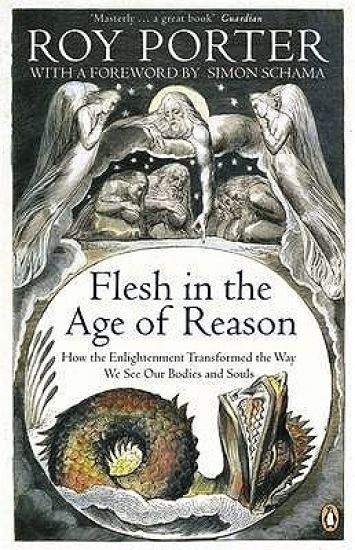
Flesh in the Age of Reason

Flesh in the Age of Reason

Roy Porter

Penguin Books Ltd
2005
pokkari
'As an introduction to early modern thinking and the impact of past ideas on present lives, this book can find few equals and no superiors. Porter is a witty, humane writer with an extraordinary vocabulary and a sparkling sense of fun. Whether he is quoting from obscure medical texts or analysing scabrous diaries, dishing the dirt on long-dead bigwigs or evoking sympathy for human suffering, his grasp is masterly and his erudition appealing. I wish I could read it again for the first time: you can.' Times Educational Supplement, Book of the Week In this startlingly brilliant sequel to the prize-winning ENLIGHTENMENT Roy Porter completes his lifetime's work, offering a magical, enthusiastic and charming account of the writings of some of the most attractive figures ever to write English.
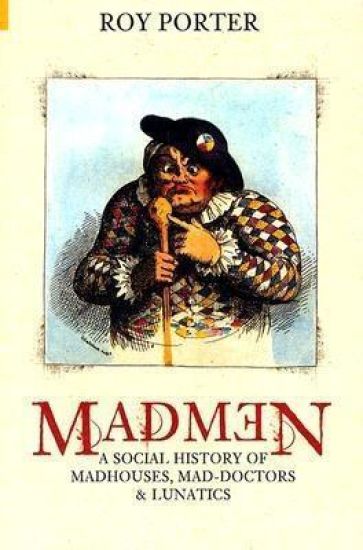
Madmen

Madmen

Roy Porter

The History Press Ltd
2004
sidottu
What was it like to be insane in the Georgian England of Mary Wollstonecraft and Coleridge (himself afflicted with madness?) How were our eighteenth-century ancestors confined and how were they treated by the fledgling psychiatric 'profession'? Indeed, how was the most famous mad person of the century - Shelley's 'old, mad, blind, despised king' George III - treated before his final descent into senility in 1808? Best-selling popular historian Roy Porter looks at the bizarre and savage practices of mad-doctors treating those afflicted by 'manias', ranging from huge doses of opium, blood-letting and cold-water immersion to beatings, confinement in cages and blistering.The author reveals how Bethlem - the London asylum created to care for the capital's mentally sick - was riddled with sadism and embezzlement, and if that wasn't dehumanising enough, jeering, ogling sightseers were permitted entry - for a fee of course.
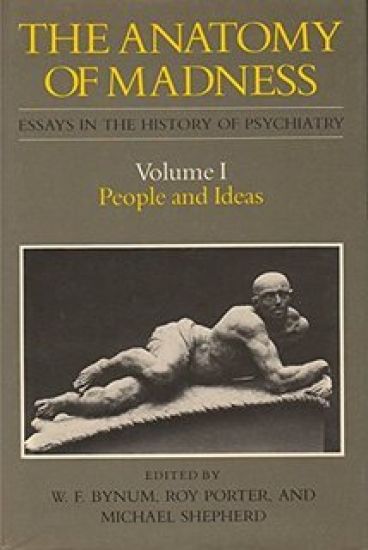
The Anatomy of Madness

The Anatomy of Madness

W.F. Bynum; Roy Porter; Michael Shepherd

Routledge
2003
muu
Originally published in 1985 by The Tavistock Press, this three-volume set covers the history of British and continental European madness and psychiatry from the Renaissance through to Freud. The long time-span covered affords the reader views of the changing understanding of madness and the resultant policies towards it in the light of long-term developments such as secularization and industrialization. Volume 1 examines theories of madness and its treatment, both those of laymen and those of the emergent psychiatric profession, as well as looking at the experiences of mad people themselves. Volume 2 examines the emergence of the modern lunatic asylum and judges how far it lived up to the hopes of the nineteenth century reformers. Essays on such subjects as psychiatry in the courtroom and the treatment of First World War shellshock victims dissect the historical dimensions of current notions of psychiatry as a means of social control. Volume 3 brings together essays on nineteenth century psychiatry on various themes ranging from the architecture of asylums to social policy, from therapeutics to professionalization. As well as British, aspects of French, Italian, American and Danish psychiatry are also analysed.
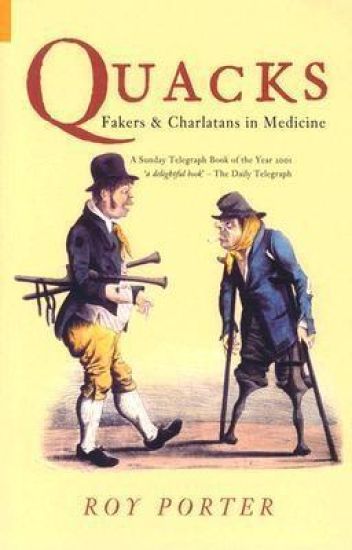
Quacks

Quacks

Roy Porter

NPI Media Group
2003
nidottu
If the thought of visiting the doctor or having a spell in the hospital gives most people pause to contemplate their mortality, then such thoughts must pale when compared to the experiences of our ancestors. They were largely at the mercy of a medical fraternity renowned more for the eccentricity of their cures than their efficacy. From the pisse prophets who would gaze upon a patient s urine to establish the most accurate diagnosis, to the pushers of such remedies as Walkers Jesuit Drops to cure venereal disease, "Quacks" is a thrilling history of opportunists, charlatans, conmen, some deludedly sincere doctors, andultimatelyof our own enduring credulity."
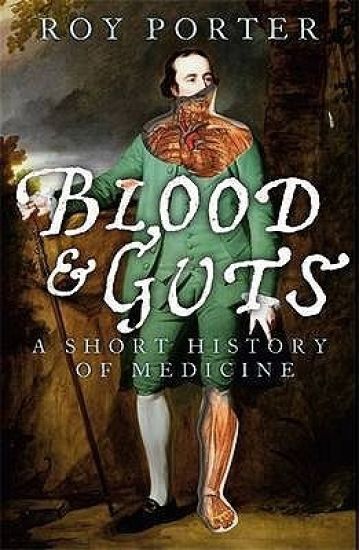
Blood and Guts

Blood and Guts

Roy Porter

Penguin Books Ltd
2003
pokkari
Mankind's battle to stay alive is the greatest of all subjects. This brief, witty and unusual book by Britain's greatest medical historian compresses into a tiny span a lifetime spent thinking about millennia of human ingenuity in the quest to cheat death. Each chapter sums up one of these battlefields (surgery, doctors, disease, hospitals, laboratories and the human body) in a way that is both frightening and elating. Startlingly illustrated, A SHORT HISTORY OF MEDICINE is the ideal presentfor anyone who is keenly aware of their own mortality and wants to do something about it. It is also a wonderful memorial to one of Penguin's greatest historians.
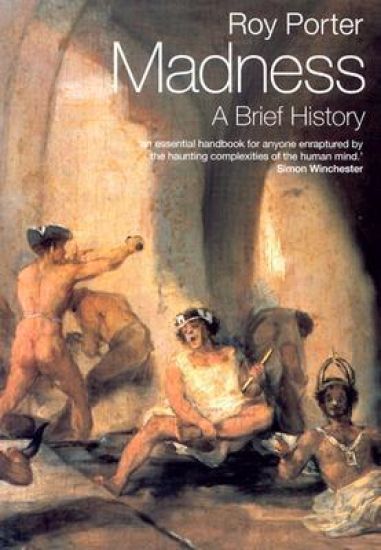
Madness

Madness

Roy Porter

Oxford University Press
2003
nidottu
This work explores what we really mean by "madness", covering an enormous range of topics from witches to creative geniuses, electric shock therapy to sexual deviancy, psychoanalysis to prozac.
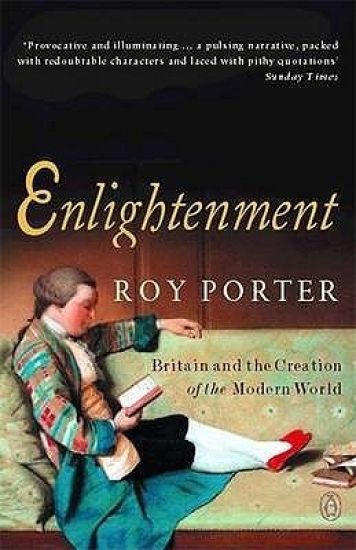
Enlightenment

Enlightenment

Roy Porter

Penguin Books Ltd
2001
pokkari
For generations the traditional focus for those wishing to understand the roots of the modern world has been France on the eve of the Revolution. Porter certainly acknowledges France's importance, but here makes an overwhelming case for consideringBritain the true home of modernity - a country driven by an exuberance, diversity and power of invention comparable only to twentieth-century America. Porter immerses the reader in a society which, recovering from the horrors of the Civil War and decisively reinvigorated by the revolution of 1688, had emerged as something new and extraordinary - a society unlike any other in the world.
The Enlightenment

The Enlightenment

Roy Porter

Red Globe Press
2001
nidottu
The eighteenth-century Enlightenment was one of the most exciting and significant currents of European culture. Battling against tyranny, ignorance and superstition, it formulated the ideals which still inform our society today: a belief in reason, criticism, freedom of thought, religion and expression, the value of science, the pursuit of progress. Enlightenment thinkers undermined the ancien regime and provided the ideas for the French Revolution. Modern scholarship, however, has shown it was a more complex and ambiguous movement than commonly recognized. This book, now in a fully updated second edition, sympathetically explores the complexities of the Enlightenment. Synthesizing and evaluating the latest scholarship, it offers a new and comprehensive vision of this many-faceted movement.
London

London

Roy Porter

Penguin Books Ltd
2000
pokkari
'Roy Porter, a historian of formidable range, turns to urban history in this marvellously lucid, informative and passionate book... Porter's facts are always at the service of the narrative, which has a finely maintained momentum, balancing statistics with the words of historians, diarists and novelists, poets and churchmen: Pepys, Boswell, Fielding, Walpole, Blake, Mayhew, Wells, Woolf, Spark, ... a timely and brilliant book.' CLAIRE TOMALIN, EVENING STANDARD 'A vivid celebration of the city, but also an elegy for its decline, bubbling with statistics and anecdote, from Boadicea to Betjeman.' RICHARD HOLMES, DAILY TELEGRAPH BOOKS OF THE YEAR