Kirjojen hintavertailu. Mukana 12 390 323 kirjaa ja 12 kauppaa.

Kirjailija

Sami Pihlström

Kirjat ja teokset yhdessä paikassa: 35 kirjaa, julkaisuja vuosilta 2005-2026, suosituimpien joukossa Minerva 4. Vertaile teosten hintoja ja tarkista saatavuus suomalaisista kirjakaupoista.

35 kirjaa

Kirjojen julkaisuhaarukka 2005-2026.

Minerva 4

Minerva 4

Jaana Hallamaa; Kaisa Heinlahti; Tuomas Nevanlinna; Sami Pihlström; Ukri Pulliainen

Sanoma Pro
2025
nidottu
Siinä tutustutaan olemassaoloon, tietoon ja totuuteen filosofian tutkimuskohteina. Lisäksi siinä tarkastellaan tieteenfilosofiaan liittyviä kysymyksiä, kuten tieteen tunnusmerkkejä sekä tieteen etiikkaa. Oppimateriaali sisältää runsaasti harjoituksia ja tehtäviä, jotka auttavat ottamaan filosofian tietoja ja taitoja haltuun. Sarja kehittää ajattelun taitoja ja auttaa soveltamaan filosofiaa eri elämänalueille.

Minerva 2

Minerva 2

Jaana Hallamaa; Kaisa Heinlahti; Tuomas Nevanlinna; Sami Pihlström; Ukri Pulliainen

Sanoma Pro
2025
nidottu
Siinä tutustutaan moraalisen toiminnan lähtökohtiin ja peruskäsitteisiin. Kirjassa tarkastellaan etiikan keskeisiä teorioita ja elämänfilosofisia kysymyksiä, kuten kuolevaisuutta ja onnellisuuden tavoittelua.Oppimateriaali sisältää runsaasti harjoituksia ja tehtäviä, jotka auttavat ottamaan filosofian tietoja ja taitoja haltuun. Sarja kehittää ajattelun taitoja ja auttaa soveltamaan filosofiaa eri elämänalueille.

Minerva 1

Minerva 1

Jaana Hallamaa; Kaisa Heinlahti; Tuomas Nevanlinna; Sami Pihlström; Ukri Pulliainen; Eero Salmenkivi

Sanoma Pro
2025
nidottu
Siinä tutustutaan kriittiseen ajatteluun filosofian lähtökohtana ja filosofian menetelmiin, kuten käsitteiden määrittelyyn, ajatuskokeiden tekemiseen ja taitavaan argumentaatioon. Minervan avulla opiskelija perehtyy myös siihen, mitä tieto ja tiede ovat sekä mihin ne perustuvat.Oppimateriaali sisältää runsaasti harjoituksia ja tehtäviä, jotka auttavat ottamaan filosofian tietoja ja taitoja haltuun. Sarja kehittää ajattelun taitoja ja auttaa soveltamaan filosofiaa eri elämänalueille.

Ota elämä vakavasti

Ota elämä vakavasti

Sami Pihlström

Ntamo
2018
nidottu
Myönteisen ajattelun voittokulkua eivät näytä pysäyttävän tieteelliset vastalauseet eikä yhteiskuntakritiikki. Ainakin julkista keskustelua se pitelee pihdeissään: laajalle varsinaisen olopiirinsä ulkopuolelle leviävää elämäntyylipuhetta hallitsevat omalla autuudellaan ylpeilevät ja erinomaisuudestaan omakuvia jakavat positiivisen asenteen lähettiläät ja lobbarit. OTA ELÄMÄ VAKAVASTI on tavallista järeämpi väline katteettoman hehkutuksen erittelyyn ja todellisten elämänkysymysten käsittelyyn. "Moraalista onnistumista ja menestystä korostava poseeraaminen voi pahimmillaan köyhdyttää ja rappeuttaa moraalista kieltä", teos varoittaa. Samalla heikentyvät "moraalisen toiminnan ja arvioinnin käytännöt, joihin yksilöinä ja yhteisöinä osallistumme". Kokemus niin hyvästä ja pahasta kuin oikeasta ja väärästä pinnallistuu ja yksipuolistuu. Tapahtumakulkua heijastavat ja kiihdyttävät sekä yksilöitä kouliva itseapuhöttö että yhteisöjä trimmaava konsulttihumpuuki. Hukataan taju elämän vaikeudesta ja eettisyyden painosta. Vakavalle elämänfilosofialle on harvoin ollut yhtä kiireellistä tarvetta kuin nyt. Elämiseen kuuluvia huolia ja murheita ei pidä kieltää tai kätkeä kritiikittömän luovuuden, kapeasti ymmärretyn kilpailukyvyn tai äkkinäisesti teeskennellyn ratkaisukeskeisuuden nimissä. Mitään kestävästi myönteistä ei synny tunnustamatta ja tutkailematta olemassaolon pulmallisuutta ja omaa rajallisuuttamme täydessä painossaan. OTA ELÄMÄ VAKAVASTI tarjoaa rautaisannoksen vanhaa viisautta ja uutta tutkimusta. Yleistajuisena tietokirjana se evästää ongelmalliseen mutta ongelmallisuudessaan mielekkääseen elämään.
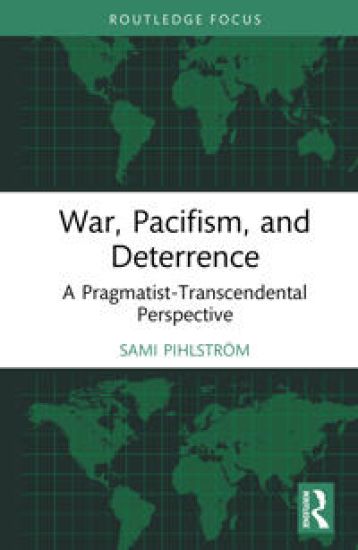
War, Pacifism, and Deterrence

War, Pacifism, and Deterrence

Sami Pihlström

TAYLOR FRANCIS LTD
2026
nidottu
In our troubled times of global conflict, philosophical reflection on war and peace has never been more urgent. This distinctive contribution to the ethics of war combines pragmatism with Kantian-inspired transcendental philosophy to offer fresh insights into age-old questions of when, if ever, war can be ethically acceptable. Sami Pihlström argues that both traditional just war theory and pacifism function as forms of "secular theodicy", which justify innocent suffering for supposed greater goods. Moving beyond these approaches, he develops a meliorist framework that refuses both naive optimism and fatalistic pessimism about human conflict. The book examines three critical areas: the problem of sacrificing innocents in war, the ethics of nuclear deterrence in our post-World War II world, and the philosophy of history that shapes how we understand ourselves as a political community. Central to this analysis is the concept of defending the "transcendental 'us'"—not merely a contingent nation-state, but the very conditions that make ethical and political community possible. Drawing on thinkers from William James to Raimond Gaita, this work offers a philosophically rigorous yet accessible exploration of what it means to defend civilization itself against existential threats, ensuring that those who die in such defense "shall not have died in vain." War, Pacifism, and Deterrence will appeal to researchers and graduate students interested in the philosophy of war and peace, pragmatism, and transcendental philosophy.
"The Unthinkable" in Ethics, History and Philosophical Anthropology
What we find ‘unthinkable’ is not seriously considered as an ethical option in our thought and deliberation; it is ruled out from the outset. Combining a broadly pragmatist approach with a Kantian-inspired transcendental strategy, Sami Pihlström distinguishes between what is considered ‘unthinkable’ and what is merely ethically wrong. Pihlström demonstrates how different issues concerning the unthinkable vs the thinkable, ranging from the proper ethical response to the Holocaust to philosophical considerations of monstrous characters familiar in gothic fiction, may challenge the categories we use to structure the world. In particular, he makes the case that it is unthinkable for us to reject the kind of ‘human exceptionalism’ that attributes an ineliminable dignity or preciousness to human beings. Chapters also explore the complex relationship between our responses to human suffering and the suffering of non-human animals, together with questions concerning the philosophy of war and pacifism. ‘The Unthinkable’ in Ethics, History and Philosophical Anthropology turns our attention to the ethically and ontologically constitutive character of the boundaries we draw between the thinkable and the unthinkable, while utilizing conceptual and argumentative resources from the Wittgensteinian tradition in moral philosophy, particularly from the work of Raimond Gaita. An original and timely study, it will be welcomed by students and scholars interested in the fundamental ethical issues of human life.
War, Pacifism, and Deterrence

War, Pacifism, and Deterrence

Sami Pihlström

TAYLOR FRANCIS LTD
2026
sidottu
In our troubled times of global conflict, philosophical reflection on war and peace has never been more urgent. This distinctive contribution to the ethics of war combines pragmatism with Kantian-inspired transcendental philosophy to offer fresh insights into age-old questions of when, if ever, war can be ethically acceptable. Sami Pihlström argues that both traditional just war theory and pacifism function as forms of "secular theodicy", which justify innocent suffering for supposed greater goods. Moving beyond these approaches, he develops a meliorist framework that refuses both naive optimism and fatalistic pessimism about human conflict. The book examines three critical areas: the problem of sacrificing innocents in war, the ethics of nuclear deterrence in our post-World War II world, and the philosophy of history that shapes how we understand ourselves as a political community. Central to this analysis is the concept of defending the "transcendental 'us'"—not merely a contingent nation-state, but the very conditions that make ethical and political community possible. Drawing on thinkers from William James to Raimond Gaita, this work offers a philosophically rigorous yet accessible exploration of what it means to defend civilization itself against existential threats, ensuring that those who die in such defense "shall not have died in vain." War, Pacifism, and Deterrence will appeal to researchers and graduate students interested in the philosophy of war and peace, pragmatism, and transcendental philosophy.
Advanced Introduction to Antitheodicy

Advanced Introduction to Antitheodicy

Sami Pihlström

ANTHEM PRESS
2026
nidottu
This book introduces the concept of antitheodicy and an approach that the author proposes to call antitheodicism as central elements of a critical ethical response to the problem of evil and suffering. While the mainstream debate on this problem in the philosophy of religion continues to focus on theodicies and “defenses” seeking to justify or excuse God’s allowing that there is apparently meaningless suffering (which, then, ceases to be meaningless when we understand God’s reasons for allowing this), this introduction not only explains why an antitheodicist alternative is ethically superior to such attempts but also, perhaps more importantly, extends the antitheodicist approach from the philosophy of religion to broader ethical engagements with suffering. Sketching some of the historical milestones of antitheodicist thought as well as the most important contemporary versions of antitheodicism, the book argues that antitheodicy is the only decent account of suffering and that theodicies are incompatible with ethical seriousness. Theodicies tend to instrumentalize suffering in the service of some imagined overall good, or a metaphysical scheme failing to recognize the individual perspective of the victim of suffering. The significance of this essentially ethical argument against theodicies reaches far beyond the philosophy of religion, as the theodicy versus antitheodicy opposition can be shown to take interesting secular varieties.
Advanced Introduction to Antitheodicy

Advanced Introduction to Antitheodicy

Sami Pihlström

ANTHEM PRESS
2026
sidottu
This book introduces the concept of antitheodicy and an approach that the author proposes to call antitheodicism as central elements of a critical ethical response to the problem of evil and suffering. While the mainstream debate on this problem in the philosophy of religion continues to focus on theodicies and “defenses” seeking to justify or excuse God’s allowing that there is apparently meaningless suffering (which, then, ceases to be meaningless when we understand God’s reasons for allowing this), this introduction not only explains why an antitheodicist alternative is ethically superior to such attempts but also, perhaps more importantly, extends the antitheodicist approach from the philosophy of religion to broader ethical engagements with suffering. Sketching some of the historical milestones of antitheodicist thought as well as the most important contemporary versions of antitheodicism, the book argues that antitheodicy is the only decent account of suffering and that theodicies are incompatible with ethical seriousness. Theodicies tend to instrumentalize suffering in the service of some imagined overall good, or a metaphysical scheme failing to recognize the individual perspective of the victim of suffering. The significance of this essentially ethical argument against theodicies reaches far beyond the philosophy of religion, as the theodicy versus antitheodicy opposition can be shown to take interesting secular varieties.
Ennen kuin ihminen väistyy

Ennen kuin ihminen väistyy

Sami Pihlström

Ntamo
2025
nidottu
Humanismi on yhä miettimisen ja kehittelemisen arvoinen ajatussuunta. Tässä kirjassa kansainvälisesti ansioitunut suomalainen filosofi ei esitä käsitteestä yleiskatsausta vaan käyttää sitä punaisena lankana monien polttavien opillisten, yhteiskunnallisten ja kulttuuristen ongelmien tarkastelussa. Esille otetaan esimerkiksi korona, pasifismi ja käännytyslaki sekä uskonto, pahuus ja ilmastonmuutos. Niitä kaikkia voidaan tutkailla 'ihmisen maailman' painotuksin ja sen näkökulmia puolustaen. Keskustelukumppaneiden joukossa ovat muiden muassa G. H. von Wright, Susan Neiman ja Immanuel Kant.
"The Unthinkable" in Ethics, History and Philosophical Anthropology
What we find ‘unthinkable’ is not seriously considered as an ethical option in our thought and deliberation; it is ruled out from the outset. Combining a broadly pragmatist approach with a Kantian-inspired transcendental strategy, Sami Pihlström distinguishes between what is considered ‘unthinkable’ and what is merely ethically wrong. Pihlström demonstrates how different issues concerning the unthinkable vs the thinkable, ranging from the proper ethical response to the Holocaust to philosophical considerations of monstrous characters familiar in gothic fiction, may challenge the categories we use to structure the world. In particular, he makes the case that it is unthinkable for us to reject the kind of ‘human exceptionalism’ that attributes an ineliminable dignity or preciousness to human beings. Chapters also explore the complex relationship between our responses to human suffering and the suffering of non-human animals, together with questions concerning the philosophy of war and pacifism. ‘The Unthinkable’ in Ethics, History and Philosophical Anthropology turns our attention to the ethically and ontologically constitutive character of the boundaries we draw between the thinkable and the unthinkable, while utilizing conceptual and argumentative resources from the Wittgensteinian tradition in moral philosophy, particularly from the work of Raimond Gaita. An original and timely study, it will be welcomed by students and scholars interested in the fundamental ethical issues of human life.
Speglingar

Speglingar

Sari Kivistö; Sami Pihlström

Appell Förlag
2024
nidottu
Vetenskap för nyfikna, kompakt och lättläst på 60 sidor. I serien Värt att veta utforskar Sari Kivistö och Sami Pihlström symboliken i Speglingar, hur konst och litteratur reflekterar våra föreställningsvärldar.Ges ut i samarbete med Svenska litteratursällskapet i Finland.
Speglingar

Speglingar

Sari Kivistö; Sami Pihlström

Svenska litteratursällskapet i Finland
2024
nidottu
Vem möter du i spegeln? Spegeln har genom tiderna varit en återkommande symbol inom litteratur, bildkonst och filosofi. Att se sig i spegeln innebär att betrakta och pröva sina tankar, motiv och handlingar, sitt sätt att leva. Vi speglar oss i andra människor, i naturen och i den mångfald av kulturella uttryck som omger oss.Speglingar utforskar hur språket, litteraturen och konsten reflekterar våra föreställningsvärldar, hur vi uppfattar verkligheten. Sari Kivistö och Sami Pihlström visar hur spegeln som metafor har använts i myter, sagor och populärkultur, och vilka symboliska och moraliska dimensioner som förknippas med den. De belyser också hur den moderna filosofin laborerar med spegelmotivet för att göra relationen mellan oss själva och världen begriplig.Speglingar är en bok om hur vi ser oss själva.
Realism, Value, and Transcendental Arguments between Neopragmatism and Analytic Philosophy
The essays collected in this volume and authored by Sami Pihlström emphasize that our relation to the world we live in and seek to represent and get to know better through our practices of conceptualization and inquiry is irreducibly valuational. There is no way of even approaching, let alone resolving, the philosophical issue of realism without drawing due attention to the ways in which human values are inextricably entangled with even the most purely “factual” projects of inquiry we engage in.This entanglement of the factual and the normative is, as explicitly argued in Chapter 7 but implicitly suggested in all the other chapters as well, both pragmatic (practice-embedded and practice-involving) and transcendental (operating at the level of the necessary conditions for the possibility of our representing and cognizing the world in general). The author claims we need to carefully examine the complex relations of realism, value, and transcendental arguments at the intersection of pragmatism and analytic philosophy. This book does so by offering case-studies of various important neopragmatists and philosophers close to the pragmatist tradition, including Hilary Putnam, Nicholas Rescher, Joseph Margolis, and Ludwig Wittgenstein. It appeals to scholars and advanced graduate students focusing on pragmatism and analytic philosophy.
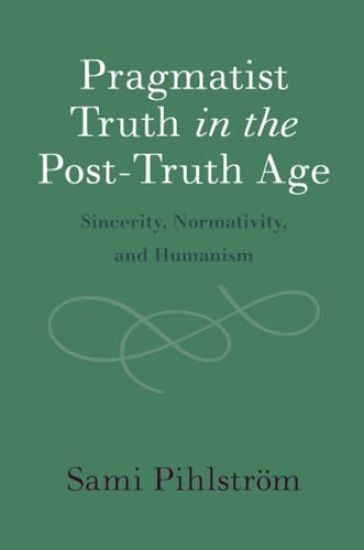
Pragmatist Truth in the Post-Truth Age

Pragmatist Truth in the Post-Truth Age

Sami Pihlström

Cambridge University Press
2024
pokkari
It is commonly believed that populist politics and social media pose a serious threat to our concept of truth. Philosophical pragmatists, who are typically thought to regard truth as merely that which is 'helpful' for us to believe, are sometimes blamed for providing the theoretical basis for the phenomenon of 'post-truth'. In this book, Sami Pihlström develops a pragmatist account of truth and truth-seeking based on the ideas of William James, and defends a thoroughly pragmatist view of humanism which gives space for a sincere search for truth. By elaborating on James's pragmatism and the 'will to believe' strategy in the philosophy of religion, Pihlström argues for a Kantian-inspired transcendental articulation of pragmatism that recognizes irreducible normativity as a constitutive feature of our practices of pursuing the truth. James himself thereby emerges as a deeply Kantian thinker.
Critical Distance: Ethical and Literary Engagements with Detachment, Isolation, and Otherness

Critical Distance: Ethical and Literary Engagements with Detachment, Isolation, and Otherness

Sami Pihlström; Sari Kivistö

Springer International Publishing AG
2023
nidottu
This book argues that no ethically appropriate relation to other human beings is possible unless we treat them as genuinely other. The authors provide reasons to be critical of various attempts, many of them popular in our contemporary (Western) culture, to encourage deeper attachment to and immersion into others’ lives and experiences. They defend the significance of the distance between human beings, criticizing exaggerated uses of, e.g., the concept of empathy and related concepts in academic as well as more popular ethical contexts, across a range of issues from the nature of ethical duty to the philosophy of love. The chapters offer non-technical philosophical and cultural criticism through selected perspectives on the continuum between closeness and distance, exploring various aspects of ethically significant relations between human beings. This book thus appeals to a wide audience, especially researchers and students in different fields of the humanities, including philosophy, literary studies, and cultural studies, by combining philosophical and literary methodologies in a humanistic examination of the value of distance. The book also argues that we have to be able to abstract from the concrete other in ethical relations, living in the normative and rational sphere of duty instead of emotional immersion.
Toward a Pragmatist Philosophy of the Humanities

Toward a Pragmatist Philosophy of the Humanities

Sami Pihlström

STATE UNIVERSITY OF NEW YORK PRESS
2023
pokkari
Develops a pragmatist approach to the philosophy of the humanities, interpreting history, literature, and religion in terms of pragmatic realism.Humanist scholars often feel the need to defend the humanities. The value of humanistic research is sometimes challenged, as the cultural "reality" investigated by disciplines such as history, literary studies, and theology may seem unclearIn particular, the ontology of the humanities might be considered obscure in comparison to the ontology of the natural sciences. Toward a Pragmatist Philosophy of the Humanities proposes to develop a comprehensive philosophical account of the humanities, focusing on the ontology and epistemology of humanistic inquiry from the standpoint of pragmatism. Sami Pihlström argues that humanistic cognitive pursuits can be interpreted along the lines of a pragmatist theory of inquiry, defending pragmatic realism about the humanities. However, far from leading to any reductive naturalization of the human world, the pragmatist philosophy of the humanities defended by Pihlström takes a distinctively Kantian critical turn in emphasizing the need for transcendental argumentation in the philosophy of the humanities, insisting on the irreducibly ethical dimensions of humanistic scholarship.
Realism, Value, and Transcendental Arguments between Neopragmatism and Analytic Philosophy
The essays collected in this volume and authored by Sami Pihlström emphasize that our relation to the world we live in and seek to represent and get to know better through our practices of conceptualization and inquiry is irreducibly valuational. There is no way of even approaching, let alone resolving, the philosophical issue of realism without drawing due attention to the ways in which human values are inextricably entangled with even the most purely “factual” projects of inquiry we engage in.This entanglement of the factual and the normative is, as explicitly argued in Chapter 7 but implicitly suggested in all the other chapters as well, both pragmatic (practice-embedded and practice-involving) and transcendental (operating at the level of the necessary conditions for the possibility of our representing and cognizing the world in general). The author claims we need to carefully examine the complex relations of realism, value, and transcendental arguments at the intersection of pragmatism and analytic philosophy. This book does so by offering case-studies of various important neopragmatists and philosophers close to the pragmatist tradition, including Hilary Putnam, Nicholas Rescher, Joseph Margolis, and Ludwig Wittgenstein. It appeals to scholars and advanced graduate students focusing on pragmatism and analytic philosophy.
Humanism, Antitheodicism, and the Critique of Meaning in Pragmatist Philosophy of Religion
Humanism, Antitheodicism, and the Critique of Meaning in Pragmatist Philosophy of Religion develops a distinctive approach to pragmatist philosophy of religion, and more generally to pragmatist investigations of the human search for meaning, by emphasizing what may be considered two closely interrelated main features of this tradition: humanism and antitheodicism. Humanism here emphasizes the need to focus on religion as a human practice within human concerns of meaningfulness and significance, as distinguished from any metaphysical search for cosmic meaning. Antitheodicism, in turn, stands for the refusal to accept any justification, divine or secular, for the experiences of meaninglessness that individuals undergoing horrendous suffering may have. Developing a critical form of pragmatism emphasizing these ideas, Sami Pihlström explores the relations between pragmatism and analytic philosophy in the philosophy of religion, especially regarding the question of religious meaning, as well as the significance of literature for philosophy of religion, with particular emphasis on William James's pragmatism.