Kirjojen hintavertailu. Mukana 12 363 183 kirjaa ja 12 kauppaa.

Kirjailija

Sarah Moss

Kirjat ja teokset yhdessä paikassa: 47 kirjaa, julkaisuja vuosilta 2006-2026, suosituimpien joukossa The Winter Guest. Vertaile teosten hintoja ja tarkista saatavuus suomalaisista kirjakaupoista.

47 kirjaa

Kirjojen julkaisuhaarukka 2006-2026.

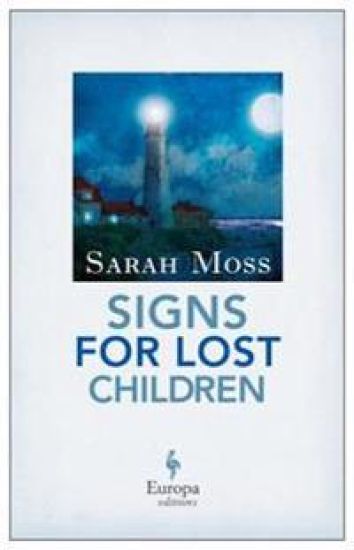
Signs for Lost Children

Signs for Lost Children

Sarah Moss

Europa Editions
2017
nidottu
In Victorian Cornwall, a doctor risks her marriage to fight for female asylum patients: "One of the most memorable heroines of recent fiction " (The Times, London). Shortlisted for the Wellcome Book Prize for Historical Fiction Ally Moberley, a recently qualified doctor, never expected to marry until she met architect Tom Cavendish. But only weeks into their marriage, Tom sets out for Japan, leaving Ally as she begins work at the Truro Asylum in Cornwall. Horrified by the brutal attitudes of male doctors and nurses toward their female patients, Ally plunges into the institutional politics of women's mental health at a time when madness is only just being imagined as treatable. She has to contend with a longstanding tradition of permanently institutionalizing women who are deemed difficult, all the while fighting to be taken seriously in a profession dominated by men. Meanwhile, Tom is overseeing the building of lighthouses, and has a commission from a wealthy collector to bring back embroideries and woodwork. As he travels Japan in search of these enchanting objects, he begins to question the value of the life he left in England. As Ally becomes increasingly absorbed in the moral importance of her work, and Tom pursues his interests on the other side of the world, they will return to each other as different people.From the blustery coast of Western England to the landscape of Japan, Signs for Lost Children offers a "fine exploration of marriage and the complex minds of 'lost children'--that is, all of us" (The New York Times Book Review). "Compelling . . . A quietly devastating portrait of the way identity crumbles when you've nothing, or no one, to pin it to."--The Guardian
Names for the Sea

Names for the Sea

Sarah Moss

Granta Books
2013
nidottu
'One of the most enjoyable travel books I've read' The Times Acclaimed novelist Sarah Moss's compelling account of living in Iceland with two small children in the year the volcano erupted At the height of the financial crisis in 2009, Sarah Moss and her husband moved with their two small children to Iceland. From their makeshift home among the half-finished skyscrapers of Reykjavik, Moss travels to hillsides of boiling mud and volcanic craters, and the remote farms and fishing villages of the far north. She watches the northern lights and the comings and goings of migratory birds, and as the weeks and months go by, she and her family find new ways to live. By turns meditative and wickedly observant, Sarah Moss's account of her time in Iceland is the adventure of a lifetime with the baggage of a lifetime too. 'Moss is a wry and a very good companion...and her book is as perceptive of the southern English middle-classes, as it is of Icelanders' Kathleen Jamie, Guardian 'A wry, intimate and beautifully-observed portrait of a culture both alien and familiar. Sarah Moss's account of her Icelandic sojourn is a vicarious treat' Philip Marsden
Spilling the Beans

Spilling the Beans

Sarah Moss

Manchester University Press
2011
nidottu
The study of food in literature complicates established critical positions. Both a libidinal pleasure and the ultimate commodity, food in fiction can represent sex as well as money and brings the body and the marketplace together in ways that are sometimes obvious and sometimes unsettling. Spilling the Beans explores these relations in the context of late eighteenth and early nineteenth century women’s fiction, where concerns about bodily, economic and intellectual productivity and consumption power decades of novels, conduct books and popular medicine.The introduction suggests ways in which attention to food in these texts might complicate recent developments in literary theory and criticism, while the body of the book is devoted to close readings of novels and children’s stories by Frances Burney, Mary Wollstonecraft, Maria Edgeworth and Susan Ferrier. This book will be of interest to scholars and students of eighteenth and nineteenth century literature, women’s studies and material culture.
Spilling the Beans

Spilling the Beans

Sarah Moss

Manchester University Press
2009
sidottu
The study of food in literature complicates established critical positions. Both a libidinal pleasure and the ultimate commodity, food in fiction can represent sex as well as money and brings the body and the marketplace together in ways that are sometimes obvious and sometimes unsettling. Spilling the Beans explores these relations in the context of late eighteenth and early nineteenth century women’s fiction, where concerns about bodily, economic and intellectual productivity and consumption power decades of novels, conduct books and popular medicine.The introduction suggests ways in which attention to food in these texts might complicate recent developments in literary theory and criticism, while the body of the book is devoted to close readings of novels and children’s stories by Frances Burney, Mary Wollstonecraft, Maria Edgeworth and Susan Ferrier. This book will be of interest to scholars and students of eighteenth and nineteenth century literature, women’s studies and material culture.
Chocolate

Chocolate

Sarah Moss; Alexander Badenoch

Reaktion Books
2009
sidottu
Redolent of everything sensual and hedonistic, chocolate is synonymous with our idea of indulgence. It is adored around the world and has been since the Spanish first encountered cocoa beans in South America in the sixteenth century. It is seen as magical, exotic, addictive and powerful beyond anything that can be explained by its ingredients, and in Chocolate Sarah Moss and Alexander Badenoch explore the origins and growth of this almost universal obsession.Moss and Badenoch recount the history of chocolate, which from ancient times has been associated with sexuality, sin, blood and sacrifice. The first Spanish accounts claim that the Aztecs and Mayans used chocolate as a substitute for blood in sacrificial rituals and as a currency to replace gold. In 1753 Linnaeus gave the cocoa tree the official classification Theobroma cacao, or ‘the food of the gods’. In the eighteenth century chocolate became regarded as an aphrodisiac - the first step on the road to today’s boxes of Valentine delights. Chocolate also looks at the production of chocolate, from artisanal chocolatiers to the brands such as Hershey’s, Lindt and Cadbury that dominate our supermarket shelves, and explores its associations with slavery and globalization.Packed with tempting images and decadent descriptions of chocolate throughout the ages, Chocolate will be as irresistible as the tasty treats it describes.
Scott's Last Biscuit

Scott's Last Biscuit

Sarah Moss

Signal Books Ltd
2006
nidottu
Arctic and Antarctic travel writing has seized the popular imagination for the last three hundred years. Emphasizing themes of endurance, danger and self-sacrifice, tales from the poles are testimony both to human curiosity and to the often fatal attraction of alien landscapes. Figures such as Ernest Shackleton, Captain Oates and Roald Amundsen have become iconic figures in the history of exploration. Yet polar exploration has also spawned a literature with its own history and development. This book discusses the most influential and popular accounts of polar journeys, from the fourteenth-century tax collector who arrived at the Viking settlement in Greenland to find that the inhabitants had mysteriously disappeared, to Captain Robert Falcon Scott's meticulous account of his own dying. Sarah Moss offers literary readings of books by Nansen, Scott, Franklin and Parry as well as bringing to light less famous but equally important works by other explorers, missionaries and archaeologists from Europe and North America. Thematically arranged, Scott's Last Biscuit considers the morbid fascination of expeditions that go horribly wrong and the even greater interest attached to those that are rescued at the last minute. Looking at risks ranging from frostbite and polar bears to starvation and cannibalism, it also analyses the enduring appeal of romanticized polar landscapes, the relationship between national identity and planting flags in the ice, and literary approaches to polar travel from Winnie the Pooh to Frankenstein. Considering the little-charted role of women in polar history, Sarah Moss discusses Jenny Darlington's unjustly neglected American 1950s autobiography, My Antarctic Honeymoon ("for protection against the polar winds I applied lipstick"), Letitia Hargraves' moving and likeable journal of life as the wife of a Hudson's Bay Company factor in the early nineteenth century, and Isobel Hutchison's solitary travels around Greenland in the 1930s as a botanist for Kew Gardens.