Kirjojen hintavertailu. Mukana 12 152 606 kirjaa ja 12 kauppaa.
Kirjailija
Saskia Sassen
Kirjat ja teokset yhdessä paikassa: 27 kirjaa, julkaisuja vuosilta 1988-2025, suosituimpien joukossa A Sociology of Globalization. Vertaile teosten hintoja ja tarkista saatavuus suomalaisista kirjakaupoista.
Sassen identifies two sets of processes that make up globalization: the first and more commonly studied set of processes is global institutions, from the World Trade Organization to the War Crime Tribunals; the second and less frequently explored set of processes occur at the national and local level, including state monetary policy, small-scale activism that has an explicit or implicit global agenda, and local politics. Emphasizing the interplay between global and local phenomena, Sassen insightfully examines new forms and conditions such as global cities, transnational communities, and commodity chains. This unique approach to globalization offers new interpretive and analytic tools to understand the complexity of global interdependence. Sociology of Globalization is part of the Contemporary Societies series.
Jesper Meijling; Tigran Haas; Ola Andersson; Vania Ceccato; Peter Elmlund; Jill L. Grant; Ebba Högström; Peter L. Laurence; Michael W. Mehaffy; Eva Minoira; Saskia Sassen; Per Svensson; Catharina Thörn
Jane Jacobs blev känd över världen för sin bok The Death and Life of Great American Cities. Genom boken och sin aktivism på gatunivå i 1960-talets New York blev hon en centralfigur inom stadsplaneringsfrågor och hennes insatser har efter genombrottet ständigt tolkats och debatterats.Den tidiga berömmelsen verkar emellertid ha överskuggat hennes författarskap trots att det sträcker sig fram till 2004. Jacobs breddade sitt tänkande till att omfatta samhällsbyggandet i dess vidaste mening från ekonomi och ekologi till politik och samhällsfilosofi. Hennes böcker tvingar läsaren att reflektera och vidga sitt synfält. Jacobs är mer aktuell än någonsin i den ovissa värld vi möter idag.I Samhällsbyggandet som mysterium tar tretton initierade skribenter upp unika aspekter av de brännande frågor hon väcker vad är det som i grunden gör ett samhälle hållbart? Tillsammans tecknar de medverkande för första gången på svenska en nära nog heltäckande bild av Jacobs verksamhet från 1930-tal till 2000-tal, och sätter in hennes arbeten i nutida kontexter. Boken utgör samtidigt en introduktion och guide till Jacobs författarskap som kan inspirera till vidare läsning och upptäckter. Medverkande:Ola Andersson. Praktiserande arkitekt och författare, Stockholm. Vania Ceccato. Professor i samhällsplanering, Stockholm. Peter Elmlund. Civilekonom och projektledare, Stockholm. Jill L. Grant. Professor emerita i planering, Halifax, Nova Scotia. Tigran Haas. Lektor och docent i stadsplanering, Stockholm. Ebba Högström. Lektor i fysisk planering, Nacka och Karlskrona. Peter L. Laurence. Lektor i arkitektur, Clemson, South Carolina. Michael W. Mehaffy. Arkitekturforskare, Portland, Oregon. Jesper Meijling. Forskare och författare, Stockholm. Eva Minoura. Praktiserande arkitekt,Stockholm. Saskia Sassen. Professor i sociologi, New York. Per Svensson. Journalist och författare, Malmö och Stockholm. Catharina Thörn. Docent i sociologi, Göteborg.
Research on gated communities is moving away from the hard concept of a 'gated community' to the more fluid one of urban gating. The latter allows communities to be viewed through a new lens of soft boundaries, modern communication and networks of influence.The book, written by an international team of experts, builds on the research of Bagaeen and Uduku’s previous edited publication, Gated Communities (Routledge 2010) and relates recent events to trends in urban research, showing how the discussion has moved from privatised to newly collectivised spaces, which have been the focal point for events such as the Occupy London movement and the Arab Spring.Communities are now more mobilised and connected than ever, and Beyond Gated Communities shows how neighbourhoods can become part of a global network beyond their own gates. With chapters on Australia, Canada, Europe, South America, Asia, Africa and the Middle East, this is a truly international resource for scholars and students of urban studies interested in this dynamic, growing area of research.
What determines the flow of labor and capital in this new global information economy? Who has the capacity to coordinate this new system, to create some measure of order? What happens to territoriality and sovereignty, two fundamental principles of the modern state? And who gains rights and who loses rights? Losing Control? examines the rise of private transnational legal codes and supranational institutions, such as the World Trade Organization and universal human rights covenants, and shows that though sovereignty remains an important feature of the international system, it is no longer confined to the nation-state. Other actors gain rights and a kind of sovereignty by setting some of the rules that used to be within the exclusive domain of states. Saskia Sassen tracks the emergence and the making of the transformations that mark our world today, among which is the partial denationalizing of national territory. Two arenas in particular stand out in the new spatial and economic order by their capacity to set their own rules: the global capital market and the series of codes and institutions that have mushroomed into an international human rights regime. As Sassen shows, these two quasi-legal realms now have the power and legitimacy to demand action and accountability from national governments, with the ironic twist that both depend upon the state to enforce their goals. From the economic policy shifts forced by the Mexico debt crisis to the recurring battles over immigration and refugees around the world, Losing Control? incisively analyzes the events that have radically altered the landscape of governance in an era of increasing globalization.
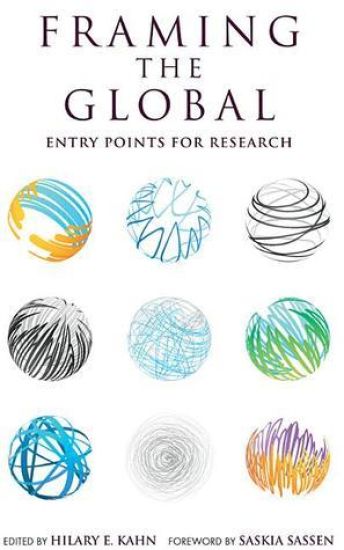
Framing the Global explores new and interdisciplinary approaches to the study of global issues. Essays are framed around the entry points or key concepts that have emerged in each contributor's engagement with global studies in the course of empirical research, offering a conceptual toolkit for global research in the 21st century.
What determines the flow of labor and capital in this new global information economy? Who has the capacity to coordinate this new system, to create some measure of order? What happens to territoriality and sovereignty, two fundamental principles of the modern state? And who gains rights and who loses rights? Losing Control? examines the rise of private transnational legal codes and supranational institutions, such as the World Trade Organization and universal human rights covenants, and shows that though sovereignty remains an important feature of the international system, it is no longer confined to the nation-state. Other actors gain rights and a kind of sovereignty by setting some of the rules that used to be within the exclusive domain of states. Saskia Sassen tracks the emergence and the making of the transformations that mark our world today, among which is the partial denationalizing of national territory. Two arenas in particular stand out in the new spatial and economic order by their capacity to set their own rules: the global capital market and the series of codes and institutions that have mushroomed into an international human rights regime. As Sassen shows, these two quasi-legal realms now have the power and legitimacy to demand action and accountability from national governments, with the ironic twist that both depend upon the state to enforce their goals. From the economic policy shifts forced by the Mexico debt crisis to the recurring battles over immigration and refugees around the world, Losing Control? incisively analyzes the events that have radically altered the landscape of governance in an era of increasing globalization.
In her classic book The Global City, Saskia Sassen tells how New York, London, and Tokyo became command centers of the emerging global economy and, in the process, underwent massive and parallel changes. The book reorients the way we think about how cities shape and are shaped by globalization and provides lessons for the future.
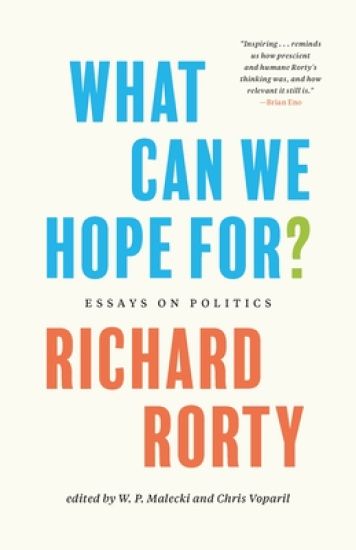
Prescient essays about the state of our politics from the philosopher who predicted that a populist demagogue would become president of the United StatesRichard Rorty, one of the most influential intellectuals of recent decades, is perhaps best known today as the philosopher who, almost two decades before the 2016 U.S. presidential election, warned of the rise of a Trumpian strongman in America. What Can We Hope For? gathers nineteen of Rorty’s essays on American and global politics, including four previously unpublished and many lesser-known and hard-to-find pieces.In these provocative and compelling essays, Rorty confronts the critical challenges democracies face at home and abroad, including populism, growing economic inequality, and overpopulation and environmental devastation. In response, he offers optimistic and realistic ideas about how to address these crises. He outlines strategies for fostering social hope and building an inclusive global community of trust, and urges us to put our faith in trade unions, universities, bottom-up social campaigns, and bold political visions that thwart ideological pieties.Driven by Rorty’s sense of emergency about our collective future, What Can We Hope For? is filled with striking diagnoses of today’s political crises and creative proposals for solving them.
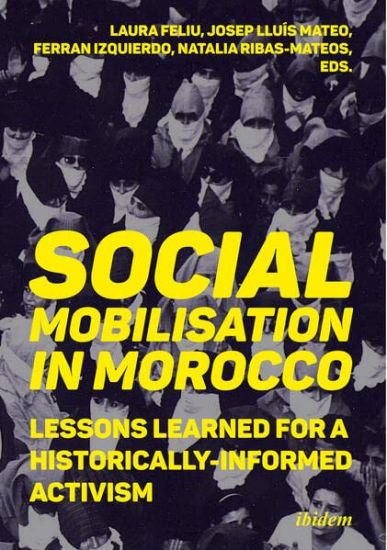
This collected volume investigates the ways in which historical training supports current activism and advocacy in global times by highlighting models of social activism and political representation in different parts of the world, with diverse social actions, strategies, and protest spaces. Morocco is a fascinating society to examine protest movements in an authoritarian regime. For the first time ever, the contributors reply in detail to questions, challenges and findings regarding the implications of historically informed activism in Morocco. The cooperative perspective is the key to a better understanding as it reinvigorates a conversation between social scientists--sociologists, anthropologists, and political scientists--and historians about how to analyse social and political activism. The main findings relate to the great structural transformations that have shaped the current power regimes in a longue dur e perspective. How are social movements born, how do they mature, and how do they die? Through the dynamics of social mobilisation, we discover the structure of the power regime, the responses (strategies), and its forms of survival (resources and capacities). How does history inform and empower current activism? The book covers 22 scenarios of popular revolts -urban, rural, and peripheral. Casablanca (1907, 1965, 2000), Fez (1907, 1990), the Eastern Rif (1909, 1921, 1958, 1984, 2004), Meknes (1937, 2011), Tangiers (1952, 2011, 2015), Sal , (1930, 2008), Taza (1915), and Imider (2011).
Prescient essays about the state of our politics from the philosopher who predicted that a populist demagogue would become president of the United StatesRichard Rorty, one of the most influential intellectuals of recent decades, is perhaps best known today as the philosopher who, almost two decades before the 2016 U.S. presidential election, warned of the rise of a Trumpian strongman in America. What Can We Hope For? gathers nineteen of Rorty’s essays on American and global politics, including four previously unpublished and many lesser-known and hard-to-find pieces.In these provocative and compelling essays, Rorty confronts the critical challenges democracies face at home and abroad, including populism, growing economic inequality, and overpopulation and environmental devastation. In response, he offers optimistic and realistic ideas about how to address these crises. He outlines strategies for fostering social hope and building an inclusive global community of trust, and urges us to put our faith in trade unions, universities, bottom-up social campaigns, and bold political visions that thwart ideological pieties.Driven by Rorty’s sense of emergency about our collective future, What Can We Hope For? is filled with striking diagnoses of today’s political crises and creative proposals for solving them.
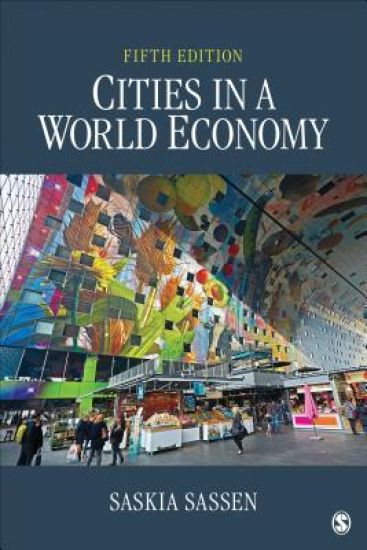
Cities in a World Economy examines the emergence of global cities as a new social formation. As sites of rapid and widespread developments in the areas of finance, information and people, global cities lie at the core of the major processes of globalization. The book features a cross-disciplinary approach to urban sociology using global examples, and discusses the impact of global processes on the social structure of cities. The Fifth Edition reflects the most current data available and explores recent debates such as the role of cities in mitigating environmental problems, the global refugee crisis, Brexit, and the rise of Donald Trump in the United States.
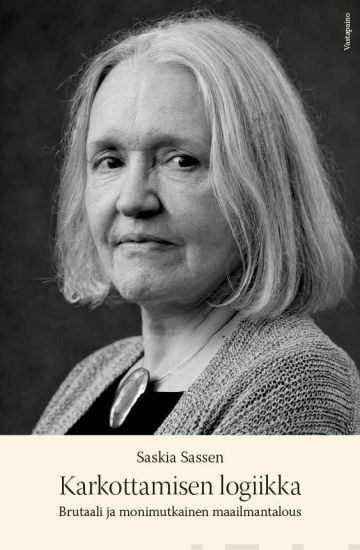
Merkittävän ajattelijan puheenvuoro globalisaation julmuudestaMitä yhteistä on pakolaisilla, finanssikriisissä kotinsa menettäneillä yhdysvaltalaisilla ja kaivosteollisuuden maananastuksilla? Saskia Sassenin mukaan nämä kaikki ovat esimerkkejä karkottamisesta eli prosessista, jossa ihmisiä, yrityksiä ja raaka-aineita työnnetään ulos työstä, kodeista ja maaperästä.Karkottamiseen johtaa usein globaalin talouden monimutkaisuus - teknologiset innovaatiot, finanssitalouden rahoitusvälineet ja juridiset operaatiot. Niiden tulisi palvella yhteiskunnan kehitystä ja hyvinvointia, mutta aivan liian usein ne aiheuttavat epätasa-arvoa, tuhoavat luontoa sekä häätävät köyhiä mailtaan. Sassen jäsentää ilmiöitä täysin uudella tavalla ja löytää niiden väliltä yllättäviä yhteyksiä.Saskia Sassen on sosiologian professori Columbian yliopistossa. Hän on tutkinut muun muassa globalisaatiota, maailmantaloutta, siirtolaisuutta ja globaaleja kaupunkeja.
When we talk about globalization, we tend to focus on its social and economic benefits. In Governance in the New Global Disorder, the political philosopher Daniel Innerarity considers its unsettling and largely unacknowledged consequences. The "opening" of different societies to new ideas, products, and forms of prosperity has introduced a persistent uncertainty, or disorder, into everyday life. Multinational corporations have weakened sovereignty. We no longer know who is in control or who is responsible. Economies can collapse without sufficient warning, and the effort to rebuild can drag on for years. Piracy is everywhere. Is there any way to balance the interests of state, marketplace, and society in this new construct of power? Since national economies have become deterritorialized and political interdependencies aggravate our common vulnerabilities, Innerarity contends that there is no other solution except to move toward global governance and a denationalization of justice. Globalization tries to unify the world through technologies, the economy, and cultural products and styles, but it cannot articulate or regulate political and legal equivalents. Everyone faces the same risks to their security, food supply, health, financial stability, and environment, and these risks demand a new global politics of humanity. In her foreword, the sociologist Saskia Sassen isolates the key takeaways from Innerarity's argument and the solutions they present to growing global tensions.
Research on gated communities is moving away from the hard concept of a 'gated community' to the more fluid one of urban gating. The latter allows communities to be viewed through a new lens of soft boundaries, modern communication and networks of influence.The book, written by an international team of experts, builds on the research of Bagaeen and Uduku’s previous edited publication, Gated Communities (Routledge 2010) and relates recent events to trends in urban research, showing how the discussion has moved from privatised to newly collectivised spaces, which have been the focal point for events such as the Occupy London movement and the Arab Spring.Communities are now more mobilised and connected than ever, and Beyond Gated Communities shows how neighbourhoods can become part of a global network beyond their own gates. With chapters on Australia, Canada, Europe, South America, Asia, Africa and the Middle East, this is a truly international resource for scholars and students of urban studies interested in this dynamic, growing area of research.
Framing the Global explores new and interdisciplinary approaches to the study of global issues. Essays are framed around the entry points or key concepts that have emerged in each contributor's engagement with global studies in the course of empirical research, offering a conceptual toolkit for global research in the 21st century.
Soaring income inequality and unemployment, expanding populations of the displaced and imprisoned, accelerating destruction of land and water bodies: today’s socioeconomic and environmental dislocations cannot be fully understood in the usual terms of poverty and injustice, according to Saskia Sassen. They are more accurately understood as a type of expulsion—from professional livelihood, from living space, even from the very biosphere that makes life possible.This hard-headed critique updates our understanding of economics for the twenty-first century, exposing a system with devastating consequences even for those who think they are not vulnerable. From finance to mining, the complex types of knowledge and technology we have come to admire are used too often in ways that produce elementary brutalities. These have evolved into predatory formations—assemblages of knowledge, interests, and outcomes that go beyond a firm’s or an individual’s or a government’s project.Sassen draws surprising connections to illuminate the systemic logic of these expulsions. The sophisticated knowledge that created today’s financial “instruments” is paralleled by the engineering expertise that enables exploitation of the environment, and by the legal expertise that allows the world’s have-nations to acquire vast stretches of territory from the have-nots. Expulsions lays bare the extent to which the sheer complexity of the global economy makes it hard to trace lines of responsibility for the displacements, evictions, and eradications it produces—and equally hard for those who benefit from the system to feel responsible for its depredations.
Gated Communities provides a historic, socio-political and contemporary cultural perspective of gated communities. In doing so it offers a different lens through which to view the historical vernacular background of this now global phenomenon. The book presents a collection of new writing on the issue by an international and interdisciplinary group of contributors. The authors review current thinking on gated communities and consider the sustainability issues that these contemporary 'lifestyle' communities raise. The authors argue that there are links that can be drawn between the historic gated homesteads and cities, found in much of the world, and today's Western-style secure complexes. Global examples of gated communities, and their historical context, are presented throughout the book. The authors also comment on how sustainability issues have impacted on these communities. The book concludes by considering how the historic measures up with the contemporary in terms of sustainability function, and aesthetic.