
Kirjailija
Sheila Fitzpatrick
Kirjat ja teokset yhdessä paikassa: 26 kirjaa, julkaisuja vuosilta 1990-2026, suosituimpien joukossa Lost Souls. Vertaile teosten hintoja ja tarkista saatavuus suomalaisista kirjakaupoista.
26 kirjaa
Kirjojen julkaisuhaarukka 1990-2026.
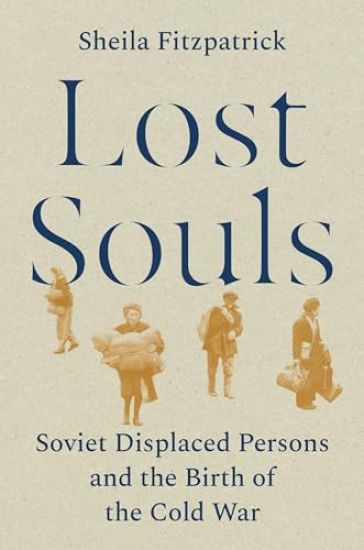
A vivid history of how Cold War politics helped solve one of the twentieth century’s biggest refugee crisesWhen World War II ended, about one million people whom the Soviet Union claimed as its citizens were outside the borders of the USSR, mostly in the Western-occupied zones of Germany and Austria. These “displaced persons,” or DPs—Russians, prewar Soviet citizens, and people from West Ukraine and the Baltic states forcibly incorporated into the Soviet Union in 1939—refused to repatriate to the Soviet Union despite its demands. Thus began one of the first big conflicts of the Cold War. In Lost Souls, Sheila Fitzpatrick draws on new archival research, including Soviet interviews with hundreds of DPs, to offer a vivid account of this crisis, from the competitive maneuverings of politicians and diplomats to the everyday lives of DPs.American enthusiasm for funding the refugee organizations taking care of DPs quickly waned after the war. It was only after DPs were redefined—from “victims of war and Nazism” to “victims of Communism”—in 1947 that a solution was found: the United States would pay for the mass resettlement of DPs in America, Australia, and other countries outside Europe. The Soviet Union protested this “theft” of its citizens. But it was a coup for the United States. The choice of DPs to live a free life in the West, and the West’s welcome of them, became an important theme in America’s Cold War propaganda battle with the Soviet Union.A compelling story of the early Cold War, Lost Souls is also a rare chronicle of a refugee crisis that was solved.
År 1917 kom bolsjevikerna till makten i det krigshärjade ryska imperiet på ett sätt som trotsade alla förutsägelser, inklusive deras egna. En knapp livstid senare, 1991, kollapsade Sovjetunionen lika oavsiktligt som den uppstått. Decennierna däremellan utspelades ett drama i episk skala - kaos och revolution, hungersnöd och utrensningar, dyrköpt seger i historiens mest förödande krig och världsomspännande geopolitisk konflikt, allt för drömmen om att bygga ett bättre samhälle. Den här komplexa historien berättas mästerligt, med talande detaljer. I ett storslaget svep får vi följa Lenin, Stalin, Gorbatjov och Putin och en av 1900-talets stormakter som fascinerar och påverkar oss än idag. SHEILA FITZPATRICK är flerfaldigt prisbelönad författare till en rad böcker och en av världens främsta forskare på Sovjetunionens historia. Hon medverkar regelbundet i London Review of Books och är professor emerita i Rysslands historia vid University of Chicago, hedersprofessor vid University of Sydney och professor vid Australian Catholic University."Kortfattad och oerhört läsvärd."SPECTATOR "En av de mest inflytelserika historikerna på Sovjetepokens historia." FOREIGN AFFAIRS "Oerhört respektingivande [...] än mer levande för att den visar på den sovjetiska utvecklingens många olika möjliga utfall." TIMES LITERARY SUPPLEMENT "Nära nog mirakulös [...] en översikt över Sovjetunionens historia från 1917 till 1991, full av anekdoter och levande detaljer, men håller också högsta akademiska standard." SLAVOJ ZIZEK
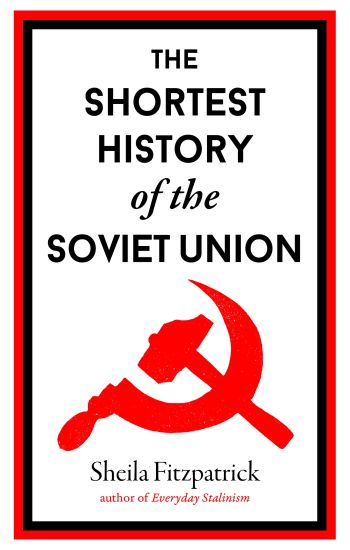
In 1917, Bolshevik revolutionaries came to power in the war-torn Russian Empire in a way that defied all predictions, including their own. Scarcely a lifespan later, in 1991, the Soviet Union collapsed as accidentally as it arose. The decades between witnessed drama on an epic scale--the chaos and hope of revolution, famines and purges, hard-won victory in history's most destructive war, and worldwide geopolitical conflict, all entwined around the dream of building a better society. This book is a lively and authoritative distillation of this complex history, told with vivid details, a grand sweep, and wry wit. The acclaimed historian Sheila Fitzpatrick chronicles the Soviet Age--its rise, reign, and unexpected fall, as well as its afterlife in today's Russia. She underscores the many ironies of the Soviet experience: An ideology that claimed to offer humanity the reins of history wrangled with contingency. An avowedly internationalist and anti-imperialist state birthed an array of nationalisms. And a vision of transcending economic and social inequality and injustice gave rise to a country that was, in its way, surprisingly normal. Moving seamlessly from Lenin to Stalin to Gorbachev to Putin, The Shortest History of the Soviet Union provides an indispensable guide to one of the twentieth century's great powers and the enduring fascination it still exerts.
In 1917, Bolshevik revolutionaries came to power in the war-torn Russian Empire in a way that defied all predictions, including their own. Scarcely a lifespan later, in 1991, the Soviet Union collapsed as accidentally as it arose. The decades between witnessed drama on an epic scale--the chaos and hope of revolution, famines and purges, hard-won victory in history's most destructive war, and worldwide geopolitical conflict, all entwined around the dream of building a better society. This book is a lively and authoritative distillation of this complex history, told with vivid details, a grand sweep, and wry wit. The acclaimed historian Sheila Fitzpatrick chronicles the Soviet Age--its rise, reign, and unexpected fall, as well as its afterlife in today's Russia. She underscores the many ironies of the Soviet experience: An ideology that claimed to offer humanity the reins of history wrangled with contingency. An avowedly internationalist and anti-imperialist state birthed an array of nationalisms. And a vision of transcending economic and social inequality and injustice gave rise to a country that was, in its way, surprisingly normal. Moving seamlessly from Lenin to Stalin to Gorbachev to Putin, The Shortest History of the Soviet Union provides an indispensable guide to one of the twentieth century's great powers and the enduring fascination it still exerts.
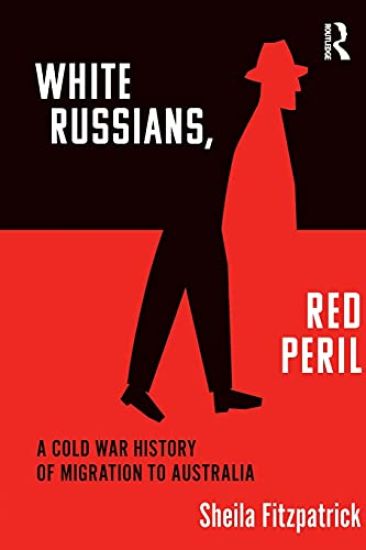
Over 20,000 ethnic Russians migrated to Australia after World War II – yet we know very little about their experiences. Some came via China, others from refugee camps in Europe.Many preferred to keep a low profile in Australia, and some attempted to ‘pass’ as Polish, West Ukrainian or Yugoslavian. They had good reason to do so: to the Soviet Union, Australia’s resettling of Russians amounted to the theft of its citizens, and undercover agents were deployed to persuade them to repatriate. Australia regarded the newcomers with wary suspicion, even as it sought to build its population by opening its door to more immigrants.Making extensive use of newly discovered Russian-language archives and drawing on a lifetime’s study of Soviet history and politics, award-winning author Sheila Fitzpatrick examines the early years of a diverse and disunited Russian-Australian community and how Australian and Soviet intelligence agencies attempted to track and influence them. While anti-Communist ‘White’ Russians dreamed a war of liberation would overthrow the Soviet regime, a dissident minority admired its achievements and thought of returning home.
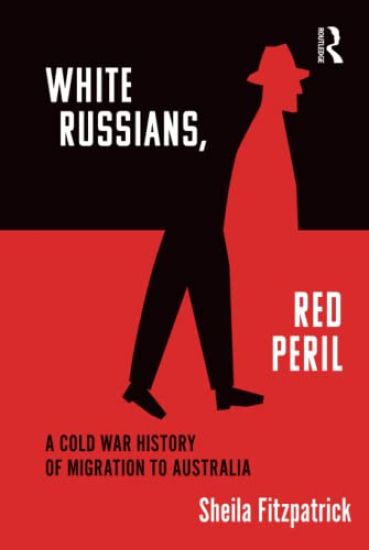
Over 20,000 ethnic Russians migrated to Australia after World War II – yet we know very little about their experiences. Some came via China, others from refugee camps in Europe.Many preferred to keep a low profile in Australia, and some attempted to ‘pass’ as Polish, West Ukrainian or Yugoslavian. They had good reason to do so: to the Soviet Union, Australia’s resettling of Russians amounted to the theft of its citizens, and undercover agents were deployed to persuade them to repatriate. Australia regarded the newcomers with wary suspicion, even as it sought to build its population by opening its door to more immigrants.Making extensive use of newly discovered Russian-language archives and drawing on a lifetime’s study of Soviet history and politics, award-winning author Sheila Fitzpatrick examines the early years of a diverse and disunited Russian-Australian community and how Australian and Soviet intelligence agencies attempted to track and influence them. While anti-Communist ‘White’ Russians dreamed a war of liberation would overthrow the Soviet regime, a dissident minority admired its achievements and thought of returning home.
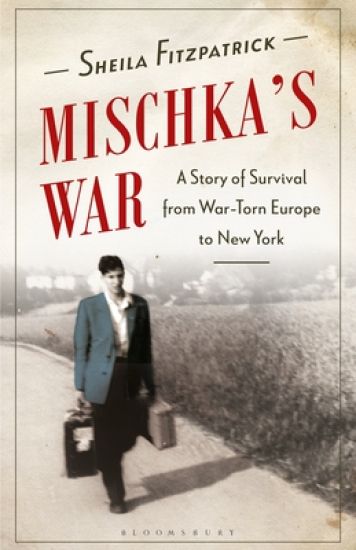
On a winter's day in 1943, 21-year-old Latvian Mischka Danos chanced on a terrible sight - a pit filled with the bodies of Jews killed by the occupying Germans. In order to escape conscription to the Waffen-SS - the authors of such atrocities - Mischka volunteered to go on a student exchange to Germany. He did not then know that he was part Jewish. Whilst in Germany, he narrowly escaped death in the Allied fire-bombing of Dresden. Surviving Hitler's Reich, he became a displaced person in occupied Germany, where in 1951 he earned a PhD at the exceptional Heidelberg Physics Institute. In the 1950s Mischka was sponsored as an immigrant to the US by a Jewish survivor whom his mother, Olga, had saved during Riga's worst period of Jewish arrests. As refugee experiences go, Mischka was among the lucky ones - but even luck leaves scars. The author Sheila Fitzpatrick, who met and married Mischka forty years after these events, turns her skills as a historian and wry eye as a memoirist to telling the remarkable story of Mischka's odyssey and survival.
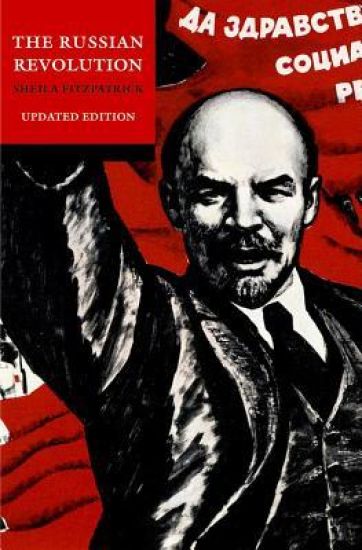
The Russian Revolution had a decisive impact on the history of the twentieth century. In the years following the collapse of the Soviet regime and the opening of its archives, it has become possible to step back and see the full picture. Starting with an overview of the roots of the revolution, Fitzpatrick takes the story from 1917, through Stalin's 'revolution from above', to the great purges of the 1930s. She tells a gripping story of a Marxist revolution that was intended to transform the world, visited enormous suffering on the Russian people, and, like the French Revolution before it, ended up by devouring its own children. This updated edition contains a fully revised bibliography and updated introduction to address the centenary, what does it all mean in retrospect.
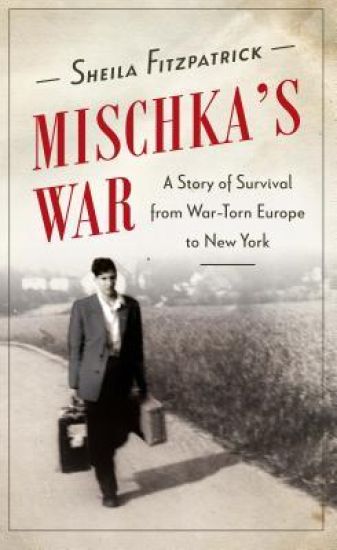
ON a winter's day in 1943, 21-year-old Latvian Mischka Danos chanced on a terrible sight - a pit filled with the bodies of Jews killed by the occupying Germans. In order to escape conscription to the Waffen-SS - the authors of such atrocities - Mischka volunteered to go on a student exchange to Germany. He did not then know that he was part Jewish. Whilst in Germany, he narrowly escaped death in the Allied fire-bombing of Dresden. Surviving Hitler's Reich, he became a displaced person in occupied Germany, where in 1951 he earned a PhD at the exceptional Heidelberg Physics Institute. In the 1950s Mischka was sponsored as an immigrant to the US by a Jewish survivor whom his mother, Olga, had saved during Riga's worst period of Jewish arrests. As refugee experiences go, Mischka was among the lucky ones - but even luck leaves scars. The author Sheila Fitzpatrick, who met and married Mischka forty years after these events, turns her skills as a historian and wry eye as a memoirist to telling the remarkable story of Mischka's odyssey and survival.
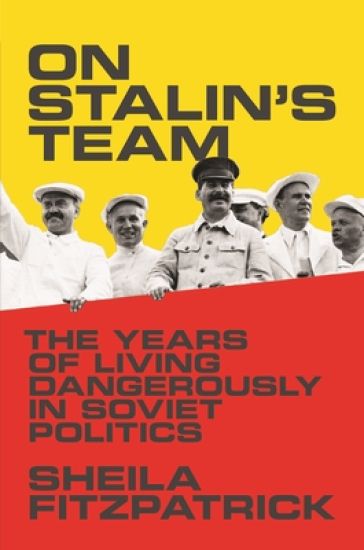
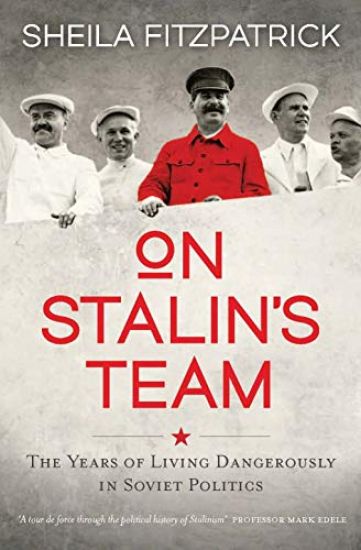
Stalin was the unchallenged dictator of the Soviet Union for so long that most historians have dismissed the officials surrounding him as mere yes-men and political window dressing. On Stalin's Team overturns this view, revealing that behind Stalin was a group of loyal men who formed a remarkably effective team with him from the late 1920s until his death in 1953. Drawing on extensive original research, Sheila Fitzpatrick provides the first in-depth account of this inner circle and their families. She vividly describes how these dedicated comrades-in-arms not only worked closely with Stalin, but also constituted his social circle. Stalin's team included the wily security chief Beria; Andreev, who traveled to provincial purges while listening to Beethoven on a portable gramophone; and Khrushchev, who finally disbanded the team four years after Stalin's death. Taking readers from the cataclysms of the Great Purges and World War II to the paranoia of Stalin's final years, On Stalin's Team paints an entirely new picture of Stalin within his milieu--one that transforms our understanding of how the Soviet Union was ruled during much of its existence.
Stalin was the unchallenged dictator of the Soviet Union for so long that most historians have dismissed the officials surrounding him as mere yes-men and political window dressing. On Stalin's Team overturns this view, revealing that behind Stalin was a group of loyal men who formed a remarkably effective team with him from the late 1920s until his death in 1953. Drawing on extensive original research, Sheila Fitzpatrick provides the first in-depth account of this inner circle and their families. She vividly describes how these dedicated comrades-in-arms not only worked closely with Stalin, but also constituted his social circle. Stalin's team included the wily security chief Beria; Andreev, who traveled to provincial purges while listening to Beethoven on a portable gramophone; and Khrushchev, who finally disbanded the team four years after Stalin's death. Taking readers from the cataclysms of the Great Purges and World War II to the paranoia of Stalin's final years, On Stalin's Team paints an entirely new picture of Stalin within his milieu--one that transforms our understanding of how the Soviet Union was ruled during much of its existence.
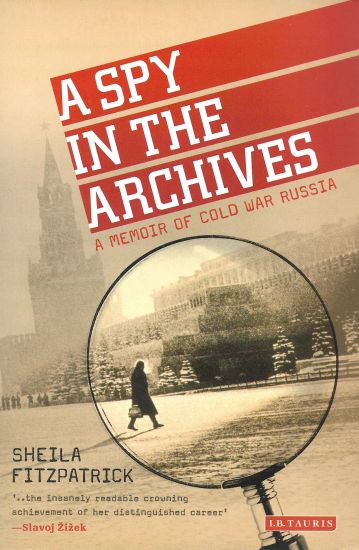
Moscow in the 1960s was the other side of the Iron Curtain: mysterious, exotic, even dangerous. In 1966 the historian Sheila Fitzpatrick travelled to Moscow to research in the Soviet archives. This was the era of Brezhnev, of a possible 'thaw' in the Cold War, when the Soviets couldn't decide either to thaw out properly or re-freeze. Moscow, the world capital of socialism, was renowned for its drabness. The buses were overcrowded; there were endemic shortages and endless queues. This was also the age of regular spying scandals and tit-for-tat diplomatic expulsions and it was no surprise that visiting students were subject to intense scrutiny by the KGB. Many of Fitzpatrick's friends were involved in espionage activities - and indeed others were accused of being spies or kept under close surveillance. In this book, Sheila Fitzpatrick provides a unique insight into everyday life in Soviet Moscow. Full of drama and colourful characters, her remarkable memoir highlights the dangers and drudgery faced by Westerners living under communism.
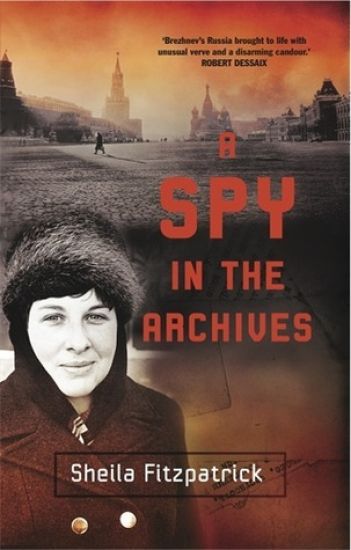
In 1968 historian Sheila Fitzpatrick was 'outed' by the Russian newspaper Sovetskaya Rossiya as all but a spy for Western intelligence. She was in Moscow at the time, working in Soviet archives for her doctoral thesis on AV Lunacharsky, the first Soviet Commissar of Enlightenment after the 1917 Bolshevik Revolution.Despite KGB attention, and the impossibility of finding a suitable winter coat, Sheila felt more at ease in Moscow than in Britainâ??a feeling cemented by her friendships with Lunacharsky's daughter, Irina, and brother-in-law, Igor, a reform-minded old Bolshevik who became a surrogate father and a intellectual mentor. An affair with young Communist activist, Sasha, pulled her further into a world in which she already felt at home. For the Soviet authorities and archives, however, she would always be marked as a foreigner, and so potentially a spy.Punctuated by letters to her mother in Melbourne and her diary entries of the time, and borne along by Fitzpatrick's wry, insightful narrative, A Spy in the Archives captures the life and times of Cold War Russia.
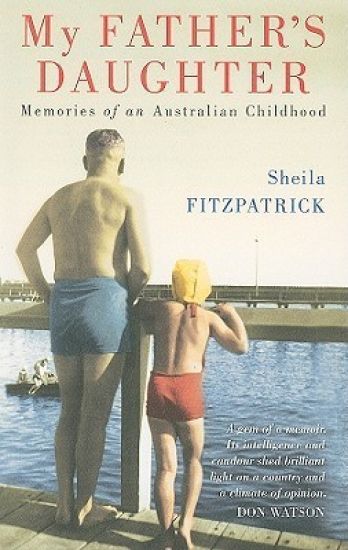
How does a daughter tell the story of her father? Sheila Fitzpatrick was taught from an early age to question authority. She learnt it from her father, the journalist and radical historian Brian Fitzpatrick. But very soon, she began to turn her questioning gaze on him. Teasing apart the many layers of memory, Fitzpatrick reveals a complex portrait of an Australian family against a Cold War backdrop. As her relationship with her father fades from girlhood adoration to adolescent scepticism, she flees Melbourne for Oxford to start a new life. But it's not so easy to escape being her father's daughter. My Father's Daughter is a vivid evocation of an Australian childhood; a personal memoir told with the piercing insight of a historian.