Kirjojen hintavertailu. Mukana 12 595 353 kirjaa ja 12 kauppaa.

Kirjailija

Simon Elliott

Kirjat ja teokset yhdessä paikassa: 28 kirjaa, julkaisuja vuosilta 2009-2026, suosituimpien joukossa Chagall. Vertaile teosten hintoja ja tarkista saatavuus suomalaisista kirjakaupoista.

28 kirjaa

Kirjojen julkaisuhaarukka 2009-2026.

Chagall

Chagall

Simon Elliott

Selfmadehero
2026
sidottu
The artist Marc Chagall (1887–1985) once described painting as “a window through which I could fly into another world” – which is just what he did. He grew up Jewish in the so-called Pale of Settlement (now Belarus) in the Russian Empire, relocating to Paris in 1910, at the height of the “Belle Époque”, and then served an uncomfortable time as an art commissar in Bolshevik Russia. He would spend his long lifetime outrunning and outliving a succession of oppressive régimes (Tsarist, Soviet, Fascist, Nazi) as numerous as the art movements he absorbed (surrealist, fauvist, symbolist, modernist) and the range of media he both liberated and illuminated. In his ceramics, stained glass, tapestry – above all, in his paintings – Chagall brought the freedom of his “colours of love” to a stark world that is too often too dark. Acclaimed for his graphic biographies of Hockney (2023), Van Gogh (2024), and Kusama (2025), Simon Elliott returns with a triumphant portrait of perhaps the greatest colourist (and therefore optimist) of them all.
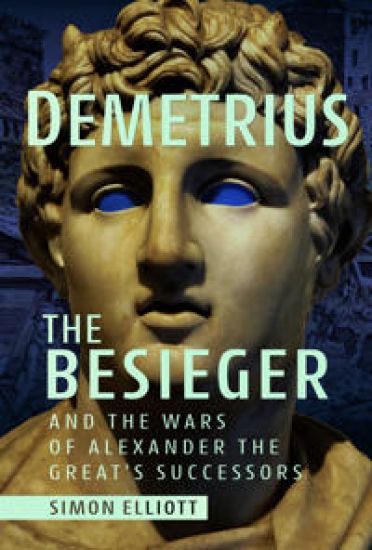
Demetrius the Besieger and the Wars of Alexander the Great's Successors
Of the many vivid characters who shine in the wars of Alexander the Great’s successors, Demetrius Poliorketes’ light burns brighter than any other. Later famed for his siege prowess, the son of Antigonus Monopthalmus was raised knowing at some stage he could inherit Alexander’s entire empire, such was his father’s initial success. He was a true celebrity in his day, fighting with his father in the Second War of the Diadochi against the cunning Eumenes, and later against Hellenistic all-comers in the Third and Fourth Wars of the Diadochi. Often seen as the culprit when Antiochus died at the Battle of Ipsus in 301 BC (Demetrius’ victorious cavalry chasing their opponents off the field of battle, leaving his father to his fate), he later made a power play for the Macedonian throne, becoming its first Antigonid king. Sadly for Demetrius he didn’t enjoy his reign for long, being defeated by the combined forces of Pyrrhus of Epirus and his allies in the eastern Mediterranean. Then finally, with his last army, he fled to Syria where his troops deserted him and he died a captive of Seleucus in 283 BC. However, he did establish the Antigonid line which ruled Macedon until its final king, Perseus, was defeated by the Romans at the Battle of Pydna in 168 BC. In this brand new biography of the most glamorous of the diadochi, the story of the 40 year funeral games following the death of Alexander will be told from a fresh viewpoint, looking not only at the exploits of Demetrius himself but of his incredible life and times as the plates of political control across Alexander’s vast empire shifted time and again, sometimes in favour of our protagonist, and sometimes against.
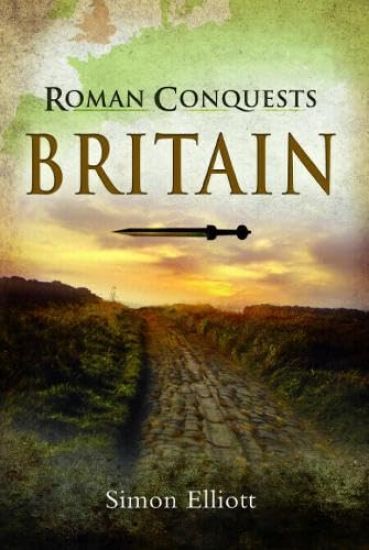
Roman Conquests: Britain

Roman Conquests: Britain

Simon Elliott

PEN SWORD BOOKS LTD
2025
nidottu
The Roman Conquests series seeks to explain when and how the Romans were able to conquer a vast empire stretching from the foothills of the Scottish Highlands to the Sahara Desert, from the Atlantic to the Persian Gulf. How did their armies adapt to and overcome the challenges of widely varied enemies and terrain? In this volume, Dr Simon Elliott draws on the latest research and archaeological evidence to present a new narrative of the conquest (never completed) of Britain. From Julius Caesar’s initial incursions in 55 and 54 BC, through the Claudian invasion of 43 AD and the campaigns of expansion and pacification thereafter, he analyses the Roman army in action. The weapons, equipment, organization, leadership, strategy and tactics of the legions and their British foes are described and analysed. The ferocity of the resistance was such that the island was never wholly subdued and required a disproportionate military presence for the duration of its time as a Roman province.
The African Emperor

The African Emperor

Simon Elliott

ICON BOOKS
2025
sidottu
Septimius Severus was Rome's black emperor. Born in the blistering heat of a North African spring in Leptis Magna AD 145, he died in the freezing cold of a northern British winter in York in AD 211. A giant of an emperor, whose career can be counted in superlatives, Severus was in power at the height of Rome's might. He led the largest army to ever campaign in Britain, comprising 50,000 men, part of a Roman military establishment which peaked at 33 legions under his rule.Born into the richest family, in the richest part of the Roman Empire, Severus monumentalised his rule across the empire. He visited - and often fought in - every region. Where he did, he left a mighty legacy in the built environment, for example in Rome where much of the Forum Romanum and most of the imperial palaces are Severan. In North Africa, his hometown of Leptis Magna is all Severan, as are the Roman cities at the Atlas mountains. In London, the land walls that still define the City's Square Mile were delineated under his rule. Visitors to the under croft at York Minster can stand where he died.Septimius Severus was one of the greatest warrior emperors, a hard man who almost died in battle several times and whose attitude is reflected in his deathbed advice to two sons: 'Be of one mind with your family, enrich the soldiers, and despise the rest.'
Agricola in Scotland

Agricola in Scotland

Simon Elliott

PEN SWORD BOOKS LTD
2025
sidottu
Agricola was the great Flavian warrior governor of Britain tasked by the emperor Vespasian with conquering the far north of its main island for the first time. Initially campaigning in Wales and then the north of modern England to secure his rear, he launched his first assault into modern Scotland at the end of the 70s AD. Four more bloody campaigns beyond the Solway Firth-Tyne frontier followed, each time the Romans heading further and further into the heart of darkness, as they would have seen it. Famously, at one stage during the campaigns he also contemplated invading Ireland, only to be told no by the new emperor, Domitian. Ultimately, the primary sources say he defeated the combined armies of the natives in far north at the Battle of Mons Graupius in AD 83. After this, the successful conquest of the whole island was declared, Agricola commanded the Classis Britannia (the Roman navy in Britain) to circumnavigate the whole province for the first time, and Domitian ordered a monumental arch to be built at Richborough on the east coast of Kent to celebrate the Roman triumph. This became the imperial gateway into Roman Britain. In this new, generation-defining book on Agricola’s campaigns in Scotland new archaeological evidence will be used to show how Agricola was able to campaign so far north of the imperial frontier and in such numbers (with over 30,000 men, plus the fleet), and the exact routes he followed. Thus, for the first time, the true story of Agricola in Scotland can be told.
Kusama

Kusama

Simon Elliott

Selfmadehero
2025
sidottu
“The only method I have found that relieves my illness is to keep creating art. I followed the thread of art and somehow discovered a path that would allow me to live.” From her days in 1960s New York as a proponent of free love and peace to her current position as internationally recognised Queen of Polka Dots and creator of infinity, Yayoi Kusama’s life is an extraordinary story of triumph over struggle through art. This graphic novel vividly portrays Kusama’s unusual youth and family troubles, her discovery of a new style of painting, her struggles with mental illness, and her rise to international art stardom. For those seeking an introduction to this incredible artist or searching for a fresh take on her story – this is Yayoi Kusama’s life as you’ve never seen it before.
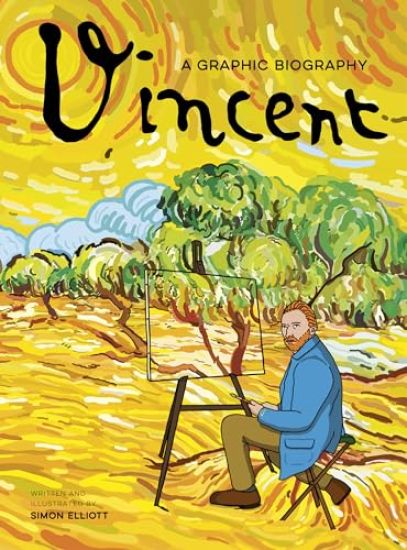
Vincent: A Graphic Biography

Vincent: A Graphic Biography

Simon Elliott

Quarto Publishing Plc
2024
sidottu
'I know for sure that I have an instinct for colour, and painting is in the very marrow of my bones' The life of Van Gogh has gone down in legend as the archetypal artist’s existence. He was irascible and short-tempered, hugely passionate and emotional, absurdly talented and, for most of his lifetime, notoriously misunderstood and under-appreciated. And yet today, we see him as one of the most inventive, influential and admired painters of the entire Western canon, if not a genius. Taking us through his short but explosive life, this graphic novel paints a vivid picture of Van Gogh’s unusual youth, his famous early failures, his discovery of a new style of painting, his tragic suicide, and the meteoric artistic legacy that followed. For those looking for an introduction to this incredible artist, or searching for a fresh take on his story – this is Vincent Van Gogh’s life as you’ve never seen it before.
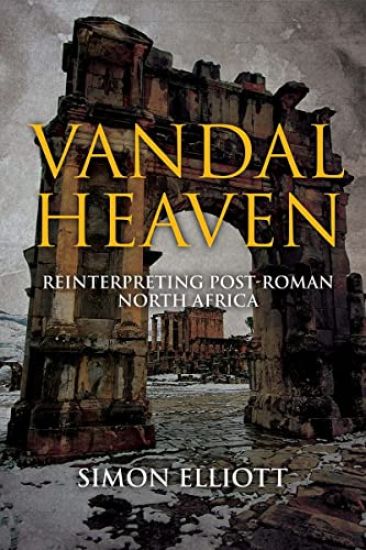
Vandal Heaven

Vandal Heaven

Simon Elliott

Casemate Publishers
2024
sidottu
North Africa was one of the richest parts of the Roman Empire, the agricultural powerhouse of the Mediterranean. It was also home to some of the emperor’s biggest imperial estates, and prosperous cities of all kinds. Its loss to the Vandals in the first half of the 5th century AD was the mortal blow which precipitated the fall of the western empire, and set the eastern empire back for decades. Its reconquest then became an obsession with each new emperor in Constantinople. Time and again the eastern Romans failed in this goal, until Justinian I finally succeeded in the AD 530s. Although North Africa’s restoration to the world of Rome only lasted a short time, it has widely been regarded as a positive development. However, new research – published here for the first time – shows that post-Roman North Africa thrived under the Vandals. To them it was Vandal heaven, a place where they found a way as the new incumbent elite to live comfortably alongside the late Roman inhabitants, despite their different interpretations of Christianity. Together, the two cultures flourished. When the eastern Romans – now styled Byzantines – returned, they weren’t welcome. This is evidenced in the surviving built environments, namely chains of small forts along the frontier and interior, where the Byzantines used mounted troops to keep an unhappy local population under control. Dr Elliott presents a brand-new interpretation of post-Roman North Africa, providing a compelling argument for how the region today came to be part of the Arab world, in contrast to the regions along the northern Mediterranean freeboard which maintain their Roman-ness to this day.
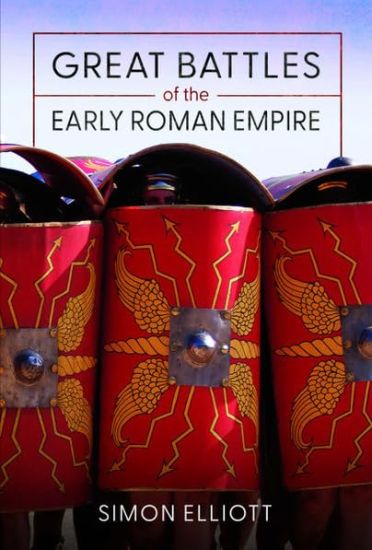
Great Battles of the Early Roman Empire

Great Battles of the Early Roman Empire

Simon Elliott

PEN SWORD BOOKS LTD
2023
sidottu
Dr Simon Elliott describes eight of the greatest, most decisive of the Roman Empire of the first to third centuries. The list includes battles fought from the highlands of Scotland and the forests of Germany to the deserts of the Middle East. They show how the vaunted Roman legions adapted to extremes of terrain and climate as well as a wide array of very different foes, from the wild Caledonian tribes to the sophisticated, combined-arms armies of Sassanid Persia with their war elephants and superb cavalry. Some of the battles even pit the Roman legions against their own kind in brutal civil wars. After an introductory chapter on the Imperial Roman army, detailing its organization, equipment, tactics and doctrine, the author moves on to describing each battle in detail. He sets the strategic context and background of the chosen engagement before analysing the size and composition of the opposing forces, also detailing the nature of the enemy faced. The manoeuvres leading up to the battle are described, followed by deployment and the course of the fighting itself. Finally, the aftermath and implications of the battles outcome are assessed. The well-researched and engaging text is supported by clear maps.
Roman Britain's Missing Legion

Roman Britain's Missing Legion

Simon Elliott

PEN SWORD BOOKS LTD
2023
nidottu
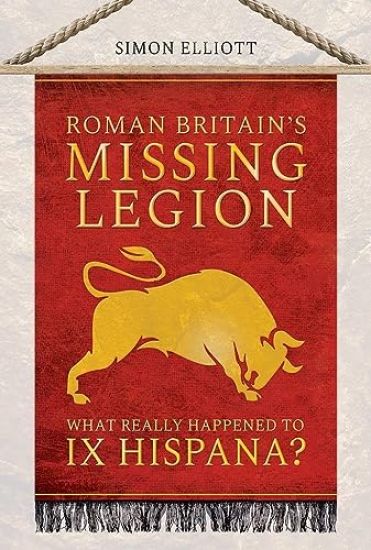
Legio IX Hispana had a long and active history, later founding York from where it guarded the northern frontiers in Britain. But the last evidence for its existence in Britain comes from AD 108. The mystery of their disappearance has inspired debate and imagination for decades. The most popular theory, immortalized in Rosemary Sutcliffe’s novel The Eagle of the Ninth, is that the legion was sent to fight the Caledonians in Scotland and wiped out there. But more recent archaeology (including evidence that London was burnt to the ground and dozens of decapitated heads) suggests a crisis, not on the border but in the heart of the province, previously thought to have been peaceful at this time. What if IX Hispana took part in a rebellion, leading to their punishment, disbandment and damnatio memoriae (official erasure from the records)? This proposed ‘Hadrianic War’ would then be the real context for Hadrian’s ‘visit’ in 122 with a whole legion, VI Victrix, which replaced the ‘vanished’ IX as the garrison at York. Other theories are that it was lost on the Rhine or Danube, or in the East. Simon Elliott considers the evidence for these four theories, and other possibilities.
Hockney

Hockney

Simon Elliott

Quarto Publishing Plc
2023
sidottu
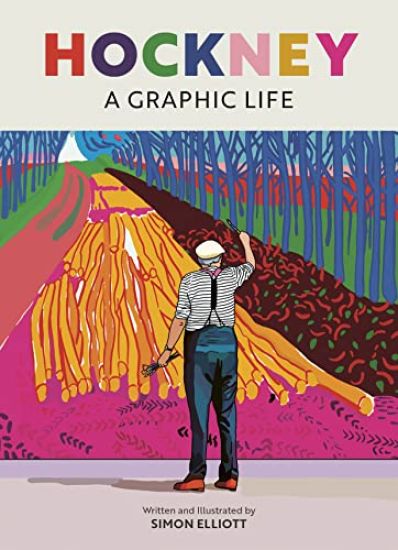
Follow the journey of David Hockney's exceptional life in a unique graphic novel format.From his childhood in Bradford and early years making it as an artist, to his sun-drenched Los Angeles period, his triumphal return to the UK and his recent iPad drawings that proudly exclaim that ‘spring cannot be cancelled’, this charming biography traces the captivating life and times of David Hockney. Drawn entirely on an iPad in a fun, fully illustrated style – and in homage to Hockney's own iPad drawings – this is a colourful, thought-provoking and joyous story of one of the world's best-loved artists.
Roman Special Forces and Special Ops

Roman Special Forces and Special Ops

Simon Elliott

PEN SWORD BOOKS LTD
2023
sidottu
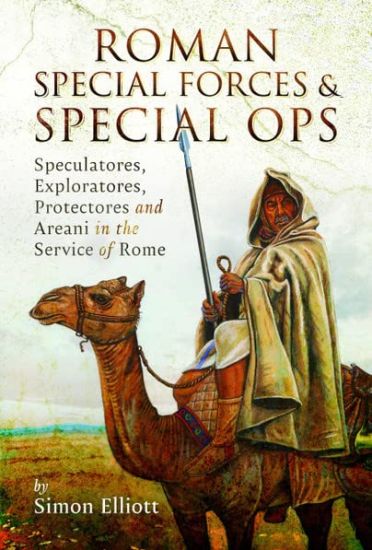
Much has been written about the Roman army and the mighty legions that conquered their empire and then defended it for centuries against all comers. But little has been written about the men and units employed when something more subtle than the march of legions into pitched battle was required. This is the only book available dedicated to Roman special ops and the role of the Speculatores, Exploratores, Protectores and Areani. Simon Elliott reveals the kinds of special operations conducted by the Romans: tactical scouting ahead of the legions, covert strategic reconnaissance in neighbouring states, espionage, assassination or abduction of dissidents and enemies, counter-insurgency, and close protection of Roman officials and commanders. While such missions were frequently executed by ad-hoc units or individuals detailed for that specific mission, the author goes on to reveal the evidence for the aforementioned specialist units. He concludes with an analysis of the extent to which these various forces corresponded to a modern conception of Special Forces. These men were the eyes and ears of the Empire, the deadly tip of the Roman sword.
Sea Eagles of Empire

Sea Eagles of Empire

Simon Elliott; Andrew Lambert

THE HISTORY PRESS LTD
2022
pokkari
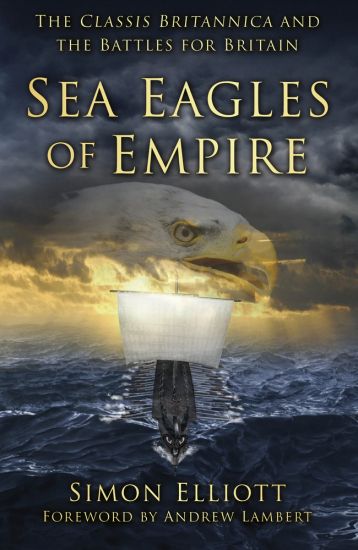
Winner of Military History Monthly’s 2017 Book of the Year AwardThe Classis Britannica was the Roman regional fleet controlling and protecting the waters around the British Isles – in other words, Britain’s first-ever navy.For over 200 years it played a key role in the northern frontiers of the Roman Empire: it helped to establish the province of Britannia and assisted in Roman military campaigns, as well as controlling the continental coast through to the Rhine Delta. Outside of war, the Classis Britannica also offered vital support for the civilian infrastructure of Roman Britain, assisting in administration, carrying out major building and engineering projects, and running industry. Later, its mysterious disappearance in the mid-third century ad would contribute to Britain finally leaving the Empire 150 years later. In Sea Eagles of Empire, acclaimed historian Simon Elliott tells its story for the very first time.
Roman Warriors

Roman Warriors

Graham Sumner; Simon Elliott; Adrian Golsworthy

GREENHILL BOOKS
2022
sidottu
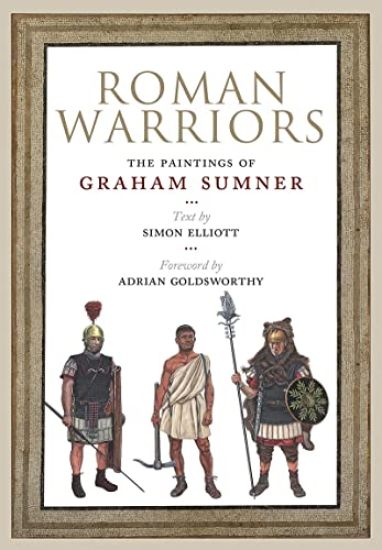
This book represents the fruit of many years of study by a well respected author in the field. It is well written so as to be very readable for the non-academic whilst presenting a huge, and surely definitive, array of evidence - Roman Army Talk on Roman Military Dress An excellent and informative book from a very knowledgeable author - Amazon.co.uk on Roman Military Dress Gathering together stunning artwork from Graham Sumner's impressive, expansive portfolio, featuring never-before-seen illustrations from the artist and reminding us of his exceptional ability to bring Ancient Rome to life through painting, this colourful, comprehensive anthology is a must-have for any enthusiast of the period, and of military history in general. Introduced with a foreword by best-selling historian and author Adrian Goldsworthy, Sumner's beautiful colour reconstructions of Ancient Roman warriors over time are complemented expertly with informative, enlightening text by eminent historian and author Simon Elliott. This combination of Sumner's illustrations and Elliott's writing leaves no stone unturned as they divulge information about this fascinating period of military history in mesmerising, intricate detail. Readers will swiftly become fully immersed in this ancient world, and will leave it with a wealth of knowledge about and a profound understanding of the warriors of Ancient Rome, and a great appreciation for Sumner and Elliott's expertise in the area.
The Legacy of Rome

The Legacy of Rome

Simon Elliott

THE HISTORY PRESS LTD
2022
sidottu
The world of the Roman Republic and Empire is still very much with us, alive and a key companion as we negotiate the trials and tribulations of modern life. We don’t just walk in the footsteps of Romans great and small; we walk side by side with them.At its height in the second century AD the Roman Empire stretched across three continents, from Hadrian’s Wall in the far north-west to the bustling port cities on the Red Sea, but its influence spread even further afield, with its legacy lasting to this day.In The Legacy of Rome, acclaimed historian Dr Simon Elliott sets off on a grand tour of the whole empire, reviewing each region in turn to show how the experience of being part of the Roman world still has a dramatic impact on our lives today. From wild Britannia, where the legacy of conquest still influences relationships with the Continent; to western Europe, where the language, church and even law can be traced back to antiquity; to schisms and war across central Europe and the Middle East that are directly rooted in the world of Rome – the result is a fascinating exploration of the reach of Rome beyond its borders and through time.
Roman Britain's Pirate King

Roman Britain's Pirate King

Simon Elliott

PEN SWORD BOOKS LTD
2022
sidottu
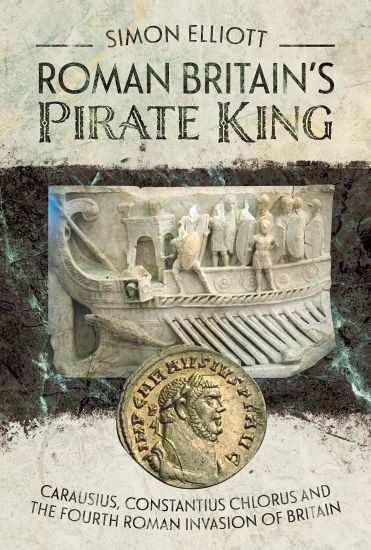
In the mid-3rd century AD Roman Britain's regional fleet, the Classis Britannica, disappeared. It was never to return. Soon the North Sea and English Channel were over-run by Germanic pirates preying upon the east and south coast of Britain, and the continental coast up to the Rhine Delta. The western augustus (senior emperor) Maximian turned to a seasoned naval leader called Marcus Aurelius Mausaeus Valerius Carausius to restore order. He was so successful that Maximian accused him of pocketing the plunder he'd recaptured, ordering his execution. The canny Carausius moved first and in 286 usurped imperial authority, creating a North Sea empire in northern Gaul and Britain which lasted until 296. Dubbed the pirate king, he initially thrived, seeing off early attempts by Maximian to defeat him. However, in the early 290s Maximian appointed his new caesar (junior emperor), Constantius Chlorus (the father of Constantine the Great), to defeat Carausius. A seasoned commander, Constantius Chlorus soon brought northern Gaul back into the imperial fold, leaving Carausius controlling only Britain. Carausius was then assassinated and replaced by Allectus, his treasurer. Allectus was in turn defeated by Constantius Chlorus in AD 296 in the fourth Roman invasion of Britain, the caesar arriving just in time to prevent London being sacked by Allectus' Frankish mercenaries. Once more Britain was part of the Roman Empire.
Alexander the Great versus Julius Caesar

Alexander the Great versus Julius Caesar

Simon Elliott

PEN SWORD BOOKS LTD
2021
sidottu
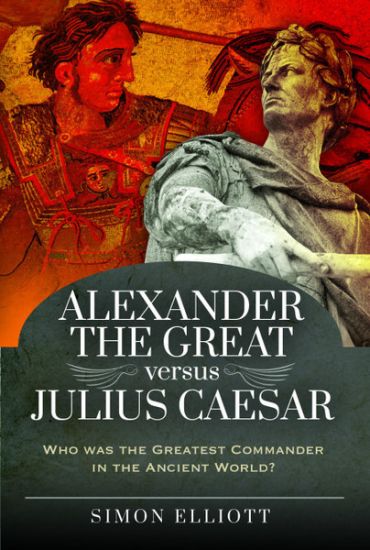
In the annals of ancient history the lights of Alexander the Great and Gaius Julius Caesar shine brighter than any other, inspiring generations of dynasts and despots with their imperial exploits. Each has been termed the greatest military leader of the ancient world, but who actually was the best? In this new book Dr Simon Elliott first establishes a set of criteria by which to judge the strategic and tactical genius of both. He then considers both in turn in brand-new, up-to-date military biographies, starting with Alexander, undefeated in battle and conqueror of the largest empire the world had seen by the age of 26\. Next Caesar, the man who played the crucial role in expanding Roman territory to the size which would later emerge as the Empire under his great nephew, adopted son and heir Augustus. The book's detailed conclusion sets each of their military careers against the criteria set out earlier to finally answer the question: who was the greatest military leader in the ancient world?
Ancient Greeks at War

Ancient Greeks at War

Simon Elliott

Casemate Publishers
2021
sidottu
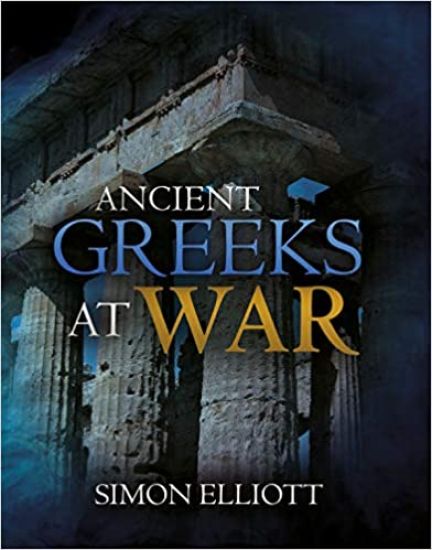
Ancient Greeks at War is a lavishly illustrated tour de force covering every aspect of warfare in the Ancient Greek world from the beginnings of Greek civilization through to its assimilation into the ever expanding world of Rome. As such it begins with the onset Minoan culture on Crete around 2,000 BC, then covers the arrival of the Mycenaean civilisation and the ensuing Late Bronze Age Collapse, before moving on to Dark Age and Archaic Greece. This sets the scene for the flowering of Classical Greek civilization, as told through detailed narratives of the Greek and Persian Wars, Peloponnesian Wars and the rise of Thebes as a major power.The book then moves on to the onset of Macedonian domination under Philip II, before focusing in detail on the exploits of his son Alexander the Great, the all-conquering hero of the ancient world. His legacy was the Hellenistic world with its multiple, never ending series of conflicts that took place over a huge territory, ranging from Italy in the west all the way to India in the east. Those covered include the various Wars of the Successors, the rise of the Bactrian-Greek and Indo-Greek kingdoms, the various wars between the Antigonid Macedonian, Seleucid and Ptolemaic kingdoms, and later the onset of the clash of cultures between the rising power of Rome in the west and the Hellenistic kingdoms. In the long run the latter proved unable to match Rome's insatiable desire for conquest in the eastern Mediterranean, and this together with the rise of Parthia in the east ensured that one by one the Hellenistic kingdoms and states fell. The book ends with the destruction of Corinth in 146 BC after the defeat by Rome of the Achaean League. The conclusion considers the legacy of the Ancients Greeks in the Roman world, and subsequently.
Roman Conquests: Britain

Roman Conquests: Britain

Simon Elliott

Pen Sword Military
2021
sidottu
The Roman Conquests series seeks to explain when and how the Romans were able to conquer a vast empire stretching from the foothills of the Scottish Highlands to the Sahara Desert, from the Atlantic to the Persian Gulf. How did their armies adapt to and overcome the challenges of widely varied enemies and terrain? In this volume, Dr Simon Elliott draws on the latest research and archaeological evidence to present a new narrative of the conquest (never completed) of Britain. From Julius Caesar's initial incursions in 55 and 54 BC, through the Claudian invasion of 43 AD and the campaigns of expansion and pacification thereafter, he analyses the Roman army in action. The weapons, equipment, organization, leadership, strategy and tactics of the legions and their British foes are described and analysed. The ferocity of the resistance was such that the island was never wholly subdued and required a disproportionate military presence for the duration of its time as a Roman province.