Kirjailija
Simon Forty
Kirjat ja teokset yhdessä paikassa: 34 kirjaa, julkaisuja vuosilta 2015-2026, suosituimpien joukossa Operation Market Garden. Vertaile teosten hintoja ja tarkista saatavuus suomalaisista kirjakaupoista.
34 kirjaa
Kirjojen julkaisuhaarukka 2015-2026.
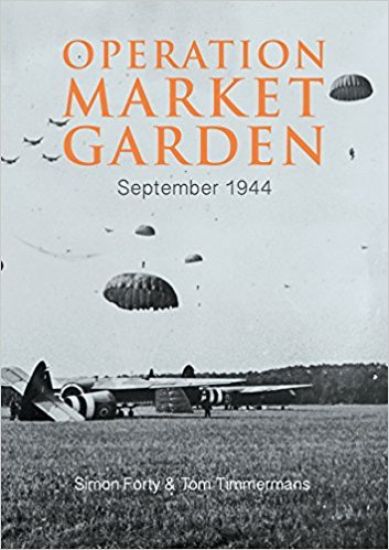
The battle of Normandy ended as the Allied armies crossed the Seine at the end of August 1944, a month after Operation Cobra had broken the stalemate. The Allies harried the retreating Germans, who left their tanks and heavy weapons south of the Seine, and by mid-September the Allies were coming up against the defences of Germany itself, the impressive Westwall.As far as the Allies were concerned, the Germans were beaten. The scent of immediate victory was in the air, the only question was where to apply the coup de grace. Logistics demanded that this should be a single thrust rather than Eisenhower’s broad front approach. Montgomery—the architect of victory in Normandy—proposed a daring plan to circumvent the Westwall, thrust towards Berlin, and make use of the newly created 1st Allied Airborne Army. The plan was simple: use the Paratroopers to hold key bridges along a single route along which British XXX Corps would make an advance that would be “rapid and violent, and without regard to what is happening on the flanks.” US 101st Airborne would land north of Eindhoven; 82nd Airborne at Nijmegen; British 1st Airborne at Arnhem—the so-called “bridge too far.”Unfortunately, the plan was flawed, the execution imperfect, and the Germans far from beaten. In spite of the audacious actions of the Paratroopers who would cover themselves with glory, Operation Market Garden showed that the German ground forces would still provide the Allies with stiff opposition in the West.And then, in 1977, A Bridge Too Far came out. With levels of realism that wouldn’t be approached for twenty years, the movie produced a view of the battle that subverted reality and permeated public perception. Just as George C. Scott produced the definitive Patton, so A Bridge Too Far provided an unnuanced view of the battles that historians have battled to correct ever since.As with its companion volumes on D-Day, the Bocage, and the Ardennes battlefields, this book provides a balanced, up-to-date view of the operation making full use of modern research. With over 500 illustrations including many maps, aerial and then and now photography, it will provide the reader with an easy-to-read, up-to-date examination of each part of the operation, benefitting from on-the-ground research by Tom Timmermans, who lives in Eindhoven.
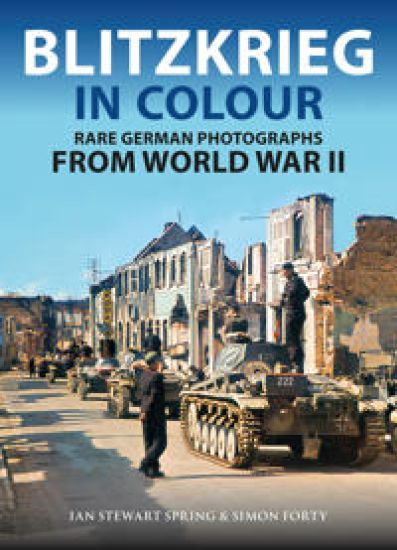
In 1939, Germany unleashed a new form of warfare on Europe – blitzkrieg, or ‘lightning war’. The strategy was to carry out rapid, overwhelming attacks combining tanks, motorized infantry and air support to smash through enemy lines. During the early years of the war, it was put into devastating effect and would change the face of modern conflict forever. With more than 250 original colour images – almost entirely never seen before – this remarkable new work is an immersive visual chronicle of the Wehrmacht’s blitzkrieg campaigns of 1939 and 1940, from the first tanks rolling into Poland to the sweeping conquests across Western Europe. The photos are from original colour slides and provide a genuine, vivid look at the past as it was originally seen. The accompanying historical commentary is based on thorough archival research, and together they take the reader to the heart of the frontline, conveying both the tactical brilliance of this revolutionary method of warfare and the terrible human toll. As well as covering the tanks, equipment and aircraft, the book captures snapshots of everyday life for soldiers and civilians, and the destruction caused by the campaigns: cities reduced to rubble, the German occupation of towns, the displacement of refugees, and casualties of war.
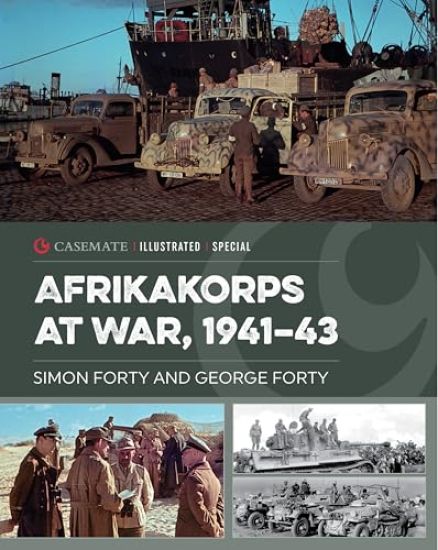
The battles in North Africa hold a unique place in the history of World War II. Praised in Parliament and the British press, German commander Erwin Rommel achieved near-mythical status as a general. The fighting was seen as one of few “clean” wars fought by the Nazis, marked by mutual respect between the opponents. And the desert setting was dramatic: blistering daytime heat and plummeting temperatures at nights, abrasive sandstorms and flash floods, from Egypt’s Qattara Depression to Tunisia’s Atlas Mountains—an arena that still bore the marks of battles as far back as Roman times where Scipio had fought Hannibal. The weather and terrain produced a fearsome place to fight a war. This is also the theater in which the U.S. forces made their first significant appearance in the battles against Hitler, where the men who would lead in Normandy came together from American and British forces, resulting in a victory that saw a quarter of a million German and Italian soldiers captured. Richly illustrated, this completely revised edition of George Forty’s classic work provides an eyewitness account of what it was like to fight and survive in the desert, examines the importance of intelligence and codebreaking, and reassesses Rommel’s reputation as a battlefield commander.
A Photographic History of Airborne Warfare, 1939–1945
Simon Forty; Jonathan Forty
PEN SWORD BOOKS LTD
2026
nidottu
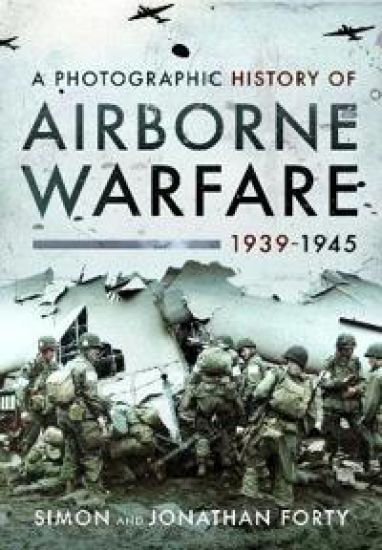
On 10 May 1940 German Fallschirmjäger stormed the Dutch fort of Eben-Emael, south of Maastricht. The brilliantly executed operation was the first signal success by airborne troops in the Second World War and it made the military world sit up and take notice. Improved parachutes and the creation of gliders that could carry troops meant that assault forces could be dropped or landed behind enemy lines. This was a significant new tactic which had a dramatic impact on several of the key campaigns, and it is the subject of Simon and Jonathan Forty’s in-depth, highly illustrated history. They tell the story of the development of airborne forces, how they were trained and equipped, and how they were landed and put into action in every theatre of the global conflict. The results were mixed. German airborne forces were victorious on Crete, but the cost was so great that Hitler vowed never to use them in the same way again. The Allies saw things differently. After Crete they built up elite units who would play important roles in later battles – in Normandy, for example, where the British 6th Airborne Division took vital bridges prior to the D-Day landings. These are just two examples of the many similar operations on the Western and Eastern Fronts and in the Pacific which are covered in this wide-ranging book. It offers the reader a fascinating insight into airborne warfare over seventy years ago.
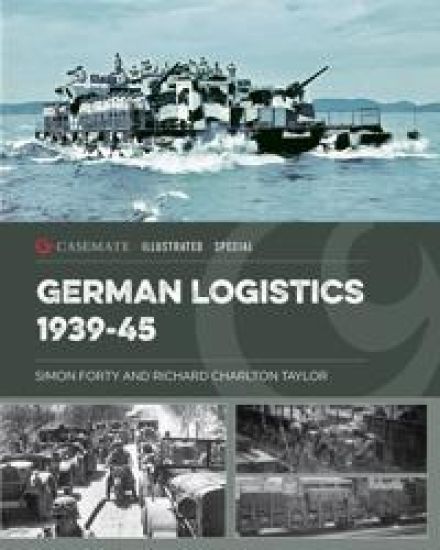
When we think of the German Army we think of the Blitzkrieg years, 1939–41, during which Panzers pushed deep into enemy territory and forced huge encirclement battles that annihilated the enemy’s strength in Poland, France, the Balkans and the Soviet Union. With their Auftragstaktik and cutting-edge weaponry, they epitomised incisive modern war. However, there was an elephant in the room, and in spite of their superb battlefield leadership, their brilliant victories, their technical prowess, their mighty Tigers and Panthers, they lost because of it. It wasn’t, as the German generals argued postwar, the Soviet hordes that swamped them. It wasn’t the industrial capabilities of the United States. It wasn’t the control exerted by a dictator increasingly removed from the real world. It wasn’t the amount of effort spent transporting millions of people to their deaths in the camps, or the amount of concrete poured into the Atlantic Wall from the Arctic to the Mediterranean. All these points helped swing the war in the Allies’ favour but they weren’t the main reason why the German Wehrmacht lost. The elephant in the room was logistics. It’s easy to point out how well the Germans achieved their Blitzkrieg successes, but the war didn’t end in 1941. It’s easy to talk about the positives of German logistics—the fact that they could advance so far into the Soviet Union over such difficult terrain until the weather and poor roads conspired against them; the way that German industry kept going in spite of Allied strategic bombing; the resilience and resourcefulness of the way they kept the railways running, allowing huge numbers of men and armoured vehicles to shuttle from east to west as they were needed. In the end, at the critical moments in the war, their logistics failed them
Sturmartillerie Crewman: Sturmgeschütze, Panzerjäger, and Panzerartillerie
Simon Forty; Richard Charlton Taylor
Casemate
2025
nidottu
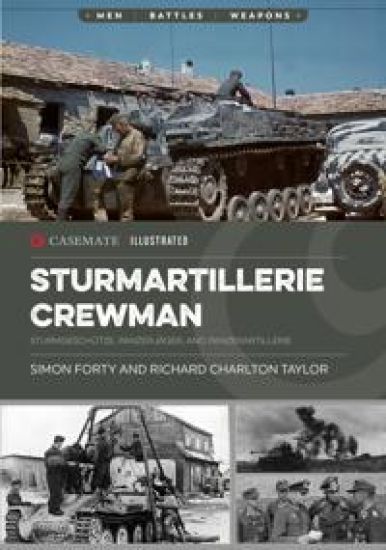
Germany's gun-armed armored vehicles, from StuGs to Jagdpanzers, played key roles in World War II combat.The German procurement process resulted in a wide range of gun-armed armored vehicles--assault guns, tank destroyers and self-propeled artillery--mounting both German and captured guns. Some were developed from existing German chassis; many employed captured enemy vehicles or were built in the factories of the countries they had conquered.Originally designed as infantry support vehicles, the Sturmgesch tz arm was controlled by the artillery but ended the war having knocked out more enemy tanks than the Panzers. Mainly built on the chassis of the PzKpfw III, particularly after it became obsolete, the StuGs proved durable and effective in infantry support and, when upgunned and even without a turret, as tank killers.The Germans produced a range of vehicles to fend off enemy armor. They mounted increasingly larger guns on any chassis they could lay their hands on, often captured vehicles--the Marder series on French or Czech chassis. There was also the Jagdpanzer range, better protected with an armored casemate providing overhead armor, based on tank chassis. Heavier Jagdpanzer were produced as the war continued the Hornisse/Nashorn (but without overhead protection), the Ferdinand/Elefant and the Jagdpanther armed with 8.8cm weapons. A few of the massive 12.8cm-armed Jagdtiger appeared before war's end.Blitzkrieg showed that the Panzer divisions needed mobile artillery support, so the Germans mounted artillery weapons on tracked chassis: first PzKpfw Is and IIs and then PzKpfw IIIs and 38(t)s. The best known are the Wespe (on the PzKpfw II), the Grille (on the PzKpfw 38(t)), the Hummel (on the Gesch tzwagen III/IV), and the Sturmpanzer (on the PzKpfw IV).While some of the crew duties on these vehicles were similar to those of the Panzertruppen, they were completely different vehicles to fight in and fight with: strategically, operationally, tactically and logistically. This fully illustrated book tells the story of the soldiers who crewed these vehicles.
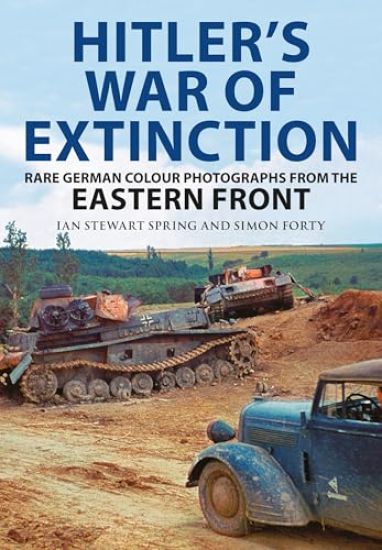
The Eastern Front was where the war against Nazi Germany was lost and won. More people died there in the battles and destruction than all the other theatres put together. From the Arctic snows of Finland to the vast steppes of the Ukraine, the fighting took place in every sort of landscape and every weather condition: sub-zero temperatures that froze engines and weapons, mosquito-infested swamps, the raputitsa mud that brought mechanised armies to a halt, and the huge industrial cities that were fought over street by street and house by house. What was it like to fight there? Hitler's War of Extinction from the Eastern Fronttakes the reader into the thick of the battle lines in vivid colour. First-hand accounts from reports and diaries provide soldiers' insights to accompany the candid photos of life and death to provide an evocation of what it was like to fight for survival on the Eastern Front. Boasting more 250 original colour photographs, Hitler's War of Extinction: Rare German Colour Photographs shows the visceral nature of the battle between two intolerant ideologies that would leave upwards of 25 million servicemen and civilians dead.
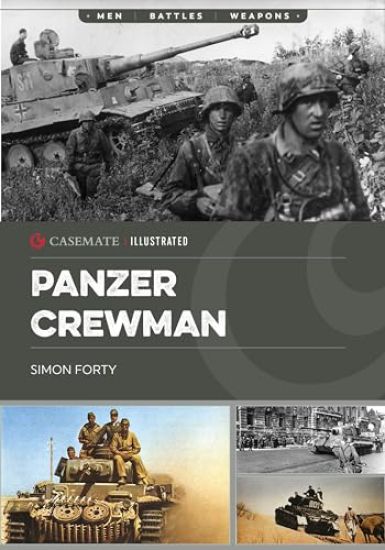
A fully illustrated introduction to the role, and experience, of the Panzer crewman. The German Panzerwaffe ripped up the rulebooks of war that had been laid down by the grinding slaughter of the trenches of World War I. Armored vehicles, close-air support, and bold leadership based on mission command, Auftragstaktik, cut a deadly swathe through the armies of east and west Europe. The Panzers made a significant contribution to Nazi successes; they remained steadfast in defense as their conquests slipped away their grasp from the apogee at Stalingrad and El Alamein in late 1942, through the long years of retreat to final defeat. Attrition and overwhelming odds blunted the opportunities for advances, but with increasingly powerful weaponry, the Panzerwaffe stiffened the German defensive backbone right to the end. Part of the reason for these successes was undoubtedly the Panzers themselves, but it wasn’t just the weapons that led to the Panzers’ successes—it was the way they were handled. A weapon is only as good as those who use it and the Panzertruppen—from higher command down to individual crew members—proved themselves to be very good at using their weapons. Not just the men who fought in the tanks but those who maintained them and kept them in the field, recovered and rebuilt the casualties, and dealt with the over-complexity of design and the huge variety of types of tank, weapon and ammunition. Selection and training standards—so good in the early war years—may have dropped off as wartime exigencies bit deep, but from 1939 to 1945 German Panzer crew were second to none. This Casemate Illustrated provides a full introduction to the role, and experience, of the Panzer crewman.
The German Infantryman on the Eastern Front
Simon Forty; Richard Charlton-Taylor
Casemate Publishers
2023
nidottu
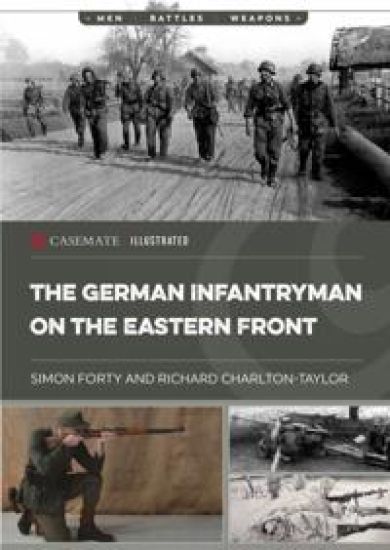
The German Army was all-conquering until late 1941 when, only a few miles short of Moscow, it ran out of steam. Maniacal defence, the Russian winter and exhaustion all played their part and, although they didn't realise it, the German forces wouldn't advance further on this front. While they continued their offensives into 1942, Soviet defenses had stiffened. Its equipment – notably the T-34 – had improved and the Germans had lost too many of their best men: the savvy NCOs and experienced junior officers that gave the Wehrmacht its edge over the opposition. They had lost their moral compass as well. Complicity in the massacres of the SS-Einsatzgruppen, the barbarity of the anti-Partisan operations and summary execution for those who flagged, were the hallmarks of the German Army's fight for survival against people it considered less than human. Outnumbered, under attack on many other fronts, their homeland bombarded unceasingly from the air, the German servicemen endured the hell of the Eastern Front until their armies were destroyed in 1945. While the morality of the regime they fought for and its reprehensible actions should never be forgotten, what cannot be denied is the indefatigable courage of the German infantrymen. Fully illustrated with over 200 contemporary photographs and illustrations – and exploring a broad range of topics from uniform, weapons and provisions to tactics and communications – this title provides valuable insights into the Germans' main theater of operations in World War II.
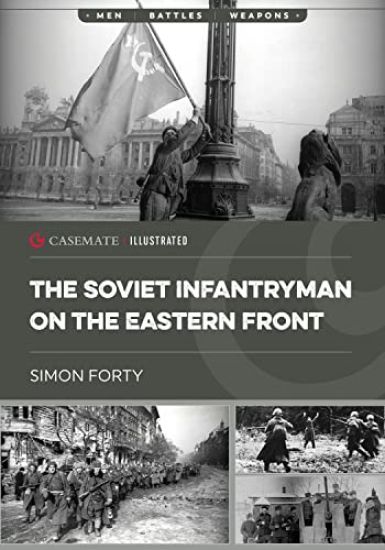
The Soviet Army was ill-prepared for its erstwhile ally's treacherous onslaught in 1941. Its officer corps decimated by Stalin's purges and its men less well-trained than the Germans, the Red Army was poorly led, hampered by the power of the political officers and only partly mobilised. But, in spite of the huge German victories and the speed of the Nazi attack, the Soviets proved fantastically capable of rolling with the punches. The vast territory of the Soviet Union and huge population were significant factors, as was substantial assistance from the West – the United States and Britain in particular – which was in evidence when the German columns got to within a few miles short of Moscow and were held and then forced back. The tide turned thanks to help from outside and the efforts of the Soviet soldiers, who proved hardy and durable. And just like its soldiers, Russian infantry equipment was rugged and effective. While Soviet infantrymen may not have had the flexibility or tactical nous of the Germans, they did not lack cunning: deception, camouflage skills and endurance made Russian snipers, as an example, more than the equal of the Germans. Most views of the Soviet soldier and campaign are influenced by self-serving German postwar accounts designed to excuse their loss by suggesting that Adolf Hitler's meddling and Soviet numbers were the main reasons for victory: this denigrates the Russian infantryman whose toughness and ingenuity helped destroy the Third Reich in spite of the faults of its own regime. Fully illustrated with over 200 contemporary photographs and illustrations, Soviet Infantryman on the Eastern Front in the Casemate Illustrated series provides an insight into the Soviets' main theater of operations in World War II.
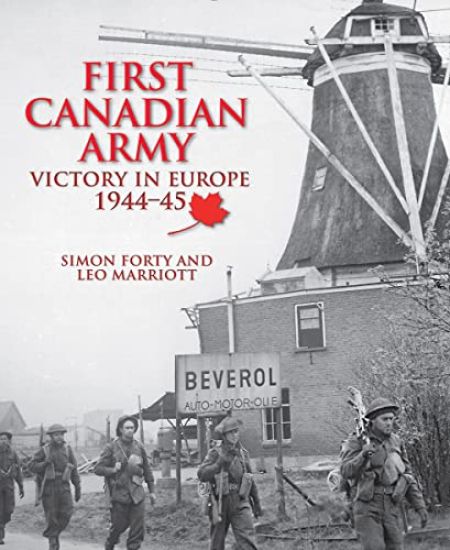
“It’s rare for a book to capture your attention from the very first sentence, but kudos to the authors of First Canadian Army for doing just that... I, too, feel that Canada’s contributions to victory in both world wars have unfortunately been downplayed or ignored over the decades by the country’s allies.” — Canada’s History Magazine. A pictorial history of the decisive role played by Canada in the final year of World War II. After Dunkirk, as the tattered remnants of Britain’s best troops returned home without their heavy weapons, Canadian troops moved in to defend northwest Europe, sending in virtually all of its disposable weapon resources and 368,000 soldiers. The majority of these were to be part of the First Canadian Army, which would play a key role leading to the unconditional surrender by Nazi Germany on May 9, 1945. This book is a pictorial history of the First Canadian Army in northwest Europe during the final year of the war. It concentrates not just on the events of 75 years ago but also what can be seen on the ground today. The illustrations, over 350 of them, include battle, landing and assault maps; photographs of soldiers in action and resting, aerial photographs of key sites of action then and now; battlefield survivors such as Sherman tanks; memorials to individuals and units; and, of course, the cemeteries of Canadian, Polish and British soldiers. In ten parts and 60 chapters featuring 350 illustrations and maps, the book covers: The Bridgehead; The Battles Around Caen; Clearing the Coast; Clearing The Scheldt; Winter on the Maas; The Rhineland; Advance to the Sea; I Corps in The West Netherlands; The German Surrender. Military history buffs will enjoy this book for its focus on a specific battalion and its actions at a decisive moment in the war. The archival photographs are important records and reminders of this watershed moment in World War II’s European theater.
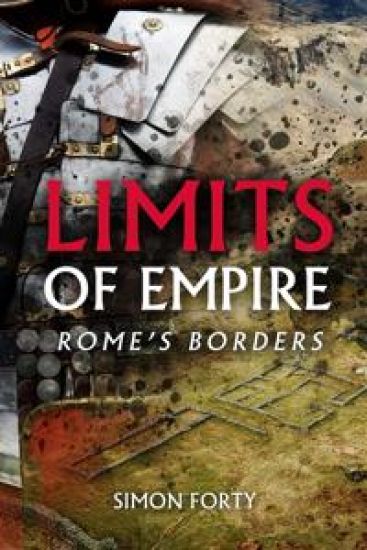
The borders of the Roman Empire were frontiers that were often wild and dangerous. The expansion of the empire after the Punic Wars saw the Roman Republic become the dominant force in the Mediterranean as it first took Carthaginian territories in Gaul, Spain and north Africa and then moved into Greece with purpose, subjugating the area and creating two provinces, Achaea and Macedonia. The growth of the territories under Roman control continued through the rise of Julius Caesar - who conquered the rest of Gaul - and the establishment of the empire: each of the emperors could point to territories annexed and lands won.By AD 117 and the accession of Hadrian, the empire had reached its peak. It held sway from Britain to Morocco, from Spain to the Black Sea. And its wealth was coveted by those outside its borders. Just as today those from poorer countries try to make their way into Europe or North America, so those outside the empire wanted to make their way into the Promised Land – for trade, for improvement of their lives or for plunder. Thus the Roman borders became a mix - just as our borders are today - of defensive bulwark against enemies, but also control areas where import and export taxes were levied, and entrance was controlled. Some of these borders were hard: the early equivalents of the Inner German Border or Trump’s Wall - Hadrian's Wall and the line between the Rhine and Danube. Others, such as these two great rivers, were natural borders that the Romans policed with their navy.This book examines these frontiers of the empire, looking at the way they were constructed and manned and how that changed over the years. It looks at the physical barriers - from the walls in Britain to the Fossatum Africae in the desert. It looks at the traders and the prices that were paid for the traffic of goods. It looks at the way that civil settlements - vici - grew up around the forts and fortlets and what life was like for soldiers, sailors and civilians.As well as artefacts of the period, the book provides a guidebook to top Roman museums and a gazetteer of visitable sites
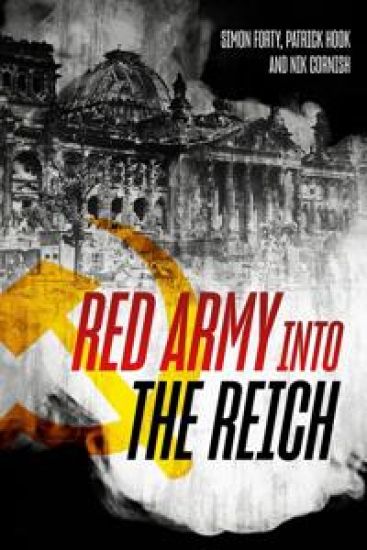
The last year of the war saw Russian offensives that cleared the Germans out of their final strongholds in Finland and the Baltic states, before advancing into Finnmark in Norway and the east European states that bordered Germany: Poland, Czechoslovakia and Hungary. By spring 1945 the Red Army had reached to Vienna and the Balkans, and had thrust deep into Germany where they met American, French and British troops advancing from the west. The final days of the Third Reich were at hand. Berlin was first surrounded, then attacked and taken. Hitler's suicide and his successors' unconditional surrender ended the war. For writers and historians who concentrate on the Western Allies and the battles in France and the Low Countries, the Eastern Front comes as a shock. The sheer size of both the territories and the forces involved; the savagery of both weather and the fighting; the appalling suffering of the civilian populations of all countries and the wreckage of towns and cities - it's no wonder that words like armageddon are used to describe the annihilation. Red Army into the Reich combines a narrative history, contemporary photographs and maps with images of memorials, battlefield survivors and then & now views. It may come as a surprise to the western reader to see how many memorials there are to Russia's Great Patriotic War and those to the losses suffered by the countries who spent so long under the murderous Nazi regime.
A Photographic History of Infantry Warfare, 1939-1945
Jonathan Forty; Simon Forty
Pen Sword Military
2021
sidottu
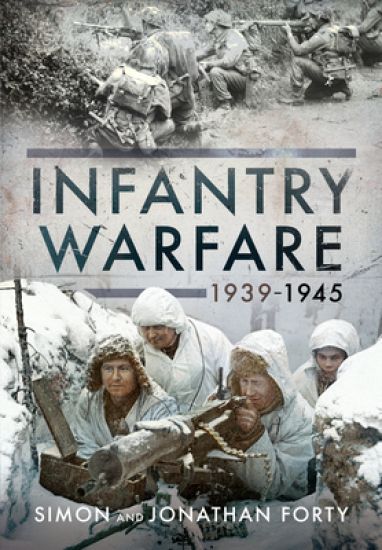
The infantry can always be found at the sharp end of the battlefield. You may be able to crush an opponent with armour or artillery, but there's only one way to take and hold ground and that's with riflemen - the 'poor bloody infantry'. And it is the infantrymen of the Second World War - from all sides, Allied and Axis - who are the subject of this highly illustrated history. It uses over 400 wartime photographs plus contemporary documents and other illustrations to show the developments in equipment, training and tactical techniques and to give an insight into the experience of the infantry soldier during the conflict. Although the infantry were critical to the war effort, their contribution is often overshadowed by the more dramatic roles played by soldiers with more specialized skills - like tank crew, paratroopers and special forces. They also suffered devastating casualties, in particular during the last phase of the war in the west when around 20 per cent of an infantry division's riflemen were likely to die and over 60 per cent could expect to be wounded. So as well as describing how the infantry fought, the authors look at the motivation which kept them fighting in awful conditions and despite brutal setbacks. The result is a thorough, detailed and revealing portrait of infantry warfare over seventy years ago.
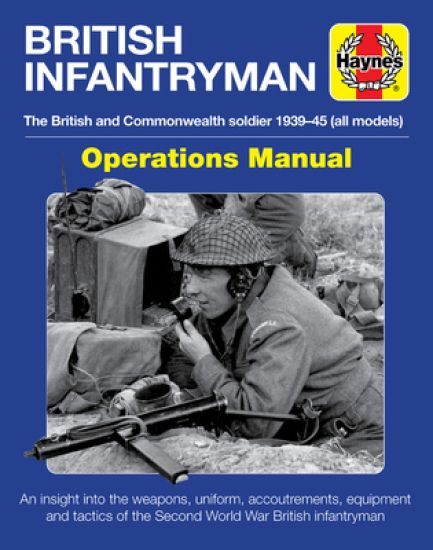
The British and Commonwealth Soldier 1939-45, British soldiers, with their old-fashioned helmets, spring-powered PIAT anti-tank guns and veneration of heroic defeats, may have lost the propaganda war, but their record speaks for itself: they may have started badly in France in 1940 and the Far East in 1941, but they were victorious in the North African desert, in Europe and in India and Burma where the 'Forgotten Army' first held the Japanese and then inflicted at Imphal and Kohima the greatest loss to the Japanese on land. They held back the might of the Panzers in Normandy in 1944, chased the Germans back into Holland and came within a whisker at Arnhem of circumventing the Siegfried Line, and won battle after battle against a fanatical defence on their way to final victory., This book doesn't cover the progress of the Second World War, but looks in detail at the weapons, uniform, accoutrements, equipment and tactics of the Second World War British infantryman, following the themes of the Haynes Great War British Tommy and German Infantryman Manuals., Author: Simon Forty was educated at Sedbergh School and London University's School of Slavonic and East European Studies. He has been involved in publishing for over three decades and specializes in military history having contributed to a large number of books. He was also general editor of World War I: A Visual Encyclopedia. Simon lives in Devon with his wife and two children.
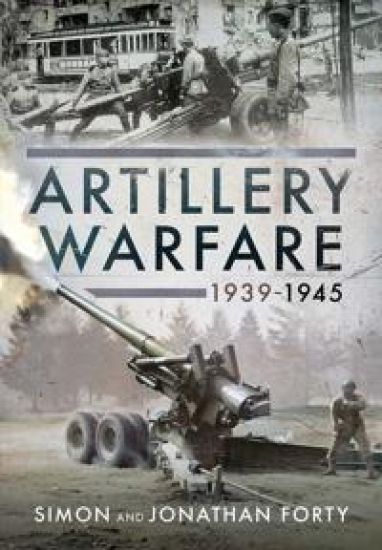
It is said that artillery won the Second World War for the Allies - that Soviet guns wore down German forces on the Eastern Front, negating their superior tactics and fighting ability, and that the accuracy and intensity of the British and American artillery was a major reason for the success of Allied forces in North Africa from El Alamein, in Italy and Normandy, and played a vital role in the battles of 1944 and 1945\. Yet the range of weapons used is often overlooked or taken for granted - which is why this highly illustrated history by Simon and Jonathan Forty is of such value. They stress the importance of artillery on every front and analyse how artillery equipment, training and tactical techniques developed during the conflict. The selection of wartime photographs - many from east European sources - and the extensive quotations from contemporary documents give a graphic impression of how the guns were used on all sides. The photographs emphasize the wide range of pieces employed as field, anti-aircraft and anti-tank artillery without forgetting self-propelled guns, coastal and other heavyweights and the development of rockets. The authors offer a fascinating insight into the weapons that served in the artillery over seventy years ago.
On the battlefields of Europe and North Africa during the Second World War tanks played a key role, and the intense pressure of combat drove forward tank design and tactics at an extraordinary rate. In a few years, on all sides, tank warfare was transformed. This is the dramatic process that Simon and Jonathan Forty chronicle in this heavily illustrated history. They describe the fundamentals of pre-war tank design and compare the theories formulated in the 1930s as to how they should be used in battle. Then they show how the harsh experience of the German blitzkrieg campaigns in Poland, France and the Soviet Union compelled the Western Allies to reconsider their equipment, organization and tactics - and how the Germans responded to the Allied challenge. The speed of progress is demonstrated in the selection of over 180 archive photographs which record, as only photographs can, the conditions of war on each battle front. They also give a vivid impression of what armoured warfare was like for the tank crews of 75 years ago.
The last rites were administered to the Third Reich from the west by a massive concentration of Allied forces and firepower. With France secured, Hitler’s vain counterattack in the Ardennes held and the Channel and North Sea ports cleared, little stood in the way of the Allies other than the dominant geographical feature of western Europe: the mighty Rhine River stretching from the North Sea almost to Switzerland. In the north, the 21st Army Group executed one of the largest operations of the war: a huge airdrop backed up by an amphibious crossing that made full use of 79th Armoured Division’s specialized armour including the Alligators of 4th Royal Tank Regiment. Further south, until it collapsed under the pressure, the Ludendorff Bridge, captured intact at Remagen allowed US First Army to create a bridgehead. They would use it to good effect, wheeling north to surround the Ruhr, Germany’s industrial heartland. Further south, where the river was narrower, Patton’s Third Army vaulted the Rhine with its customary elan, as did Devers’ Sixth Army Group.Ahead of the Allies were the remains of the German forces, often no more than Volkssturm or Hitlerjugend, determined to resist for as long as possible so that their Fu¨hrer had time to unleash his super weapons. In the end, these proved figments of Hitler’s imagination and the defenders crumbled in the face of units that, after nine months of training, had become deadly proponents of the art of aggressive warfare with modern, new equipment – such as the M26 Pershing and Comet – being rushed to the front in the hope it could see action before the war finished.
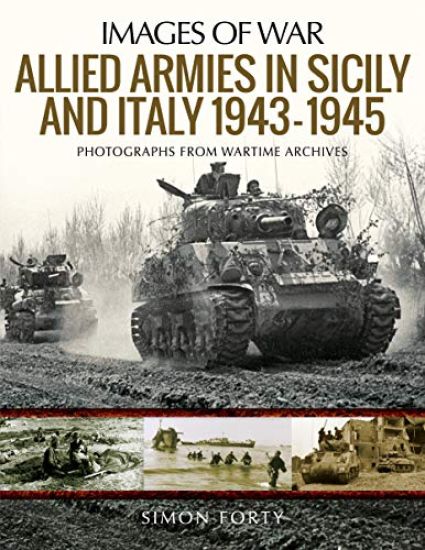
The Italian campaign was one of the most debated of the Second World War, splitting the American and British allies, and causing great disharmony. After the fall of Rome and the surrender of Italy, the invasion of Normandy led to the Italian campaign becoming a sideshow as the D-Day Dodgers' fought their way through Italy to the Alps against a grinding defence and extreme weather. In a sequence of 200 wartime photographs Simon Forty sums up the major events of the conflict - from the landings on Sicily to the crossing of the Po. Commanded first by Sir Harold Alexander and then Mark Clark, the Allied armies (US Fifth and British Eighth) drew men not only from Britain, the United States, France and Poland but from all over the Commonwealth - from Australia, Canada, India, New Zealand and South Africa - as well as such other countries as Brazil, Czechoslovakia, Greece and Palestine. The devastation caused by the war in the cities, towns and countryside is part of the story, but perhaps the most powerful impression is made by the faces of the soldiers themselves as they look out from the Italian front of so long ago.
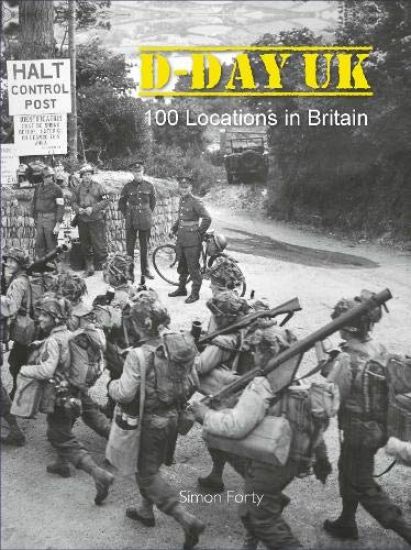
The D-Day landings of 6 June 1944 were the culmination of months of meticulous planning and organisation. A vast army had to be trained and equipped; huge amounts of material – from tin cans to tank transporters, petrol to parachutes – had to be stockpiled, distributed and readied for transport to the beaches of Normandy; bombing missions had to reduce the enemy; fighters, minesweepers and other naval missions had to clear the English Channel; and, finally, the men had to embark and the armada had to deliver its cargo to a strict timetable under enemy fire onto a hostile shore. For understandable reasons, the emphasis on remembrance of D-Day is focused on the beaches: that’s where the battles took place; that’s where most of the casualties occurred; that’s where the remarkable stories were written in blood, sand and shingle. We should never forget the sacrifice of those who fell, but equally we shouldn’t forget the sacrifices of those who prepared the way. The hundred locations chosen for this book are a small collection of those places in Britain that were involved in the preparations for D-Day. It would have been easy to choose a hundred others: few parts of Britain were not part of the war effort. It is perhaps best to see the chosen 100 as starting points from which the reader can discover the considerable depth of involvement required to launch the great invasion.