Kirjojen hintavertailu. Mukana 12 595 353 kirjaa ja 12 kauppaa.

Kirjailija

Simon Winchester

Kirjat ja teokset yhdessä paikassa: 57 kirjaa, julkaisuja vuosilta 1999-2026, suosituimpien joukossa Lonely Planet Tales from Nowhere. Vertaile teosten hintoja ja tarkista saatavuus suomalaisista kirjakaupoista.

57 kirjaa

Kirjojen julkaisuhaarukka 1999-2026.

Lonely Planet Tales from Nowhere

Lonely Planet Tales from Nowhere

Tim Cahill; Jason Elliot; Don George; Pam Houston; Pico Iyer; Rolf Potts; Anthony Sattin; Danny Wallace; Simon Winchester

Lonely Planet Global Limited
2016
nidottu
Lonely Planet: The world's leading travel guide publisher*Unexpected stories from unexpected places.Many places can feel like nowhere: a desert, an isolated village, even the middle of a bustling, impersonal city. And then something happens: an adventure, a revelation, an experience that changes the whole landscape. The discovery that every place is the centre of the world to somebody and has its own riches and wonders. The authors of these 30 real-life tales find passion, surprise and illumination in the middle of Borneo or Beijing, in a Mayan mountain village, along a timeworn trail in Tuscany, on an isolated South Pacific island, or under a desert moon in Mali.These richly varied stories all celebrate and illuminate one simple truth: if we embark on each adventure with an open heart and an open mind, travel will take us places we never planned to go, and enrich and enlighten us in ways we never otherwise would have known.Featuring stories by: Anthony Sattin, Danny Wallace, Jason Elliot, Pam Houston, Ralph Potts, Pico Iyer, Tim Cahill, Simon WinchesterAbout Lonely Planet: Started in 1973, Lonely Planet has become the world's leading travel guide publisher with guidebooks to every destination on the planet, as well as an award-winning website, a suite of mobile and digital travel products, and a dedicated traveller community. Lonely Planet's mission is to enable curious travellers to experience the world and to truly get to the heart of the places where they travel.TripAdvisor Travellers' Choice Awards 2012 and 2013 winner in Favorite Travel Guide category'Lonely Planet guides are, quite simply, like no other.' - New York Times'Lonely Planet. It's on everyone's bookshelves, it's in every traveller's hands. It's on mobile phones. It's on the Internet. It's everywhere, and it's telling entire generations of people how to travel the world.' - Fairfax Media (Australia) *#1 in the world market share - source: Nielsen Bookscan. Australia, UK and USA. March 2012-January 2013
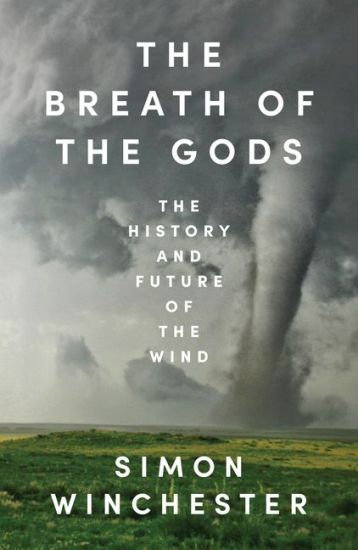
The Breath of the Gods: The History and Future of the Wind
New York Times bestselling author Simon Winchester returns with a thought-provoking history of the wind, written in his edifying and entertaining style.What is going on with our atmosphere? The headlines are filled with news of devastating hurricanes, murderous tornadoes, and cataclysmic fires affecting large swaths of America. Gale force advisories are issued on a regular basis by the National Weather Service.In 2022, a report was released by atmospheric scientists at the University of Northern Illinois, warning that winds--the force at the center of all these dangerous natural events--are expected to steadily increase in the years ahead, strengthening in power, speed, and frequency.While this prediction worried the insurance industry, governmental leaders, scientists, and conscientious citizens, one particular segment of society received it with unbridled enthusiasm. To the energy industry, rising wind strength and speeds as an unalloyed boon for humankind--a vital source of clean and "safe" power.Between these two poles--wind as a malevolent force, and wind as savior of our planet--lies a world of fascination, history, literature, science, poetry, and engineering which Simon Winchester explores with the curiosity and vigor that are the hallmarks of his bestselling works. In The Breath of the Gods, he explains how wind plays a part in our everyday lives, from airplane or car travel to the "natural disasters" that are becoming more frequent and regular.The Breath of the Gods is an urgently-needed portrait across time of that unseen force--unseen but not unfelt--that respects no national borders and no vessel or structure in its path. Wind, the movement of the air, is seen by so many as a heavenly creation and generally a thing of essential goodness. But when it flexes its invisible muscles, all should take care and be very afraid.
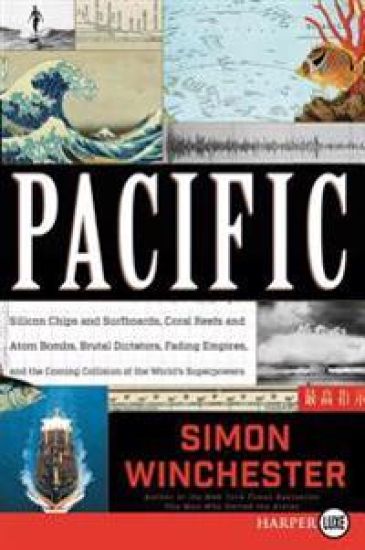
Pacific LP

Pacific LP

Simon Winchester

Harperluxe
2024
nidottu
One of Library Journal's 10 Best Books of 2015Following his acclaimed Atlantic and The Men Who United the States, New York Times bestselling author Simon Winchester offers an enthralling biography of the Pacific Ocean and its role in the modern world, exploring our relationship with this imposing force of nature.As the Mediterranean shaped the classical world, and the Atlantic connected Europe to the New World, the Pacific Ocean defines our tomorrow. With China on the rise, so, too, are the American cities of the West coast, including Seattle, San Francisco, and the long cluster of towns down the Silicon Valley.Today, the Pacific is ascendant. Its geological history has long transformed us--tremendous earthquakes, volcanoes, and tsunamis--but its human history, from a Western perspective, is quite young, beginning with Magellan's sixteenth-century circumnavigation. It is a natural wonder whose most fascinating history is currently being made.In telling the story of the Pacific, Simon Winchester takes us from the Bering Strait to Cape Horn, the Yangtze River to the Panama Canal, and to the many small islands and archipelagos that lie in between. He observes the fall of a dictator in Manila, visits aboriginals in northern Queensland, and is jailed in Tierra del Fuego, the land at the end of the world. His journey encompasses a trip down the Alaska Highway, a stop at the isolated Pitcairn Islands, a trek across South Korea and a glimpse of its mysterious northern neighbor.Winchester's personal experience is vast and his storytelling second to none. And his historical understanding of the region is formidable, making Pacific a paean to this magnificent sea of beauty, myth, and imagination that is transforming our lives.--Wall Street Journal
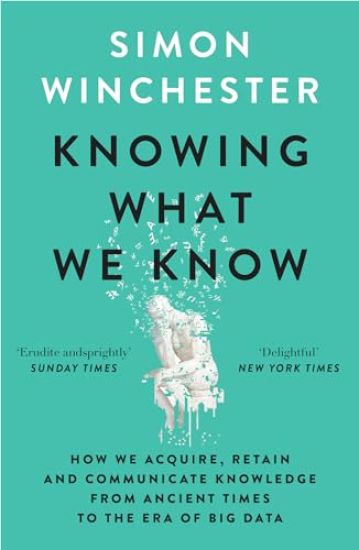
Knowing What We Know

Knowing What We Know

Simon Winchester

HARPERCOLLINS PUBLISHERS
2024
nidottu
‘A delightful compendium of the kind of facts you immediately want to share with anyone you encounter’ New York Times ‘An ebullient, irrepressible spirit invests this book. It is erudite and sprightly’Sunday Times From the creation of the first encyclopedia to Wikipedia, from ancient museums to modern kindergarten classes—here is award-winning writer Simon Winchester’s brilliant and all-encompassing look at how humans acquire, retain, and pass on information and data, and how technology continues to change our lives and our minds. With the advent of the internet, any topic we want to know about is instantly available with the touch of a smartphone button. With so much knowledge at our fingertips, what is there left for our brains to do? At a time when we seem to be stripping all value from the idea of knowing things – no need for maths, no need for map reading, no need for memorisation – are we risking our ability to think? As we empty our minds, will we one day be incapable of thoughtfulness? Addressing these questions, Simon Winchester explores how humans have attained, stored and disseminated knowledge. Examining such disciplines as education, journalism, encyclopedia creation, museum curation, photography and broadcasting, he looks at a whole range of knowledge diffusion – from the cuneiform writings of Babylon to the machine-made genius of artificial intelligence, by way of Gutenberg, Google and Wikipedia to the huge Victorian assemblage of the Mundaneum, the collection of everything ever known, currently stored in a damp basement in northern Belgium. Studded with strange and fascinating details, Knowing What We Know is a deep dive into learning and the human mind. Throughout this fascinating tour, Winchester forces us to ponder what rational humans are becoming. What good is all this knowledge if it leads to lack of thought? What is information without wisdom? Does René Descartes’ ‘Cogito, ergo sum’—'I think, therefore I am’, the foundation for human knowledge widely accepted since the Enlightenment—still hold? And what will the world be like if no one in it is wise?
Knowing What We Know: The Transmission of Knowledge: From Ancient Wisdom to Modern Magic
From the creation of the first encyclopedia to Wikipedia, from ancient museums to modern kindergarten classes--this is award winning writer Simon Winchester's brilliant and all-encompassing look at how humans acquire, retain, and pass on information and data, and how technology continues to change our lives and our minds.With the advent of the internet, any topic we want to know about is instantly available with the touch of a smartphone button. With so much knowledge at our fingertips, what is there left for our brains to do? At a time when we seem to be stripping all value from the idea of knowing things--no need for math, no need for map-reading, no need for memorization--are we risking our ability to think? As we empty our minds, will we one day be incapable of thoughtfulness? Addressing these questions, Simon Winchester explores how humans have attained, stored, and disseminated knowledge. Examining such disciplines as education, journalism, encyclopedia creation, museum curation, photography, and broadcasting, he looks at a whole range of knowledge diffusion--from the cuneiform writings of Babylon to the machine-made genius of artificial intelligence, by way of Gutenberg, Google, and Wikipedia to the huge Victorian assemblage of the Mundanaeum, the collection of everything ever known, currently stored in a damp basement in northern Belgium. Studded with strange and fascinating details, Knowing What We Know is a deep dive into learning and the human mind. Throughout this fascinating tour, Winchester forces us to ponder what rational humans are becoming. What good is all this knowledge if it leads to lack of thought? What is information without wisdom? Does Rene Descartes's Cogito, ergo sum--"I think therefore I am," the foundation for human knowledge widely accepted since the Enlightenment--still hold? And what will the world be like if no one in it is wise?
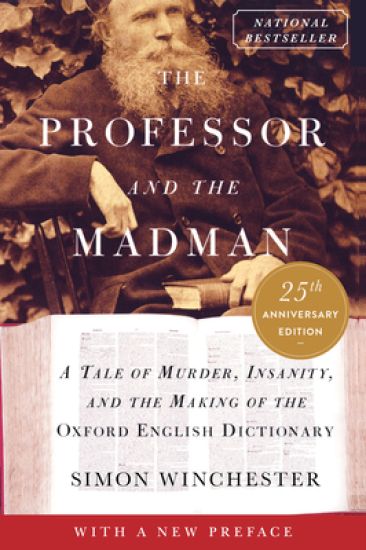
The Professor and the Madman: A Tale of Murder, Insanity, and the Making of the Oxford English Dictionary
"A narrative full of suspense, pathos and humor. . . . In this elegant book Winchester] has created a vivid parable, in the spirit of Nabokov and Borges. There is much truth to be drawn from it, about Victorian pride, the relation between language and the world, and the fine line between sanity and madness." -- Daniel Mark Epstein, Wall Street Journal"Splendid. . . . Simon Winchester could not have told it better." --The EconomistIn celebration of its 25th anniversary, an updated edition of the worldwide celebrated classic, featuring a new introduction by the author.Masterfully researched and eloquently written, The Professor and the Madman is an extraordinary tale of madness, genius, and the incredible obsessions of two remarkable men that led to the making of the Oxford English Dictionary--one of the most ambitious projects ever undertaken. As definitions were collected, the OED's overseeing committee, led by Professor James Murray, was stunned to discover that one man, Dr. W. C. Minor, had submitted more than ten thousand entries. But their surprise would pale in comparison to what they were about to discover when the committee insisted on honoring him. Dr. Minor, an American Civil War veteran, was also an inmate at an asylum for the criminally insane.
Knowing What We Know: The Transmission of Knowledge: From Ancient Wisdom to Modern Magic
"A delightful compendium of the kind of facts you immediately want to share with anyone you encounter . . . . Simon Winchester has firmly earned his place in history . . . as a promulgator of knowledge of every variety, perhaps the last of the famous explorers who crisscrossed the now-vanished British Empire and reported what they found to an astonished world." -- New York TimesFrom the creation of the first encyclopedia to Wikipedia, from ancient museums to modern kindergarten classes--this is award winning writer Simon Winchester's brilliant and all-encompassing look at how humans acquire, retain, and pass on information and data, and how technology continues to change our lives and our minds.With the advent of the internet, any topic we want to know about is instantly available with the touch of a smartphone button. With so much knowledge at our fingertips, what is there left for our brains to do? At a time when we seem to be stripping all value from the idea of knowing things--no need for math, no need for map-reading, no need for memorization--are we risking our ability to think? As we empty our minds, will we one day be incapable of thoughtfulness? Addressing these questions, Simon Winchester explores how humans have attained, stored, and disseminated knowledge. Examining such disciplines as education, journalism, encyclopedia creation, museum curation, photography, and broadcasting, he looks at a whole range of knowledge diffusion--from the cuneiform writings of Babylon to the machine-made genius of artificial intelligence, by way of Gutenberg, Google, and Wikipedia to the huge Victorian assemblage of the Mundanaeum, the collection of everything ever known, currently stored in a damp basement in northern Belgium. Studded with strange and fascinating details, Knowing What We Know is a deep dive into learning and the human mind. Throughout this fascinating tour, Winchester forces us to ponder what rational humans are becoming. What good is all this knowledge if it leads to lack of thought? What is information without wisdom? Does Rene Descartes's Cogito, ergo sum--"I think therefore I am," the foundation for human knowledge widely accepted since the Enlightenment--still hold? And what will the world be like if no one in it is wise?
Knowing What We Know

Knowing What We Know

Simon Winchester

HARPERCOLLINS PUBLISHERS
2023
nidottu
From the creation of the first encyclopedia to Wikipedia, from ancient museums to modern kindergarten classes-here is award-winning writer Simon Winchester's brilliant and all-encompassing look at how humans acquire, retain, and pass on information and data, and how technology continues to change our lives and our minds.
Knowing What We Know

Knowing What We Know

Simon Winchester

HARPERCOLLINS PUBLISHERS
2023
sidottu
‘A delightful compendium of the kind of facts you immediately want to share with anyone you encounter’ New York Times ‘An ebullient, irrepressible spirit invests this book. It is erudite and sprightly’Sunday Times From the creation of the first encyclopedia to Wikipedia, from ancient museums to modern kindergarten classes—here is award-winning writer Simon Winchester’s brilliant and all-encompassing look at how humans acquire, retain, and pass on information and data, and how technology continues to change our lives and our minds. With the advent of the internet, any topic we want to know about is instantly available with the touch of a smartphone button. With so much knowledge at our fingertips, what is there left for our brains to do? At a time when we seem to be stripping all value from the idea of knowing things – no need for maths, no need for map reading, no need for memorisation – are we risking our ability to think? As we empty our minds, will we one day be incapable of thoughtfulness? Addressing these questions, Simon Winchester explores how humans have attained, stored and disseminated knowledge. Examining such disciplines as education, journalism, encyclopedia creation, museum curation, photography and broadcasting, he looks at a whole range of knowledge diffusion – from the cuneiform writings of Babylon to the machine-made genius of artificial intelligence, by way of Gutenberg, Google and Wikipedia to the huge Victorian assemblage of the Mundaneum, the collection of everything ever known, currently stored in a damp basement in northern Belgium. Studded with strange and fascinating details, Knowing What We Know is a deep dive into learning and the human mind. Throughout this fascinating tour, Winchester forces us to ponder what rational humans are becoming. What good is all this knowledge if it leads to lack of thought? What is information without wisdom? Does René Descartes’ ‘Cogito, ergo sum’—'I think, therefore I am’, the foundation for human knowledge widely accepted since the Enlightenment—still hold? And what will the world be like if no one in it is wise?
Knowing What We Know: The Transmission of Knowledge: From Ancient Wisdom to Modern Magic
"A delightful compendium of the kind of facts you immediately want to share with anyone you encounter . . . . Simon Winchester has firmly earned his place in history . . . as a promulgator of knowledge of every variety, perhaps the last of the famous explorers who crisscrossed the now-vanished British Empire and reported what they found to an astonished world." -- New York TimesFrom the creation of the first encyclopedia to Wikipedia, from ancient museums to modern kindergarten classes--this is award winning writer Simon Winchester's brilliant and all-encompassing look at how humans acquire, retain, and pass on information and data, and how technology continues to change our lives and our minds.With the advent of the internet, any topic we want to know about is instantly available with the touch of a smartphone button. With so much knowledge at our fingertips, what is there left for our brains to do? At a time when we seem to be stripping all value from the idea of knowing things--no need for math, no need for map-reading, no need for memorization--are we risking our ability to think? As we empty our minds, will we one day be incapable of thoughtfulness? Addressing these questions, Simon Winchester explores how humans have attained, stored, and disseminated knowledge. Examining such disciplines as education, journalism, encyclopedia creation, museum curation, photography, and broadcasting, he looks at a whole range of knowledge diffusion--from the cuneiform writings of Babylon to the machine-made genius of artificial intelligence, by way of Gutenberg, Google, and Wikipedia to the huge Victorian assemblage of the Mundanaeum, the collection of everything ever known, currently stored in a damp basement in northern Belgium. Studded with strange and fascinating details, Knowing What We Know is a deep dive into learning and the human mind. Throughout this fascinating tour, Winchester forces us to ponder what rational humans are becoming. What good is all this knowledge if it leads to lack of thought? What is information without wisdom? Does Rene Descartes's Cogito, ergo sum--"I think therefore I am," the foundation for human knowledge widely accepted since the Enlightenment--still hold? And what will the world be like if no one in it is wise?
Land

Land

Simon Winchester

William Collins
2022
nidottu
From the bestselling author Simon Winchester, a human history of land around the world: who mapped it, owned it, stole it, cared for it, fought for it and gave it back. In 1889, thousands of hopeful people raced southward from the Kansas state line and westward from the Arkansas boundary to stake claims on the thousands of acres of unclaimed pastures and meadows. Across the twentieth century, water was dammed and drained in Holland so that a new province, Flevoland, rose up, unchartered and requiring new thinking. In 1850, California legislated the theft of land from Native Americans. An apology came in 2019 from the governor, but what of the call for reparations or return? What of government confiscation of land in India, or questions of fairness when it comes to New Zealand’s Maori population and the legacy of settlers? The ownership of land has always been complicated, opaque, and more than a little anarchic when viewed from the outside. In this book, Simon Winchester explores the the stewardship of land, the ways it is delineated and changes hands, the great disputes, and the questions of restoration – particularly in the light of climate change and colonialist reparation. A global study, this is an exquisite exploration of what the ownership of land might really mean – not in dry-as-dust legal terms, but for the people who live on it.
Land

Land

Simon Winchester

HARPERCOLLINS PUBLISHERS
2021
sidottu
From the bestselling author Simon Winchester, a human history of land around the world: who mapped it, owned it, stole it, cared for it, fought for it and gave it back.
Land Lib/E: How the Hunger for Ownership Shaped the Modern World
"In many ways, Land combines bits and pieces of many of Winchester's previous books into a satisfying, globe-trotting whole. . . . Winchester is, once again, a consummate guide."--Boston Globe The author of The Professor and the Madman, The Map That Changed the World, and The Perfectionists explores the notion of property--bought, earned, or received; in Europe, Africa, North America, or the South Pacific--through human history, how it has shaped us and what it will mean for our future.Land--whether meadow or mountainside, desert or peat bog, parkland or pasture, suburb or city--is central to our existence. It quite literally underlies and underpins everything. Employing the keen intellect, insatiable curiosity, and narrative verve that are the foundations of his previous bestselling works, Simon Winchester examines what we human beings are doing--and have done--with the billions of acres that together make up the solid surface of our planet.Land: How the Hunger for Ownership Shaped the Modern World examines in depth how we acquire land, how we steward it, how and why we fight over it, and finally, how we can, and on occasion do, come to share it. Ultimately, Winchester confronts the essential question: who actually owns the world's land--and why does it matter? Supplemental enhancement PDF accompanies the audiobook.
Land: How the Hunger for Ownership Shaped the Modern World
"In many ways, Land combines bits and pieces of many of Winchester's previous books into a satisfying, globe-trotting whole. . . . Winchester is, once again, a consummate guide."--Boston GlobeThe author of The Professor and the Madman, The Map That Changed the World, and The Perfectionists explores the notion of property--bought, earned, or received; in Europe, Africa, North America, or the South Pacific--through human history, how it has shaped us and what it will mean for our future.Land--whether meadow or mountainside, desert or peat bog, parkland or pasture, suburb or city--is central to our existence. It quite literally underlies and underpins everything. Employing the keen intellect, insatiable curiosity, and narrative verve that are the foundations of his previous bestselling works, Simon Winchester examines what we human beings are doing--and have done--with the billions of acres that together make up the solid surface of our planet.Land: How the Hunger for Ownership Shaped the Modern World examines in depth how we acquire land, how we steward it, how and why we fight over it, and finally, how we can, and on occasion do, come to share it. Ultimately, Winchester confronts the essential question: who actually owns the world's land--and why does it matter?
Land: How the Hunger for Ownership Shaped the Modern World
"In many ways, Land combines bits and pieces of many of Winchester's previous books into a satisfying, globe-trotting whole. . . . Winchester is, once again, a consummate guide."--Boston GlobeThe author of The Professor and the Madman, The Map That Changed the World, and The Perfectionists explores the notion of property--bought, earned, or received; in Europe, Africa, North America, or the South Pacific--through human history, how it has shaped us and what it will mean for our future.Land--whether meadow or mountainside, desert or peat bog, parkland or pasture, suburb or city--is central to our existence. It quite literally underlies and underpins everything. Employing the keen intellect, insatiable curiosity, and narrative verve that are the foundations of his previous bestselling works, Simon Winchester examines what we human beings are doing--and have done--with the billions of acres that together make up the solid surface of our planet.Land: How the Hunger for Ownership Shaped the Modern World examines in depth how we acquire land, how we steward it, how and why we fight over it, and finally, how we can, and on occasion do, come to share it. Ultimately, Winchester confronts the essential question: who actually owns the world's land--and why does it matter?
Perfektionisterna : precision, ingenjörskonst och den moderna världens tillkomst
NOMINERAD TILL ROYAL SOCIETY SCIENCE BOOK PRICE 2018»Prosan är elegant och historien om precision är berättad med stor skicklighet. ... Överlag är detta en strålande bok som förtjänas att läsas av alla med intresse för hur teknik och vetenskap danat vårt samhälle. Helhetsbetyg: 5/5.» /Bibliotekstjänst»Boken är intressant, informativ, spännande … Och är man det minsta intresserad av hur de maskiner vi omger oss med fungerar, är den en riktig upplevelse.» /Roma Agrawal i New York TimesOm man talar om precision i tekniska sam­manhang tänker många kanske på urverk: små kugghjul som driver andra små kugghjul i ett oöverskådligt gytter. Men det var som bekant länge sedan den mest avancerade tekniken befann sig på kugghjulsnivå. Idag kan det till och med handla om molekyler istället för kuggar.Vetenskapsjournalisten Simon Winchester skildrar i "Perfektionisterna" precisionens historia under de senaste århundradena och fram till vår tids hisnande datorutveckling och nano­tekno­logiska experiment. Men ökad preci­sion­ förutsätter ökad mätbarhet, så precision­ens historia är också mätbarhetens. Felmargi­nalerna blir ständigt mindre på båda håll. "Perfektionisterna" visar pedagogiskt vilket intrikat teoretiskt och praktiskt samspel som ligger bakom båda gammal och ny teknologi. Men boken problematiserar samtidigt en teknisk förfining som ibland kan tyckas självgående. Hur smart behöver en smart telefon egentligen vara?Boken handlar också, som titeln antyder, om människorna bakom tekniken. Somliga av dem, som sjuttonhundratalsingenjören och obotlige järnfantasten John Wilkinson, som med sin precisionsborrade cylinder gjorde James Watts ångmaskin praktiskt möjlig, skulle mycket väl kunna kallas kufar, andra gör ett mindre färgstarkt intryck. Men också här har det handlat om ett intrikat samspel mellan olika faktorer – och om ett och annat lyckligt sammanträffande, rätt personer på rätt plats i rätt ögonblick, om man så vill mänsklig precision.Simon Winchester är författare och journalist. Han har skrivit över tjugo böcker och varit verk­sam i bland andra "The Guardian" och "National Geographic".