Kirjojen hintavertailu. Mukana 12 152 606 kirjaa ja 12 kauppaa.

Kirjailija

Simone Weil

Kirjat ja teokset yhdessä paikassa: 113 kirjaa, julkaisuja vuosilta 1978-2026, suosituimpien joukossa Bread and Wine. Vertaile teosten hintoja ja tarkista saatavuus suomalaisista kirjakaupoista.

113 kirjaa

Kirjojen julkaisuhaarukka 1978-2026.

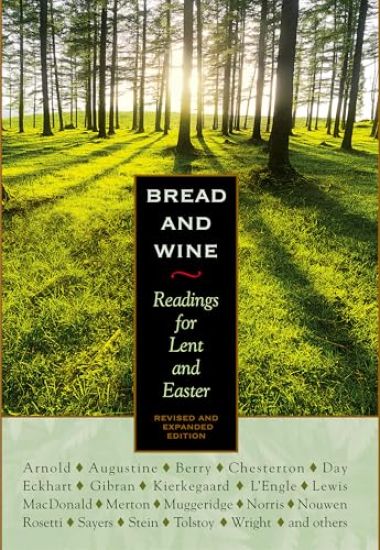
Bread and Wine

Bread and Wine

C. S. Lewis; Eberhard Arnold; Wendell Berry; Dietrich Bonhoeffer; Dorothy Day; Khalil Gibran; Clarence Jordan; Soren Kierkegaard; Thomas Merton; Kathleen Norris; Henri Nouwen; Christina Rosetti; Edith Stein; Dorothy Sayers; Fleming Rutledge; Simone Weil; Toyohiko Kagawa; Madeleine L’Engle; John Donne; Oscar Wilde

PLOUGH PUBLISHING HOUSE
2026
sidottu
Easter is the high point of the year for millions of Christians around the world. And for most of them, there can be no Easter without Lent, the season that leads up to it. A time for self-denial, soul-searching, and spiritual preparation, Lent makes time for daily reading and reflection. This time-tested collection of devotions will deepen and stretch your faith, and can be returned to year after year. Culled from the wealth of twenty centuries, the selections are ecumenical in scope, representing the best classic and contemporary Christian writers. This expanded second edition adds dozens of voices, new and old, and takes the reader all the way through Eastertide to Pentecost. Includes ninety-six Lenten and Easter readings, plus seven chapter-opening poems, by Eberhard Arnold, Saint Augustine, Wendell Berry, Christoph Friedrich Blumhardt, Dietrich Bonhoeffer, G. K. Chesterton, Dorothy Day, Meister Eckhart, Khalil Gibran, Clarence Jordan, Soren Kierkegaard, Madeleine L'Engle, C. S. Lewis, George MacDonald, Thomas Merton, Malcolm Muggeridge, Kathleen Norris, Henri Nouwen, Christina Rosetti, Fleming Rutledge, Dorothy Sayers, Edith Stein, Mother Teresa, Leo Tolstoy, N. T. Wright, Alfred Kazin, Amy Carmichael, Barbara Brown Taylor, Barbara Cawthorne Crafton, Blaise Pascal, Brennan Manning, Dag Hammarskjöld, Dorothee Soelle, Dylan Thomas, E. Stanley Jones, Emil Brunner, Frederick Buechner, Fyodor Dostoevsky, Geoffrey Hill, Henry Drummond, J. Heinrich Arnold, Jean-Pierre de Caussade, Johann Christoph Arnold, John Dear, John Donne, John Masefield, John Stott, John Updike, Jürgen Moltmann, Karl Barth, Madeleine L’Engle, Martin Luther, Oscar Wilde, Oswald Chambers, Paul Tillich, Peter Kreeft, Philip Berrigan, Philip Yancey, Romano Guardini, Sadhu Sundar Singh , Saint Augustine, Simone Weil, Thomas à Kempis, Toyohiko Kagawa, Walter J. Ciszek, Walter Wangerin, Watchman Nee, William Willimon and others.
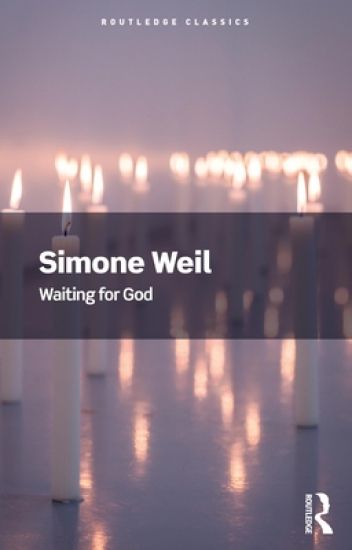
Waiting for God

Waiting for God

Simone Weil

Routledge
2021
nidottu
'You cannot get far in these essays without sensing yourself in the presence of a writer of immense intellectual power and fierce independence of mind.' - Janet Soskice, from the Introduction to the Routledge Classics editionSimone Weil (1909–1943) is one of the most brilliant and unorthodox religious and philosophical thinkers of the twentieth century. She was also a political activist who worked in the Renault car factory in France in the 1930s and fought briefly as an anarchist in the Spanish Civil War. Hailed by Albert Camus as 'the only great spirit of our times,' her work spans an astonishing variety of subjects, from ancient Greek philosophy and Christianity to oppression, political freedom and French national identity. Waiting for God is one of her most remarkable books, full of piercing spiritual and moral insight. The first part comprises letters she wrote in 1942 to Jean-Marie Perrin, a Dominican priest, and demonstrate the intense inner conflict Weil experienced as she wrestled with the demands of Christian belief and commitment. She then explores the 'just balance' of the world, arguing that we should regard God as providing two forms of guidance: our ability as human beings to think for ourselves; and our need for both physical and emotional 'matter.' She also argues for the concept of a 'sacred longing'; that humanity's search for beauty, both in the world and within each other, is driven by our underlying desire for a tangible god. Eloquent and inspiring, Waiting for God asks profound questions about the nature of faith, doubt and morality that continue to resonate today.This Routledge Classics edition includes a new Introduction by Janet Soskice and retains the Foreword to the 1979 edition by Malcolm Muggeridge.
Waiting for God

Waiting for God

Simone Weil

Routledge
2021
sidottu
'You cannot get far in these essays without sensing yourself in the presence of a writer of immense intellectual power and fierce independence of mind.' - Janet Soskice, from the Introduction to the Routledge Classics editionSimone Weil (1909–1943) is one of the most brilliant and unorthodox religious and philosophical thinkers of the twentieth century. She was also a political activist who worked in the Renault car factory in France in the 1930s and fought briefly as an anarchist in the Spanish Civil War. Hailed by Albert Camus as 'the only great spirit of our times,' her work spans an astonishing variety of subjects, from ancient Greek philosophy and Christianity to oppression, political freedom and French national identity. Waiting for God is one of her most remarkable books, full of piercing spiritual and moral insight. The first part comprises letters she wrote in 1942 to Jean-Marie Perrin, a Dominican priest, and demonstrate the intense inner conflict Weil experienced as she wrestled with the demands of Christian belief and commitment. She then explores the 'just balance' of the world, arguing that we should regard God as providing two forms of guidance: our ability as human beings to think for ourselves; and our need for both physical and emotional 'matter.' She also argues for the concept of a 'sacred longing'; that humanity's search for beauty, both in the world and within each other, is driven by our underlying desire for a tangible god. Eloquent and inspiring, Waiting for God asks profound questions about the nature of faith, doubt and morality that continue to resonate today.This Routledge Classics edition includes a new Introduction by Janet Soskice and retains the Foreword to the 1979 edition by Malcolm Muggeridge.
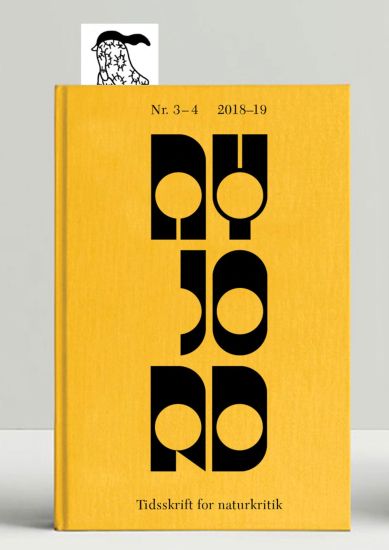
Ny Jord 3-4

Ny Jord 3-4

Andreas Malm; Margaret Mead; Emil Leth Meilvang; Peter Handke; Rune Engelbreht Larsen; Christoffer Basse Eriksen; Simone Weil; Anders Dunker; Francisco Goya; Liv Sejrbo Lidegaard; Arno Schmidt; Phillip Martinussen; Walt Whitman; Emil Bønnelycke; Signe Gjessing; Daniel Flendt Dreesen; Gaston Bachelard; Jørn H. Sværen; Michael Stoltze; Lao Zi; Ursula K. Le Guin; Peter Sloterdijk; Oliver Bak; Anna Marie Ortese; Edith Södergran; August Strindberg; C.Y. Frostholm; Lea Marie Løppenthin; Max Klinger; Charles Sanders Peirce

Forlaget Virkelig
2020
nidottu
Ny Jord – Tidsskrift for naturkritik er et multidisciplinært tidsskrift, der orienterer sig på tværs af århundreder og landegrænser og bringer videnskab, litteratur og kunst side om side i ønsket om at bidrage til en kvalificeret samtale om naturen i en tid, hvor vores forestillinger og idéer om den ændres markant.
Plough Quarterly No. 13 - Save Our Souls

Plough Quarterly No. 13 - Save Our Souls

Eberhard Arnold; Stephanie Saldaa; Ross Douthat; Dana Gioia; Simone Weil; Rod Dreher; Pawel Kuczynski; Meister Eckhart; Isaac Penington; Gerard Manley Hopkins; Jacqueline C. Rivers

Plough Publishing House
2017
pokkari
In an age of distraction, this issue of Plough Quarterly looks at inwardness – how sustainable human community and social activism must be rooted in the spiritual life. How much of your day is spent in reality, and how much in a fake world? We’ve learned that screen time is bad for you, too much media consumption damages your heart, and Facebook can make you mentally ill. We’re aware of the mind-altering power of advertising, the dehumanizing passions of our polarized politics, and the fact that millions of us have learned to multitask while watching footage of refugees drowning. But what are we to do about it? If this fake world is invading our souls, it’s in our souls that we must find the cure. Only a return to inwardness can bring distracted moderns back to Jesus and to constructive work for his kingdom. Here activists may object: Isn’t it the height of selfishness to retreat into our interior life when we ought to be out saving starving children? Yet Christians through the ages have insisted that inwardness is crucial to the life of discipleship. It’s what keeps us from falling for demagogues and false gospels, from wasting life on superficialities, and from ignoring our neighbor. In fact, throughout history it has often been the mystics who were most active in serving others. In true Plough fashion, this issue brings together a colorful cast of examples: from medieval Beguines and Benedictines to Gerard Manley Hopkins, Simone Weil, and Fannie Lou Hamer, to contemporary voices like Robert Cardinal Sarah, Johann Christoph Arnold, and three persecuted Syrian priests. These lives offer us glimpses of the real world from which our fake world seeks to distract us, and can guide us in our own refusal to conform. Also in this issue: • Poetry from Gerard Manley Hopkins and Malcolm Guite • Insights on inwardness from Meister Eckhart, Eberhard Arnold, Marguerite Porete, Simone Weil, and Isaac Penington • A forum on the Benedict Option with Rod Dreher, Ross Douthat, Jacqueline C. Rivers, and Randall Gauger • Artwork by Jason Landsel, Bruce Herman, Jane Chapin, Graham Berry, Fra Angelico, Francisco de Zurbarán, Eleanor Fortescue-Brickdale, Matthew J. Cutter, John August Swanson, Vittorio Matteo Corcos, and Leon Dabo Plough Quarterly features stories, ideas, and culture for people eager to put their faith into action. Each issue brings you in-depth articles, interviews, poetry, book reviews, and art to help you put Jesus’ message into practice and find common cause with others.
A Life in Letters

A Life in Letters

Simone Weil

HARVARD UNIVERSITY PRESS
2026
pokkari
The inspiring letters of philosopher, mystic, and freedom fighter Simone Weil to her family, presented for the first time in English. Now in the pantheon of great thinkers, Simone Weil (1909-1943) lived largely in the shadows. Assembled here, the letters she wrote to her parents and brother from childhood onward chart her intellectual range as well as her itinerancy and shifting preoccupations, revealing the singular personality at the heart of her brilliant essays. The daughter of a bourgeois Parisian Jewish family, Weil was a troublemaking idealist who preferred the company of miners and Russian exiles to that of her peers. A scholar of history and politics, she ultimately found a home in Christian mysticism. Weil paired teaching with poetry and even dabbled in mathematics, as evidenced by her correspondence with her brother, Andr , who won the Kyoto Prize in 1994 for the famed Weil Conjectures. The first complete collection of Simone Weil's missives to her family, A Life in Letters vividly illustrates her thought taking shape as she joins the Spanish struggle against fascism and the transatlantic resistance to the Nazis. An introduction and notes contextualize the letters historically and intellectually, providing an ideal entryway into Weil's treasured philosophical insights.
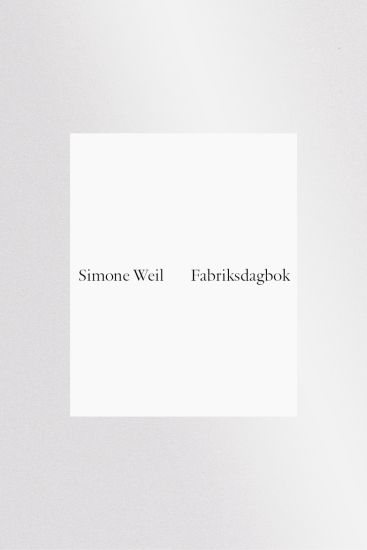
Fabriksdagbok

Fabriksdagbok

Simone Weil; Filip Lindberg

RELÄ
2026
muu
Simone Weil (1909–1943) var en fransk filosof, mystiker och politisk aktivist. Fabriksdagbok skrevs mellan 1934 och 1935 då Weil tjänstgjorde som okvalificerad fabriksarbetare på Alsthom och Renault i Paris. Under sin anställning hyrde Weil ett rum i anslutning till fabrikerna, som tillverkade bildelar respektive elektrisk utrustning till spårvagnar, och trädde in i en av samhällets mest utsatta klasser: den okvalificerade kvinnliga fabriksarbetarens. I Fabriksdagbok varvas detaljerade uppgifter om ackordsbelopp, tillverkade metalldelar och fabrikens maskiner med skador och missöden, utskällningar från förmän och filosofiska reflektioner. Från att ha betraktat fabriken som en plats för politisk organisering och subjektivering erfar Weil istället ett förtryck som inte ger upphov ”till revolt som omedelbar reaktion, utan till underkastelse”. Fabriksdagbok är resultatet av ett filosoferande över arbetets villkor, med kroppen som insats. Denna första svenska utgåva av Fabriksdagbok baseras på den faktiska anteckningsbok som Weil förde under tiden som fabriksarbetare. Fabriksdagbok är översatt av Martin Högström, med efterord av Högström och Filip Lindberg.
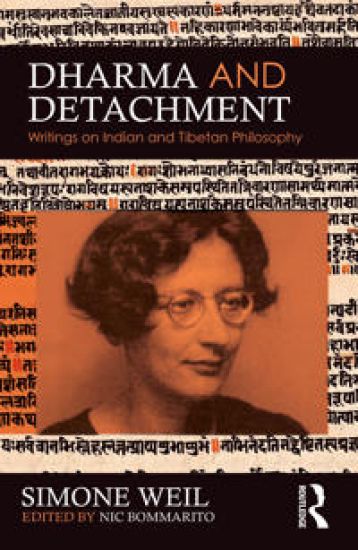
Dharma and Detachment: Writings on Indian and Tibetan Thought
Simone Weil was one of the most profound and thought-provoking thinkers of the twentieth century. An intellectual prodigy from an early age in both the sciences and the arts, she was at different times a teacher, factory and farm labourer, and political activist, spending a brief period in Spain during the Spanish Civil War. Her writings, which span philosophy, politics, religion and spirituality, are marked by a both passionate and contemplative attempt to understand profound questions about the good, God, human thought and action, and suffering and beauty.However, considerably less known is Weil's fascination with the texts and ideas of Indian and Tibetan thought, which she both thought and wrote about extensively. Dharma and Detachment: Writings on Indian and Tibetan Thought is the first volume to draw together some of Weil's most interesting and important writings on eastern thought.Expertly edited and introduced by Nicolas Bommarito, the anthology contains writings drawn from Weil's extensive Notebooks. The extracts show how she moves seamlessly between Plato, Catholicism, mathematics, the Bhagavad-Gita, and Buddhism, engaging with texts in the original Sanskrit. To help the reader gain a full insight into Weil's thought, the volume also includes – along with Weil's own writings – key passages from the classical texts that inspired her, especially the Bhagavad-Gita and the Upanisòads. In addition to a helpful Introduction by Nicolas Bommarito setting out the background to Weil's life and her engagement with Indo-Tibetan texts, he also explains fundamental Indo-Tibetan philosophical terms such as atman, the three gunòas, karma and detachment. A glossary is also included, making the volume an ideal starting point for those unfamiliar with Indo-Tibetan philosophy and seeking a clear path into Weil's engagement with these texts and ideas.Dharma and Detachment: Writings on Indian and Tibetan Thought will be of great interest to all readers and students of Simone Weil's work, as well as to those interested in Indian and Tibetan philosophy, religion, and phenomenology.
Dharma and Detachment: Writings on Indian and Tibetan Thought
Simone Weil was one of the most profound and thought-provoking thinkers of the twentieth century. An intellectual prodigy from an early age in both the sciences and the arts, she was at different times a teacher, factory and farm labourer, and political activist, spending a brief period in Spain during the Spanish Civil War. Her writings, which span philosophy, politics, religion and spirituality, are marked by a both passionate and contemplative attempt to understand profound questions about the good, God, human thought and action, and suffering and beauty.However, considerably less known is Weil's fascination with the texts and ideas of Indian and Tibetan thought, which she both thought and wrote about extensively. Dharma and Detachment: Writings on Indian and Tibetan Thought is the first volume to draw together some of Weil's most interesting and important writings on eastern thought.Expertly edited and introduced by Nicolas Bommarito, the anthology contains writings drawn from Weil's extensive Notebooks. The extracts show how she moves seamlessly between Plato, Catholicism, mathematics, the Bhagavad-Gita, and Buddhism, engaging with texts in the original Sanskrit. To help the reader gain a full insight into Weil's thought, the volume also includes – along with Weil's own writings – key passages from the classical texts that inspired her, especially the Bhagavad-Gita and the Upanisòads. In addition to a helpful Introduction by Nicolas Bommarito setting out the background to Weil's life and her engagement with Indo-Tibetan texts, he also explains fundamental Indo-Tibetan philosophical terms such as atman, the three gunòas, karma and detachment. A glossary is also included, making the volume an ideal starting point for those unfamiliar with Indo-Tibetan philosophy and seeking a clear path into Weil's engagement with these texts and ideas.Dharma and Detachment: Writings on Indian and Tibetan Thought will be of great interest to all readers and students of Simone Weil's work, as well as to those interested in Indian and Tibetan philosophy, religion, and phenomenology.
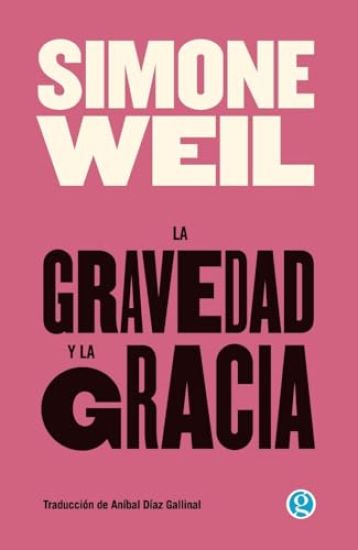
La gravedad y la gracia

La gravedad y la gracia

Simone Weil

Godot Editores
2025
nidottu
Este libro re ne quiz s los textos m s ntimos de Simone Weil. El amor y la desgracia se entrelazan con las dos fuerzas que, seg n Weil, organizan todos nuestros comportamientos: la gravedad y la gracia. Escritos entre 1941 y 1942, estos textos fragmentarios extra dos de sus cuadernos tratan sobre los temas fundamentales del esp ritu humano: la fe, el trabajo, el sufrimiento, la verdad, la contradicci n y la injusticia. El trabajo lleva a experimentar de manera agotadora el fen meno de la finalidad pospuesta, como una pelota; trabajar para comer, comer para trabajar. Si miramos una de las dos como un fin, o una y otra tomadas por separado, estamos perdidos. El ciclo contiene la verdad. El pensamiento est obligado a pasar de un instante al instante siguiente sin atarse ni al pasado ni al futuro.