Kirjailija
Stephen J Vicchio
Kirjat ja teokset yhdessä paikassa: 38 kirjaa, julkaisuja vuosilta 2001-2025, suosituimpien joukossa James Madison's Religion. Vertaile teosten hintoja ja tarkista saatavuus suomalaisista kirjakaupoista.
Mukana myös kirjoitusasut: Stephen J. Vicchio
38 kirjaa
Kirjojen julkaisuhaarukka 2001-2025.
What happens when the most private conviction shapes the most public liberty? In James Madison's Religion, discover how James Madison's lifelong wrestling with belief-born in Anglican Virginia, sharpened by Enlightenment reason, and tested in the furnace of politics-became the blueprint for the First Amendment. Drawing on letters, debates, and long-overlooked manuscripts, this gripping narrative follows Madison from his Presbyterian schooling to the Constitutional Convention and beyond, revealing a statesman who viewed conscience as sacred, pluralism as strength, and state power over religion as the surest path to oppression. Far from a tidy "separation" slogan, Madison's theology of liberty was a rigorous moral realism-one that still guides today's fiercest debates over church, state, and free expression. Inside you'll discover: - Madison's evolution of faith-from Anglican roots to an independent, conscience-first philosophy. - The intellectual sparring with Jefferson, Hamilton, and others that refined his political theology. - The road to the First Amendment-how ideas became law, and why wording mattered. - Religion's double edge-its power to elevate civic virtue or enforce conformity. - Why Madison's pluralism endures-and what it means for modern disputes over speech, belief, and the public square. This book blends biography, intellectual history, and political analysis to offer a fresh, deeply researched portrait of a founder who believed the freedom of the soul is the cornerstone of a free republic. If you care about how belief and liberty can coexist-this is the founding story you've been waiting for.
Hannah and Martin brings to life the complex relationship between two towering figures of 20th-century philosophy: Hannah Arendt and Martin Heidegger. dramatized as a play, this work stages their philosophical and romantic entanglements set against the backdrop of significant philosophical questions about being, truth, and ethics. Stephen Vicchio uses their relationship, complicated by Heidegger's involvement with the Nazi party and Arendt's Jewish identity, to serve as a powerful narrative to explore these questions.In addition to the play, several essays are included that dissect the philosophical and moral dilemmas presented in the drama. These essays cover a wide range of topics including the nature of human suffering, the complexities of love as discussed in classical and Christian traditions, and the ethical implications of philosophical thought.Through its blend of drama and philosophical inquiry, Hannah & Martin challenges the audience to reflect on the interplay between personal history and philosophical thought, and the ways in which this shapes our understanding of morality and existence.
This book is about the history of an idea-the age-old notion of hell and the soul's punishment after death. It begins with perspectives on this idea found in the ancient world, continues to the medieval period, and culminates with perspectives on the history of this same idea in the modern world of Judaism, Christianity, and Islam. Several fascinating images accompany a riveting historical and spiritual narrative that at times might trigger anxiety in certain readers. Herin lies all you ever wanted--or didn't want--to know about where you'll spend eternity if you fail to abide by the prescriptions of your chosen religion. The book also contains several appendices on foreign words and phrases, the idea of levels of hell, and how the idea has been portrayed in art over the centuries. Abandon all boredom ye who enter here
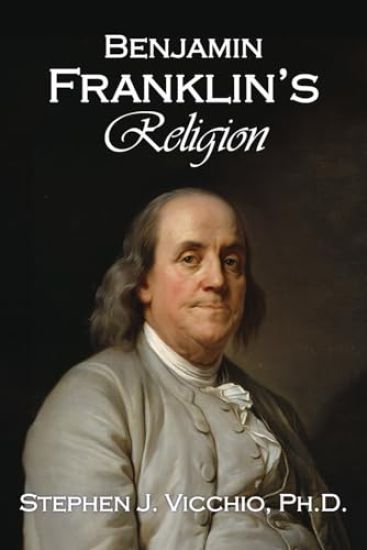
This book is about the religious views of the greatest statesman in the history of the United States-Benjamin Franklin. The text covers Franklin's views from the adoption of his parents Congregationalist and Presbyterian perspectives, followed by a period of religious doubt, his comments about religion as a diplomat in Britain and France, and ironically, a return at the end of his life to the monotheism of his mother and father. This study also examines the intellectual sources of his views on religion, including the Enlightenment, the movement known as Deism, and Franklin's readings of many seventeenth- and eighteenth-century philosophers and theologians of his day. And all of this with the background that Frankin only had two years of formal education.
This is the story of the Black man known as "Estevanico," or "Little Stephen" in Portuguese, and the slave of Senior Dorantes. Estevanico was a scout, ambassador, and a guide for the Narv ez expedition. He went ahead for the purpose of sending back reports of the importance of the pueblos and towns he found in what would become the American Southwest.Estevanico (1499-1539) most likely was born "Musthapha Zammouri." He is the first known person of African descent to have arrived in the present-day continental United States. He was one of only four survivors of the Spanish Narv ez expedition and traveled with explorer Cabeza de Vaca across northern New Spain (the present-day US Southwest and Northern Mexico).
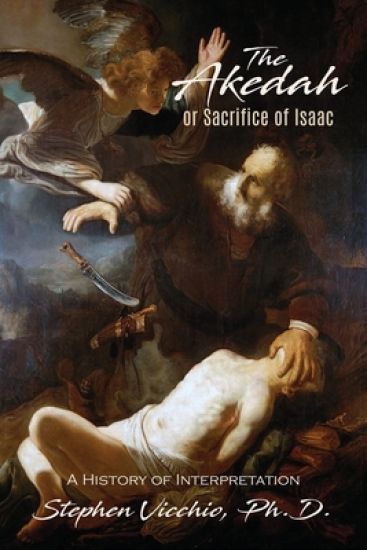
The Akedah or Sacrifice of Isaac is a history of how the Old Testament passage at Genesis 22:1 to 19, called the Akedah or the Sacrifice of Isaac, has been interpreted over time in Judaism, Christianity and Islam. This study begins with an analysis of human sacrifice in the ancient world, followed by human sacrifice elsewhere in the Bible and a close reading of the Hebrew text of Genesis 22. The remainder of this study is a careful summary of views on the Akedah over time: in early Judaism, early Christianity, in the Jewish medieval period, in the tradition of Islam, and more modern perspectives including those of Soren Kierkegaard, the Akedah in the holocaust, and the Akedah in contemporary life. This study also includes three helpful appendices on classical Hebrew words and phrases, Greek and Latin words and phrases, and other foreign words and phrases.
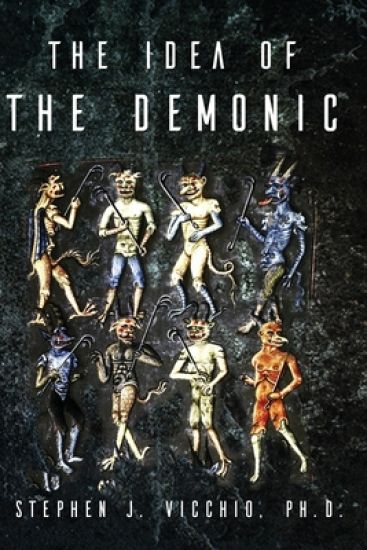
This study examines the idea of the demonic as it appeared among the many cultures and in the diverse religions and scriptures of the world. The book explores many different periods of time including the medieval period, the early modern era, the reformation, early modern periods, and in the contemporary world. Special attention is also given to how the idea of the demonic has been used in painting, sculpture, music, and film. A glossary of foreign words and phrases is included.
This work is the product of ten years of study. It is about the phenomenon of Muslim slaves in the Chesapeake Bay Region from 1634 until 1865. The book examines fifty-five Muslim slaves in Maryland and another fifty-one in Virginia. It also looks at slave forts and prisons in Africa, the Middle Passage-the route by which West African slaves came to America-slave auction and slave dealers in Maryland, Virginia, and the District of Columbia and many other issues related to American slavery in the seventeenth to nineteenth centuries.
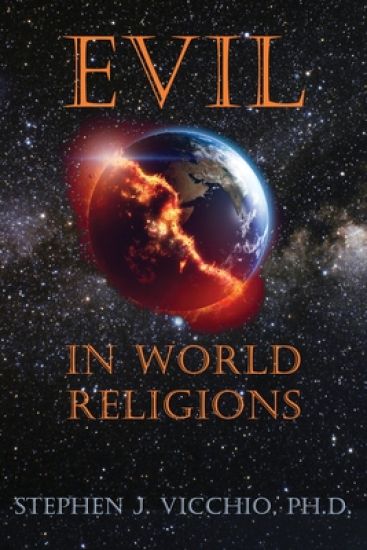
Evil in World Religions is an authoritative examination of the similarities and differences in how many of the world's religions respond to the issues of evil and suffering in the world. After proposing definitions of "religion," "evil" and other useful religious concepts, this study begins with the world's oldest religions-Hinduism, Judaism and the dualistic faiths of Zoroastrianism, Mithraism and Manichaeism. The study continues on to an analysis of the beliefs of four Asian faiths-Buddhism, Confucianism, Taoism and Shinto. Finally, the book examines Christianity and Islam, which arose in the ancient Near East in Israel and the Arabian Peninsula, and then traditional African religions, particularly of the Yoruba and Igbo people. Evil in World Religions is an invaluable resource for scholars and students of comparative religion and theodicy.
When I became aware of the Corona virus in January of 2020, I thought I would continue to do what I have always done-to think and write about evil and suffering. Thus, I began planning a book on Biblical views on evil and suffering. This was an effort to do what I have always done. That is, to use my skills to show what the Bible has said about times of crisis and turmoil. In my academic career, I have been trained as both a philosopher and a Biblical scholar. I have learned the Biblical languages, as well as other tongues such as Classical Greek and Medieval Latin of the Church so that I could read and study texts in the original languages. What better way, then, to contribute to the worldwide pandemic than to employ my skills in making a contribution to the current crisis? And so, this book should be seen as a summary and some reflections on what the Bible has had to say about the issues of evil and suffering when human beings are in times of calamity. I might suggest that the reader of this study have a copy of the Bible at his or her side when going through the book. This would allow the reader more easily to follow the arguments and explication to be found in the book.
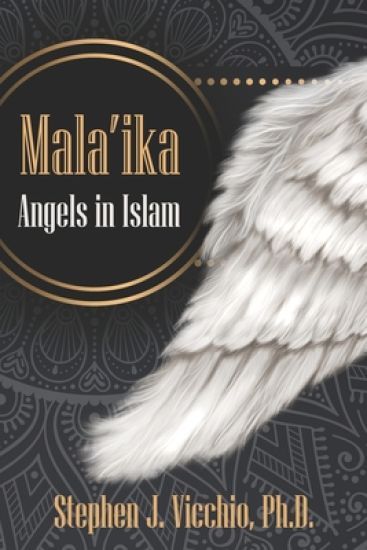
This book analyzes the many views of the Mala'ika-or angels-in the Islamic faith, the nature and functions of angels, and how a belief in angels is among Islam's six principal Articles of Faith. The work deeply examines the most important angel, Jibril (Gabriel), who delivered the message of Al-Qur'an to the Prophet Muhammad, and further examines the other archangels and their relationships to Allah. The role of angels in the earliest Islamic battles is studied, along with the central role of angels in Muslim art and the roles played by the Jinn in relation to humans.
This book is a history of the idea of the demonic in human history from the ancient world to contemporary life from the late twentieth century to the twenty-first century. It begins with an analysis of the idea of the demonic in the cultures of the ancient world, followed by chapters on the Bible, the Talmud and Mishnah, the early church fathers, the demonic in medieval Judaism and Christianity, as well as the demonic in Islam, early modern Judaism, the Reformation period, the early modern period in the eighteenth and nineteenth centuries, and the demonic in contemporary life. Additionally, there are appendices with additional information on the demonic in painting and sculpture, in music, and in the film and movie industry.
This book is the product of fifty years of scholarship. It consists of two main parts: the first is an essay on the history of interpreting the book of Job in Judaism, Christianity, and Islam. The second part is a commentary on the book.
This book analyzes the many views of the Mala'ika-or angels-in the Islamic faith, the nature and functions of angels, and how a belief in angels is among Islam's six principal Articles of Faith. The work deeply examines the most important angels, Jibril (Gabriel), who delivered the message of Al-Qur'an to the Prophet Muhammad, and further examines the other archangels and their relationships to Allah. The role of angels in the earliest Islamic battles is studied, along with the central role of angels in Muslim art and the roles played by the Jinn in relation to humans.
Strange things comin' and goin' on that hill . . . The guillotine challenges the axe-wielding executioner's craft. This exploration of capital punishment set in a small Dutch town in 1799 sears with the immediacy of today's current debate. A play in three acts, Executioner's Hill explores the dynamics of the death penalty, and challenges attitudes from both sides of the issue.