Kirjojen hintavertailu. Mukana 12 390 323 kirjaa ja 12 kauppaa.

Kirjailija

Stephen Wynn

Kirjat ja teokset yhdessä paikassa: 32 kirjaa, julkaisuja vuosilta 2012-2025, suosituimpien joukossa Die 12. SS-Panzerdivision "Hitlerjugend". Vertaile teosten hintoja ja tarkista saatavuus suomalaisista kirjakaupoista.

32 kirjaa

Kirjojen julkaisuhaarukka 2012-2025.

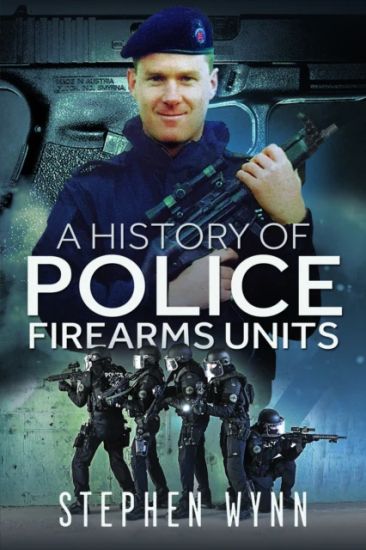
A History of Police Firearms Units

A History of Police Firearms Units

Stephen Wynn

PEN SWORD BOOKS LTD
2025
nidottu
The role of the police firearms officers is possibly one of the most thankless jobs there is in a non-military environment. Home Office figures for March 2022 to March 2023 show there were 6,038 police officers throughout England and Wales who were authorised to carry firearms for operational purposes, out of a total of 149,572 officers overall - the culmination of a four-year decline in firearms officers, from a peak of 6,621 in March 2019. Being a firearms officer carries a kudos in policing, although why this is the case is not absolutely clear, especially when considering the real risk of either being shot dead, shooting somebody and being charged with their murder, or not shooting somebody and it resulting in the death of a colleague or a member of the public. In the late 1960s and early 1970s, the police's use of firearms was far removed from what it is today. Nominated officers were allowed to draw firearms on an 'as and when' basis, and would undertake firing practice on only a few occasions throughout the course of the year, with little or no thought or consideration given to tactical approaches to a particular scenario. However, the change in attitudes by senior officers to firearms can be traced back to the August 1966 murders of three Metropolitan police officers by two armed criminals close to Wormwood Scrubs prison, in west London. This book looks at the history of police firearms units, which started to be formed in the immediate aftermath of the 1966 killings, and how they have subsequently evolved, improving in the selection of suitable officers, along with the weaponry and equipment used and the training provided to the officers who volunteer for this extremely dangerous and stressful role.

Escaping Stalag Luft III

Escaping Stalag Luft III

Stephen Wynn

PEN SWORD BOOKS LTD
2025
sidottu
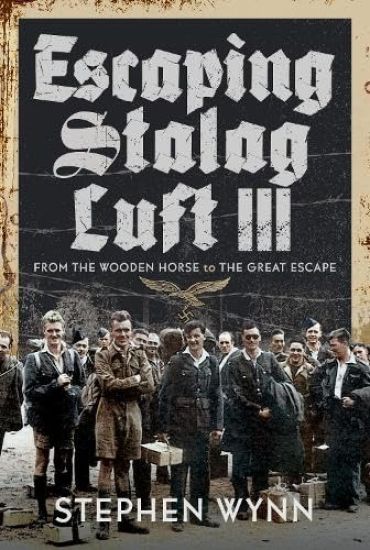
Stalag Luft lll was where Germany sent all its habitual Allied escapers, and the first British and Commonwealth POWs arrived there on 11 April 1942. The following year, on 29 October, what became known as The Wooden Horse Escape took place – the name deriving from the use of a gymnastic vaulting horse to cover the fact that a tunnel was being dug underneath. The escape was devised by Flight Lieutenant Eric Williams and Lieutenant Richard Michael Codner. Joined by Pilot Officer Oliver Philpot, all three men escaped and made it safely back to England. The escape inspired others and, five months later, on the evening of 24/25 March 1944, what became known as the Great Escape took place. The intention was to break out more than 200 British and Allied POWs, but a combination of tunnel collapses, a nearby Allied air raid and the discovery of the tunnel exit meant only 76 escapees made it out. Only 3 made it back to the UK, with 73 being recaptured and 50 of those being murdered by the Gestapo on Hitler’s orders. Both escapes were made famous first by books and then even more famous by their respective films, and although not entirely accurate, each ensured that the stories told would reach a worldwide audience.
The Surrender of Singapore

The Surrender of Singapore

Stephen Wynn

PEN SWORD BOOKS LTD
2024
nidottu
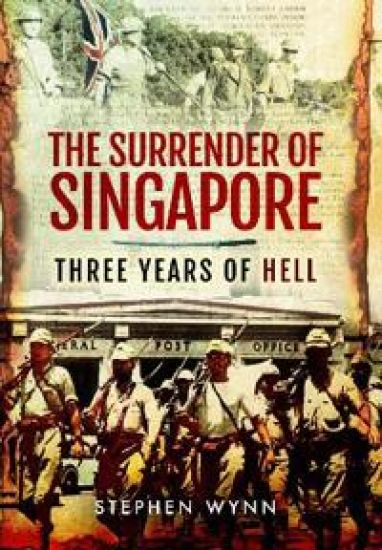
Until the late 1930s, Singapore was noted as a popular stop-off point for wealthy European travellers on their way to countries such as Australia and New Zealand. All of that changed with the outbreak of the Second World War. Despite Major-General William Dobbie, the General Officer Commanding Malaya between 8 November 1935 and August 1939, warning that Singapore could be conquered by the Japanese, his concerns went unheeded. As far as the British authorities were concerned, Singapore was an impregnable fortress. There were many reasons which led to the fall of Singapore. The apparent arrogance of some senior British military personnel and politicians; a misconception that Japanese soldiers were inferior to their American and Commonwealth counterparts; a belief that Japan would not militarily engage both America and Britain at the same time; and that as far as the Allies were concerned, victory in Europe was a priority over defeating the Japanese throughout Asia and the Pacific. Singapore fell to the Japanese in 1942 and was then controlled by them for the next three years, a time in which Chinese civilians and Commonwealth soldiers were murdered at their hands, in such incidents as the Sook Ching massacre and the Burma Railway death march. Included in this account is one mans never before told story of his time as a PoW in Changi prison. The book explores how he miraculously survived the horrors of working on the Burma railway, only to be sent back to Changi, and reveals how the Japanese authorities held letters that his wife sent him for three years. Winston Churchill decided against a public enquiry into the circumstances surrounding the fall of Singapore, and no subsequent British Government has seen fit to change that decision. This remarkable book seeks to remedy that by using an array of sources to tell the fascinating and largely forgotten story of the fall of Singapore.
Operation North Pole

Operation North Pole

Stephen Wynn

PEN SWORD BOOKS LTD
2024
sidottu
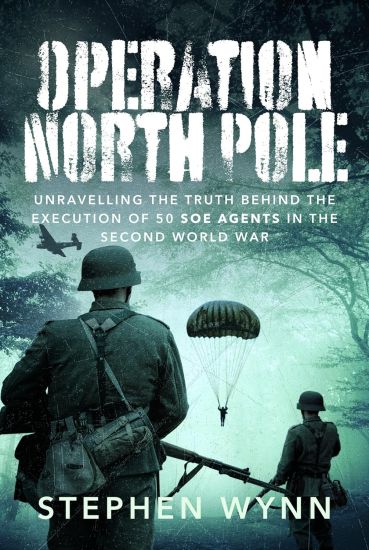
Englandspiel Nordpol, or Operation North Pole, was a successful Second World War counterintelligence operation conducted by Germany's military intelligence (the Abwehr) between 1942 and 1944. On the night of 6-7 November 1941 two SOE agents, Huub Lauwers and Thys Taconis were parachuted into the Netherlands and dropped over Stegerveld, near Ommen. Lauwers was captured on 6 March 1942, whilst Taconis was captured 3 days later on 9 March. Lauwers was persuaded to send messages back to London by the Germans, in which he intentionally left out two security checks. This should have automatically sounded 'alarm bells' with those who received the messages, but for some inexplicable reason, it did not. Whether this was just a genuine mistake or something more sinister has never been fully ascertained. After all, security checks were in place to ensure that messages received from agents in the field were genuine and were part of the SOE's own transmission protocol. As no one in London realised messages being received from SOE agents in the Netherlands were being sent under the control and direction of German military intelligence, more and more agents and equipment followed unabated for more than 18 months. Of the 54 SOE agents sent to the Netherlands from England during Operation North Pole, 50 died or were executed whilst being held prisoner by the Germans.
Against All Odds

Against All Odds

Stephen Wynn

PEN SWORD BOOKS LTD
2024
nidottu
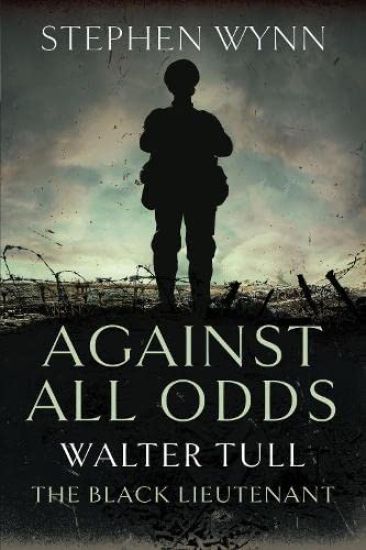
Walter Tull would have been a remarkable individual no matter when he had been born, but to achieve what he did, during the time that he did, makes him even more remarkable. He was an orphan at just six years of age, and despite not wanting to, his step mother, Clara, had no choice but to place him and his elder brother, Edward, in to a children's home in the East End of London. As neither Walter or Edward had ever travelled outside of Folkestone before, the upheaval must have come as quite a shock. Two years after entering the home, Walter and Edward were split up when Edward was adopted and went to live in Glasgow. Walter's sporting prowess saw him play for top local amateur side, Clapton Football club, signing for them in 1908, but it was to be a short lived affair, as by the following year he had signed as a professional for the prestigious Tottenham Hotspur Football Club, making his first team debut against Manchester United. In October 1911 Walter was transferred to Northampton Town Football Club, where he would go on to play over one hundred first team games, before the First World War brought a premature end to his career as a professional footballer. With the outbreak of war, Walter wasted no time enlisting in the British Army, initially as a Private in the newly formed 17th (Football) Battalion, Middlesex Regiment. Further promotions followed and in no time at all he had reached the rank of Sergeant. He was put forward for a commission and passed out as a 2nd Lieutenant on 29 May 1917. He went on to become the first black officer in the British Army to lead white troops in to battle, and was fondly regarded by the men who served under him. Walter was killed in action whilst leading his men in a counter attack against German defensive positions on Monday 25 March 1918. He died a hero. He was well liked and respected by all who knew him. Like many men of his generation his life was cut short for the greater good whilst in the service of his country, so that others might prevail.
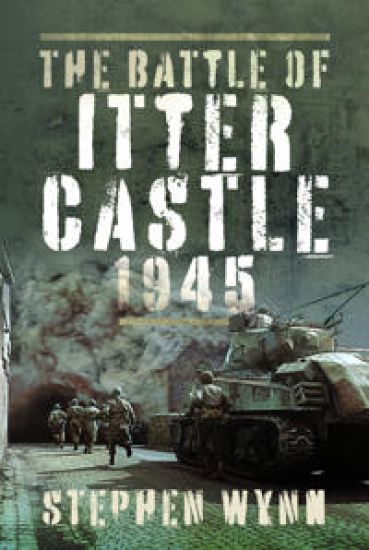
The Battle of Itter Castle, 1945

The Battle of Itter Castle, 1945

Stephen Wynn

PEN SWORD BOOKS LTD
2024
sidottu
The Battle of Itter Castle was undoubtedly one of the strangest events of the Second World War, being one of only two occasions during the war in which Americans and Germans fought side by side. The castle was seized by the Nazis on 7 February 1943, on the direct orders of Heinrich Himmler, and in just ten weeks was changed into a five-star prison for a number of high-ranking French dignitaries, both civilian and military. In the final days of the war, in May 1945, with the castle's German guards having deserted their posts and an attack by SS units imminent, those inside the castle realised they needed help. Having sent out two men to try to make contact with American forces, it was then a case of sit and wait, not knowing if they had been successful in their task or had been captured and killed by the SS. Help eventually arrived in the shape of United States Army Captain John C. "Jack" Lee, his tank and a handful of men, along with German Wehrmacht officer Major Josef "Sepp" Gangl, and some of his men. Although happy that their 'prayers' had been answered and help had arrived, the French dignitaries could not hide their disappointment at such a small force of rescuers. The subsequent battle started early on the morning of Saturday, 5 May, and continued until mid-afternoon when a larger American force arrived and defeated the remaining SS forces. The victory came at a price for Major Gangl, who was the only one of the defenders to lose his life in the fighting.
The Shetland 'Bus'

The Shetland 'Bus'

Stephen Wynn

PEN SWORD BOOKS LTD
2023
nidottu
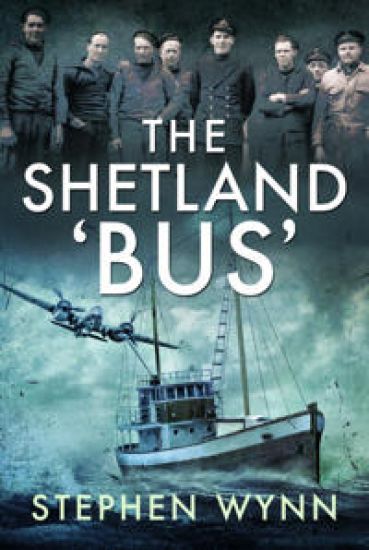
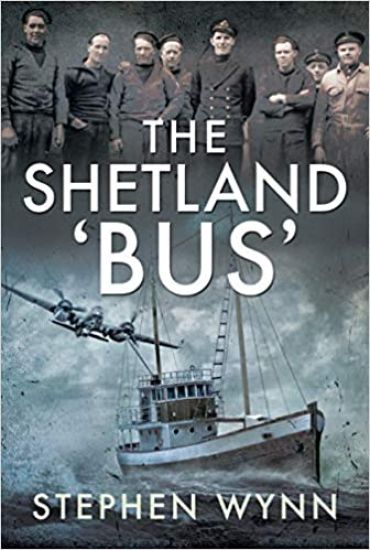
The Shetland Bus was not a bus, but the nickname of a special operations group that set up a route across the North Sea between Norway and the Shetland Islands, north-east of mainland Scotland. The first voyage was made by Norwegian sailors to help their compatriots in occupied Norway, but soon the Secret Intelligence Service and the Special Operations Executive asked if they would be prepared to carry cargoes of British agents and equipment, as well. Fourteen boats of different sizes were originally used, and Flemington House in Shetland was commandeered as the operation's HQ. The first official journey was carried out by the Norwegian fishing vessel the Aksel, which left Luna Ness on 30 August 1941 on route to Bremen in Norway. This book examines that first journey, as well later ones, and discusses the agents and operations which members of the Shetland Bus were involved in throughout the war. It also looks at the donation of 3 submarine chasers to the operation, made in October 1943, by the United States Navy. These torpedo-type boats were 110 ft long and very fast, allowing journey times between Shetland and Norway to be greatly reduced and carried out in greater safety. The story of the Shetland Bus would be nothing without the individuals involved, both the sailors of the boats and the agents who were carried between the two countries. These were very brave individuals who helped maintain an important lifeline to the beleaguered Norwegians. It also allowed British and Norwegian agents a way in to Norway so that they could liaise with the Norwegian Underground movement and carry out important missions against the German occupiers.
Dieppe   1942

Dieppe 1942

Stephen Wynn

PEN SWORD BOOKS LTD
2023
sidottu
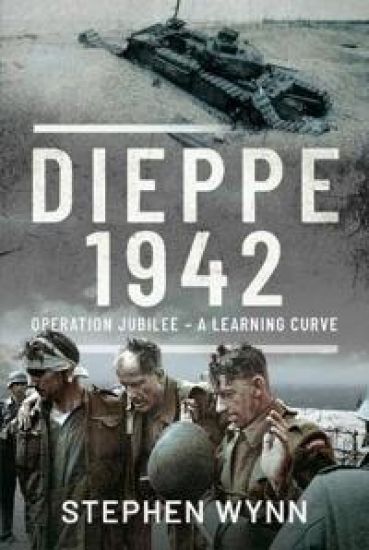
On 19 August 1942, an Allied amphibious raid took place on the coastal town of Dieppe in northern France, when a force of some 6,500 infantry soldiers, predominantly Canadian, and supported by a number of tanks were landed by ships of the Royal Navy under a blanket of cover provided by the RAF. The official reason for the raid was to capture the town's port, gather relevant intelligence, and destroy a number of coastal defences, port structures and other identified buildings. Allied authorities believed the raid would not only provide a much-needed boost to Allied morale, but also demonstrate to Stalin that Britain and the United States were serious in their commitment to opening a second front, in order to help the Soviet army fighting on the Eastern Front. It has also been suggested that the real reason for the raid was to capture a new German 4-rotor Enigma code machine, along with related code books. Whatever the reasons for the raid, it was an unmitigated failure. The German defences were more formidable than intelligence reports suggested they would be, Allied aerial and naval support was insufficient, meaning soldiers were unable to achieve their objectives, and most of the tanks failed to make it off the beaches. Indeed, due to the unexpected mounting casualties, the decision was taken to cut short the raid and evacuate the remaining men.
The Blackout Ripper

The Blackout Ripper

Stephen Wynn

PEN SWORD BOOKS LTD
2022
nidottu
Two days before the outbreak of the Second World War, the British government imposed blackout regulations across the nation as it was believed that in the event of war, Germany would very quickly begin conducting air raids on British towns and cities. The measures included covering windows in a dark, thick material at night to ensure no light could be seen from the outside. The use of vehicle headlamps was also prohibited, which resulted in a number of accidents and pedestrians being killed. These restrictions, enforced by Air Raid Precaution wardens and the police, were for the benefit and safety of the British public, but it also unintentionally made life a lot less dangerous for members of the criminal fraternity, allowing them to go about their regular night time activities with less chance of being caught by the police. As a result, during one week in February 1942, Gordon Cummins, RAF, was able to move around freely to carry out his attacks and make it back to his billet without being caught, or even stopped, by the police. The very restrictions put in place to protect the British public from German bombers actually placed women in danger from men such as Cummins: three of his victims were known prostitutes, as was at least one of the two women he is known to have attacked, but who survived. All of Cummins victims were attacked during the hours of darkness whilst the blackou? was in place, leading to him becoming known as the Blackout Ripper.
St Nazaire Raid, 1942

St Nazaire Raid, 1942

Stephen Wynn

PEN SWORD BOOKS LTD
2022
sidottu
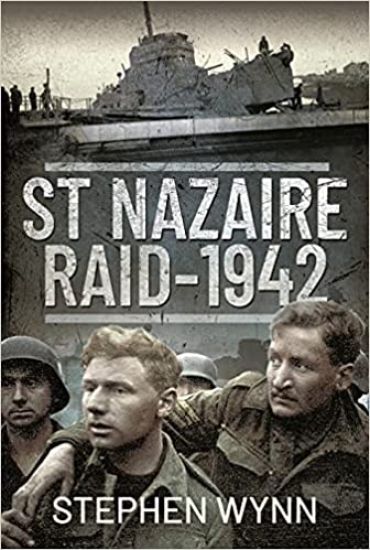
The raid on St Nazaire has gone down in history as one of the most daring commando raids of all time. Given the code name of Operation Chariot, it took place in the early hours of Saturday, 28 March 1942, and was a joint undertaking by the Royal Navy and British Commando units. The port at St Nazaire, which sits on the Loire estuary and the Atlantic Ocean, has a dry dock that was capable of accommodating some of Germany's biggest naval vessels, such as the _Bismarck_, or the _Tirpitz_. By putting the port out of action, any repairs or maintenance work that needed to be carried out would instead have to be undertaken back home at the German port of Bremerhaven. To do this, the German vessels would either have to navigate the waters of the English Channel or the North Sea, with both journeys potentially bringing them to the attention of the Home Fleet of the Royal Navy. A raiding force of 612 officers and men were assembled and dispatched from Falmouth to carry out the raid, sailing on board the obsolete British destroyer HMS _Campbeltown_, along with 18 Motor Launches. The idea was to ram the destroyer in to the outer gates of the dry dock at St Nazaire and put it out of action for as long as possible. The raid was a success, but came at a price: of those who set out, 169 were killed whilst a further 215 were captured. Only 3 Motor Launches and 228 men escaped and made the return journey back to the UK. Many brave men gave it their all during the action at St Nazaire, to such an extent that 89 of those who took part in the raid were awarded decorations for bravery, including 5 who were awarded the Victoria Cross.
Joachim Peiper and the Nazi Atrocities of 1944

Joachim Peiper and the Nazi Atrocities of 1944

Stephen Wynn

PEN SWORD BOOKS LTD
2022
sidottu
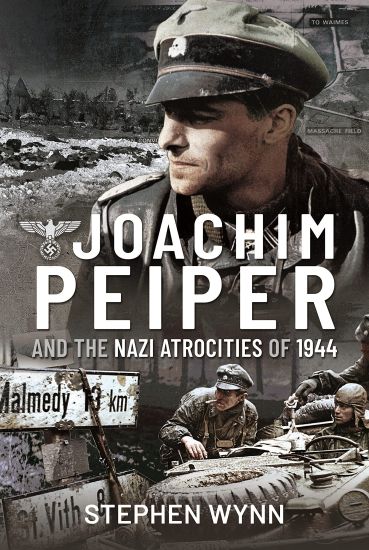
Joachim Peiper held the rank of Obersturmbannfuhrer in Nazi Germany's fanatical Schutzstaffel, more commonly referred to as the SS. He spent the first two years of the war as an adjutant to the Reichsfuhrer of the Schutzstaffel, and leading member of the Nazi Party, Heinrich Himmler, where he would have witnessed at first hand the construction and implementation of numerous SS policies, many of which would have been in relation to ethnic cleansing and the Holocaust. In October 1941, having yearned for a chance at combat, he changed roles and became a commander in the Waffen-SS, although he still remained in regular contact with Himmler. As a member of the 1st SS Panzer Division Leibstandarte, he saw service in the Soviet Union, Italy and Belgium. On 19 September 1943, he and his men were responsible for the murder of twenty-four Italian civilians at the village of Boves. On 17 December 1944, men under his command were responsible for what became known as the Malmedy massacre, involving the murder of eighty-four unarmed American prisoners of war. Following this, between 17 and 20 December, Peiper and his men were involved in the murder of a number of other American soldiers, as well as Belgian civilians. Peiper was never charged with the atrocities at Boves, but in 1946 he faced an American military tribunal for the Malmedy masssacre. Although found guilty and sentenced to death, his sentence was reduced to life imprisonment but he was eventually released in 1956. In 1972, Peiper moved to the French village of Troves in north east France. On 14 July 1976, his home was attacked and set on fire. Overcome by smoke, he died in the flames.
The Aftermath of Dunkirk

The Aftermath of Dunkirk

Stephen Wynn

Pen Sword Military
2021
nidottu
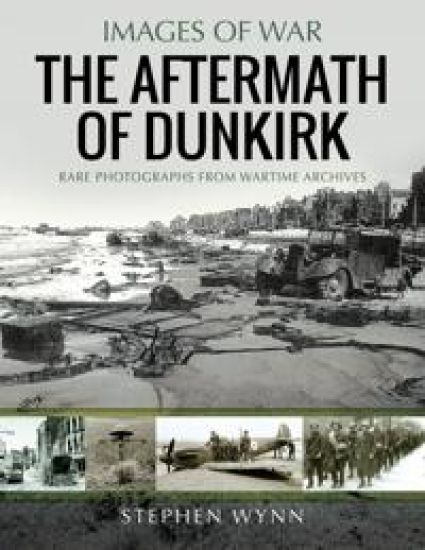
Operation Dynamo, the successful evacuation of Belgian, British, Dutch, French and Polish troops from the beaches at Dunkirk between 27 May and 4 June 1940, was not only a pivotal moment of the war, but one that changed its final outcome. There has been much debate in the years since the end of the war concerning the "Hitler Halt" order, which was given to German Panzer units waiting patiently on the outskirts of Dunkirk to be allowed to finish the job they had started. Many theories have been put forward as to the reasons behind this, but the consequence was that it allowed Britain to remain in the war. A total of 338,226, British and Allied troops were rescued from the beaches of Dunkirk, aboard a total of 861 vessels, of which 243 were sunk. For those left behind, official figures record that up to 80,000 French and British troops were captured, whilst during the time of the actual evacuation, somewhere in the region of 16,000 French and 1,000 British soldiers were killed. Equipment wise British forces left behind somewhere in the region of 90,000 rifles, 11,000 machine guns, huge supplies of ammunition, 880 field guns, 310 large calibre artillery pieces, 500 anti-aircraft guns, 850 anti-tank guns, 700 tanks, 45,000 cars and lorries, and 20,000 motor cycles - enough equipment to arm nearly ten divisions of soldiers. It is known that two atrocities took place during the Battle of Dunkirk: the Massacre at Le Paradis, and another at Wormhoudt, carried out by Waffen- SS soldiers, against British and French troops who had already surrendered. Although the Battle of Dunkirk must ultimately go down tactically as a German victory, the rescue of so many of its men, ensured that like a phoenix, Britain rose from the ashes of defeat to gain a great and lasting victory.
Churchill's Flawed Decisions

Churchill's Flawed Decisions

Stephen Wynn

Pen Sword Military
2021
nidottu
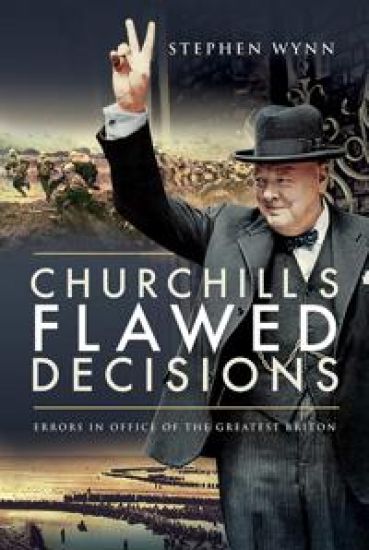
Winston Churchill is undoubtedly one of the most respected and best-loved characters the nation has ever known. However, much of how people view him is based on his leadership during the bleak and dire times of the Second World War. If it wasn't for him, Britain would almost definitely have lost the war: there were those in government who encouraged Churchill to strike a deal with Hitler at the time of the Dunkirk evacuations, which took place just three weeks after he had been made Prime Minister, but he stuck resolutely to his guns and said, 'no'. However, Churchill was never the favourite to take over after Neville Chamberlain resigned. Indeed, everyone believed Lord Halifax would be the next Prime Minister, although even he thankfully recognised that Winston Churchill was the best man for the job, even though King George VI disagreed. Yet there was another side to Churchill that is not often spoken of, and one that led to him making some questionable decisions. Some of these, it could be argued, were for national security reasons, but others were not, proving that even the very best are not always as perfect as they first appear.
The Shetland 'Bus'

The Shetland 'Bus'

Stephen Wynn

Pen Sword Military
2021
sidottu
The Shetland Bus was not a bus, but the nickname of a special operations group that set up a route across the North Sea between Norway and the Shetland Islands, north-east of mainland Scotland. The first voyage was made by Norwegian sailors to help their compatriots in occupied Norway, but soon the Secret Intelligence Service and the Special Operations Executive asked if they would be prepared to carry cargoes of British agents and equipment, as well. Fourteen boats of different sizes were originally used, and Flemington House in Shetland was commandeered as the operation's HQ. The first official journey was carried out by the Norwegian fishing vessel the _Aksel_, which left Luna Ness on 30 August 1941 on route to Bremen in Norway. This book examines that first journey, as well later ones, and discusses the agents and operations which members of the Shetland Bus were involved in throughout the war. It also looks at the donation of 3 submarine chasers to the operation, made in October 1943, by the United States Navy. These torpedo-type boats were 110 ft long and very fast, allowing journey times between Shetland and Norway to be greatly reduced and carried out in greater safety. The story of the Shetland Bus would be nothing without the individuals involved, both the sailors of the boats and the agents who were carried between the two countries. These were very brave individuals who helped maintain an important lifeline to the beleaguered Norwegians. It also allowed British and Norwegian agents a way in to Norway so that they could liaise with the Norwegian Underground movement and carry out important missions against the German occupiers.
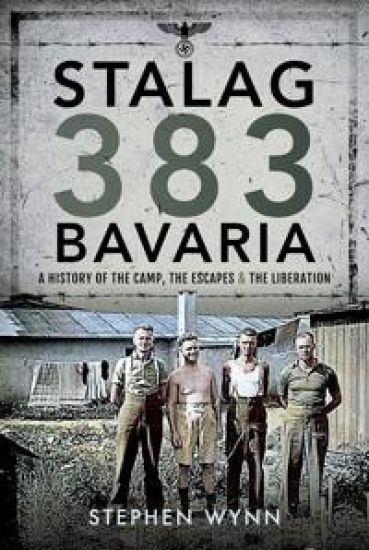
Stalag 383 Bavaria

Stalag 383 Bavaria

Stephen Wynn

Pen Sword Military
2021
sidottu
Stalag 383 was somewhat unique as a Second World War prisoner of war camp. Located in a high valley surrounded by dense woodland and hills in Hofenfels, Bavaria, it began life in 1938 as a training ground for the German Army. At the outbreak of war it was commandeered by the German authorities for use as a prisoner of war camp for Allied non-commissioned officers, and given the name Oflag lllC. It was renamed Stalag 383 in November 1942. For most of its existence it comprised of some 400 huts, 30 feet long and 14 feet wide, with each typically being home to 14 men. Many of the British service men who found themselves incarcerated at the camp had been captured during the evacuations at Dunkirk, or when the Greek island of Crete fell to the Germans on 1 June 1941. Stalag 383 had somewhat of a holiday camp feel to it for many who found themselves prisoners there. There were numerous clubs formed by different regiments, or men from the same town or county. These clubs catered for interests such as education, sports, theatrical productions and debates, to name but a few. This book examines life in the camp, the escapes that were undertaken from there, and includes a selection of never before published photographs of the camp and the men who lived there, many for more than five years.
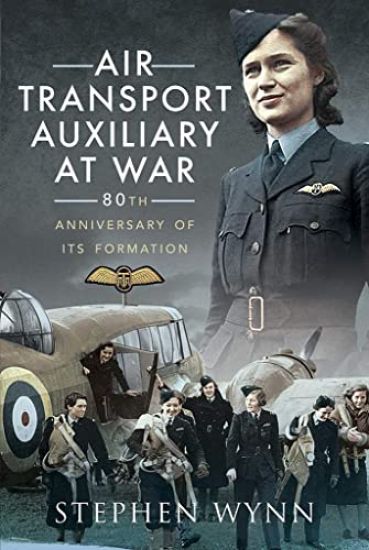
Air Transport Auxiliary at War

Air Transport Auxiliary at War

Stephen Wynn

Pen Sword Aviation
2021
nidottu
This book looks at the invaluable work carried out by members of the Air Transport Auxiliary during the course of the Second World War. Comprised of both men and women, it was a civilian organisation tasked with the collection and delivery of military aircraft from the factories to the RAF and Royal Navy stations. Men who undertook the role had to be exempt from having to undertake war time military service due to health or age, but other than that there were very few restrictions on who who could join, which accounted for one-legged, one-armed, one-eyed and short sighted pilots being accepted. Initially it was only men who were allowed to carry out this service, but by December 1939, British authorities were persuaded by Pauline Gower (the daughter of Sir Robert Vaughan Gower, a wartime Conservative MP, and an accomplished pilot in her own right), to establish a women's section of the Air Transport Auxiliary, of which she was put in charge. The first eight women were accepted in to the service, but it would not be until 1943 that its male and female members received the same pay. By the end of the war 147 different types of aircraft had been flown by the men and women of the Air Transport Auxiliary, including Spitfire fighter aircraft and Lancaster bombers. These brave pilots were not just British, but came from 28 Commonwealth and neutral countries and their efforts sometimes came at a price: 174 Air Transport Auxiliary pilots, both men and women, died during the war whilst flying for the service.
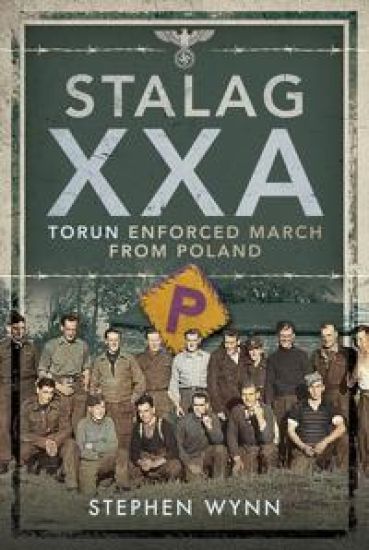
Stalag XXA and the Enforced March from Poland

Stalag XXA and the Enforced March from Poland

Stephen Wynn

Pen Sword Military
2020
sidottu
Stalag XXA was a Second World War German POW camp for non-commissioned officers located in Nazi occupied Torun, in northern Poland. The camp consisted of fifteen forts, which in September 1939, under the name of Stalag 357, was used to house Polish POWs who were captured after German forces had taken the Polish fort at Westerplatte. British POWs didn't arrive at the camp until June 1940, and were those captured during the Allied campaign in Norway, the evacuations of the British at Dunkirk, and the men of the 51st (Highland) Division at St. Valery. At its peak, the camp housed more than 10,000 men and was liberated by Russian forces on 1 February 1945. This book examines in detail what life was like in the camp for those held there, which over the course of the war numbered more than 60,000 men, including Polish, French, Belgians, British, Yugoslavians, Russians, Americans, Italians and Norwegians. The bulk of the book is based on a diary kept by Leonard Parker, a POW at Stalag XXA who was forced to undertake a march from the camp, commencing on 19 January 1945, taking himself and his comrades to the Russian port of Odessa. It was a difficult march undertaken in harsh wintery conditions, where lack of food, the cold, and the fear of death were their constant companions. The final leg of their liberation saw the men of Stalag XXA board the _Duchess of Richmond_ at Odessa, before arriving at Greenock, Scotland, on 17 April 1945, and finally finding their freedom.
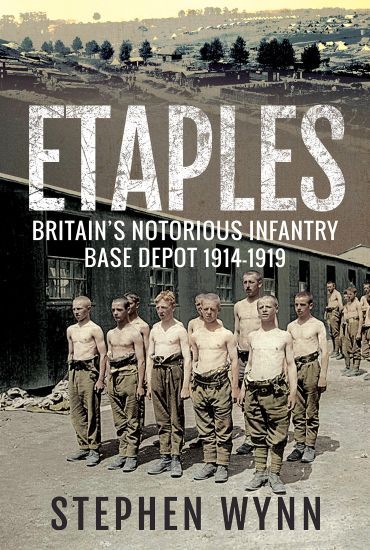
Etaples

Etaples

Stephen Wynn

Pen Sword Military
2020
nidottu
During the First World War, Etaples, a coastal fishing port situated on the North-East French coast, 15 miles south of Boulogne, was a base camp for the British Army, as well as a major medical facility for wounded and sick troops, including both British and Canadian hospitals. The Etaples camp also included a military cemetery, which by the end of the war contained the graves of more than 11,000 British and British Imperial soldiers. Soldiers crossing the Channel on their way to the battlefields of the Western Front found themselves at the Etaples camp, where they would stay an average of two weeks undergoing further training and drills. The training staff who oversaw them had a bad reputation for either their training methods or their lack of genuine military experience at the Front. The Etaples camp was also part of the route taken by men on their way back to the UK. Opportunities for leisure and recreation activities for soldiers away from the camp could be found in Etaples town. Officers, meanwhile, headed to the slightly more up-market beach resort of nearby Le Touquet, which was separated from the Etaples area by the river Canche, and accessible by a bridge. To ensure it remained 'just for officers,' pickets, usually members of the Military Police, were placed on the bridge to enforce its exclusiveness. The men's overall treatment, conditions in the camp and the poor relationship between them and members of the Military Police, was a cocktail for disaster, culminating in a number of incidents in September 1917, which have collectively become known as the Etaples Mutiny, the full story of which can be found in this book.