Kirjojen hintavertailu. Mukana 12 595 353 kirjaa ja 12 kauppaa.
Kirjailija
Stevan Harrell
Kirjat ja teokset yhdessä paikassa: 25 kirjaa, julkaisuja vuosilta 1996-2025, suosituimpien joukossa Mountain Patterns. Vertaile teosten hintoja ja tarkista saatavuus suomalaisista kirjakaupoista.
Artists navigate faith, commerce, and gender as thangkas thrive beyond traditionXue Ming offers a rare and deeply researched look into the lives of Rebgong thangka painters, whose sacred art is at once devotional, commercial, and political. Rebgong, a major center of thangka painting since at least the eighteenth century, has long been a site of artistic and religious significance. But in contemporary China, thangkas exist within multiple, sometimes conflicting, markets. Tibetan communities near and far continue to commission these intricate paintings for ritual use, while the Chinese state promotes them as folk art and a national heritage commodity. At the same time, a growing number of non-Tibetan patrons seek thangkas for their religious efficacy—the very quality often elided in official narratives.Bringing together over a decade of ethnographic research, Xue illuminates the complex intersections of artistic tradition, state narratives, and shifting economies Rebgong artists must negotiate. She gives particular attention to female thangka painters, who were only allowed to paint beginning in the twenty-first century, and who continue to face cultural and market constraints unique to their gender. The book challenges assumptions about commodification, showing that rather than diminishing the religious value of thangkas, the market can serve as a platform for painters to assert their faith, preserve their cultural traditions, and establish their artistic authority.Blending anthropology, material religion, and art history, Painting Thangkas on the Tibetan Plateau reveals the evolving social life of Tibetan sacred art in the twenty-first century.
What does comedy look like when the wrong punchline can land you in jail?Humor has long been a vital, if underrecognized, component of Tibetan life. In recent years, alongside well-publicized struggles for religious freedom and cultural preservation, comedians, hip-hop artists, and other creatives have used zurza, the Tibetan art of satire, to render meaningful social and political critique under the ever-present eye of the Chinese state. Timothy Thurston's Satirical Tibet offers the first-ever look at this powerful tool of misdirection and inversion. Focusing on the region of Amdo, Thurston introduces the vibrant and technologically innovative comedy scene that took shape following the death of Mao Zedong and the rise of ethnic revival policies. He moves decade by decade to show how artists have folded zurza into stage performances, radio broadcasts, televised sketch comedies, and hip-hop lyrics to criticize injustices, steer popular attitudes, and encourage the survival of Tibetan culture. Surprising and vivid, Satirical Tibet shows how the ever-changing uses and meanings of a time-honored art form allow Tibetans to shape their society while navigating tightly controlled media channels.Open access edition DOI: 10.6069/9780295753126
What does comedy look like when the wrong punchline can land you in jail?Humor has long been a vital, if underrecognized, component of Tibetan life. In recent years, alongside well-publicized struggles for religious freedom and cultural preservation, comedians, hip-hop artists, and other creatives have used zurza, the Tibetan art of satire, to render meaningful social and political critique under the ever-present eye of the Chinese state. Timothy Thurston's Satirical Tibet offers the first-ever look at this powerful tool of misdirection and inversion. Focusing on the region of Amdo, Thurston introduces the vibrant and technologically innovative comedy scene that took shape following the death of Mao Zedong and the rise of ethnic revival policies. He moves decade by decade to show how artists have folded zurza into stage performances, radio broadcasts, televised sketch comedies, and hip-hop lyrics to criticize injustices, steer popular attitudes, and encourage the survival of Tibetan culture. Surprising and vivid, Satirical Tibet shows how the ever-changing uses and meanings of a time-honored art form allow Tibetans to shape their society while navigating tightly controlled media channels.Open access edition DOI: 10.6069/9780295753126
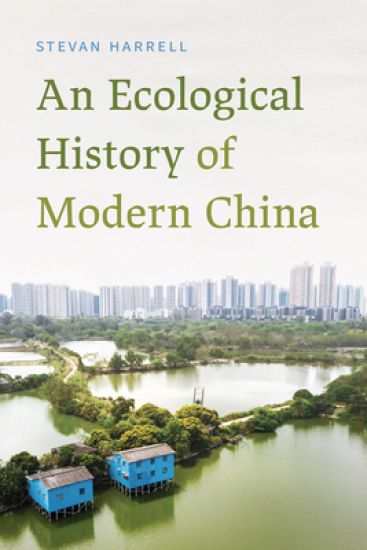
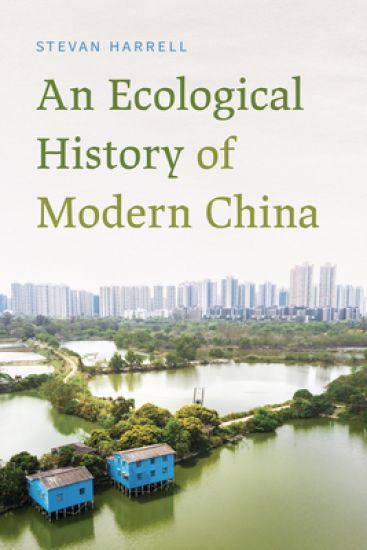
How mega-dams, industrial agriculture, and other developments challenge ecosystem resilienceIs environmental degradation an inevitable result of economic development? Can ecosystems be restored once government officials and the public are committed to doing so? These questions are at the heart of An Ecological History of Modern China, a comprehensive account of China's transformation since the founding of the People's Republic from the perspective not of the economy but of the biophysical world. Examples throughout illustrate how agricultural, industrial, and urban development have affected the resilience of China's ecosystems—their ability to withstand disturbances and additional growth—and what this means for the country's future. Drawing on decades of research, Stevan Harrell demonstrates the local and global impacts of China's miraculous rise. In clear and accessible prose, An Ecological History of Modern China untangles the paradoxes of development and questions the possibility of a future that is both prosperous and sustainable. It is a critical resource for students, scholars, and general readers interested in environmental change, Chinese history, and sustainable development.
How mega-dams, industrial agriculture, and other developments challenge ecosystem resilienceIs environmental degradation an inevitable result of economic development? Can ecosystems be restored once government officials and the public are committed to doing so? These questions are at the heart of An Ecological History of Modern China, a comprehensive account of China's transformation since the founding of the People's Republic from the perspective not of the economy but of the biophysical world. Examples throughout illustrate how agricultural, industrial, and urban development have affected the resilience of China's ecosystems—their ability to withstand disturbances and additional growth—and what this means for the country's future. Drawing on decades of research, Stevan Harrell demonstrates the local and global impacts of China's miraculous rise. In clear and accessible prose, An Ecological History of Modern China untangles the paradoxes of development and questions the possibility of a future that is both prosperous and sustainable. It is a critical resource for students, scholars, and general readers interested in environmental change, Chinese history, and sustainable development.
This book combines perspectives from literature, anthropology, sociology, political science, economics, history, philosophy, and art to explore the culture of a fully industrialized society with a traditional Chinese background. It explores the importance of key cultural influences on Taiwan.
This detailed study maps the variations in family systems throughout the world, focusing on the ways families interact with their societies. Tracing the developmental cycle of families in a wide range of times and places, Stevan Harrell shows how family members in different societies must cooperate to perform various activities and thus organize themselves in particular ways.Within six major divisions, the book describes families in nomadic bands, traditional African societies, Polynesian and Micronesian societies, native societies of the Pacific Northwest coast, preindustrial class societies, and modern industrial societies. Within each group, the author's copious examples demonstrate the variation from one family system to another. His case studies are clearly illustrated with a unique set of diagrams that allow comparison of complex groups and of family processes extending over a generation. Scholars and advanced students alike will find this ambitious book an invaluable resource.
With its increasing wealth, a growing and better-educated urban population, and one of the world's largest trade surpluses, Taiwan has shed its identity as an impoverished, war-torn nation and joined the ranks of developed countries. Yet, despite the attention focused on the country's profound transformation, surprisingly little information exists
Open-access edition: DOI 10.6069/9780295804088China's exploitation by Western imperialism is well known, but the imperialist treatment within China of ethnic minorities has been little explored. Around the geographic periphery of China, as well as some of the less accessible parts of the interior, and even in its cities, live a variety of peoples of different origins, languages, ecological adaptations, and cultures. These people have interacted for centuries with the Han Chinese majority, with other minority ethnic groups (minzu), and with non-Chinese, but identification of distinct groups and analysis of their history and relationship to others still are problematic.Cultural Encounters on China's Ethnic Frontiers provides rich material for the comparative study of colonialism and imperialism and for the study of Chinese nation-building. It represents some of the first scholarship on ethnic minorities in China based on direct research since before World War II. This, combined with increasing awareness in the West of the importance of ethnic relations, makes it an especially timely book. It will be of interest to anthopologists, historians, and political scientists, as well as to sinologists.
Fieldwork Connections tells the story of the intertwined research histories of three anthropologists working in Liangshan Yi Autonomous Prefecture, Sichuan, China in the late twentieth century. Chapters are written alternately by a male American anthropologist, a male researcher raised in a village in Liangshan, and a highly educated woman from an elite Nuosu/Chinese family. As decades of mutual ethnographic research unfold, the authors enter one another's narratives and challenge the reader to ponder the nature of ethnographic "truth."The book begins with short accounts of the process by which each of the authors became involved in anthropological field research. It then proceeds to describe the research itself, and the stories begin to connect as they become active collaborators. The scene shifts in the course of the narrative from China to America, and the relationship between the authors shifts from distant, wary, and somewhat hierarchical to close, egalitarian, and reciprocal.The authors share their histories through personal stories, not technical analyses; their aim is to entertain while addressing the process of ethnography and the dynamics of international and intercultural communication.
Open-access edition: DOI 10.6069/9780295804071Drawing on extensive fieldwork conducted in the 1980s and 1990s in southern Sichuan, this pathbreaking study examines the nature of ethnic consciousness and ethnic relations among local communities, focusing on the Nuosu (classified as Yi by the Chinese government), Prmi, Naze, and Han. It argues that even within the same regional social system, ethnic identity is formulated, perceived, and promoted differently by different communities at different times.Ways of Being Ethnic in Southwest China exemplifies a model in which ethnic consciousness and ethnic relations consist of drawing boundaries between one's own group and others, crossing those boundaries, and promoting internal unity within a group. Leaders and members of ethnic groups use commonalties and differences in history, culture, and kinship to promote internal unity and to strengthen or cross external boundaries. Superimposed on the structure of competing and cooperating local groups is a state system of ethnic classification and administration; members and leaders of local groups incorporate this system into their own ethnic consciousness, co-opting or resisting it situationally.The heart of the book consists of detailed case studies of three Nuosu village communities, along with studies of Prmi and Naze communities, smaller groups such as the Yala and Nasu, and Han Chinese who live in minority areas. These are followed by a synthesis that compares different configurations of ethnic identity in different communities and discusses the implications of these examples for our understanding of ethnicity and for the near future of China. This lively description and analysis of the region's complex ethnic identities and relationships constitutes an original and important contribution to the study of ethnic identity.Ways of Being Ethnic in Southwest China will be of interest to social scientists concerned with issues of ethnicity and state-building.
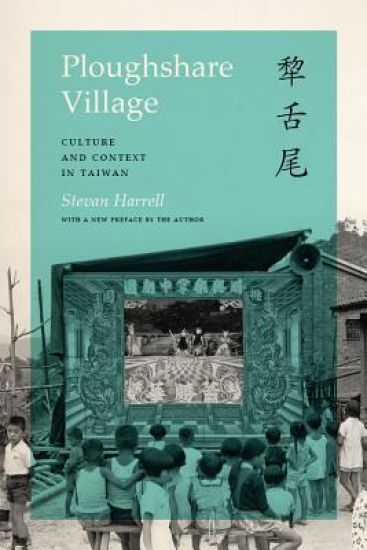
This anthropological study of a workers' village in North Taiwan makes an important contribution to the comparative literature on Chinese and Taiwanese social organization. Based on fieldwork conducted in 1973 and 1978, the study is exceptional not only because of its excellent data but also because the village itself was unique. Unlike villages previously studied and written about, Ploughshare was neither an agricultural nor a fishing village, but rather one whose inhabitants earned their living mostly from coal mining, knitting, and other non-agrarian activities. Culture and environmental context thus shaped social organization there differently than in other Taiwanese villages. This ethnography links local data to surrounding socioeconomic spheres: it shows the village's relationship to its region, to Taiwan as a whole, and to the international economy. It also captures an important point in time, as Taiwan was undergoing the "economic miracle" that brought it into the ranks of developed countries. Stevan Harrell's new preface highlights changes not only in the village over the last several decades, but also in the ways that anthropologists think about culture and Taiwan.Ploughshare Village, with its rich descriptions and analyses, will be of value to anthropologists, sociologists, economists, and China specialists.
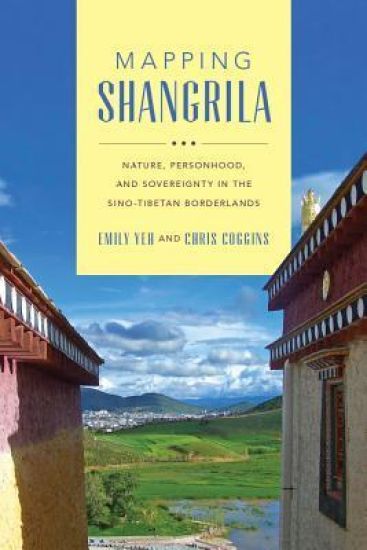
Open-access edition: DOI 10.6069/9780295805023In 2001 the Chinese government announced that the precise location of Shangrila—a place that previously had existed only in fiction—had been identified in Zhongdian County, Yunnan. Since then, Sino-Tibetan borderlands in Yunnan, Sichuan, Gansu, Qinghai, and the Tibet Autonomous Region have been the sites of numerous state projects of tourism development and nature conservation, which have in turn attracted throngs of backpackers, environmentalists, and entrepreneurs who seek to experience, protect, and profit from the region's landscapes.Mapping Shangrila advances a view of landscapes as media of governance, representation, and resistance, examining how they are reshaping cultural economies, political ecologies of resource use, subjectivities, and interethnic relations. Chapters illuminate topics such as the role of Han and Tibetan literary representations of border landscapes in the formation of ethnic identities; the remaking of Chinese national geographic imaginaries through tourism in the Yading Nature Reserve; the role of The Nature Conservancy and other transnational environmental organizations in struggles over culture and environmental governance; the way in which matsutake mushroom and caterpillar fungus commodity chains are reshaping montane landscapes; and contestations over the changing roles of mountain deities and their mediums as both interact with increasingly intensive nature conservation and state-sponsored capitalism.
Open-access edition: DOI 10.6069/9780295805023In 2001 the Chinese government announced that the precise location of Shangrila—a place that previously had existed only in fiction—had been identified in Zhongdian County, Yunnan. Since then, Sino-Tibetan borderlands in Yunnan, Sichuan, Gansu, Qinghai, and the Tibet Autonomous Region have been the sites of numerous state projects of tourism development and nature conservation, which have in turn attracted throngs of backpackers, environmentalists, and entrepreneurs who seek to experience, protect, and profit from the region's landscapes.Mapping Shangrila advances a view of landscapes as media of governance, representation, and resistance, examining how they are reshaping cultural economies, political ecologies of resource use, subjectivities, and interethnic relations. Chapters illuminate topics such as the role of Han and Tibetan literary representations of border landscapes in the formation of ethnic identities; the remaking of Chinese national geographic imaginaries through tourism in the Yading Nature Reserve; the role of The Nature Conservancy and other transnational environmental organizations in struggles over culture and environmental governance; the way in which matsutake mushroom and caterpillar fungus commodity chains are reshaping montane landscapes; and contestations over the changing roles of mountain deities and their mediums as both interact with increasingly intensive nature conservation and state-sponsored capitalism.
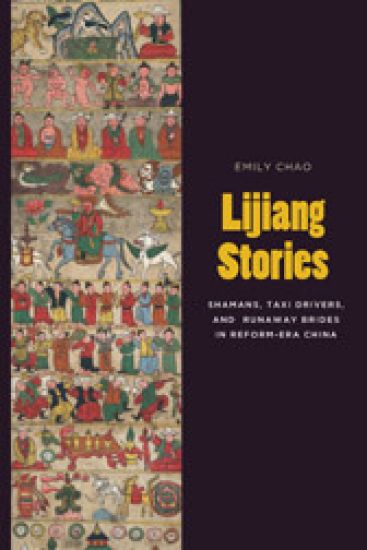
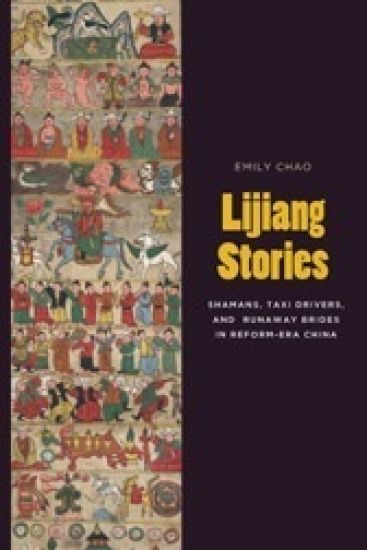
Lijiang, a once-sleepy market town in southwest China, has become a magnet for tourism since the mid-1990s. Drawing on stories about taxi drivers, reluctant brides, dogmeat, and shamanism, Emily Chao illustrates how biopolitics and the essentialization of difference shape the ways in which Naxi residents represent and interpret their social world.The vignettes presented here are lively examples of the cultural reverberations that have occurred throughout contemporary China in the wake of its emergence as a global giant. With particular attention to the politics of gender, ethnicity, and historical representation, Chao reveals how citizens strategically imagine, produce, and critique a new moral economy in which the market and neoliberal logic are preeminent.
Lijiang, a once-sleepy market town in southwest China, has become a magnet for tourism since the mid-1990s. Drawing on stories about taxi drivers, reluctant brides, dogmeat, and shamanism, Emily Chao illustrates how biopolitics and the essentialization of difference shape the ways in which Naxi residents represent and interpret their social world.The vignettes presented here are lively examples of the cultural reverberations that have occurred throughout contemporary China in the wake of its emergence as a global giant. With particular attention to the politics of gender, ethnicity, and historical representation, Chao reveals how citizens strategically imagine, produce, and critique a new moral economy in which the market and neoliberal logic are preeminent.
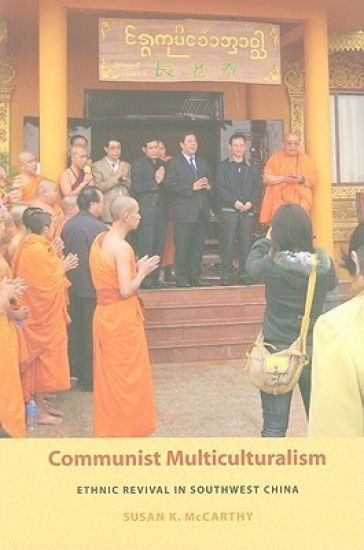
Open-access edition: DOI 10.6069/9780295800417The communist Chinese state promotes the distinctiveness of the many minorities within its borders. At the same time, it is vigilant in suppressing groups that threaten the nation's unity or its modernizing goals. In Communist Multiculturalism, Susan K. McCarthy examines three minority groups in the province of Yunnan, focusing on the ways in which they have adapted to the government's nationbuilding and minority nationalities policies since the 1980s. She reveals that Chinese government policy is shaped by perceptions of what constitutes an authentic cultural group and of the threat ethnic minorities may constitute to national interests. These minority groups fit no clear categories but rather are practicing both their Chinese citizenship and the revival of their distinct cultural identities. For these groups, being minority is, or can be, one way of being national.Minorities in the Chinese state face a paradox: modern, cosmopolitan, sophisticated people -- good Chinese citizens, in other words -- do not engage in unmodern behaviors. Minorities, however, are expected to engage in them.
Open-access edition: DOI 10.6069/9780295800417The communist Chinese state promotes the distinctiveness of the many minorities within its borders. At the same time, it is vigilant in suppressing groups that threaten the nation's unity or its modernizing goals. In Communist Multiculturalism, Susan K. McCarthy examines three minority groups in the province of Yunnan, focusing on the ways in which they have adapted to the government's nationbuilding and minority nationalities policies since the 1980s. She reveals that Chinese government policy is shaped by perceptions of what constitutes an authentic cultural group and of the threat ethnic minorities may constitute to national interests. These minority groups fit no clear categories but rather are practicing both their Chinese citizenship and the revival of their distinct cultural identities. For these groups, being minority is, or can be, one way of being national.Minorities in the Chinese state face a paradox: modern, cosmopolitan, sophisticated people -- good Chinese citizens, in other words -- do not engage in unmodern behaviors. Minorities, however, are expected to engage in them.
Fieldwork Connections tells the story of the intertwined research histories of three anthropologists working in Liangshan Yi Autonomous Prefecture, Sichuan, China in the late twentieth century. Chapters are written alternately by a male American anthropologist, a male researcher raised in a village in Liangshan, and a highly educated woman from an elite Nuosu/Chinese family. As decades of mutual ethnographic research unfold, the authors enter one another's narratives and challenge the reader to ponder the nature of ethnographic "truth."The book begins with short accounts of the process by which each of the authors became involved in anthropological field research. It then proceeds to describe the research itself, and the stories begin to connect as they become active collaborators. The scene shifts in the course of the narrative from China to America, and the relationship between the authors shifts from distant, wary, and somewhat hierarchical to close, egalitarian, and reciprocal.The authors share their histories through personal stories, not technical analyses; their aim is to entertain while addressing the process of ethnography and the dynamics of international and intercultural communication.