Kirjojen hintavertailu. Mukana 12 595 353 kirjaa ja 12 kauppaa.

Kirjailija

Stuart Sim

Kirjat ja teokset yhdessä paikassa: 27 kirjaa, julkaisuja vuosilta 1992-2025, suosituimpien joukossa Post-Marxism. Vertaile teosten hintoja ja tarkista saatavuus suomalaisista kirjakaupoista.

27 kirjaa

Kirjojen julkaisuhaarukka 1992-2025.

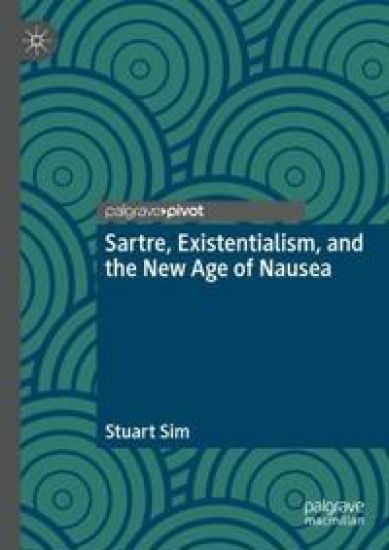
Sartre, Existentialism, and the New Age of Nausea

Sartre, Existentialism, and the New Age of Nausea

Stuart Sim

Springer International Publishing AG
2025
sidottu
This book explores the relevance of Sartrean existentialism to the contemporary socio-political landscape, with particular reference to his early novel Nausea and the concepts of bad faith and authenticity outlined in his major philosophical work Being and Nothingness. In an era where political authoritarianism has asserted itself so powerfully internationally and climate crisis has revealed the shortcomings of the political class so sharply, Stuart Sim argues that existentialism has much to offer as a worldview in addressing such issues. The sense of a world order falling apart connects us strongly to Sartre's situation in the Europe of the 1930s and 40s, when fascism was in the ascendant and human rights under severe threat as a direct consequence. To read Sartre's work through these phenomena is to realise the renewed importance of key existentialist concepts to the current geopolitical situation.
Daniel Defoe's A Journal of the Plague Year and Covid-19

Daniel Defoe's A Journal of the Plague Year and Covid-19

Stuart Sim

Springer International Publishing AG
2023
sidottu
Daniel Defoe's A Journal of the Plague Year has taken on a new relevance with the advent of the Covid-19 pandemic. Through an exploration of two chronologically distant societies in crisis, this study compares the attitudes, beliefs, and conduct of the public portrayed in the book and those in our own embattled Covid era. There are interesting similarities to note, with equivalents to the Covid-deniers and the anti-vaxxers to be found in Defoe's bleak vision of London in the 1660s as it descends into a state of chaos. JPY offers us some uncomfortable truths about human nature that resonate strongly in our own times, revealing how responding to a pandemic can bring out both the best and the worst in our character as we face up to a world where the old certainties no longer seem to apply. Pandemics expose the fault-lines in ideology, putting the social contract at risk - the question they pose is whether we can continue to rely on our current socio-political set-up or whether it requires a radical rethink. There is a pressing need for more debate on this issue, and this project is designed to make a case for that.
A Call to Dissent

A Call to Dissent

Stuart Sim

EDINBURGH UNIVERSITY PRESS
2022
sidottu
Dogmatism, prejudice and bigotry are becoming ever more evident in Western politics. Divisive governments looking to cement their power strive to close down anyone who disagrees with them: political opponents, members of their own parties, the mainstream media, educators, protesters and, ultimately, voters. A Call to Dissent defends dissent as an essential part of democracy. Stuart Sim argues that the political left are falling into despair in the face of growing right-wing populism and extremism, rather than challenging and standing up to it. Taking a wide view, he identifies how dissent works in philosophy, religion, science and the arts as well as in politics. Ultimately, he calls on all of us to become dissenters ourselves in order to challenge authority and counter the growth of prejudice and bigotry in public life.
A Call to Dissent

A Call to Dissent

Stuart Sim

EDINBURGH UNIVERSITY PRESS
2022
nidottu
Dogmatism, prejudice and bigotry are becoming ever more evident in Western politics. Divisive governments looking to cement their power strive to close down anyone who disagrees with them: political opponents, members of their own parties, the mainstream media, educators, protesters and, ultimately, voters. A Call to Dissent defends dissent as an essential part of democracy. Stuart Sim argues that the political left are falling into despair in the face of growing right-wing populism and extremism, rather than challenging and standing up to it. Taking a wide view, he identifies how dissent works in philosophy, religion, science and the arts as well as in politics. Ultimately, he calls on all of us to become dissenters ourselves in order to challenge authority and counter the growth of prejudice and bigotry in public life.
Lyotard and Politics

Lyotard and Politics

Stuart Sim

Edinburgh University Press
2020
sidottu
It is Jean Francois Lyotard's political focus that singles him out from his poststructuralist and postmodernist contemporaries. He is invariably 'thinking politics': finding ways of translating philosophical thought into a basis for political action. Stuart Sim explores how Lyotard's brand of pragmatism can provide a focus for political theory and action in our cultural climate, especially in light of the dramatic resurgence of right-wing extremism.
Lyotard and Politics

Lyotard and Politics

Stuart Sim

Edinburgh University Press
2020
nidottu
It is Jean Francois Lyotard's political focus that singles him out from his poststructuralist and postmodernist contemporaries. He is invariably 'thinking politics': finding ways of translating philosophical thought into a basis for political action. Stuart Sim explores how Lyotard's brand of pragmatism can provide a focus for political theory and action in our cultural climate, especially in light of the dramatic resurgence of right-wing extremism.
Post-Truth, Scepticism & Power

Post-Truth, Scepticism & Power

Stuart Sim

Springer Nature Switzerland AG
2019
sidottu
This book examines the concept of post-truth and the impact it is having on contemporary life, bringing out both its philosophical and political dimensions. Post-truth is contextualised within the philosophical discourse of truth, with particular reference to theories of scepticism and relativism, to explore whether it can take advantage of these to claim any intellectual credibility. Sim argues that post-truth cannot be defended on either sceptical or relativistic grounds – even those provided by recent iconoclastic philosophical movements such as poststructuralism and postmodernism. The affinity between post-truth and conspiracy theory is emphasised, and the extent to which post-truth plays a role in religious doctrine is also considered. Post-truth is seen to constitute a threat to liberal democratic ideals and our Enlightenment heritage, raising the question of whether we are moving into a post-liberal age where the far right would hold power. To prevent this, post-truth urgently needs to be countered.
Contemporary Continental Philosophy
This title was first published in 2000. Contemporary continental philosophy is a widely-used, but in many ways a highly problematic, term and its exact frame of reference is not always clear. In its more recent French manifestations in particular, it continues to arouse considerable controversy and create bitter divisions, with particularly hostile reactions to the work of Derrida and others. Much work in the recent continental tradition can be fitted into a longer-running philosophical tradition of scepticism, and scepticism has always had the power to provoke and unsettle the philosophical establishment. Presenting an overview of the philosophical landscape of the continental tradition since the 1940s, this book traces the establishment of the new, super-scepticism as an intellectual paradigm with the power to threaten and disorientate existing world-views and more traditional styles of philosophical discourse - marking the continental divide. Exploring how contemporary continental philosophy from existentialism to postmodernism can be characterised as this new, more resistant form of scepticism, Sim identifies a clutch of key themes - including "difference", "the subject", "antifoundationalism", "dialectics" - which have been obsessively worked over by key thinkers in the Existentialist-Postmodernist period and demonstrates how these have contributed to the development of a super-sceptical outlook. Presenting a new theme-led approach to provide an entry into current debates in continental philosophy, Stuart Sim reintegrates the work of Sartre into the more recent continental tradition, and suggests that something qualitatively different is now occurring in French philosophy.
Contemporary Continental Philosophy
This title was first published in 2000. Contemporary continental philosophy is a widely-used, but in many ways a highly problematic, term and its exact frame of reference is not always clear. In its more recent French manifestations in particular, it continues to arouse considerable controversy and create bitter divisions, with particularly hostile reactions to the work of Derrida and others. Much work in the recent continental tradition can be fitted into a longer-running philosophical tradition of scepticism, and scepticism has always had the power to provoke and unsettle the philosophical establishment. Presenting an overview of the philosophical landscape of the continental tradition since the 1940s, this book traces the establishment of the new, super-scepticism as an intellectual paradigm with the power to threaten and disorientate existing world-views and more traditional styles of philosophical discourse - marking the continental divide. Exploring how contemporary continental philosophy from existentialism to postmodernism can be characterised as this new, more resistant form of scepticism, Sim identifies a clutch of key themes - including "difference", "the subject", "antifoundationalism", "dialectics" - which have been obsessively worked over by key thinkers in the Existentialist-Postmodernist period and demonstrates how these have contributed to the development of a super-sceptical outlook. Presenting a new theme-led approach to provide an entry into current debates in continental philosophy, Stuart Sim reintegrates the work of Sartre into the more recent continental tradition, and suggests that something qualitatively different is now occurring in French philosophy.
A Philosophy of Pessimism

A Philosophy of Pessimism

Stuart Sim

Reaktion Books
2015
nidottu
There are many reasons to despair at the state of the world today: climate change and global warming; widespread 'humanitarian disasters' caused by war, famine and political corruption; religious intolerance and the growing influence of fundamentalist belief; political terrorism; racism and discrimination against ethnic minorities; the list could go on and on. Reflect on such phenomena at any length and it can be very difficult not to become deeply pessimistic about human existence. Yet for some, pessimists are simply refusing to acknowledge the progress that humankind has made over the centuries, especially with regard to the technological advances of the modern era. To these people, it is almost wilfully contrary not to be uncompromisingly optimistic about our prospects for the future. The glass, for some, is always half-full, but perhaps pessimists have the more realistic world view. To counter the optimists and their rosy outlook, it is necessary to keep the dark side of human affairs at the forefront of our consciousness; perhaps, after all, it is more rational to adopt an essentially pessimistic attitude. Throughout history a significant proportion of the world's thinkers have taken this view, insisting that we face up to the more desperate aspects of the human condition. Philosophers, theologians, authors, creative artists and even scientists have collectively contributed to a discourse of pessimism, and they have found a ready audience for their message across all cultures. How pessimism has developed, and its multifaceted nature, forms the subject of this book. Pessimism deserves to be cultivated, and it is in the public interest that its cause is defended vigorously: it is as relevant today as it has ever been.
Justice and Revenge in Contemporary American Crime Fiction
The detective figure in contemporary American crime fiction increasingly relies on revenge to bring about justice in a society where there has been a sharp decline in moral values. This study demonstrates how the notion of the detective as a moral exemplar or heroic ideal breaks down in the works of writers such as James Ellroy and Sara Paretsky.
Post-Marxism

Post-Marxism

Stuart Sim

Routledge
2013
nidottu
This book traces the crystallisation of post-Marxism as a specific theoretical position in its own right and considers the role played in its development by post-structuralism, postmodernism and second-wave feminism. It examines the history of dissenting tendencies within the Marxist tradition and considers what the future prospects of post-Marxism are likely to be.
Fifty Key Postmodern Thinkers

Fifty Key Postmodern Thinkers

Stuart Sim

Routledge
2013
nidottu
Postmodernism is an important part of the cultural landscape which continues to evolve, yet the ideas and theories surrounding the subject can be diverse and difficult to understand. Fifty Postmodern Thinkers critically examines the work of fifty of the most important theorists within the postmodern movement who have defined and shaped the field, bringing together their key ideas in an accessible format. Drawing on figures from a wide range of subject areas including literature, cultural theory, philosophy, sociology and architecture those covered include: John Barth Umberto Eco Slavoj Zizek Cindy Sherman John Cage Jean-Francois Lyotard Charles Jencks Jacques Derrida Homi K. Bhabha Quentin TarantinoEach entry examines the thinkers’ career, key contributions and theories and refers to their major works. A valuable resource for those studying postmodern ideas at both undergraduate and postgraduate level, this text will appeal across the humanities and social sciences.
Fifty Key Postmodern Thinkers

Fifty Key Postmodern Thinkers

Stuart Sim

Routledge
2013
sidottu
Postmodernism is an important part of the cultural landscape which continues to evolve, yet the ideas and theories surrounding the subject can be diverse and difficult to understand. Fifty Postmodern Thinkers critically examines the work of fifty of the most important theorists within the postmodern movement who have defined and shaped the field, bringing together their key ideas in an accessible format. Drawing on figures from a wide range of subject areas including literature, cultural theory, philosophy, sociology and architecture those covered include: John Barth Umberto Eco Slavoj Zizek Cindy Sherman John Cage Jean-Francois Lyotard Charles Jencks Jacques Derrida Homi K. Bhabha Quentin TarantinoEach entry examines the thinkers’ career, key contributions and theories and refers to their major works. A valuable resource for those studying postmodern ideas at both undergraduate and postgraduate level, this text will appeal across the humanities and social sciences.
Addicted to Profit

Addicted to Profit

Stuart Sim

Edinburgh University Press
2012
sidottu
Will our addiction to profit destroy the world we live in? The profit motive now exercises an effective tyranny over our lives: in the private as well as the public sector, nowhere seems immune from its reach. International tycoons, economists and politicians are obsessed with economic growth. Yet, as Stuart Sim shows, the pursuit of excessive profit brought the world to the brink of economic chaos in the recent credit crisis and threatens us with environmental disaster as well. Despite this, neoliberalism still sets the agenda for economic policy in the West. Sim suggests various 'act up' strategies so that we might resist becoming slaves to personal gain and, in doing so, he demonstrates that life needn't be all about profit. Key Features: * Analyses the psychology behind our fetishization of profit * Demonstrates the threat that neoliberalism poses to our public services - healthcare and education in particular * Explores the debate of altruism versus self-interest through the neuroscientific literature * Argues the case for a return to a more socialistic consciousness to combat neoliberalism
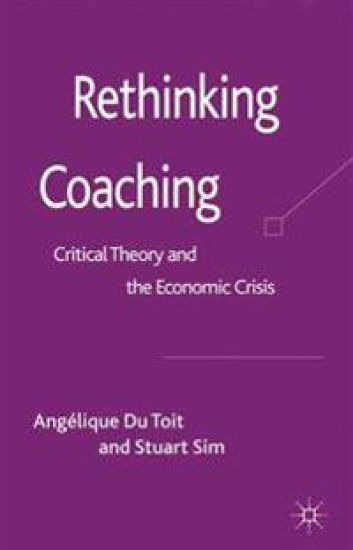
Rethinking Coaching

Rethinking Coaching

Angelique du Toit; Stuart Sim

Palgrave Macmillan
2010
sidottu
Coaching is being proposed as the best method to encourage a change in the ideologies that have brought about the credit crunch. The authors' concern is to show how coaching can widen its intellectual range to become a progressively more effective technique within organizational life.
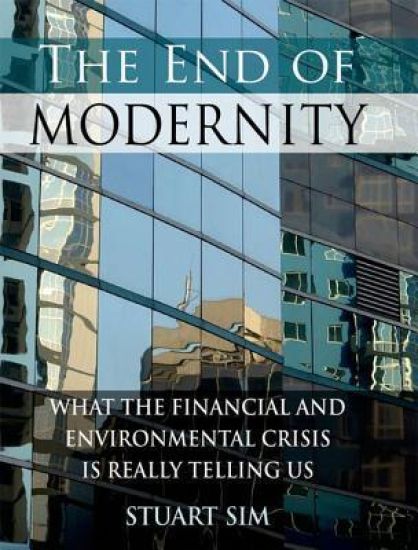
The End of Modernity

The End of Modernity

Stuart Sim

Edinburgh University Press
2010
sidottu
Global financial crisis, global environmental crisis -- what connects them? Stuart Sim claims they are both symptoms of the end of modernity, the cultural system that has prevailed in the West from the Enlightenment onwards. In this provocative book, Sim argues that the modern world's insatiable need for technologically driven economic progress is unsustainable, and potentially destructive of the planet and its socio-economic systems. The new landscape this creates - socially, politically, economically, intellectually - is explored through an interdisciplinary approach, providing a wide-ranging assessment of the collapse of modernity and the challenges it poses us. Sim calls for a radical alteration in our world view and for purposeful changes both to our economic and intellectual life: we need to jettison the free market, rein in conspicuous consumption, reinvigorate public service, and develop talents other than the entrepreneurial if we are to reconstruct our society satisfactorily. Key Features * Brings out the broader cultural dimensions of the global financial crisis * Reveals the contradictions at the heart of modernity and its cult of progress * Offers a thought-provoking interdisciplinary analysis of late modernity and its aftermath * Provides a detailed reassessment of the value of postmodern thought in the new cultural situation * Outlines the ideological adjustments we shall have to make in a post-progress world
The Carbon Footprint Wars

The Carbon Footprint Wars

Stuart Sim

Edinburgh University Press
2009
sidottu
Climate change is acknowledged to be the major problem currently facing the human race, and the need to reduce our carbon footprint becomes ever more urgent as the scientific predictions of the effects of climate change become increasingly dire. Whether we are fully aware of the social and political consequences of striving for a significant reduction is more questionable. The Carbon Footprint Wars identifies the many dangers inherent in the projected solutions - such as retreating from the spread of globalization, the current socio-economic paradigm for world trade. The war of words that is being waged over the appropriate way to deal with our collective carbon footprint has critical implications for us all. Stuart Sim examines the issues in detail, raising questions about the assumptions being made on both sides of the climate change divide. He argues that we must urgently address the problem of how to engineer the best possible trade-off between economic survival and ecological disaster - and he puts forward some radical suggestions about how we should set about doing so. Key Features *Challenges current policies about how to deal with global warming, outlining their potentially disastrous side-effects on society and the environment *Brings out the political complexities of the links between globalization and global warming *Provides a wide variety of case studies *Calls for a radical re-think of West-Third World relations
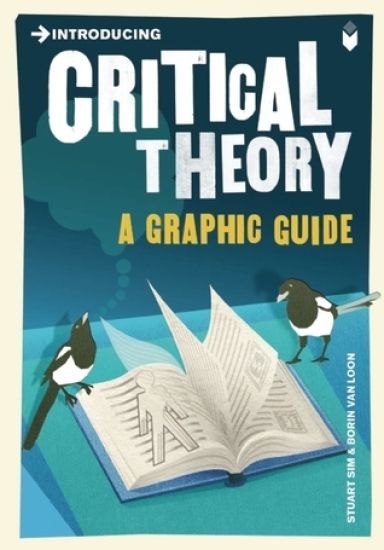
Introducing Critical Theory

Introducing Critical Theory

Stuart Sim

Icon Books Ltd
2009
nidottu
What might a 'theory of everything' look like? Is science an ideology? Who were Adorno, Horkheimer or the Frankfurt School? The decades since the 1960s have seen an explosion in the production of critical theories. Deconstructionists, poststructuralists, postmodernists, second-wave feminists, new historicists, cultural materialists, postcolonialists, black critics and queer theorists, among a host of others, all vie for our attention. Stuart Sim and Borin Van Loon's incisive graphic guide provides a route through the tangled jungle of competing ideas and provides an essential historical context, situating these theories within tradition of critical analysis going back to the rise of Marxism. They present the essential methods and objectives of each theoretical school in an incisive and accessible manner, and pay special attention to recurrent themes and concerns that have preoccupied a century of critical theoretical activity.
The Eighteenth-century Novel and Contemporary Social Issues
This study introduces readers to the eighteenth-century novel through a consideration of contemporary social issues. Eighteenth-century authors grappled with very similar problems to the ones we face today such as: what motivates a fundamentalist terrorist? What are the justifiable limits of state power? What dangers lie in wait for us when we create life artificially? The book discusses key authors from Aphra Behn in the late seventeenth century to James Hogg in the 1820s, covering the 'long' eighteenth century. It guides readers through the main genres of the period from Realism, Gothic romance and historical romance to proto-science fiction. It also introduces a range of debates around race relations, anti-social behaviour, family values and born-again theology as well as the power of the media, surveillance, political sovereignty and fundamentalist terrorism. Each novel is shown to be directly relevant to some of the most urgent moral issues of our own time. Key Features *Relates the novels of the eighteenth century to current social and political debates *Accessibly and engagingly written for non-specialists *Covers the key authors and texts of the period including Robinson Crusoe, Gulliver's Travels, Pamela, Northanger Abbey, Tristram Shandy and Frankenstein