Kirjojen hintavertailu. Mukana 12 390 323 kirjaa ja 12 kauppaa.

Kirjailija

Thomas Aiello

Kirjat ja teokset yhdessä paikassa: 30 kirjaa, julkaisuja vuosilta 2001-2025, suosituimpien joukossa The Devil's Messages. Vertaile teosten hintoja ja tarkista saatavuus suomalaisista kirjakaupoista.

30 kirjaa

Kirjojen julkaisuhaarukka 2001-2025.

Return of the King

Return of the King

Thomas Aiello

University of Nebraska Press
2025
sidottu
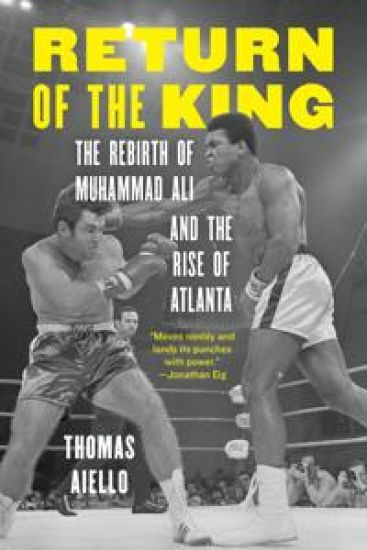
Return of the King tells the story of Muhammad Ali’s return to the ring in 1970, after a more than three-year suspension for refusing his draft notice as a conscientious objector during the Vietnam War. With Ali’s career still in doubt, he found new support in shifting public opinion about the war and in Atlanta, a city still governed by white supremacy, but a white supremacy decidedly different from that of its neighbor cities in the Deep South. Atlanta had been courting and landing professional sports teams in football, basketball, and baseball since the end of 1968. An influential state politician, Leroy Johnson, Georgia’s first Black state senator since Reconstruction, was determined to help Ali return after his exile. The state had no boxing commission to prevent Ali from fighting there, so Johnson made it his mission for Ali to make a comeback in Georgia. Ali’s opponent would be Jerry Quarry, the top heavyweight contender and, more important, a white man who had spoken out against Ali’s objection to the war. In Return of the King, Thomas Aiello examines the history of Muhammad Ali, Leroy Johnson, and the city of Atlanta, while highlighting an important fight of Ali’s that changed the trajectory of his career. Although the fight between Ali and Quarry lasted only three rounds, those nine minutes changed boxing forever and were crucial to both the growth of Atlanta and the rebirth of Ali’s boxing career.
Mary Turner and the Mob

Mary Turner and the Mob

Thomas Aiello

UNIVERSITY OF SOUTH CAROLINA PRESS
2025
sidottu
A reinterpretation of one of America's most notorious lynchings The 1918 lynching of Mary Turner by a white mob in Brooks County, Georgia, is remembered and studied mainly because of the horror of an allegedly pregnant woman's murder. In Mary and the Mob, author Thomas Aiello asserts that the gruesome details of Turner's execution have distracted historians from investigating the larger context of these terrible events. Turner was murdered but not pregnant, the author contends, and Walter White, the NAACP investigator in the case, knew this but obscured the facts because of the story's effectiveness. Aiello approaches Turner's murder and broader Brooks County violence not only as a series of rural South lynchings but also as events more accurately characterized as race rioting, fitting just inside the broader Red Summer wave starting with East St. Louis in 1917 and continuing until Tulsa in 1921. Mary and the Mob challenges readers to ask the critical questions necessary to understand why South Georgia was an especially violent place in the early 20th century.
Bound Labor in the Turpentine Belt

Bound Labor in the Turpentine Belt

Thomas Aiello

University Press of Florida
2024
pokkari
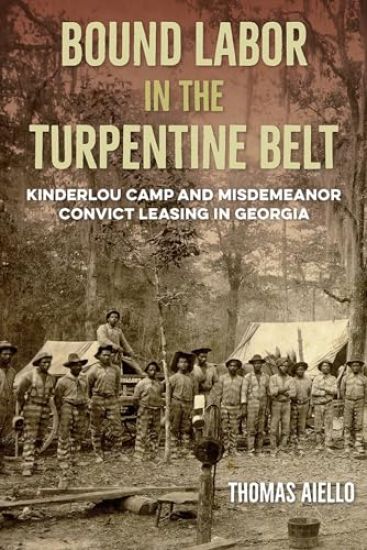
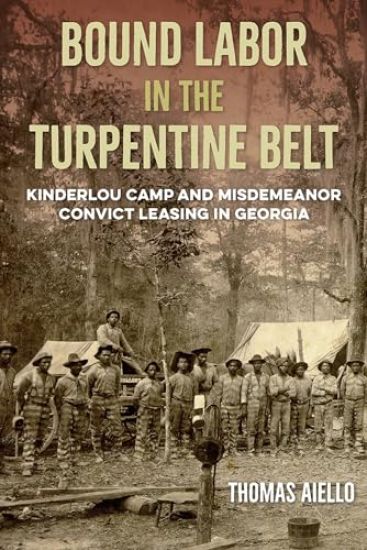
Uncovering a little-known system of bound labor in the post-Reconstruction South After the constitutional end to slavery in the United States, southern white landowners replaced labor by enslaved people with systems of bound labor in which people worked to pay off debts or legal fines. Through the story of a labor camp in Georgia, Thomas Aiello takes a close look at the Deep South’s dependence on debt peonage and convict leasing systems during the post-Reconstruction era and draws attention to a form of bound labor that has not been discussed by scholars of racialized incarceration. At the center of this study is the Kinderlou labor camp, which was owned by the prominent white McRee family of Valdosta. In south Georgia and north Florida, debt peonage and felony convict leasing operated separately from an often overlooked third system: misdemeanor convict leasing. This system was largely unregulated by prison officials, leading to abuses of persons with convictions working in the turpentine industry and the kidnapping of many Black residents of the area who had never been charged with crimes. Unlike other work camps, Kinderlou deployed all three systems to bolster its workforce, making it a unique manifestation of the region’s exploitative labor operations. Through deep archival research, Aiello uncovers injustices that drove local individuals who were imprisoned to work with federal prosecutors to seek relief and publicize the abuses they saw and experienced. The nexus of racism, work, and incarceration seen at Kinderlou is shown here to have been a form of slavery a half century after slavery’s official “end.” It also casts a long shadow on today’s carceral system. Publication of this work made possible by a Sustaining the Humanities through the American Rescue Plan grant from the National Endowment for the Humanities.
Bound Labor in the Turpentine Belt

Bound Labor in the Turpentine Belt

Thomas Aiello

University Press of Florida
2024
sidottu
Uncovering a little-known system of bound labor in the post-Reconstruction South After the constitutional end to slavery in the United States, southern white landowners replaced labor by enslaved people with systems of bound labor in which people worked to pay off debts or legal fines. Through the story of a labor camp in Georgia, Thomas Aiello takes a close look at the Deep South’s dependence on debt peonage and convict leasing systems during the post-Reconstruction era and draws attention to a form of bound labor that has not been discussed by scholars of racialized incarceration. At the center of this study is the Kinderlou labor camp, which was owned by the prominent white McRee family of Valdosta. In south Georgia and north Florida, debt peonage and felony convict leasing operated separately from an often overlooked third system: misdemeanor convict leasing. This system was largely unregulated by prison officials, leading to abuses of persons with convictions working in the turpentine industry and the kidnapping of many Black residents of the area who had never been charged with crimes. Unlike other work camps, Kinderlou deployed all three systems to bolster its workforce, making it a unique manifestation of the region’s exploitative labor operations. Through deep archival research, Aiello uncovers injustices that drove local individuals who were imprisoned to work with federal prosecutors to seek relief and publicize the abuses they saw and experienced. The nexus of racism, work, and incarceration seen at Kinderlou is shown here to have been a form of slavery a half century after slavery’s official “end.” It also casts a long shadow on today’s carceral system. Publication of this work made possible by a Sustaining the Humanities through the American Rescue Plan grant from the National Endowment for the Humanities.
Hoops

Hoops

Thomas Aiello

BLOOMSBURY PUBLISHING PLC
2024
nidottu
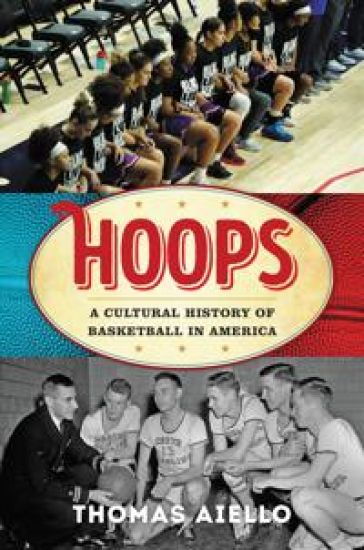
From its early days as a sport to build “muscular Christianity” among young men flooding nineteenth-century cities to its position today as a global symbol of American culture, basketball has been a force in American society. It grew through high school gymnasiums, college pep rallies, and the fits and starts of professionalization. It was a playground game, an urban game, tied to all of the caricatures that were associated with urban culture. It struggled with integration and representations of race. Today, basketball’s influence seeps into film, music, dance, and fashion. Hoops tells the story of the reciprocal relationship between the sport and the society that received it. While many books have celebrated specific aspects of the game, Thomas Aiello presents the only contemporary cultural history of the sport from the street to the highest levels of professional mens and womens competition. He argues that the game has existed in a reciprocal relationship with the broader culture, both embodying conflicts over race, class, and gender and serving a s public theater for them. Aiello places cultural icons like Bill Russell, Michael Jordan, and Kobe Bryant in the context of their times and explores how the sport negotiated controversies and scandals. Hoops belongs on the bookshelf of every reader interested in the history of basketball, sports, race, urban life, and pop culture in America.
White Ice

White Ice

Thomas Aiello

University of Tennessee Press
2024
sidottu
Having skyrocketed from six to fourteen teams between 1966 and 1970, leaders of the National Hockey League had planned to wait a few more years before expanding any further. But as its rivalry with the World Hockey Association intensified, competition for markets rose, and the race for continued expansion became too urgent to ignore. Not to be outdone, the NHL introduced two new teams in 1971: one in Long Island, New York, and one in Atlanta, Georgia. For its own part, Atlanta had been watching as White residents left the city for the suburbs over the course of the 1960s. As the turn of the decade approached, city leadership was searching for ways to mitigate white flight and bring residents of the surrounding suburbs back to the city center. So when a stereotypically White sport came to the Deep South in 1971 in the form of the Atlanta Flames, ownership saw a new opportunity to appeal to White audiences. But the challenge would be selling a game that was foreign to most of Atlanta’s longtime sports fans. Filling a significant gap in scholarly literature concerning race and hockey within US history, White Ice: Race and the Making of Atlanta Hockey is a response to two simple questions: How did a cold-climate sport like hockey end up in a majority Black city in the Deep South? And why did it come when it did? Over seven chronological chapters, Thomas Aiello unpacks the history, culture, and context surrounding these questions, teasing out what the story of the Atlanta Flames can teach us about the NHL, Atlanta, race, and the business of professional sports expansion.
Practical Radicalism and the Great Migration

Practical Radicalism and the Great Migration

Thomas Aiello

UNIVERSITY OF GEORGIA PRESS
2023
sidottu
This book’s predecessor, The Grapevine of the Black South, emphasized the owners of the Atlanta Daily World and its operation of the Scott Newspaper Syndicate between 1931 and 1955. In a pragmatic effort to avoid racial confrontation developing from white fear, newspaper editors developed a practical radicalism that argued on the fringes of racial hegemony, saving their loudest vitriol for tyranny that was not local and thus left no stake in the game for would-be white saboteurs. Thomas Aiello reexamined historical thinking about the Depression-era Black South, the information flow of the Great Migration, the place of southern newspapers in the historiography of Black journalism, and even the ideological and philosophical underpinnings of the civil rights movement.With Practical Radicalism and the Great Migration, Aiello continues that analysis by tracing the development and trajectory of the individual newspapers of the Syndicate, evaluating those with surviving issues, and presenting them as they existed in proximity to their Atlanta hub. In so doing, he emphasizes the thread of practical radicalism that ran through Syndicate editorial policy. Practical Radicalism and the Great Migration is a supplement to The Grapevine of the Black South, providing a fuller picture of the Scott Newspaper Syndicate and the Black press in the 1930s, 1940s, and 1950s.
Practical Radicalism and the Great Migration

Practical Radicalism and the Great Migration

Thomas Aiello

UNIVERSITY OF GEORGIA PRESS
2023
pokkari
This book’s predecessor, The Grapevine of the Black South, emphasized the owners of the Atlanta Daily World and its operation of the Scott Newspaper Syndicate between 1931 and 1955. In a pragmatic effort to avoid racial confrontation developing from white fear, newspaper editors developed a practical radicalism that argued on the fringes of racial hegemony, saving their loudest vitriol for tyranny that was not local and thus left no stake in the game for would-be white saboteurs. Thomas Aiello reexamined historical thinking about the Depression-era Black South, the information flow of the Great Migration, the place of southern newspapers in the historiography of Black journalism, and even the ideological and philosophical underpinnings of the civil rights movement.With Practical Radicalism and the Great Migration, Aiello continues that analysis by tracing the development and trajectory of the individual newspapers of the Syndicate, evaluating those with surviving issues, and presenting them as they existed in proximity to their Atlanta hub. In so doing, he emphasizes the thread of practical radicalism that ran through Syndicate editorial policy. Practical Radicalism and the Great Migration is a supplement to The Grapevine of the Black South, providing a fuller picture of the Scott Newspaper Syndicate and the Black press in the 1930s, 1940s, and 1950s.
Hoops

Hoops

Thomas Aiello

BLOOMSBURY PUBLISHING PLC
2022
sidottu
From its early days as a sport to build “muscular Christianity” among young men flooding nineteenth-century cities to its position today as a global symbol of American culture, basketball has been a force in American society. It grew through high school gymnasiums, college pep rallies, and the fits and starts of professionalization. It was a playground game, an urban game, tied to all of the caricatures that were associated with urban culture. It struggled with integration and representations of race. Today, basketball’s influence seeps into film, music, dance, and fashion. Hoops tells the story of the reciprocal relationship between the sport and the society that received it. While many books have celebrated specific aspects of the game, Thomas Aiello presents the only contemporary cultural history of the sport from the street to the highest levels of professional mens and womens competition. He argues that the game has existed in a reciprocal relationship with the broader culture, both embodying conflicts over race, class, and gender and serving a s public theater for them. Aiello places cultural icons like Bill Russell, Michael Jordan, and Kobe Bryant in the context of their times and explores how the sport negotiated controversies and scandals. Hoops belongs on the bookshelf of every reader interested in the history of basketball, sports, race, urban life, and pop culture in America.
The Trouble in Room 519

The Trouble in Room 519

Thomas Aiello

Louisiana State University Press
2021
nidottu
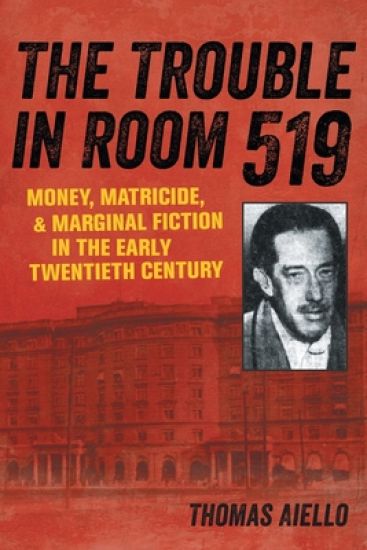
At approximately seven o'clock in the evening on May 7, 1950, Gordon Malherbe Hillman filled an empty bottle with water, capped it, and walked into his mother's room in the pair's fifth-floor suite at Boston's luxurious Copley Plaza Hotel. He then edged up behind the semi-invalid woman and bludgeoned her to death. Hotel staff had planned to evict the two the following day after several weeks of unpaid rent. Mounting debts had finally broken the fifty-year-old Hillman, a now-struggling author of mixed success, but it had not always been that way, as Thomas Aiello shows in his study of the life and work of this forgotten midcentury figure.As a youth, Hillman attended the prestigious Noble and Greenough School near Boston. Pursuing a career as a writer, he published several dozen pieces of short fiction and a critically acclaimed novel, Fortune's Cup (1941). Hollywood studios purchased the rights to two of his stories and made them into films, The Great Man Votes (1939) and Here I Am a Stranger (1940). But Hillman remained, for the most part, a middling magazine writer like the majority of fiction authors working during the Depression. Although most did not resort to acts of manic violence, Hillman's tenuous position in literary circles, along with his gradual descent into financial ruin, proved a far more common tale than the stories of literary success often pored over by critics and historians of this period.In The Trouble in Room 519: Money, Matricide, and Marginal Fiction in the Early Twentieth Century, Aiello weaves a compelling true crime narrative into his exploration of the economics of magazine fiction and the strains placed on authors by the publishing industry prior to World War II. Examining Hillman's writing as exemplary of Depression-era popular fiction, Aiello includes eight stories written by Hillman and originally published in prominent midcentury American magazines, including Collier's, Liberty, and McCall's, to provide additional context and insight into this trying time and tragic life.
The Life and Times of Louis Lomax

The Life and Times of Louis Lomax

Thomas Aiello

Duke University Press
2021
pokkari
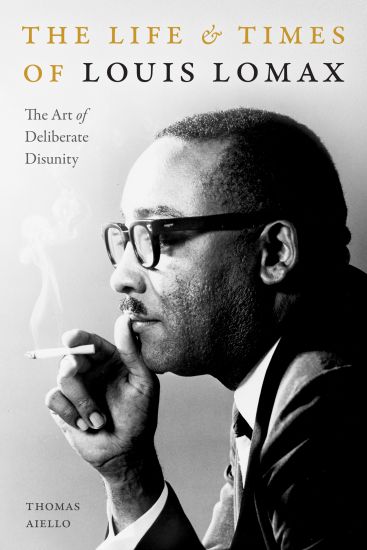
Syndicated television and radio host. Serial liar. Pioneering journalist. Convicted criminal. Close ally of Malcolm X and Martin Luther King Jr. Publicity-seeking provocateur. Louis Lomax's life was a study in contradiction. In this biography, Thomas Aiello traces the complicated and fascinating arc of Lomax's life and career, showing how the contradictions, tumult, and inconsistencies that marked his life reflected those of 1960s America. Aiello takes readers from Lomax's childhood in the Deep South to his early confidence schemes to his emergence as one of the loudest and most influential voices of the civil rights movement. Regardless of what political position he happened to take at any given moment, Lomax preached “the art of deliberate disunity,” in which the path to democracy could only be achieved through a diversity of opinions. Engaging and broad in scope, The Life and Times of Louis Lomax is the definitive study of one of the civil rights era's most complicated, important, and overlooked figures.
The Life and Times of Louis Lomax

The Life and Times of Louis Lomax

Thomas Aiello

Duke University Press
2021
sidottu
Syndicated television and radio host. Serial liar. Pioneering journalist. Convicted criminal. Close ally of Malcolm X and Martin Luther King Jr. Publicity-seeking provocateur. Louis Lomax's life was a study in contradiction. In this biography, Thomas Aiello traces the complicated and fascinating arc of Lomax's life and career, showing how the contradictions, tumult, and inconsistencies that marked his life reflected those of 1960s America. Aiello takes readers from Lomax's childhood in the Deep South to his early confidence schemes to his emergence as one of the loudest and most influential voices of the civil rights movement. Regardless of what political position he happened to take at any given moment, Lomax preached “the art of deliberate disunity,” in which the path to democracy could only be achieved through a diversity of opinions. Engaging and broad in scope, The Life and Times of Louis Lomax is the definitive study of one of the civil rights era's most complicated, important, and overlooked figures.
Solemnity

Solemnity

Thomas Aiello

Lulu.com
2020
pokkari
Solemnity is, in its way, a love story. It is a vehicle for its narrator to understand the collapse of his relationship and his sanity, an attempt to answer the three questions Abraham Lincoln posed in his first inaugural address: IS IT POSSIBLE, THEN, TO MAKE THAT INTERCOURSE MORE ADVANTAGEOUS OR MORE SATISFACTORY AFTER SEPARATION THAN BEFORE? (yes) CAN ALIENS MAKE TREATIES EASIER THAN FRIENDS CAN MAKE LAWS? (no) CAN TREATIES BE MORE FAITHFULLY ENFORCED BETWEEN ALIENS THAN LAWS CAN AMONG FRIENDS? (yes and no) The narrator, a small-town Arkansas grocery store manager, begins researching those answers after his wife leaves him, and his history of the failed relationship, told through an engagement of Lincoln's questions about intercourse and aliens. The story begins with the couple's childhood, then progresses through their marriage, their happiness, and the narrator's mental declension, which ultimately unravels his marriage. He soon begins hallucinating both aliens and Abraham Lincoln, and his investigation soon turns to the reasons for their appearance, leading to a stay in a mental hospital. He is, ultimately, crafting a history of his life's meaning, and thus the story is told with the accoutrements of history writing, footnoted, bibliographied, and illustrated. While the story is ultimately a tragedy and uses some academic language and an academic format to structure its narrative, it is still a comedy. It is tale of the South. And it is a love story.
Jim Crow's Last Stand

Jim Crow's Last Stand

Thomas Aiello

Louisiana State University Press
2019
nidottu
A remnant of the racist post-Reconstruction Redeemer sociopolitical agenda, Louisiana's nonunanimous jury-verdict law permitted juries to convict criminal defendants with only nine, and later ten, out of twelve votes: a legal oddity. On the surface, it was meant to speed convictions. In practice, the law funneled many convicts- especially African Americans- into Louisiana's burgeoning convict lease system. Although it faced multiple legal challenges through the years, the law endured well after convict leasing had ended. Few were aware of its existence, let alone its original purpose. In fact, the original publication of Jim Crow's Last Stand was one of the first attempts to call attention to the historical injustice caused by this law. This updated edition of Jim Crow's Last Stand unpacks the origins of the statute in Bourbon Louisiana, traces its survival through the civil rights era, and ends with the successful effort to overturn the nonunanimous jury practice, a policy that officially went into effect on January 1, 2019.
New Orleans Sports

New Orleans Sports

Thomas Aiello

University of Arkansas Press
2019
nidottu
New Orleans has long been a city fixated on its own history and culture. Founded in 1718 by the French, transferred to the Spanish in the 1763 Treaty of Paris, and sold to the United States in 1803, the city's culture, law, architecture, food, music, and language share the influence of all three countries. This cultural mélange also manifests in the city's approach to sport, where each game is steeped in the city's history. Tracing that history from the early nineteenth century to the present, while also surveying the state of the city's sports historiography, New Orleans Sports places sport in the context of race relations, politics, and civic and business development to expand that historiography-currently dominated by a text that stops at 1900-into the twentieth century, offering a modern examination of sports in the city.
The Grapevine of the Black South

The Grapevine of the Black South

Thomas Aiello

University of Georgia Press
2018
pokkari
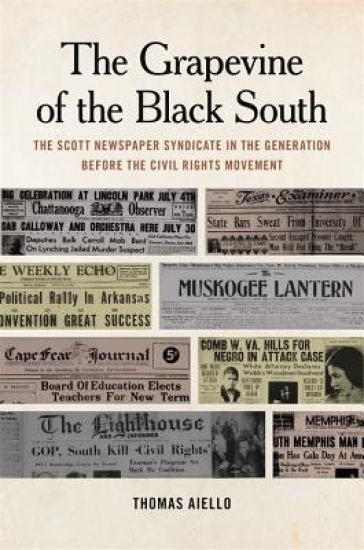
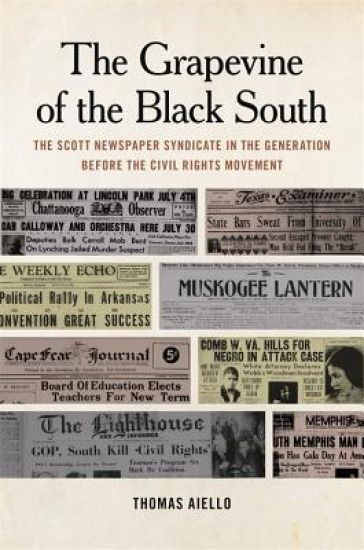
In the summer of 1928, William Alexander Scott began a small four-page weekly with the help of his brother Cornelius. In 1930 his Atlanta World became a semiweekly, and the following year W. A. began to implement his vision for a massive newspaper chain based out of Atlanta: the Southern Newspaper Syndicate, later dubbed the Scott Newspaper Syndicate. In April 1931 the World had become a triweekly, and its reach began drifting beyond the South.With The Grapevine of the Black South, Thomas Aiello offers the first critical history of this influential newspaper syndicate, from its roots in the 1930s through its end in the 1950s. At its heyday, more than 240 papers were associated with the Syndicate, making it one of the biggest organs of the black press during the period leading up to the classic civil rights era (1955–68).In the generation that followed, the Syndicate helped formalize knowledge among the African American population in the South. As the civil rights movement exploded throughout the region, black southerners found a collective identity in that struggle built on the commonality of the news and the subsequent interpretation of that news. Or as Gunnar Myrdal explained, the press was “the chief agency of group control. It [told] the individual how he should think and feel as an American Negro and create[d] a tremendous power of suggestion by implying that all other Negroes think and feel in this manner.” It didn’t create a complete homogeneity in black southern thinking, but it gave thinkers a similar set of tools from which to draw.
The Grapevine of the Black South

The Grapevine of the Black South

Thomas Aiello

University of Georgia Press
2018
sidottu
In the summer of 1928, William Alexander Scott began a small four-page weekly with the help of his brother Cornelius. In 1930 his Atlanta World became a semiweekly, and the following year W. A. began to implement his vision for a massive newspaper chain based out of Atlanta: the Southern Newspaper Syndicate, later dubbed the Scott Newspaper Syndicate. In April 1931 the World had become a triweekly, and its reach began drifting beyond the South.With The Grapevine of the Black South, Thomas Aiello offers the first critical history of this influential newspaper syndicate, from its roots in the 1930s through its end in the 1950s. At its heyday, more than 240 papers were associated with the Syndicate, making it one of the biggest organs of the black press during the period leading up to the classic civil rights era (1955–68).In the generation that followed, the Syndicate helped formalize knowledge among the African American population in the South. As the civil rights movement exploded throughout the region, black southerners found a collective identity in that struggle built on the commonality of the news and the subsequent interpretation of that news. Or as Gunnar Myrdal explained, the press was “the chief agency of group control. It [told] the individual how he should think and feel as an American Negro and create[d] a tremendous power of suggestion by implying that all other Negroes think and feel in this manner.” It didn’t create a complete homogeneity in black southern thinking, but it gave thinkers a similar set of tools from which to draw.
The Tyranny of Architecture: A Vegan Apologetic
The Tyranny of Architecture is a full philosophical defense of veganism, one that defends the practice in a way fundamentally unique among such arguments. It makes the case that in a human society built on artificial constructs, the only demonstrable ethics not part of an imagined community is that of respecting the right to life and contentment, construed for farmed animals as adequate food, space, and other basic amenities, along with the right not to be tortured and killed for the unnecessary whims of humans existing mentally within a subset of artificial constructs that do not include those nonhuman animals.
The Battle for the Souls of Black Folk

The Battle for the Souls of Black Folk

Thomas Aiello

Praeger Publishers Inc
2016
sidottu
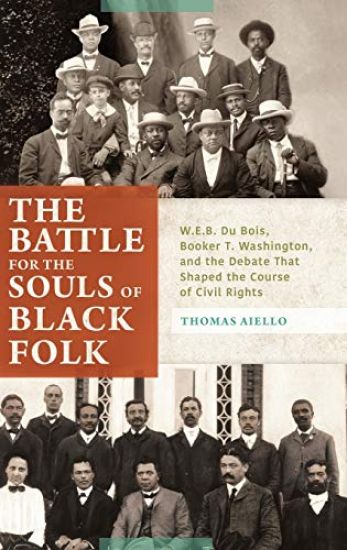
In the 20 years between 1895 and 1915, two key leaders—Booker T. Washington and W.E.B. Du Bois—shaped the struggle for African American rights. This book examines the impact of their fierce debate on America's response to Jim Crow and positions on civil rights throughout the 20th century—and evaluates the legacies of these two individuals even today.The debate between W.E.B. Du Bois and Booker T. Washington on how to further social and economic progress for African Americans lasted 20 years, from 1895 to Washington's death in 1915. Their ongoing conversation evolved over time, becoming fiercer and more personal as the years progressed. But despite its complexities and steadily accumulating bitterness, it was still, at its heart, a conversation—an impassioned contest at the turn of the century to capture the souls of black folk.This book focuses on the conversation between Washington and Du Bois in order to fully examine its contours. It serves as both a document reader and an authored text that enables readers to perceive how the back and forth between these two individuals produced a cacophony of ideas that made it anything but a bipolar debate, even though their expressed differences would ultimately shape the two dominant strains of activist strategy. The numerous chapters on specific topics and historical events follow a preface that presents an overview of both the conflict and its historiographical treatment; evaluates the legacies of both Washington and Du Bois, emphasizing the trajectories of their theories beyond 1915; and provides an explanation of the unique structure of the work.