Kirjojen hintavertailu. Mukana 12 189 169 kirjaa ja 12 kauppaa.

Kirjailija

Thomas C. Oden

Kirjat ja teokset yhdessä paikassa: 77 kirjaa, julkaisuja vuosilta 1989-2022, suosituimpien joukossa After Modernity . . . What?. Vertaile teosten hintoja ja tarkista saatavuus suomalaisista kirjakaupoista.

Mukana myös kirjoitusasut: Thomas C Oden

77 kirjaa

Kirjojen julkaisuhaarukka 1989-2022.

John Wesley's Teachings---Complete Set
Now available as a complete set, John Wesley’s Teachings is the first systematic exposition of John Wesley's theology that encompasses all of his writings. Wesley was a prolific writer and commentator on Scripture—his collected works fill eighteen volumes—and yet it is commonly held that he was not systematic or consistent in his theology and teachings. On the contrary, Thomas C. Oden demonstrates that Wesley displayed a remarkable degree of internal consistency over sixty years of preaching and ministry. This series of 4 volumes is a text-by-text guide to John Wesley’s teaching. It introduces Wesley’s thought on the basic tenets of Christian teaching: God, providence, and man (volume 1), Christ and salvation (volume 2), the practice of pastoral care (volume 3), and issues of ethics and society (volume 4). In everyday modern English, Oden clarifies Wesley’s explicit intent and communicates his meaning clearly to a contemporary audience. Both lay and professional readers will find this series useful for devotional reading, moral reflection, sermon preparation, and for referencing Wesley’s opinions on a broad range of pressing issues of contemporary society.
First and Second Timothy and Titus

First and Second Timothy and Titus

Thomas C. Oden

Westminster/John Knox Press,U.S.
2012
nidottu
Thomas Oden provides a modern commentary on the pastoral letters grounded in the classical, consensual tradition of interpretation. Oden uses the best and most accurate research concerning the historical, literary, and philological aspects of the pastoral letters. He addresses tough issues: the role of women in worship, problems of the rich and poor, the relation between servants and masters, policies concerning support of elderly widows, and how to handle church disruptions.
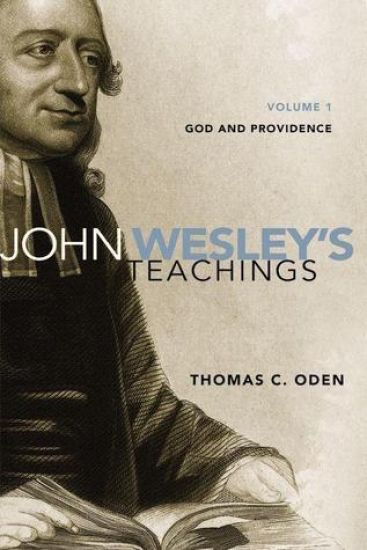
John Wesley's Teachings, Volume 1

John Wesley's Teachings, Volume 1

Thomas C. Oden

Zondervan
2012
nidottu
John Wesley’s Teaching is the first systematic exposition of John Wesley's theology that is also faithful to Wesley's own writings. Wesley was a prolific writer and commentator on Scripture—his collected works fill eighteen volumes—and yet it is commonly held that he was not systematic or consistent in his theology and teachings. On the contrary, Thomas C. Oden demonstrates that Wesley displayed a remarkable degree of internal consistency over sixty years of preaching and ministry. This series of 4 volumes is a text-by-text guide to John Wesley’s teaching. It introduces Wesley’s thought on the basic tenets of Christian teaching: God, providence, and man (volume 1), Christ and salvation (volume 2), the practice of pastoral care (volume 3), and issues of ethics and society (volume 4). In everyday modern English, Oden clarifies Wesley’s explicit intent and communicates his meaning clearly to a contemporary audience. Both lay and professional readers will find this series useful for devotional reading, moral reflection, sermon preparation, and for referencing Wesley’s opinions on a broad range of pressing issues of contemporary society.
Commentary on Jeremiah

Commentary on Jeremiah

Michael Graves; Christopher A. Hall; Thomas C. Oden; Gerald L. Bray

Inter-Varsity Press,US
2012
nidottu
Jerome (c. 347-419), one of the West's four doctors of the church, was recognized early on as one of the church's foremost translators, commentators and advocates of Christian asceticism. Skilled in Hebrew and Greek in addition to his native Latin, he was thoroughly familiar with Jewish traditions and brought them to bear on his understanding of the Old Testament. In 405 Jerome completed his Latin translation of the Old Testament, based on the Hebrew text, and not long afterward began to work on commentaries devoted to the major prophets--Daniel (407), Isaiah (408-410), Ezekiel (410-414), culminating with Jeremiah but reaching only through chapter 32 before his death in 419. Throughout the commentary Jerome displays his familiarity with both Hebrew and Greek texts of Jeremiah, often establishing the literal meaning through the Hebrew text and offering a spiritual interpretation that draws on the Septuagint. He frequently interacts with other translations known from Origen's Hexapla. Jerome's extensive education in the classics and Jewish tradition as well as in both Antiochene and Alexandrian exegesis shine through the commentary at every point. Here for the first time Michael Graves supplies readers with a highly readable translation in English, useful textual notes and a helpful introduction. Ancient Christian Texts are new English translations of full-length commentaries or sermon series from ancient Christian authors that allow you to study key writings of the early church fathers in a fresh way.
Latin Commentaries on Revelation

Latin Commentaries on Revelation

William C. Weinrich; Thomas C. Oden; Gerald L. Bray

Inter-Varsity Press,US
2011
nidottu
Interest in the book of Revelation in the Western tradition is stronger and earlier than that in the East. The earliest full commentary on the Apocalypse is that of Victorinus of Petovium written in the mid to late third century by the earliest exegete to write in Latin. Victorinus interpreted Revelation in millennialist terms, a mode of interpretation already evident in works by Irenaeus, as well as in modest allegorical terms. Caesarius of Arles wrote in the early sixth century and offered a thoroughgoing allegorical-ecclesial interpretation of the Apocalypse. Apringius of Beja in Portugal, writing in the mid sixth century, drew on Jerome's edition of Victorinus's commentary yet understood the seven seals christologically as the incarnation, birth, passion, death, resurrection, glory and kingdom. Bede the Venerable, who died in 735, is the last commentator to be included in this collection. Characteristically, he passes on commentary from earlier exegetes, here including that of Augustine, Gregory the Great, Victorinus, Tyconius and Primasius. William Weinrich renders a particular service to readers interested in ancient commentary on the Apocalypse by drawing together these significant Latin commentaries. The work of translating these texts was begun in preparing the volume on Revelation in the Ancient Christian Commentary on Scripture. We are indebted to William Weinrich for completing this work with his able and fresh translation and notes on these texts. Ancient Christian Texts are new English translations of full-length commentaries or sermon series from ancient Christian authors that allow you to study key writings of the early church fathers in a fresh way.
The African Memory of Mark – Reassessing Early Church Tradition
We often regard the author of the Gospel of Mark as an obscure figure about whom we know little. Many would be surprised to learn how much fuller a picture of Mark exists within widespread African tradition, tradition that holds that Mark himself was from North Africa, that he founded the church in Alexandria, that he was an eyewitness to the Last Supper and Pentecost, that he was related not only to Barnabas but to Peter as well and accompanied him on many of his travels. In this provocative reassessment of early church tradition, Thomas C. Oden begins with the palette of New Testament evidence and adds to it the range of colors from traditional African sources, including synaxaries (compilations of short biographies of saints to be read on feast days), archaeological sites, non-Western historical documents and ancient churches. The result is a fresh and illuminating portrait of Mark, one that is deeply rooted in African memory and seldom viewed appreciatively in the West.
Ancient Christian Devotional – Lectionary Cycle B

Ancient Christian Devotional – Lectionary Cycle B

Cindy Crosby; Thomas C. Oden

Inter-Varsity Press,US
2011
nidottu
Reading the writings of early church fathers points us to the deep joy that awaits us in Christ when we drink deeply from Scripture, the only water that can give us true life. This guide for reflection combines excerpts from the writings of the church fathers as found in the Ancient Christian Commentary on Scripture with a simple structure for daily or weekly reading and prayer. Included are fifty-two weeks of readings following the weekly lectionary cycle B which can be read in order or by thematic interest. Each day you will also find a simple opening and closing prayer drawn from the prayers and hymns of the ancient church. Come and find the deep nourishment God offers.
Greek Commentaries on Revelation

Greek Commentaries on Revelation

William C. Weinrich; Thomas C. Oden

Inter-Varsity Press,US
2011
nidottu
The Eastern church gives little evidence of particular interest in the book of Revelation. Oecumenius of Isauria's commentary on the book is the earliest full treatment in Greek and dates only from the early sixth century. Along with Oecumenius's commentary, only that of Andrew of Caesarea (dating from the same era and often summarizing Oecumenius before offering a contrary opinion) and that of Arethas of Caesarea four centuries later provide any significant commentary from within the Greek tradition. William Weinrich renders a particular service to readers interested in ancient commentary on the Apocalypse by translating in one volume the two early sixth-century commentaries. Because of the two interpreters' often differing understandings, readers are exposed not only to early dialogue on the meaning and significance of the book for the faith and life of the church, but also to breadth of interpretation within the unity of the faith the two shared. Ancient Christian Texts are new English translations of full-length commentaries or sermon series from ancient Christian authors that allow you to study key writings of the early church fathers in a fresh way.
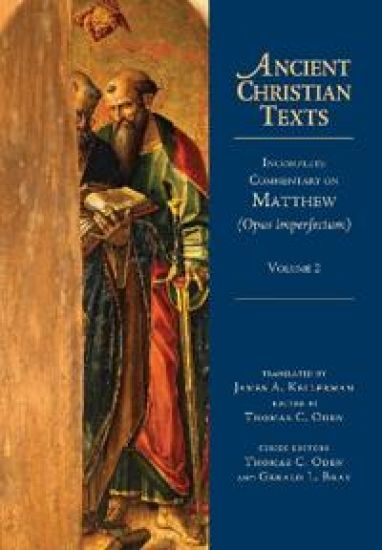
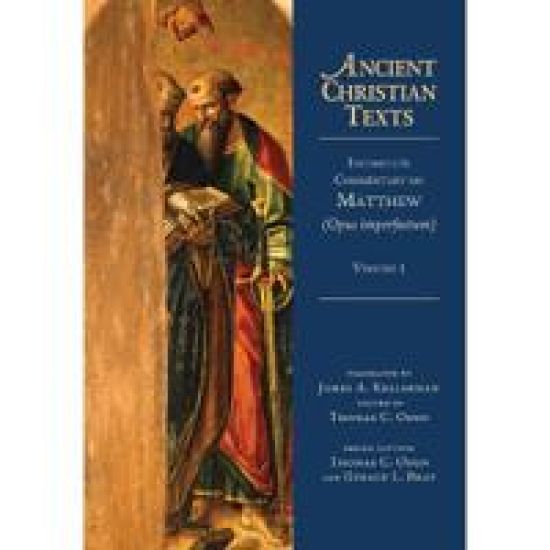
Incomplete Commentary on Matthew (Opus imperfectum)

Incomplete Commentary on Matthew (Opus imperfectum)

James A. Kellerman; Thomas C. Oden

Inter-Varsity Press,US
2010
sidottu
In the translator's introduction to this volume, James Kellerman relates the following story: As Thomas Aquinas was approaching Paris, a fellow traveler pointed out the lovely buildings gracing that city. Aquinas was impressed, to be sure, but he sighed and stated that he would rather have the complete Incomplete Commentary on Matthew than to be mayor of Paris itself. Thomas's affection for the work attests its great popularity during the Middle Ages, despite its significant missing parts--everything beyond the end of Matthew 25, with further gaps of Matthew 8:11--10:15 and 13:14--18:35. Although there are gaps, what remains is quite lengthy, so much so that we offer the work in two volumes, comprising fifty-four homilies. While the early-fifth-century author displays a few Arian propensities in a handful of passages, for the most part the commentary is moral in nature and therefore orthodox and generic. The unknown author, who for several centuries was thought to be John Chrysostom, follows the allegorizing method of the Alexandrians, but not by overlooking the literal meaning. His passion, above all, is to set forth the meaning of Matthew's Gospel for his readers. Here, for the first time, this ancient work is made available in English, ably translated by James A. Kellerman and edited by Thomas C. Oden. Ancient Christian Texts are new English translations of full-length commentaries or sermon series from ancient Christian authors that allow you to study key writings of the early church fathers in a fresh way.
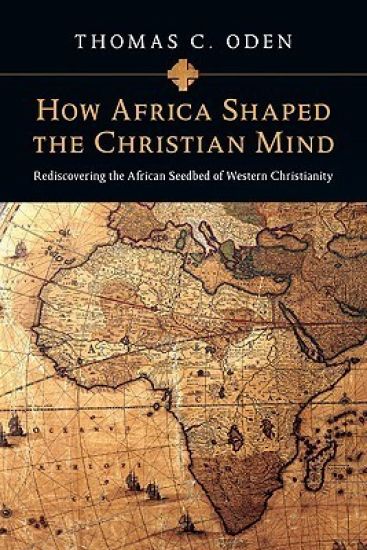
How Africa Shaped the Christian Mind – Rediscovering the African Seedbed of Western Christianity
Africa has played a decisive role in the formation of Christian culture from its infancy. Some of the most decisive intellectual achievements of Christianity were explored and understood in Africa before they were in Europe. If this is so, why is Christianity so often perceived in Africa as a Western colonial import? How can Christians in Northern and sub-Saharan Africa, indeed how can Christians throughout the world, rediscover and learn from this ancient heritage? Theologian Thomas C. Oden offers a portrait that challenges prevailing notions of the intellectual development of Christianity from its early roots to its modern expressions. The pattern, he suggests, is not from north to south from Europe to Africa, but the other way around. He then makes an impassioned plea to uncover the hard data and study in depth the vital role that early African Christians played in developing the modern university, maturing Christian exegesis of Scripture, shaping early Christian dogma, modeling conciliar patterns of ecumenical decision-making, stimulating early monasticism, developing Neoplatonism, and refining rhetorical and dialectical skills. He calls for a wide-ranging research project to fill out the picture he sketches. It will require, he says, a generation of disciplined investigation, combining intensive language study with a risk-taking commitment to uncover the truth in potentially unreceptive environments. Oden envisions a dedicated consortium of scholars linked by computer technology and a common commitment that will seek to shape not only the scholar's understanding but the ordinary African Christian's self-perception.
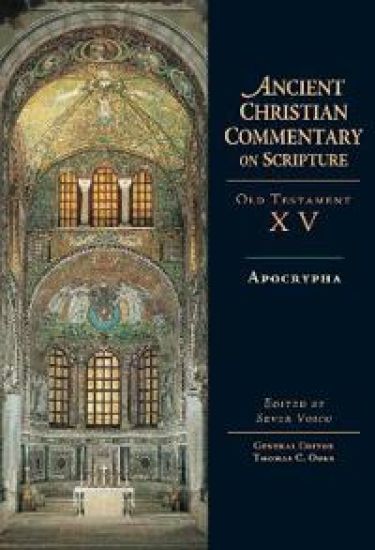
Apocrypha

Apocrypha

Sever Voicu; Thomas C. Oden

Inter-Varsity Press,US
2010
sidottu
While the canonical status of the Greek and Latin Old Testament texts commented on within this volume has been understood differently within Protestant, Roman Catholic, and Orthodox traditions, their longstanding use within the Christian churches makes them worthy of careful study and reflection. As noted in the Anglican Thirty-Nine Articles of Religion, Jerome says that the church reads the Apocrypha "for example of life and instruction of manners." As a result their influence extends well beyond ecclesiastical use to literature, hymnody, music, and art. Their questioned authority has nevertheless affected the choice of books included here, not by a priori judgment but by the paucity of comment from which to choose. None of the early fathers dedicated commentaries to these texts as a whole. Despite the length of 1 and 2 Maccabees and the model they presented for Christian martyrdom, they were rarely cited or commented on. The Wisdom books received the most comment and are those best represented here. In particular, readers will find ample comment on Tobit, Wisdom of Solomon, Sirach, Baruch, the Letter of Jeremiah, the Prayer of Azariah, and the Song of the Three Young Men, Susanna, and Bel and the Dragon (the latter three all found as additions to the Hebrew and Aramaic book of Daniel). Among commentators readers will find Origen, John Chrysostom, Theodoret of Cyr, Hippolytus, Jerome, Augustine, Julius Africanus, Athanasius, Palladius, Cyril of Jerusalem, Clement of Alexandria, Bede, Rabanus Maurus, Clement of Rome, Ignatius, Cassiodorus, Ambrose, and others. This Ancient Christian Commentary on Scripture volume presents a worthy feast of patristic comment on these ancient and important texts, some of which is presented here in English translation for the first time.
Incomplete Commentary on Matthew (Opus imperfectum)

Incomplete Commentary on Matthew (Opus imperfectum)

James A. Kellerman; Thomas C. Oden

Inter-Varsity Press,US
2010
sidottu
In the translator's introduction to this volume, James Kellerman relates the following story: As Thomas Aquinas was approaching Paris, a fellow traveler pointed out the lovely buildings gracing that city. Aquinas was impressed, to be sure, but he sighed and stated that he would rather have the complete Incomplete Commentary on Matthew than to be mayor of Paris itself. Thomas's affection for the work attests its great popularity during the Middle Ages, despite its significant missing parts--everything beyond the end of Matthew 25, with further gaps of Matthew 8:11--10:15 and 13:14--18:35. Despite the gaps what remains is quite lengthy, so much so that we offer the work in two volumes, comprising fifty-four homilies. While the early-fifth-century author displays a few Arian propensities in a handful of passages, for the most part the commentary is moral in nature and therefore orthodox and generic. The unknown author, who for several centuries was thought to be John Chrysostom, follows the allegorizing method of the Alexandrians, but not by overlooking the literal meaning. His passion, above all, is to set forth the meaning of Matthew's Gospel for his readers. Here for the first time this ancient work is made available in English, ably translated by James A. Kellerman and edited by Thomas C. Oden. Ancient Christian Texts are new English translations of full-length commentaries or sermon series from ancient Christian authors that allow you to study key writings of the early church fathers in a fresh way.
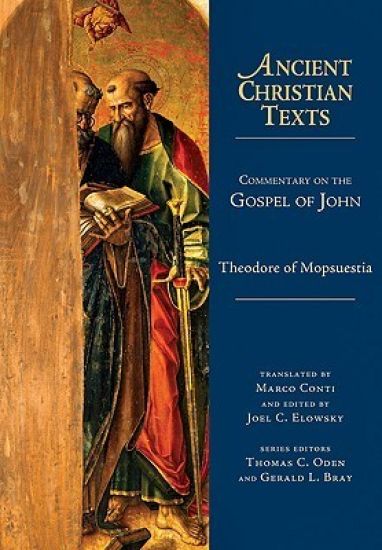
Commentary on the Gospel of John

Commentary on the Gospel of John

Theodore of Mopsuestia; Marco Conti; Joel C. Elowsky; Thomas C. Oden; Gerald L. Bray

Inter-Varsity Press,US
2010
sidottu
Theodore of Mopsuestia, born in Antioch (c. 350) and a disciple of Diodore of Tarsus, serves as one of the most important exemplars of Antiochene exegesis of his generation. Committed to literal, linguistic, grammatical and historical interpretation, he eschewed allegorical explanations that could not be supported from the text, though he was not averse to typological interpretations of Old Testament texts that were supported by the New. Regrettably, Theodore was dragged posthumously into the Nestorian controversy, and his works were condemned by the Three Chapters and the Council of Constantinople in 553. As a result many of his theological and exegetical works were lost or destroyed. The original Greek version of his Commentary on the Gospel of John remains only in fragments. This new English translation is based on an early complete Syriac translation dated A.D. 460-465, within forty years of Theodore?s death in 428. While charges of heterodoxy against Theodore may not be entirely justified, there remains an apparent dualism in his Christology that should be critically viewed in light of the later Chalcedonian formula. With this caution, there still remains much that is valuable for contemporary readers, whether preachers, students or lay people interested in the early church's understanding of the Gospel of John. Here for the first time is a complete English translation of this valuable work, ably translated by Marco Conti and edited by Joel C. Elowsky. Ancient Christian Texts is a series of new translations, most of which are here presented in English for the first time. The series provides contemporary readers with the resources they need to study for themselves the key writings of the early church. The texts represented in the series are full-length commentaries or sermon series based on biblical books or extended scriptural passages. Ancient Christian Texts are new English translations of full-length commentaries or sermon series from ancient Christian authors that allow you to study key writings of the early church fathers in a fresh way.
Classic Christianity

Classic Christianity

Thomas C Oden

HarperOne
2009
sidottu
For the first time, Thomas Oden's Systematic Theology classic series (individually titled The Living God, The Word of Life, and Life in the Spirit) is available in one complete volume. A renowned theologian, Oden provides a consensus view of the Christian faith, delving deeply into ancient Christian tradition and bringing to the contemporary church the best wisdom from its past. In this magisterial work, Oden tackles the central questions of Christian belief and the nature of the trinity. Written for clergy, Christian educators, religious scholars, and lay readers alike, Classic Christianity provides the best synthesis of the whole history of Christian thought. Part one explores the most intriguing questions of the study of God--Does God exist? Does Jesus reveal God? Is God personal, compassionate, free?--and presents answers that reflect the broad consensus culled from the breadth of the church's teachers. It is rooted deeply and deliberately in scripture but confronts the contemporary mind with the vitality of the Christian tradition. Part two addresses the perplexing Christological issues of whether God became flesh, whether God became Christ, and whether Christ is the source of salvation. Oden details the core beliefs concerning Jesus Christ that have been handed down for the last two hundred decades, namely, who he was, what he did, and what that means for us today. Part three examines how the work of God in creation and redemption is being brought to consummation by the Holy Spirit in persons, through communities, and in the fullness of human destiny. Oden's magisterial study not only treats the traditional elements of systematical theology but also highlights the foundational exegetes throughout history. Covering the ecumenical councils and early synods; the great teachers of the Eastern church tradition, including Athanasius and John Chrysostom; and the prominent Western figures such as Augustine, Ambrose, Thomas Aquinas, Martin Luther, and John Calvin, this book offers the reader the fullest understanding of the Christian faith available.
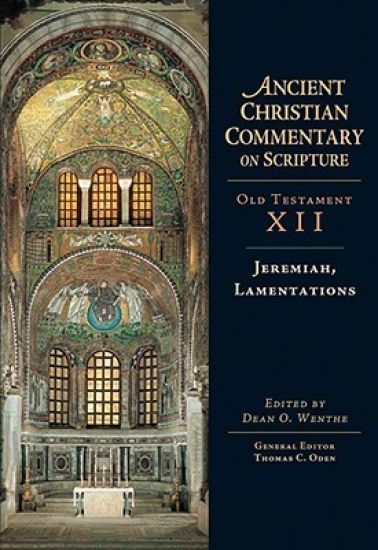
Jeremiah, Lamentations

Jeremiah, Lamentations

Dean O. Wenthe; Thomas C. Oden

IVP Academic
2009
sidottu
Jeremiah, the weeping prophet, prophesied for four decades under the last five kings of Judah—from 627 to 587 B.C. His mission: a call to repentance. Among the apostolic fathers, Jeremiah was rarely cited, but several later authors give prominent attention to him, including Origen, Theodoret of Cyr, and Jerome, who wrote individual commentaries on Jeremiah, and Cyril of Alexandria and Ephrem the Syrian, who compiled catenae. Justin and Irenaeus made use of Jeremiah to define Christians over against Jews. Athanasius made use of him in trinitarian debates. Cyril of Jerusalem, Irenaeus, Basil the Great, and Clement of Alexandria all drew on Jeremiah for ethical exhortation. Lamentations, as might be expected, quickly became associated with losses and death, notably in Gregory of Nyssa's Funeral Oration on Meletius. By extension the fathers saw Lamentations as a description of the challenges that face Christians in a fallen world. In this Ancient Christian Commentary on Scripture volume, readers will find some ancient authors translated into English here for the first time. Throughout they will gain insight and encouragement in the life of faith as seen through ancient pastoral eyes.
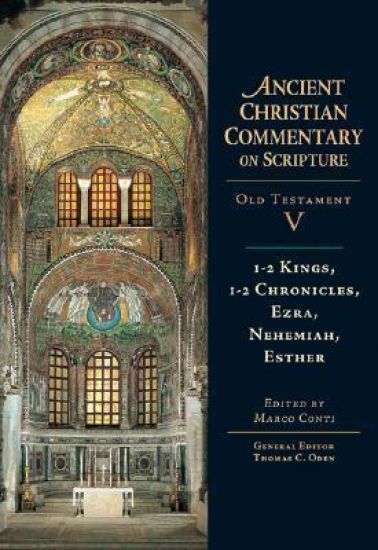
1–2 Kings, 1–2 Chronicles, Ezra, Nehemiah, Esther

1–2 Kings, 1–2 Chronicles, Ezra, Nehemiah, Esther

Marco Conti; Thomas C. Oden

Inter-Varsity Press,US
2008
sidottu
The church fathers, as they did in earlier books dealing with Israel's history from the time of Joshua to the united monarchy, found ample material for typological and moral interpretation in 1-2 Kings, 1-2 Chronicles, Ezra, Nehemiah and Esther. It will be immediately clear to readers of this volume that they gave much more attention to 1-2 Kings than to others; whether this was due to a certain repetitiveness in the story line or other reasons is unclear. But the narratives of wise King Solomon, the construction of the temple, the prophets Elijah and Elisha, and the fates of various faithful and unfaithful kings and other powerful people were well suited to their purposes. Among Greek commentators in this Ancient Christian Commentary on Scripture volume, readers will find Justin Martyr, Clement of Alexandria, Origen, Methodius, Eusebius of Caesarea, Athanasius, Cyril of Jerusalem, Basil the Great, Gregory of Nazianzus, John Chrysostom, Cyril of Alexandria, Theodoret of Cyr, Procopius of Gaza and John the Monk. Among Latin commentators are Tertullian, Cyprian, Novatian, Lactantius, Ambrose, Jerome, Prudentius, Augustine, Paulinus of Nola, John Cassian, Peter Chrysologus, Maximus of Turin, Salvian the Presbyter, Fulgentius of Ruspe, Caesarius of Arles, Gregory the Great, Bede and Rabanus Maurus. Syriac commentators include Aphrahat, Ephrem, Sahdona, Isaac of Nineveh and Isho'dad of Merv. Together they set before readers a table of delights and theological insights, some of which are here available to English readers for the first time.
Ezekiel, Daniel

Ezekiel, Daniel

Kenneth Stevenson; Michael Glerup; Thomas C. Oden

Inter-Varsity Press,US
2008
sidottu
The books of Ezekiel and Daniel are rich in imagery that is taken up afresh in the New Testament. Echoes of Ezekiel—with its words of doom and hope, vision of a new temple, and scroll-eating prophet—are especially apparent in the book of Revelation. Daniel is most notable in supplying terminology and imagery for Jesus of Nazareth's favored self-description as "Son of man," a phrase also found in Ezekiel. The four beasts of Daniel find their counterparts in the lion, ox, man, and eagle of Ezekiel and Revelation. It is no wonder these books, despite the difficulties in interpreting them, took hold on the imagination of the early church. In this Ancient Christian Commentary on Scripture volume, over forty church fathers are cited in the commentary on Ezekiel, some of whom are here translated into English for the first time, but pride of place goes to four significant extant works: the homilies of Origen and Gregory the Great, and the commentaries of Jerome and Theodoret of Cyr, thus bridging East and West, North and South. A similar array of fathers are found within the commentary on Daniel. Extensive comments derive from the works of Theodoret of Cyr, Hippolytus, Jerome, and Isho'dad of Merv, providing a wealth of insight.
Doctrinal Standards in the Wesleyan Tradition
The history ofWesleyan family of churches doctrines What are our core beliefs? Doctrinal Standards in the Wesleyan Tradition, Revised Edition, narrates the history of the formation of Wesleyan doctrines, describing how they were transplanted from the British Isles to North American, how they became constitutionally protected in Wesleyan-rooted churches. The first edition of this book affected the outcome of the 1988 General Conference of The United Methodist Church as the delegates decidedmany then-disputed doctrinal issues. This revised editionaddresses the continuing hunger for more precise and useful information on the doctrinal traditions of mainline Protestantism. Hence the arguments have been updated with more than 400 changes. Included are doctrinal statements for the Evangelical United Bethren, Free Methodist, Methodist Protestant, Wesleyan, Nazarene, African Methodist Episcopal Zion, Christian Methodist Episcopal, and African Methodist EpiscopalChurches; as well as an outline syllabus of a Course on the Articles of Religion."
Psalms 51–150

Psalms 51–150

Quentin F. Wesselschmidt; Thomas C. Oden

Inter-Varsity Press,US
2007
sidottu
The Psalms have long served a vital role in the individual and corporate lives of Christians, expressing the full range of human emotions, including some that we are ashamed to admit. The Psalms reverberate with joy, groan in pain, whimper with sadness, grumble in disappointment, and rage with anger. The church fathers employed the Psalms widely. In liturgy they used them both as hymns and as Scripture readings. Within them they found pointers to Jesus both as Son of God and as Messiah. They also employed the Psalms widely as support for other New Testament teachings, as counsel on morals, and as forms for prayer. Especially noteworthy was their use of Psalms in the great doctrinal controversies. The Psalms were used to oppose subordinationism, modalism, Arianism, Apollinarianism, Nestorianism, Eutychianism, and Monophysitism, among others. More than fifty church fathers are cited in the Ancient Christian Commentary on Scripture volume from Ambrose to Zephyrinus. From the British Isles, Gaul, and the Iberian Peninsula, we find Hilary of Poitiers, Prudentius, John Cassian, Valerian of Cimiez, Salvian the Presbyter, Caesarius of Arles, Martin of Bruga, Braulio of Saragossa, and Bede. From Rome and Italy, we find Clement, Justin Martyr, Callistus, Hippolytus, Novatian, Rufinus, Maximus of Turin, Peter Chrysologus, Leo the Great, Cassiodorus, and Gregory the Great. Carthage and North Africa are represented by Tertullian, Cyprian, Augustine, and Fulgentius. Fathers from Alexandria and Egypt include Clement, Origen, Dionysius, Pachomius, Athanasius, Cyril, and Poemen. Constantinople and Asia Minor supply the Great Cappadocians—Basil the Great and the two Gregorys, from Nazianzus and Nyssa—plus Evagrius of Pontus and Nicetas of Remesiana. From Antioch and Syria we find Ephrem, John Chrysostom, Theodore of Mopsuestia, Theodoret of Cyr, Philoxenus of Mabbug, Sahdona, and John of Damascus. Finally, Jerusalem, Palestine and Mesopotamia are represented by Eusebius of Caesarea, Aphrahat, Cyril, Jacob of Sarug, Jerome, and Isaac of Nineveh. Readers of these selections, some of which appear here for the first time in English, will glean from a rich treasury of deep devotion and profound theological reflection.