Kirjojen hintavertailu. Mukana 12 657 676 kirjaa ja 12 kauppaa.

Kirjailija

Thomas Mann

Kirjat ja teokset yhdessä paikassa: 500 kirjaa, julkaisuja vuosilta 1975-2027, suosituimpien joukossa Mario and the Magician. Vertaile teosten hintoja ja tarkista saatavuus suomalaisista kirjakaupoista.

500 kirjaa

Kirjojen julkaisuhaarukka 1975-2027.

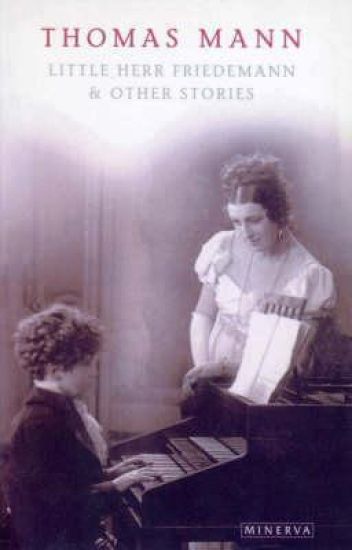
Little Herr Friedmann And Other Stories
THE BOOK: A selection of work taken from his highly acclaimed collection Stories of a Lifetime by one of the greatest writers of the 20th Century. In elegant prose, Mann explores such eternal themes as: individuals forced into the extremes of their existence, isolation and the artist's tentative position in the harsh world, the realization of one's true nature.
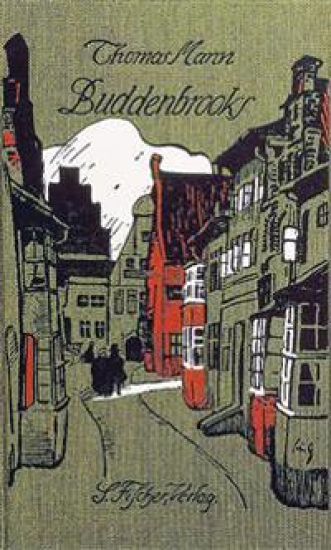
Buddenbrooks. Sonderausgabe

Buddenbrooks. Sonderausgabe

Thomas Mann

FISCHER, S.
1997
sidottu
"Es ist eine hervorragende Arbeit, redlich, positiv und reich", urteilte S. Fischers Lektor Moritz Heimann nach der Lektüre des Manuskripts über Thomas Manns, ersten Roman, seinen wohl am meisten gelesenen, am meisten verbreiteten. >Verfall einer Familie< - sein Untertitel scheint ihn einzureihen in eine bestimmte Gattung, aber "der Zug zum Satirischen und Grottesken", der darin steckt, hebt ihn zugleich davon ab, gibt ihm einen eigenen Charakter, eigene Wirkung bis in die Gegenwart. Thomas Mann erzählt nur wenig verschlüsselt die Geschichte seiner Familie und ihrer Stellung in der Vaterstadt Lübeck, soweit er sie nachvollziehen, in Einzelheiten überblicken konnte, ja sogar noch miterlebt hat. Verwandte, Honoratioren und markante Persönlichkeiten seiner Jugend werden integriert. Den meisten Raum nimmt das Leben Thomas Buddenbrooks ein - "ein modernes Heldenleben"; sein Sohn Hanno wird einen langen Strich unter die Genealogie der Familie setzen und sich rechtfertigen mit den Worten: "Ich glaubte ... ich glaubte ... es käme nichts mehr ..." In den hundert Jahren seit seinem ersten Erscheinen hat der Roman unzählige Menschen in seinen Bann gezogen und hat bis heute nichts an Charme und Aktualität eingebüßt. In der Fassung des Erstdrucks eröffnet >Buddenbrooks< die >Große kommentierte Frankfurter Ausgabe< der Werke Thomas Manns.
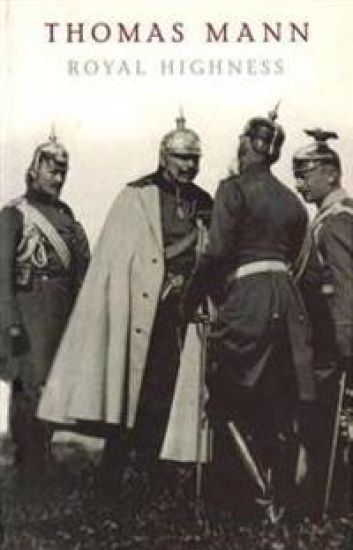
Royal Highness

Royal Highness

Thomas Mann

Vintage Publishing
1997
pokkari
THE BOOK: One of Thomas Mann's most delightful stories, Royal Highness is richly resonant with may of his themes and symbols. His careful depiction of a decaying, stratified society rejuvenated by modern forces illustrates in fable what he regarded as a universal truth - that ripeness and death are a necessary condition of rebirth.
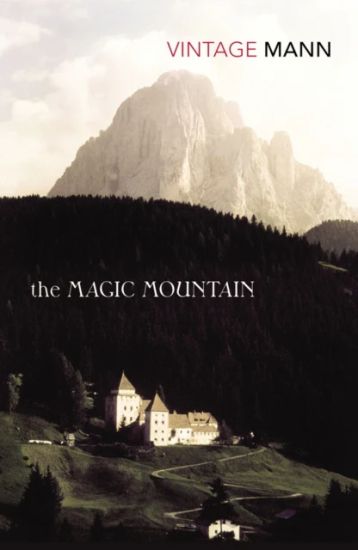
Magic Mountain

Magic Mountain

Thomas Mann

Vintage
1996
pokkari
This European masterpiece from the Nobel prizewinner explores the lure and degeneracy of ideas in an introverted community on the eve of World War I. Hans Castorp is 'a perfectly ordinary, if engaging young man' when he goes to visit his cousin in an exclusive sanatorium in the Swiss Alps.
Buddenbrooks

Buddenbrooks

Thomas Mann

Vintage
1996
pokkari
Discover Mann's Nobel Prizewinning semi-autobiographical and sweeping family epic. The Buddenbrook clan is everything you'd expect of a nineteenth-century German merchant family - wealthy, esteemed, established.
Tonio Kroger

Tonio Kroger

Thomas Mann

Bristol Classical Press
1996
nidottu
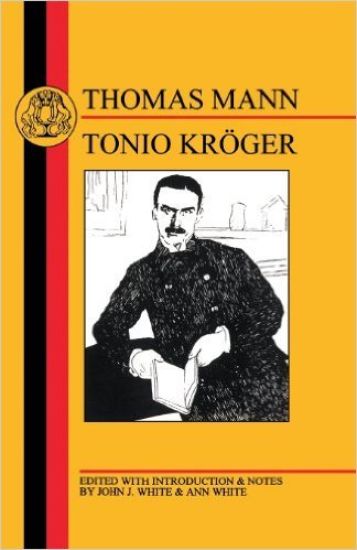
A title in the Bristol Classical Press German Texts series, in German with English notes, vocabulary and introduction. Thomas Mann (1875-1955), was awarded the Nobel Prize for literature in 1929, and "Tonio Kroger" occupies a central position in his spiritual and artistic development. A study of youth, it draws together many strands of his life and work: the duality of his parentage; his abhorrence of discipline; and the influence of Schopenhauer and Wagner on his early phase of writing.
Library Research Models

Library Research Models

Thomas Mann

Oxford University Press Inc
1995
nidottu
Most researchers, even with computers, find only a fraction of the sources available to them. As Library of Congress reference librarian Thomas Mann explains, researchers tend to work within one or another mental framework that limits their basic perception of the universe of knowledge available to them. Some, for example, use a subject-disciplinary method which leads them to a specific list of sources on a particular subject. But, Mann points out, while this method allows students and researchers to find more specialized sources, it is also limiting--they may not realize that works of interest to their own subject appear within the literature of many other disciplines. A researcher looking through anthropology journals, for example, might not discover that the MLA International Bibliography provides the best coverage of folklore journals. In Library Research Models, Mann examines the several alternative mental models people use to approach the task of research, and demonstrates new, more effective ways of finding information. Drawing on actual examples gleaned from 15 years' experience in helping thousands of researchers, he not only shows the full range of search options possible, but also illuminates the inevitable tradeoffs and losses of access that occur when researchers limit themselves to a specific method. In two chapters devoted to computers he examines the use of electronic resources and reveals their value in providing access to a wide range of sources as well as their disadvantages: what people are not getting when they rely solely on computer searches; why many sources will probably never be in databases; and what the options are for searching beyond computers. Thomas Mann's A Guide to Library Research Methods was widely praised as a definitive manual of library research. Ronald Gross, author of The Independent Scholar's Handbook called it "the savviest such guide I have ever seen--bracingly irreverent and brimming with wisdom." The perfect companion volume, Library Research Models goes even further to provide a fascinating look at the ways in which we can most efficiently gain access to our vast storehouses of knowledge.
Death in Venice

Death in Venice

Thomas Mann

Dover Publications Inc.
1995
nidottu
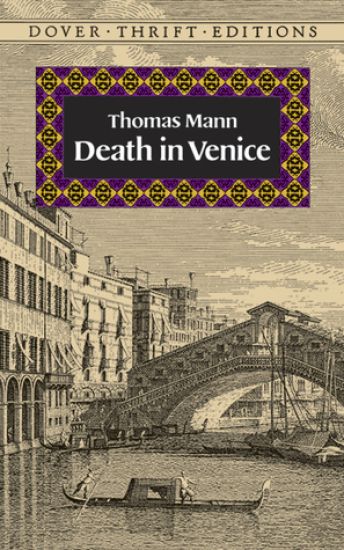
Written in 1912, Death in Venice is Thomas Mann's best-known novella – a haunting, elegiac masterpiece in which the main character, Gustav Aschenbach, is a successful and much-revered author. While vacationing in Venice, this highly disciplined writer, who always has maintained extraordinary control of his literary creations, finds himself suddenly overwhelmed by an all-consuming love for a beautiful young boy. A deadly epidemic sweeps through the city, but Aschenbach's attraction to the youth compels him to remain, thus sealing his fate.
Buddenbrooks

Buddenbrooks

Thomas Mann

Everyman's Library
1994
sidottu
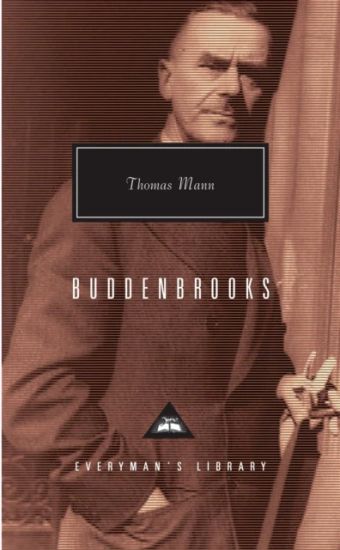
Thomas Mann's first great novel, written at the age of 25, is an epic study of decadence among the merchant families of Hamburg at the end of the nineteenth century. The novel is based on Mann's own experience as the son of a German merchant prince, but it goes far beyond his own experience in its sweep and comprehensiveness.The novel is an astounding, semi-autobiographical family epic. Mann portrays the transition of genteel Germanic stability and arrogance to a very modern uncertainty and fear.
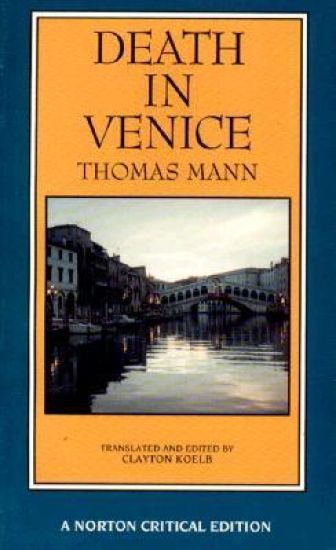
Death in Venice

Death in Venice

Thomas Mann

WW NORTON CO
1994
sidottu
Clayton Koelb's masterful translation improves upon its predecessors in two ways: it renders Mann into American (not British) English, and it remains true to Mann's original text without sacrificing fluency. For American readers, this is the translation of choice. Backgrounds and Contexts includes Mann's working notes, which allow students to observe the author's creative process. The notes are available here for the first time in English. Illuminating selections from Mann's essays and letters are also reprinted, as are period maps of Munich, Venice, and the Lido. Criticism includes six essays--by Andre von Gronicka, Manfred Dierks, T. J. Reed, Dorrit Cohn, David Luke, and Robert Tobin--sure to stimulate classroom discussion. A Chronology and Selected Bibliography are also included.
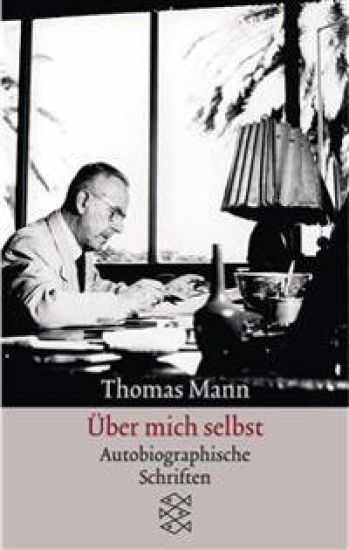
Über mich selbst

Über mich selbst

Thomas Mann

S. Fischer Verlag
1994
pokkari
Autobiographische Schriften umfassen die Jahre von 1875 bis 1955, Thomas Manns Zeit, auch eine wahrhaft schicksalhafte Epoche der deutschen Geschichte, so hatte er doch eine ?Abneigung gegen die Autobiographie? als ein geschlossenes, sein Leben nacherzählendes Buch. Er brauchte sie nicht, hat er sich selbst doch derart in all sein Schreiben eingebracht, daß man bei ihm mit gutem Recht von einer Identität von Werk und Person sprechen kann. Darüber hinaus hat er, wenn der Tag und die Stunde es erforderten, bereitwillig Auskunft gegeben über sich selbst, selten als Skizze seines Lebenslaufs, eher in Form eines weitgefächerten Vortrags oder Essays, als Erlebnis- oder Reisebericht, in Vignetten und Episoden von Angehörigen und Freunden, in Beantwortung von Rundfragen über die Voraussetzungen für seine Arbeit, über sein Verhältnis zu Religion, Musik oder zur Psychoanalyse. Thomas Mann verstand sich zeitlebens als kultureller Repräsentant seiner Zeit. Mit seinen Äußerungen über sich selbst gab er beredtes Zeugnis von der geistigen Lebensform seiner Generation.
Thomas Mann - Felix Bertaux

Thomas Mann - Felix Bertaux

Thomas Mann

Peter Lang Publishing Inc
1994
sidottu
Thomas Mann's correspondence with French Germanist Felix Bertaux between 1923 and 1948 deals with the writer's business of foreign translations, contracts, criticism, publicity and lecture tours. It also reflects the development of friendships and the disruptions caused by exile and war. It will be of interest to historians, literary scholars, international relations specialists as well as students and general readers, since the correspondence, made more accessible through its English translation, can be read as a journal of the development of Thomas Mann's international career and his lasting friendships.
Doctor Faustus

Doctor Faustus

Thomas Mann

Everyman's Library
1992
sidottu
A portrayal of genius possessed, through the biography of the composer Adrian Leverkuhn, narrated by his friend Zeitblom in the years 1943-45, as Germany faces ruin.
Der Tod in Venedig

Der Tod in Venedig

Thomas Mann

FISCHER TASCHENBUCH VERLAG GMBH
1992
muu
?Man denke sich den folgenden dichterischen Charakter. Ein Mann, edel und leidenschaftlich, aber auf irgendeine Weise gezeichnet und in seinem Gemüt eine dunkle Ausnahme unter den Regelrechten ... vornehm als Ansnahme, aber vornehm als Leidender, einsam, ausgeschlossen vom Glücke, von der Bummelei des Glücks und ganz und gar auf die Leistung gestellt.? Was Thomas Mann 1907 noch auf Shakespeares >Othello< bezog, gestaltete er selbst vier Jahre später zu Gustav Aschenbach in dieser ?Novelle gewagten. wenn nicht unmöglichen Gegenstandes?, vom plötzlichen ?Einbruch der Leidenschaft? in einen homoerotisch veranlagten Menschen. Der nicht mehr junge Schriftsteller Guslav Aschenbach - mit den Gesichtszügen Gustav Mahlers - entdeckt für sich am Lido des schwülwarmen Venedig die Gestalt des apollinisch schönen Knaben Tadzio und strebt in seinen Gedanken zu ihm, steigert sich in eine unerfüllbare Liebe und verspielt damit, nach einem Wort von Heinrich Mann, ?was ihm das wünschenswerteste schien?. Ohne seine eigene Intention zu verbergen, erklärte Thomas Mann später (1920 an Carl Maria Weber) Guslav Aschenbachs Sehnen nach Tadzio: ? Es ist das Problem der Schönheit , daß der Geist das Leben, das Leben aber den Geist als >Schönheitl< empfindet?. denn ?der Geist, welcher liebt, ist nicht fanatisch... er wirbt, und sein Werben ist erotische Ironie...? Er wollte seine Novelle verstanden wissen als ?Übersetzung eines schönsten Liebesgedichtes der Welt ins Kritisch-Prosaische, des Gedichtes, dessen Schlußstrophe beginnt: >Wer das Tiefste gedacht , liebt das Lebendigste .<? (Hölderlin, >Sokrates und Alkibiades<)