Kirjojen hintavertailu. Mukana 12 246 620 kirjaa ja 12 kauppaa.

Kirjailija

Tim Ingold

Kirjat ja teokset yhdessä paikassa: 39 kirjaa, julkaisuja vuosilta 1976-2025, suosituimpien joukossa Llevando la vida. Vertaile teosten hintoja ja tarkista saatavuus suomalaisista kirjakaupoista.

39 kirjaa

Kirjojen julkaisuhaarukka 1976-2025.

More Than Human

More Than Human

Tim Ingold

DESIGN MUSEUM
2025
sidottu
This book brings together a new generation of designers, architects and artists exploring how to reorient their practices for the flourishing of other species. Design is deeply associated with creating a better way of life – for humans. Yet we exist alongside billions of animals, plants and other living beings. Always putting human needs first has had devastating consequences on landscapes, other species and the climate. What if we fundamentally shifted our perspective? More-than-human design begins by acknowledging our entanglement with the ecosystems that give us life. It challenges us to imagine a world in which human desires no longer take precedence over the rights and needs of living systems. This book brings together a new generation of designers, architects and artists exploring how to reorient their practices for the flourishing of other species. With contributions by renowned writers and thinkers, including Anna Tsing, Tim Ingold and Daisy Hildyard, it examines what it means to design with and for the living world.
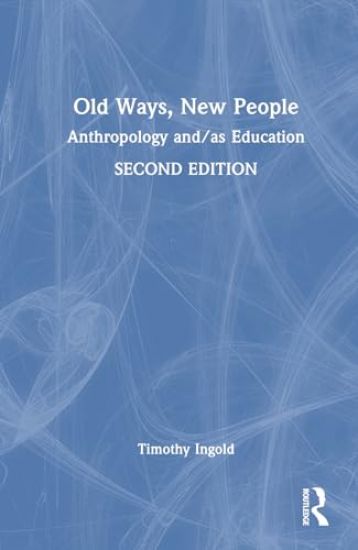
Old Ways, New People

Old Ways, New People

Tim Ingold

TAYLOR FRANCIS LTD
2025
nidottu
In this second and retitled edition of Anthropology and/as Education, Tim Ingold shows that there is more to anthropology than ethnography and more to education than teaching and learning. Building on the first edition’s exploration of the interface between the disciplines of anthropology and education, this revised edition pushes the bounds further, calling upon anthropologists to rethink their disciplinary vocation, by regarding it as fundamentally an educational rather than an ethnographic endeavour.What does a reimagining of anthropology mean for the ways we think about study and the school, teaching and learning, and the freedoms they exemplify? And how does it bear on the practices of participation and observation, on ways of study in the field and in the school, on art and science, research and teaching? This edition has been revised and expanded throughout and includes a major new chapter on how the educational mission of anthropology can shape the university of the future. This book will appeal to all who are seeking alternatives to mainstream agendas in social and educational policy, including educators and students in philosophy, the social sciences, educational psychology, environmentalism and arts practice.
Old Ways, New People

Old Ways, New People

Tim Ingold

TAYLOR FRANCIS LTD
2025
sidottu
In this second and retitled edition of Anthropology and/as Education, Tim Ingold shows that there is more to anthropology than ethnography and more to education than teaching and learning. Building on the first edition’s exploration of the interface between the disciplines of anthropology and education, this revised edition pushes the bounds further, calling upon anthropologists to rethink their disciplinary vocation, by regarding it as fundamentally an educational rather than an ethnographic endeavour.What does a reimagining of anthropology mean for the ways we think about study and the school, teaching and learning, and the freedoms they exemplify? And how does it bear on the practices of participation and observation, on ways of study in the field and in the school, on art and science, research and teaching? This edition has been revised and expanded throughout and includes a major new chapter on how the educational mission of anthropology can shape the university of the future. This book will appeal to all who are seeking alternatives to mainstream agendas in social and educational policy, including educators and students in philosophy, the social sciences, educational psychology, environmentalism and arts practice.
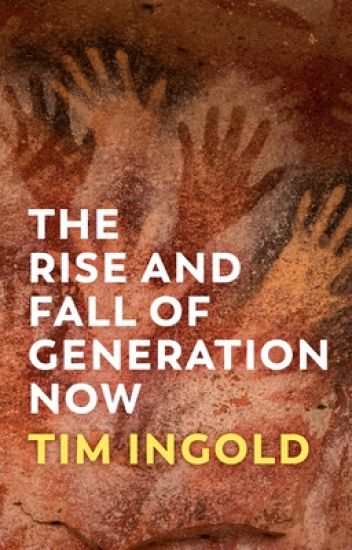
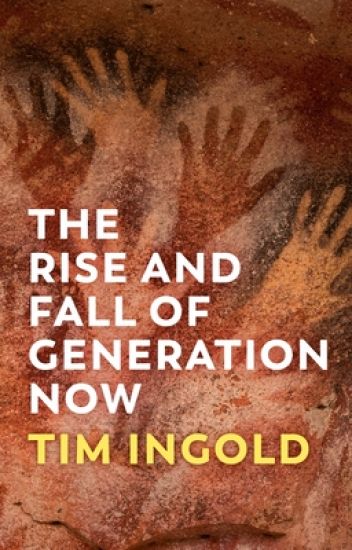
The Rise and Fall of Generation Now

The Rise and Fall of Generation Now

Tim Ingold

JOHN WILEY AND SONS LTD
2023
sidottu
Is the future about to close in, or is it open to new horizons? For anthropologist Tim Ingold, the root of our difficulty in facing up to the future lies in the way we think about generations. We imagine them as layers, succeeding one another like sheets in a stack. This view figures as a largely unquestioned backdrop to discussions of evolution, life and death, longevity, extinction, sustainability, education, climate change and other matters of contemporary concern. What if we were to think of generations, instead, as wrapping around one another along their length, more like fibres in a rope than stacked sheets? In this compelling new book, Ingold argues that a return to the idea that life is forged in the collaboration of overlapping generations might not only assuage some of our anxieties, but also offer a lasting foundation for future coexistence. But it would mean having to abandon our faith both in the inevitability of progress, and in the ability of science and technology to cushion humanity from environmental impacts. A perfect world is not around the corner, nor will our troubles ever end. Nevertheless, for as long as life continues, there is hope for generations to come.
The Rise and Fall of Generation Now

The Rise and Fall of Generation Now

Tim Ingold

JOHN WILEY AND SONS LTD
2023
nidottu
Is the future about to close in, or is it open to new horizons? For anthropologist Tim Ingold, the root of our difficulty in facing up to the future lies in the way we think about generations. We imagine them as layers, succeeding one another like sheets in a stack. This view figures as a largely unquestioned backdrop to discussions of evolution, life and death, longevity, extinction, sustainability, education, climate change and other matters of contemporary concern. What if we were to think of generations, instead, as wrapping around one another along their length, more like fibres in a rope than stacked sheets? In this compelling new book, Ingold argues that a return to the idea that life is forged in the collaboration of overlapping generations might not only assuage some of our anxieties, but also offer a lasting foundation for future coexistence. But it would mean having to abandon our faith both in the inevitability of progress, and in the ability of science and technology to cushion humanity from environmental impacts. A perfect world is not around the corner, nor will our troubles ever end. Nevertheless, for as long as life continues, there is hope for generations to come.
Being Alive

Being Alive

Tim Ingold

TAYLOR FRANCIS LTD
2021
nidottu
Anthropology is a disciplined inquiry into the conditions and potentials of human life. Generations of theorists, however, have expunged life from their accounts, treating it as the mere output of patterns, codes, structures or systems variously defined as genetic or cultural, natural or social. Building on his classic work The Perception of the Environment, Tim Ingold sets out to restore life to where it should belong, at the heart of anthropological concern. Being Alive ranges over such themes as the vitality of materials; what it means to make things; the perception and formation of the ground; the mingling of earth and sky in the weather-world; the experiences of light, sound and feeling; the role of storytelling in the integration of knowledge; and the potential of drawing to unite observation and description.Our humanity, Ingold argues, does not come ready-made but is continually fashioned in our movements along ways of life. Starting from the idea of life as a process of wayfaring, Ingold presents a radically new understanding of movement, knowledge and description as dimensions not just of being in the world, but of being alive to what is going on there.This edition includes a new preface by the author.
The Perception of the Environment

The Perception of the Environment

Tim Ingold

TAYLOR FRANCIS LTD
2021
sidottu
In this work Tim Ingold offers a persuasive new approach to understanding how human beings perceive their surroundings. He argues that what we are used to calling cultural variation consists, in the first place, of variations in skill. Neither innate nor acquired, skills are grown, incorporated into the human organism through practice and training in an environment. They are thus as much biological as cultural. To account for the generation of skills we have therefore to understand the dynamics of development. And this in turn calls for an ecological approach that situates practitioners in the context of an active engagement with the constituents of their surroundings.The twenty-three essays comprising this book focus in turn on the procurement of livelihood, on what it means to ‘dwell’, and on the nature of skill, weaving together approaches from social anthropology, ecological psychology, developmental biology and phenomenology in a way that has never been attempted before. The book is set to revolutionise the way we think about what is ‘biological’ and ‘cultural’ in humans, about evolution and history, and indeed about what it means for human beings – at once organisms and persons – to inhabit an environment. The Perception of the Environment will be essential reading not only for anthropologists but also for biologists, psychologists, archaeologists, geographers and philosophers.This edition includes a new Preface by the author.
Being Alive

Being Alive

Tim Ingold

TAYLOR FRANCIS LTD
2021
sidottu
Anthropology is a disciplined inquiry into the conditions and potentials of human life. Generations of theorists, however, have expunged life from their accounts, treating it as the mere output of patterns, codes, structures or systems variously defined as genetic or cultural, natural or social. Building on his classic work The Perception of the Environment, Tim Ingold sets out to restore life to where it should belong, at the heart of anthropological concern. Being Alive ranges over such themes as the vitality of materials; what it means to make things; the perception and formation of the ground; the mingling of earth and sky in the weather-world; the experiences of light, sound and feeling; the role of storytelling in the integration of knowledge; and the potential of drawing to unite observation and description.Our humanity, Ingold argues, does not come ready-made but is continually fashioned in our movements along ways of life. Starting from the idea of life as a process of wayfaring, Ingold presents a radically new understanding of movement, knowledge and description as dimensions not just of being in the world, but of being alive to what is going on there.This edition includes a new preface by the author.
The Perception of the Environment

The Perception of the Environment

Tim Ingold

TAYLOR FRANCIS LTD
2021
nidottu
In this work Tim Ingold offers a persuasive new approach to understanding how human beings perceive their surroundings. He argues that what we are used to calling cultural variation consists, in the first place, of variations in skill. Neither innate nor acquired, skills are grown, incorporated into the human organism through practice and training in an environment. They are thus as much biological as cultural. To account for the generation of skills we have therefore to understand the dynamics of development. And this in turn calls for an ecological approach that situates practitioners in the context of an active engagement with the constituents of their surroundings.The twenty-three essays comprising this book focus in turn on the procurement of livelihood, on what it means to ‘dwell’, and on the nature of skill, weaving together approaches from social anthropology, ecological psychology, developmental biology and phenomenology in a way that has never been attempted before. The book is set to revolutionise the way we think about what is ‘biological’ and ‘cultural’ in humans, about evolution and history, and indeed about what it means for human beings – at once organisms and persons – to inhabit an environment. The Perception of the Environment will be essential reading not only for anthropologists but also for biologists, psychologists, archaeologists, geographers and philosophers.This edition includes a new Preface by the author.
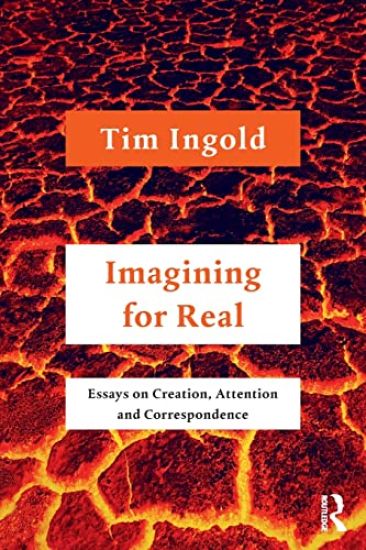
Imagining for Real

Imagining for Real

Tim Ingold

Routledge
2021
nidottu
What does imagination do for our perception of the world? Why should reality be broken off from our imagining of it? It was not always thus, and in these essays, Tim Ingold sets out to heal the break between reality and imagination at the heart of modern thought and science. Imagining for Real joins with a lifeworld ever in creation, attending to its formative processes, corresponding with the lives of its human and nonhuman inhabitants. Building on his two previous essay collections, The Perception of the Environment and Being Alive , this book rounds off the extraordinary intellectual project of one of the world’s most renowned anthropologists.Offering hope in troubled times, these essays speak to coming generations in a language that surpasses disciplinary divisions. They will be essential reading not only for anthropologists but also for students in fi elds ranging from art, aesthetics, architecture and archaeology to philosophy, psychology, human geography, comparative literature and theology.
Imagining for Real

Imagining for Real

Tim Ingold

Routledge
2021
sidottu
What does imagination do for our perception of the world? Why should reality be broken off from our imagining of it? It was not always thus, and in these essays, Tim Ingold sets out to heal the break between reality and imagination at the heart of modern thought and science. Imagining for Real joins with a lifeworld ever in creation, attending to its formative processes, corresponding with the lives of its human and nonhuman inhabitants. Building on his two previous essay collections, The Perception of the Environment and Being Alive , this book rounds off the extraordinary intellectual project of one of the world’s most renowned anthropologists.Offering hope in troubled times, these essays speak to coming generations in a language that surpasses disciplinary divisions. They will be essential reading not only for anthropologists but also for students in fi elds ranging from art, aesthetics, architecture and archaeology to philosophy, psychology, human geography, comparative literature and theology.
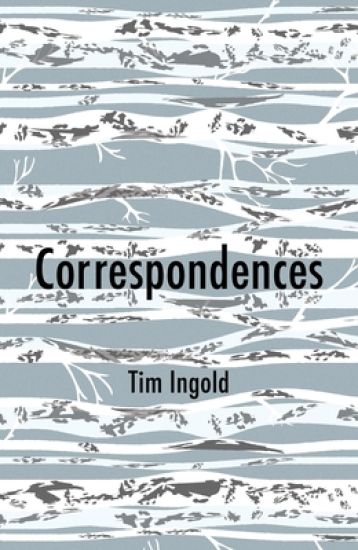
Correspondences

Correspondences

Tim Ingold

Polity Press
2020
nidottu
We inhabit a world of more than humans. For life to flourish, we must listen to the calls this world makes on us, and respond with care, sensitivity and judgement. That is what it means to correspond, to join our lives with those of the beings, matters and elements with whom, and with which, we dwell upon the earth. In this book, anthropologist Tim Ingold corresponds with landscapes and forests, oceans and skies, monuments and artworks. To each he brings the same spontaneity of thought and observation, the same intimacy and lightness of touch, but also the same affection, longing and care that, in the days when we used to write letters by hand, we would bring to our correspondences with one another. The result is a profound yet accessible inquiry into ways of attending to the world around us, into the relation between art and life, and into the craft of writing itself. At a time of environmental crisis, when words so often seem to fail us, Ingold points to how the practice of correspondence can help restore our kinship with a stricken earth.
Correspondences

Correspondences

Tim Ingold

Polity Press
2020
sidottu
We inhabit a world of more than humans. For life to flourish, we must listen to the calls this world makes on us, and respond with care, sensitivity and judgement. That is what it means to correspond, to join our lives with those of the beings, matters and elements with whom, and with which, we dwell upon the earth. In this book, anthropologist Tim Ingold corresponds with landscapes and forests, oceans and skies, monuments and artworks. To each he brings the same spontaneity of thought and observation, the same intimacy and lightness of touch, but also the same affection, longing and care that, in the days when we used to write letters by hand, we would bring to our correspondences with one another. The result is a profound yet accessible inquiry into ways of attending to the world around us, into the relation between art and life, and into the craft of writing itself. At a time of environmental crisis, when words so often seem to fail us, Ingold points to how the practice of correspondence can help restore our kinship with a stricken earth.