Kirjailija
Tom Cooper
Kirjat ja teokset yhdessä paikassa: 73 kirjaa, julkaisuja vuosilta 2003-2026, suosituimpien joukossa Lebanese Civil War. Vertaile teosten hintoja ja tarkista saatavuus suomalaisista kirjakaupoista.
73 kirjaa
Kirjojen julkaisuhaarukka 2003-2026.
This book is a collection of eloquent excerpts that express loves influence on human social interactions and the environment. In the words of Tom Cooper, "If the world just had more love, it would be a much better place." Although the pages are few in this book, the impacts are numerous. Love Relevancy for an "Ordinary Jerk" is all about providing insight about life, and how to make it meaningful. This is a great read and eye opener to the world around you. Tom Cooper will channel your energy with his words to help motivate and inspire readers.
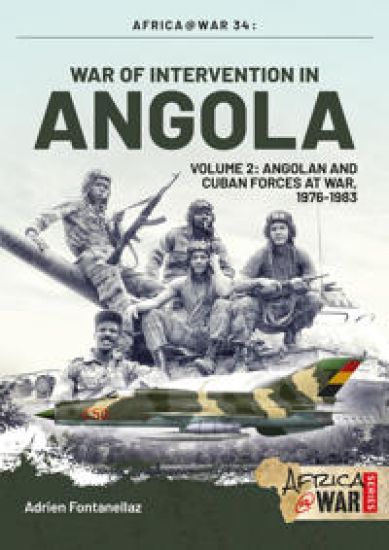
As of mid-1976, the civil war in Angola was seemingly decided: supported by a large contingent of Cuban forces, the MPLA established itself in power in Luanda. Its native competitors, the US-French-Zaire-supported FNLA, and UNITA, supported by China and South Africa, were in tatters. The French and Zaire-supported FLEC – an armed movement for the independence of the oil-rich Cabinda enclave – was in disarray. The last few of their surviving units were either driven out of the country, or forced into hiding in isolated corners of northern and south-eastern Angola. Nevertheless, the war went on. The MPLA’s government failed to decisively defeat UNITA, in southern Angola, and then found itself facing a coup attempt from within in May 1977. Crushed in blood, this resulted in thousands being jailed and tortured: many more escaped abroad, where they reinforced the ranks of the battered opposition. The coup prompted the Soviets to attempt increasing their influence with the aim of establishing permanent military bases in the country. While all such overtures were turned down, Angolan operations along the border to what was then the South-West Africa (subsequently Namibia) in October 1980, combined with the increased activity of SWAPO – an insurgency against the South African control of that territory - subsequently Namibia – prompted South Africa to launch another military intervention and resume supporting UNITA. In turn, this prompted not only the Cubans to further increase their military presence, but also the Soviet Union into delivering massive amounts of military aid to the government in Luanda. Angola not only assumed the role of one of the major hot battlefields in the Cold War: its ‘civil war’ saw a number of major showdowns between diverse belligerents, culminating in the Battle of Cangamba in 1983. Based on extensive research, with help of Angolan and Cuban sources, the ‘War of Intervention in Angola, Volume 2’, traces the military build-up of the Cuban and Soviet-supported Angolan military, the FAPLA and its combat operations, and those of the Cuban military in Angola, in the period 1976-1983, their capabilities and intentions, and their battlefield performances. The volume is illustrated with over 100 rare photographs, half a dozen maps and 18 colour profiles.
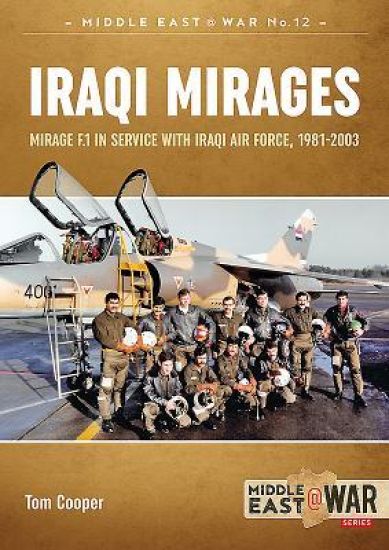
Originally envisaged as a privately funded project for a possible future NATO-fighter, the Dassault Mirage F.1 evolved into one of the most aesthetically attractive and commercially most successful combat aircraft of the 1970s and 1980s. Developed into more than a dozen of different variants and sub-variants – each of them custom-tailored to requirements of air forces that flew it – it also became a type that saw intensive combat service in numerous wars on no less than three different continents. Iraq became the biggest export customer for Mirage F.1. One way or the other, the Iraqi Air Force significantly contributed – and financed – the further development of this type, but also influenced research and development of a number of further systems that followed in its wake – most of which eventually found their way into operational service in France. While the Mirage F.1 has attracted at least some coverage in English language publications, its acquisition and combat deployment by Iraq still remains a topic with not a few controversies. The purpose of this volume is to redress the balance and provide an in-depth insight into the acquisition process, development and equipment of custom-tailored variants made for Iraq, training of Iraqi personnel on the type, and its combat deployment during wars against Iran, 1980-1988, and against the US-led, so-called Gulf Coalition, in 1991 and afterwards. Originally envisaged and acquired as a `pure’ interceptor, before long the Mirage F.1 in Iraqi service proved a highly capable multi-role platform aircraft, and was widely deployed not only for ground attack but also anti-shipping purposes, as an aerial tanker, and for delivering long-range pin-point attacks. Illustrated with over 120 photographs and many colour profiles, this book provides a unique, single point of reference on camouflage, markings, and armament configurations of Mirage F.1s in Iraqi service.
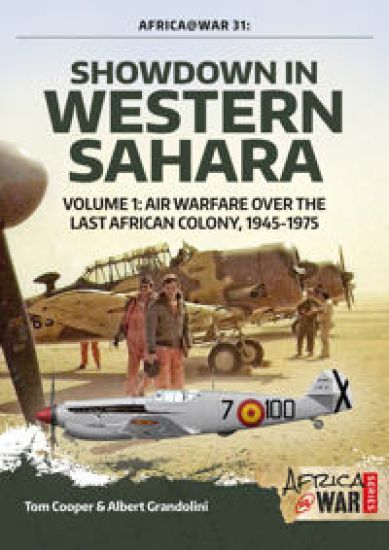
The former colony of Spanish Sahara saw frequent outbursts of tribal and ethnic rebellions already while ruled by colonial authorities, in the late 19th and through early 20th Century. Its vastness and distances de-facto dictated the application of air power in response. While most of these attracted next to no attention in English-language media, at least the large-scale operations of the Spanish colonial authorities of the late 1950s became notable for the final combat deployment of the famous Messerschmitt Bf.109. Narby, their common history as former French colonies resulted in a short war between Algeria and Morocco, which in turn prompted an arms race that lasted well into the 1980s. Following much more action than was ever reported in the media, and amid growing resistance from natives and increasing international pressure, Spain withdrew from Spanish Sahara in 1975, indirectly opening a new chapter of this part of the world, which is going to be covered in Volume 2. Warfare in Western Sahara has in many ways become exemplary for modern-day counter-insurgency efforts in Africa and elsewhere. This is so in regards of this conflict being mis-declared as a part of some larger, external conflict – like the Cold War – in regards of the concept of an insurgency applying motorized forces to deliver often spectacular ‘hit-and-run’ attacks; and in regards of a conventional military reacting with a combination of earth berms and air power. Illustrated by over 100 photographs, dozen of maps and 15 colour profiles, Showdown in Western Sahara, Volume 1 offers a fascinating study of the military aspects of this conflict, warfare strategies, tactics and experiences with different weapons systems.
In August 2015, the government of the Russian Federation embarked its military forces on an intervention in Syria. Ever since, there is no end of discussions about Russian military capabilities and intentions – in Syria and beyond. To many, the performance of the Russian military – and especially the Russian Air-Space Force (VKS) – in this war was a clear demonstration of advanced technology, improved training, fearsome firepower, and great mobility. To others, the military operation only experienced limited success and exposed a number of weaknesses. Foremost between the latter are aircraft ill-suited to the necessities of expeditionary warfare, and a gross lack of advanced weaponry and equipment. While the military component of their intervention can only be described as providing clear evidence that the Russian military is in no condition to directly challenge the NATO’s eastern frontiers, it cannot be denied that through this action Moscow instrumented a turning point in the Syrian Civil War, and indeed one on geo-strategic plan. Organized and run in cooperation with very diverse allies – ranging from the Islamic Revolutionary Guards Corps of Iran (IRGC), Hezbollah of Lebanon, the Kurdishan Workers Party (PKK) and a myrad of local warlords and their armed militias – their combination of intentional bombardment of insurgent-controlled parts of Syria, and indirect protection for the IRGC’s own military intervention in the country from a possible counter-intervention of the West, the Russians did succeed in saving the regime of the Syrian President Bashar al-Assad. Through this, this campaign created an absurd precedent in newest history: a brutal dictatorship involved in systematic elimination of hundreds of thousands on industrial scale, and frequently with help of chemical weapons, was even made popular within circles of far-right and far-left alike around the World. In turn, the resulting flow of refugees destabilized the European Union and large parts of the NATO – two parties considered the actual primary opponents by the government in Moscow – and increased the popularity of the President Vladimir Putin to unprecedented levels. Illustrated by over 130 photographs, maps and colour profiles, ‘Moscow's Game of Poker’ is providing a clear outline of the participants in this extremely complex conflict, and areas it impacts. It is providing a unique and in-depth study of Moscow’s political aims, strategy, doctrine, target selection process, military technology and tactics, day-by-day operations, and the way the Russian Federation cooperates with diverse local allies. This story is told in combination with an exclusive insight into the similar campaign run by what is left of the Syrian Arab Air Force.
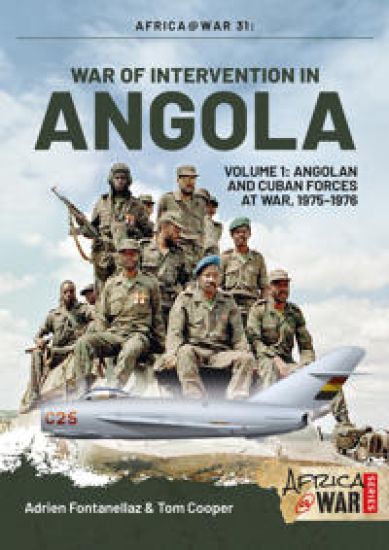
As of 1975, the decades long insurgency in Angola appeared to be short of its conclusion. However, with no less than three major insurgent movements fighting for supremacy, the war went on and then South Africa, USA, the Soviet Union, Zaire and Cuba became involved. Affairs like the CIA’s efforts to destabilise Angola for little else but to recoup its prestige after the catastrophic defeat in South Vietnam, or the South African military intervention in Angola – Operation Savannah – have attracted lots of public attention and are relatively well covered in related publications. On the contrary, the final stages of the Portuguese withdrawal, the military build-up of three native insurgent forces, and then the onset of the Cuban military intervention in Angola – Operation Carlotta run in 1975 and 1976 – remain largely unknown. Based on extensive research with help of Angolan and Cuban sources, the War of Intervention in Angola is providing a unique insight precisely into the latter topic. It traces the failures of the US-supported FNLA, the growth and reorganization of the MPLA into a conventional army; deployment of Cuban military contingents, their capabilities and intentions; and the performance and experiences of the MPLA and Cuban forces at war with South Africans and the third Angolan insurgent group – UNITA. The volume is illustrated with over 100 rare photographs, a dozen of maps and 15 colour profiles.
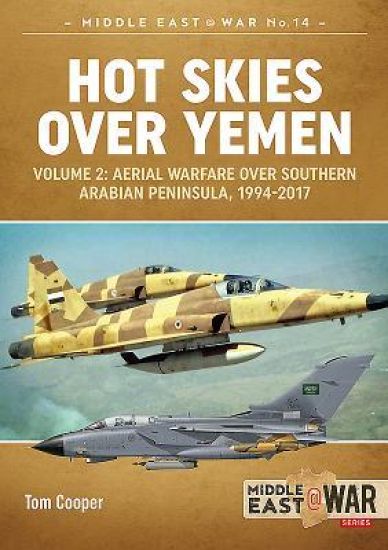
Following the Civil War of 1994, Yemen experienced few years of relative peace. This was rudely interrupted in 2004, when the government opened the first of six campaigns against the movement colloquially known as ‘Houthis’. The Yemeni Air Force – partially re-equipped over the previous years – saw intensive involvement in this conflict, but proved insufficient. In late 2009 and through 2010, the war spread into Saudi Arabia, which reacted with its first military intervention in the country. A host of long-simmering internal conflicts culminated in the second Saudi-led military intervention in Yemen, launched in March 2015. Although run along widely accepted Western doctrine of aerial warfare, and highly effective, the campaign in question experienced a number of massive problems – primarily related to unexpected developments and extremely complex relations between multiple parties in Yemen. That the air forces of the Saudi-led alliance involved in the ongoing campaign in Yemen are operating some of most modern combat aircraft and weaponry manufactured in the West is no secret. But, exactly how, why, when, and where are they deploying weapons systems in question and for what purpose remains entirely unknown in the public. Thanks to approach to first-hand sources, this volume is providing answers to precisely these questions and thus providing an exclusive insight into the conduct of operations by such modern aircraft types like F-15S, F-16E/F, EF-2000 Typhoon, and Mirage 2000. Containing over 140 photographs, colour profiles, maps and extensive tables, Hot Skies over Yemen is a richly illustrated and unique point of reference about one segment of modern aerial warfare that remains entirely unknown until today.
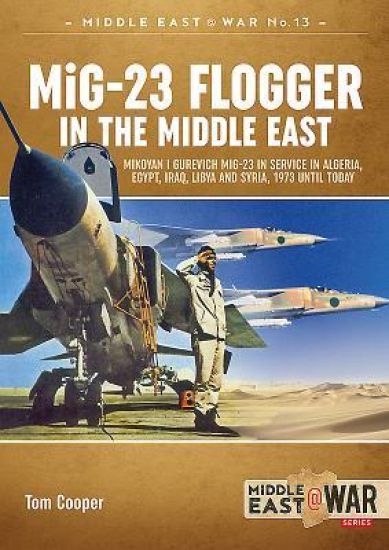
Following a protracted research and development phase, Mikoyan Gurevich’s MiG-23 finally entered service with the former Soviet Air Force in the early 1970s. Almost immediately, a number of foreign customers pressed Moscow for deliveries of this long-overdue type, expected to succeed the popular MiG-21 as a standard interceptor. Correspondingly, large numbers of MiG-23 interceptors and fighter-bombers were exported to five major Arab air forces in the mid-1970s. This is a detailed history of the operational service of this Soviet-manufactured interceptor and its fighter-bomber variants in service with Algerian, Egyptian, Iraqi, Libyan, and Syrian air forces, since 1974. While Egypt purchased only a handful before its final break with Moscow, and Algeria limited related acquisitions, Iraq, Libya and Syria continued purchasing advanced variants in significant numbers through the 1980s. The units operating MiG-23s were soon transformed into the backbone of the military services in question, and they saw combat service in a number of intensive military conflicts. In the 1980s, they fought against Israeli jets over Lebanon, against the Iranians in the Iran-Iraq War, and confronted US Navy’s F-14s on numerous occasions off Libya. In 1991 Iraqi MiG-23s were deployed in combat against the US-led coalition’s F-15s. Indeed, in Syria, different versions of MiG-23 continue flying combat operations today. Illustrated with over 110 photographs – many of these never published before –colour profiles and a dozen maps, this volume provides a unique point of reference, revealing much detail about camouflage patterns, unit insignia and aircraft markings.
Ethiopia, a country of ancient origins in eastern Africa, remains a military powerhouse of that continent until our days. Nowadays involved in the war in neighbouring Somalia, Ethiopia was also involved in half a dozen of other armed conflicts over the last 60 years. Crucial between these was the Eritrean War of Independence. Fought 1961-1991, this was one of biggest armed conflicts on the African continent, especially if measured by numbers of involved combatants. It included a wide spectrum of operations, from ‘classic’ counter-insurgency (COIN) to conventional warfare in mountains – with the latter being one of the most complex and most demanding undertakings possible to conduct by a military force. Campaigns run during the Eritrean War of Independence often included large formations of relatively well-equipped forces, led by well-trained commanders, along well-thought-out plans, based on home-grown doctrine. The air power played a crucial – although not necessarily decisive – role in many of battles. Nevertheless, most of details about this conflict remain unknown in the wider public. Similarly, relatively few Western observers are aware of relations between the Eritrean liberation movements, and various dissident and insurgent movements inside Ethiopia – although the synergy of these eventually led the downfall of the so-called Derg government, in 1991. While the first volume in this mini-series spanned the history of wars between Ethiopia and Eritrea between 1961 and 1988, the second covers the period since. Correspondingly, it is providing coverage of military operations that led to the fall of the Derg government in Ethiopia of 1991, the period of Eritrean military build-up and a complete re-organization of the Ethiopian military in the 1990s, and concludes with the first detailed account of the so-called Badme War, fought between Ethiopia and Eritrea in period 1998-2001. It is illustrated by many contemporary photographs, maps and colour profiles.
When released into independence from Great Britain, in 1948, the stunningly beautiful island of Ceylon, re-named Sri Lanka in 1972, was expected to become a sort of `South Asian Singapore’. However, stable political order and bright economic prospects proved insufficient to maintain peace. A host of unsolved ethnic conflicts and social inequalities conspired to erupt into an armed conflict, in 1971. When this broke out the entire Sri Lankan society was shocked to its core by a large-scale insurgency instigated by a Sinhalese Maoist group, JVP. Worst still, this was followed by the gradual build-up of several other Tamil groups in the north of the island. Following riots known as `Black July’, in 1983, Sri Lanka was ripped apart by a murderous war against Tamil insurgents, which caught the armed forces wrong-footed because of the government’s reluctance to build-up its military to necessary levels. This came to a temporary stop in 1987, with the implementation of a peace arrangement virtually enforced by the government of India and a deployment of a large peacekeeping force of the Indian military. By the time, the notorious LTTE emerged as the most powerful Tamil insurgent movement, and the principal opponent of the Sri Lankan armed forces. Eventually, the Indian military intervention proved to be only a temporary solution. The LTTE turned against the Indian military but suffered heavily in return. However, this provided some breathing space for the Sri Lankan military, which then launched a vicious and protracted counterinsurgency campaign against the JVP. The fighting thus went on. Relying on extensive studies of the Sri Lankan War with the help of first-hand sources, official documentation and publications from all of involved parties, this volume provides an in-depth and particularly detailed account of military operations during the first 16 years of this war.
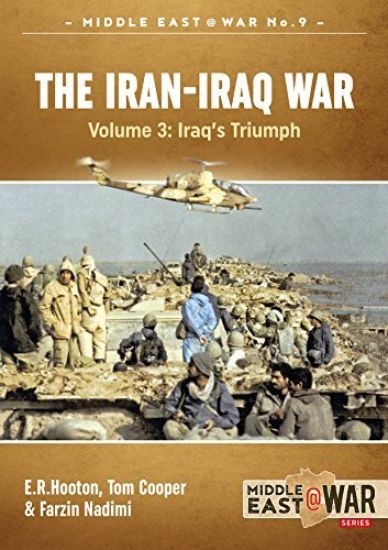
The Iran-Iraq War was one of the bloodiest conflicts of the 20th Century and accidentally created the current nightmare of Islamic fundamentalist terrorism. There have been many books on the conflict but this is the first detailed military history using materials from both sides, as well as materials obtained from US Intelligence circles and British Governmental archives. It provides a unique insight into a war which began through miscalculation and rapidly escalated into the longest conventional conflict in the post-Second World War era. The third volume covers the last two years of the war on the Southern front, where Iranians made their last supreme effort to break through Iraqi lines during the winter of 1986-1987. Iraqi defences just about held. For a year, there was an ominous silence, but then Iraq launched a series of devastating blows that recovered the Faw Peninsula, pulverised weakly-occupied Iranian positions, and drove the frontlines back to the international border. Iran was left with no option but to sue for peace.
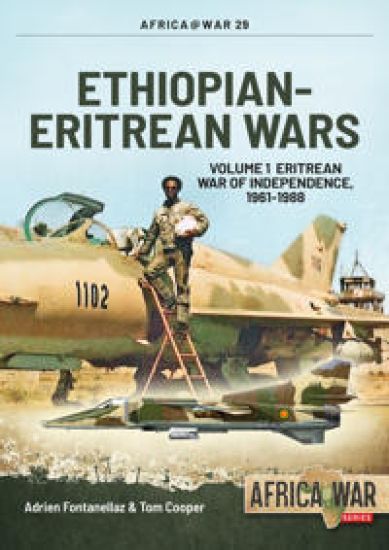
Ethiopia, a country of ancient origins in eastern Africa, has remained a military powerhouse of that continent until the present day. Currently involved in the war in neighbouring Somalia, Ethiopia was also involved in half a dozen of other armed conflicts during the last 60 years. One of the most significant was the Eritrean War of Independence. Fought 1961-1991, this was one of the biggest armed conflicts on the African continent, especially if measured by numbers of combatants involved. It included a wide spectrum of operations, from ‘classic’ counter-insurgency (COIN) to conventional warfare in mountains – with the latter being one of the most complex and demanding undertakings possible to conduct by a military force. Campaigns run during the Eritrean War of Independence often included large formations of relatively well-equipped forces, led by well-trained commanders, utilising complex plans based on home-grown doctrine. Airpower played a crucial – although not necessarily decisive – role in many of battles. Nevertheless, most of details about this conflict remain unknown to the wider public. Similarly, relatively few Western observers are aware of relations between the Eritrean liberation movements, and various dissident and insurgent movements inside Ethiopia – although the synergy of these eventually led the downfall of the so-called Derg government, in 1991. Reaching back to extensive studies of Ethiopian and Eritrean military history, this volume provides a detailed account of the first 25 years of this conflict: from the outbreak of armed insurgency in 1961 until the crucial battle of Afabet, in 1988. It is illustrated by over 100 contemporary photographs, maps and colour profiles.
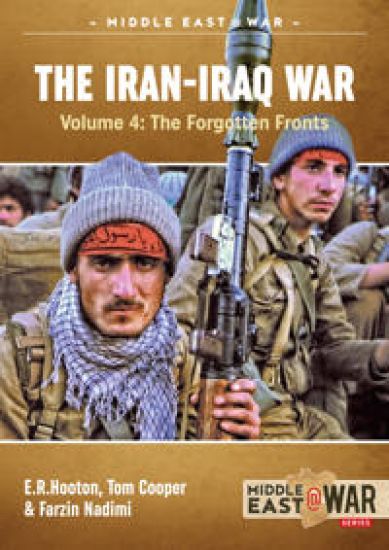
The Iran-Iraq War was one of the bloodiest conflicts of the 20th Century and accidentally created the current nightmare of Islamic fundamentalist terrorism. There have been many books on the conflict but this is the first detailed military history using materials from both sides, as well as materials obtained from US Intelligence circles and British Governmental archives. It provides a unique insight into a war which began through miscalculation and rapidly escalated into the longest conventional conflict in the post-Second World War era. Part 4 in this mini-series coversthe warfare between Iran and Iraq on the Central and Northern Fronts. Difficult terrain made it problematic for either side to assemble overwhelming superiority. Following initial Iraqi attacks that seized some territory, the Iranians began gradually nibbling back until achieving some success in the centre, in 1982. Subsequently, the Central Front saw only minor conventional battles until Iraq launched several major blows in 1988. In the north, fighting primarily revolved around several Kurdish insurgencies in northern Iraq, and culminated in the horror of the Halabcheh gas attack. The final campaign of the war saw Iraq-supported Iranian émigrés launching a spectacular, but also a swiftly-crushed, invasion of their homeland.
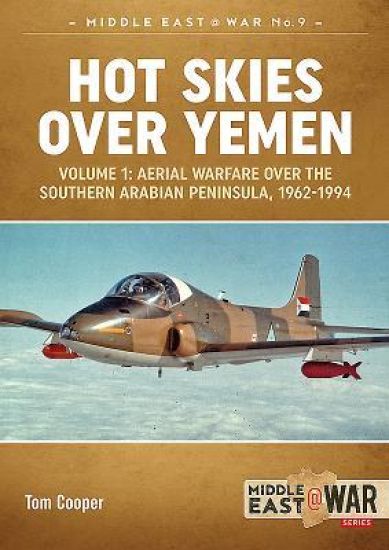
Since September 1962, hardly a week passed without a major armed confrontation or an outright war in Yemen. The number of long-lasting insurgencies, mutinies, rebellions, or terrorism-related activities that took place during this period is going into dozens. Despite duration of all these conflicts and although they may have caused as many as half a million of deaths, the rest of the World heard very little about them. At best, Yemen is nowadays known as a hotbed of international terrorism, an area that is on the receiving end of frequent US air strikes flown by UAVs, or as 'some place' fiercely bombarded by a coalition led by Saudi Arabia. While at least some details about British aerial operations in what was Southern Arabia of the 1960s were published over the years, next to nothing is known about activities of other, `local’ air forces – like those of Egypt – and even less so about that of Yemen. This is even more surprising considering that for nearly two decades there were no less than two, fully developed services of that kind - one operated by what was then North Yemen, another by what used to be South Yemen - and that these were deeply involved in the Cold War, too. Using newly released secret intelligence sources, neglected memoirs, and popular memory, this book is telling the story of military flying in Yemen between 1962 and 1994. It is providing in-depth insights and analysis of campaigns fought by the Egyptian air force of the 1960s, the creation of two Yemeni air forces in the 1970s, an entire series of inter-Yemeni wars of the 1980s and 1990s. Containing over 140 photographs, colour profiles, maps and extensive tables, Hot Skies over Yemen is a richly illustrated and unique point of reference about one segment of modern aerial warfare that remains entirely unknown until today.
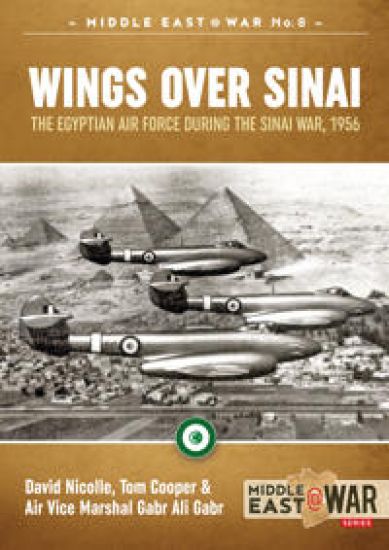
Wings Over Sinai
David Nicolle; Air Vice Marshal Gabr Ali Gabr; Tom Cooper
Helion Company
2017
nidottu
Sixty years since the tripartite aggression of France, Great Britain and Israel against Egypt, this is the first account about Egyptian military operations during the Suez War of 1956 (or `Suez Crisis’, as it is known in the West). Based on research with the help of official Egyptian documentation and recollections of crucial participants, this book provides an unique and exclusive insight into the `other side’ of a war that many consider has marked `the end of the British Empire’. From the Western point of view, the situation is usually explained in quite simple terms: in retaliation for President Gamal Abdel Nasser’s nationalisation of the Universal Suez Canal Company - and thus the strategically important waterway of the Suez Canal - France and Great Britan (operating in concert with Israel) launched the operation codenamed 'Musketeer'. Divided into three phases, each shaded into the other; this aimed at obliterating the Egyptian Air Force, occupying the whole of the Suez Canal and toppling Nasser’s government. From the Egyptian point of view, backgrounds were much more complex than this. Striving to modernize the country, a new and inexperienced government in Cairo launched a number of major projects, including one for the construction of a gigantic Asswan Dam on the Nile. The only Western power ready to help finance this project, the USA conditioned its support with basing rights for its military. With the last British soldiers still about to leave the country - and thus end Egypt’s occupation by foreign powers for the first time in 2,000 years - Nasser found this unacceptable. Around the same time, Egypt found itself under pressure from Israeli raids against border posts on the Sinai. Left without a solution, Cairo decided to nationalize the Suez Canal in order to finance the Aswan Dam project, but also to start purchasing arms from the Soviet Union. In an attempt to bolster Egyptian defenses without antagonizing Western powers, Nasser concluded the so-called `Czech Arms deal’ with Moscow - resulting in the acquisition of Soviet arms via Czechoslovakia. Little known in Cairo at the time, such moves tripped several `red lines’ in Israel and in the West - in turn prompting aggression that culminated in a war. Wings over Sinai is, first and foremost, an account of the battle for survival of the Egyptian Air Force (EAF). Caught in the middle of conversion to Soviet-types, this proved more than a match for Israel, but were hopelessly ill-prepared to face the military might of Great Britain and France too. Sustained, days-long air strikes on Egyptian air bases caused heavy damage, but were nowhere near as crippling as the losses usually claimed and assessed by the British, French and Israelis. The EAF not only survived that conflict in quite a good order, but also quickly recovered. This story is told against the backdrop of the fighting on the ground and the air and naval invasion by British and French forces. Richly illustrated with plenty of new and previously unpublished photographs, maps (and 15 color profiles), this action-packed volume is illustrates all aspects of camouflage, markings and various equipment of British and Soviet origin in Egyptian military service as of 1956.
Designed by Sydney Camm as a swept wing, daytime interceptor with excellent manoeuvrability, the Hunter became the first jet aircraft manufactured by Hawker for the Royal Air Force. It set numerous aviation records and saw widespread service with a large number of RAF units in Europe and abroad. When the Royal Air Force received newer aircraft capable of supersonic speeds to perform the interceptor duties, many Hunters were modified and re-equipped for ground-attack and reconnaissance missions instead. Because they were deemed surplus to British requirements, most of these were subsequently refurbished and exported to foreign customers – so also to Iraq and Jordan. Hawker Hunters at War covers every aspect of Hunter’s service in the two countries, from in-depth coverage of negotiations related to their export to Iraq and Jordan, to all-important details of their operational service during 1958-67. It culminates in detailed examination of their role in the June 1967 Arab-Israeli War (also known as the ‘Six Days War’) and extensive tables listing all aircraft delivered and their fates. Almost entirely based on interviews with retired commanding officers and pilots of the former Royal Iraqi Air Force, Iraqi Air Force and Royal Jordanian Air Force - as well as plenty of unpublished official documents from British, Iraqi and Jordanian archives - the narrative is providing an unprecedented insight into a number of contemporary affairs. Profusely illustrated with well over 100 photographs and 15 colour profiles showing all aspects of camouflage, markings and various equipment, Hawker Hunters at War is the ultimate profile of Hunter’s colourful and action-packed service in Iraq and Jordan during a period when this legendary type formed the backbone of local air forces.
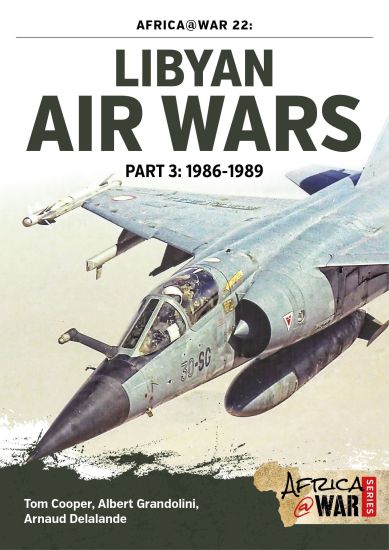
Confrontations between Libya, and the USA and France reached their highest point in the period between April 1986 and early 1989. In response to a Libyan-instigated and supported series of terror attacks against US citizens and interests in Europe, in April 1986 the USA launched Operation El Dorado Canoyon – a series of raids against carefully selected targets in Libya. Simultaneously, the USA and France bolstered the military of the Chadian government, enabling it to subsequently launch an all-out advance against Libyan troops and proxy forces in the north of Libya. This culminated in the series of spectacular campaigns better known as ‘Toyota Wars’, characterised by high speed of operations and surprise. The Chadian Army defeated its opponents in 1987 and nearly launched an invasion of Libya in 1988, successfully concluding this conflict. This title closes the Libyan Air Wars mini-series with a detailed insight into the final US–Libyan confrontation, which took place in early 1989, and culminated in another high-profile air combat between the most modern jet fighters of the Libyan Arab Air Force, and the US Navy. As usual, the volume is richly illustrated by well over 150 contemporary and exclusive photographs, colour profiles, and maps, detailing the history, training, equipment, markings and tactics of the involved air forces.
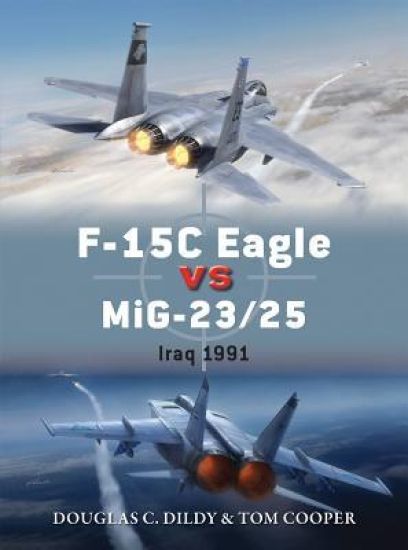
Following the relatively poor performance of America's multi-role fighters during the Vietnam War, the F-15 Eagle was designed as a dedicated air superiority fighter. But, instead of Soviet pilots, it came up against pilots of Saddam Hussein's Iraqi airforce. This book analyses the combat between the American and Soviet 'Cold War fighters' in a balanced manner, examining how the technical abilities of the aircraft combined with the different levels of training available to opposing pilots and groundcrews allowed the F-15s to destroy the Iraqi offensive abilities within weeks of the First Gulf War starting.Packed with artwork, illustrations and photographs, this book places the reader in the cockpit during one of the last major dogfighting air wars in modern history.
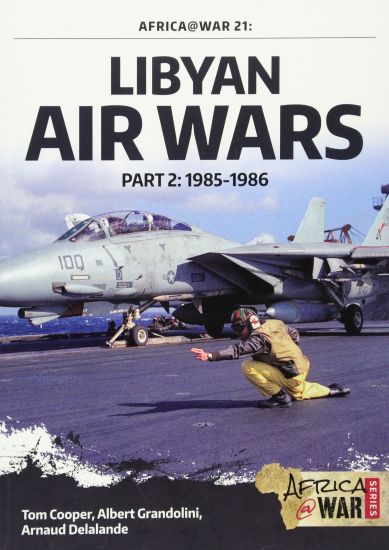
While the first volume in this mini-series spanned the first decade of confrontations between Libya and several of its neighbours, but foremost the USA and France, between 1973 and 1985, the second is to cover the period of less than a year – between mid-1985 and March 1986, when this confrontation reached its first climax. Through mid and late 1985, relations between France and Libya became tense over the situation in Chad. By early 1986, the French felt forced to deploy their air force for an airstrike on the crucial Libyan air base at Wadi Doum, in the north of that country. Tripoli reacted with a high-profile aerial attack on N’Djamena IAP and by bolstering support for its proxies. This eventually provoked Paris to launch its third military intervention in that country, OperationÉpervier. Meanwhile, a series of terror attacks on US citizens and interests in Europe and the Mediterranean area took place. While most of these saw the involvement of Iran and Syria too, Libya was recognized as major supporter of the activities in question. In the aftermath of several traumatic experiences, the US administration began planning for direct action against the government in Tripoli and various terrorist organizations supported by it. As the Pentagon planners prepared a contingency list of targets in Libya, and the US Air Force began planning its involvement, ships and aircraft of the US Navy launched intensive operations off the Libyan coast with the aim of provoking an incident that could be used as a reason for major military attack on Libya. Eventually, these operations culminated in Operation Prairie Fire– a series of short but sharp clashes between the US Navy and Libyan air defences and the Navy, in March 1986. Part 2 of this mini-series provides an unprecedentedly detailed and richly illustrated description of the involved air forces, their equipment and markings, and related military aerial operations, many of which have remained unknown until today, while others have been forgotten outright.
The Syrian Civil War, (the colloquial name of the ongoing conflict in Syria), has experienced an entirely unexpected transformation during its first two years. It started as unrest within the Syrian population and a series of mass demonstrations within the context of wider protest movements in the Middle East and North Africa in 2011, known as the Arab Spring. Contrary to events in Egypt, Libya, Tunisia and Yemen, where oppressive governments were toppled by the end of that year, the government of Syria deployed the full force of its military, its intelligence apparatus, and para-military groups, launching an unprecedented crackdown that resulted in the arrest, detention and killing of many thousands. Despite its brutality, this effort back-fired: it provoked mass desertions of the Syrian military and then an armed uprising. The emerging insurgency was generally successful through 2012, although failing to capture Damascus, it did secure more than half of Aleppo and Homs, the provincial capital of Raqqa, and nearly all of north-eastern and north-western Syria under its control. Although propped-up by economic and military support from the Islamic Republic of Iran and the Russian Federation, the government of Syria was nearing the brink of collapse during the first half of 2013 when, prompted by Tehran, the Hezbollah– a Shi’a Islamic militant group (and political party) from Lebanon – entered the conflict on its side. Soon after, the Hezbollah was reinforced by significant contingents of Iranian-sponsored Shi’a from Iraq, Lebanon and elsewhere, and then by volunteers from Iran, including crack units of the Islamic Revolutionary Guards Corps. Meanwhile, already split along the lines of Syria’s complex demography, much of the insurgency transformed from a secular and non-sectarian movement into proxies of various foreign powers, foremost Saudi Arabia and Qatar, but also Turkey and Kuwait. Furthermore, foreign Jihadists motivated by al-Qaida joined the fray, aiming to establish an Islamist state and clandestinely cooperating with the government, they fell into the back of insurgency. Thus, an extremely complex conflict – which meanwhile not only spilled over the border into Lebanon, but is having a major impact upon Iranian-Saudi relations, and relations between the West, Iran and a number of Arab countries – came into being, the outcome of which is presently anything but predictable. Syrian Conflagration is the first instalment in the Middle East@War series. Drawing on extensive research, including first hand accounts it provides a compelling overview of the first three years of the ongoing conflict in Syria. The book features around 120 photos, 12-15 artworks and 3-4 maps. Middle East@War - following on from our highly-successful Africa@War series, Middle East@War replicates the same format - concise, incisive text, rare images and high quality colour artwork providing fresh accounts of both well-known and more esoteric aspects of conflict in this part of the world since 1945.