Kirjojen hintavertailu. Mukana 12 595 353 kirjaa ja 12 kauppaa.
Kirjailija
Tom Williamson
Kirjat ja teokset yhdessä paikassa: 28 kirjaa, julkaisuja vuosilta 1998-2027, suosituimpien joukossa Lost Gardens of Hertfordshire. Vertaile teosten hintoja ja tarkista saatavuus suomalaisista kirjakaupoista.
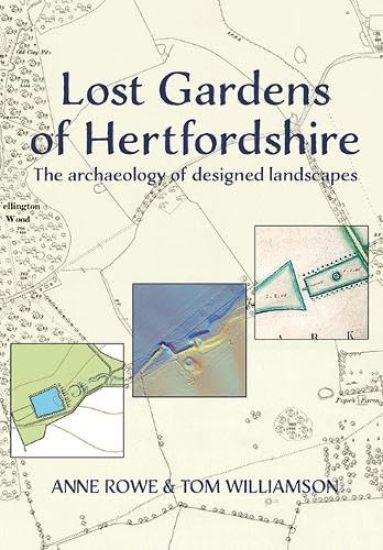
Archaeology can transform our knowledge of the history of gardens and designed landscapes. Terraces, viewing mounts, pools and other features of the great gardens laid out around elite residences at various times in the past can leave impressive earthwork traces; long-lost walls and garden buildings may be revealed by aerial photography or remote sensing techniques such as Lidar. Landscape parks, moreover, often contain the fossilised traces of the working countryside that was swept away when they were created, providing important information about the ‘genius of the place’ which was consulted when they were first designed. Hertfordshire is particularly rich in such remains. Proximity to London ensured, from an early date, an active land market and a rapid turn-over of properties: where estates were amalgamated with neighbours and mansions demolished, traces of their gardens were often preserved under grass or woodland. And the county’s moderately undulating terrain provided opportunities for - in some cases necessitated - large schemes of earth movement to provide level areas for lawns and parterres, or to create terraces. In this fascinating and innovative study - the outcome of several decades of research - systematic field survey and the analysis of aerial photographs and Lidar images are combined with the evidence of early maps and documents to reconstruct the appearance and history of more than twenty of Hertfordshire’s ‘lost gardens’. An archaeological approach also allows us to see garden history in new ways, revealing aspects of design and patterns of development not readily apparent in the kinds of evidence conventionally employed by garden historians. Clearly and accessibly written, and richly illustrated with a wealth of archaeological plans, aerial photographs, archive maps and early engravings and paintings, this book will be essential reading for all those interested in Hertfordshire’s archaeology and garden history, as well as for students of garden and landscape history more generally.
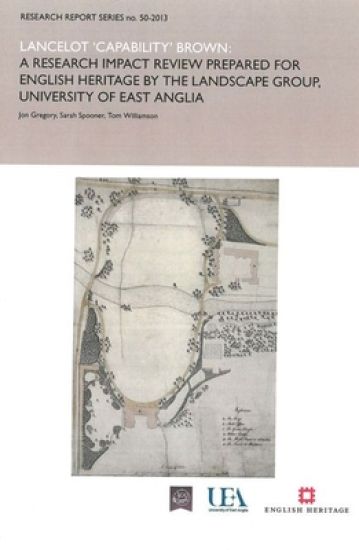
2016 marks the 300th anniversary of Lancelot ‘Capability’ Brown with a national Capability Brown 300 celebration and festival. This report attempts to highlight and understand the work of Brown and his legacy and stimulates a wider discussion about future research needs and opportunities. It contains a bibliographic list of works of Lancelot Brown and a full Gazetteer of Brown’s sites.
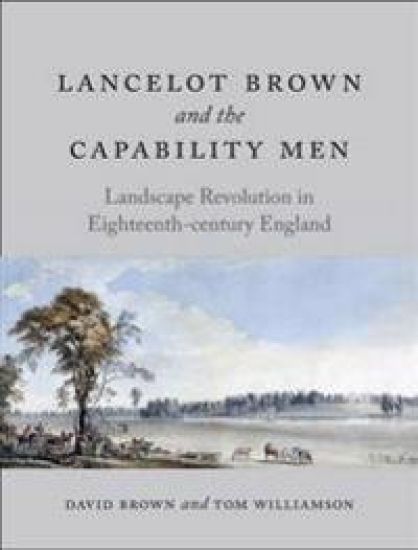
Lancelot 'Capability' Brown is often thought of as an innovative genius who single-handedly pioneered a new, 'naturalistic' style of landscape design. But he was only one of many landscape designers in Georgian England, albeit the most commercially successful. Published to tie in with the tercentenary of Brown's birth, Lancelot Brown and the Capability Men casts important new light on his world-renowned work, his eventful life and the business of landscape design in Georgian England.There is no evidence that Brown actually invented the style with which his name is now so closely associated - it was simply the style of the times. He was the head of a complex business that could supply clients with a whole design 'package', which included new greenhouses, kitchen gardens and land drainage schemes. This innovative book investigates the nature and organization of Brown's business, and draws insightful comparisons with similar providers of 'taste' such as the Adam brothers, Thomas Chippendale and Josiah Wedgwood. Illustrated with over 120 images, this beautiful book shows that Brown's style, like the organization of his business, was the product of a distinctly modern world.
Tom Williamson is a landscape historian and archaeologist whose wide ranging interests have long placed him at the forefront of research into many aspects of the English countryside from the Iron Age to the post-medieval period. His interests include the origins and development of systems of territorial organisation in early England; the history of trees and woodlands; medieval field systems and settlement patterns; and post-medieval estate landscapes and agricultural ‘improvement’. This volume in our new Reflections series re-presents some of his most important chapters published in our Windgather Press imprint, which is devoted to a broad brushstroke approach to landscape studies, and celebrates his contribution to our understanding of the development of the English countryside. Each chapter includes a new introduction by the author.
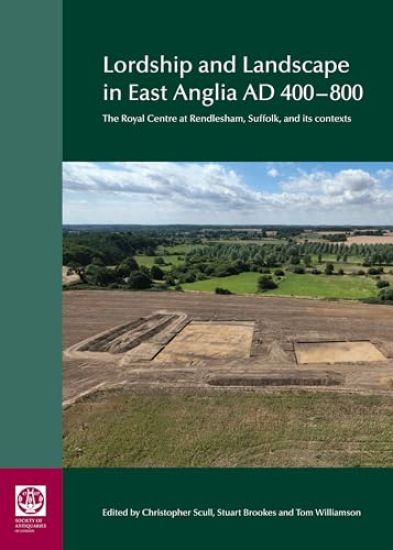
Lost for centuries, the site of the East Anglian royal settlement at Rendlesham is now giving up its secrets. Noted by the Venerable Bede as a place of royal baptism in the seventh century AD, its location has been pinpointed and its archaeology investigated. The settlement flourished from the early fifth century AD, and was at its peak between the late sixth and early eighth centuries – when it was larger and wealthier than any other of the time yet known in England. Rendlesham was then the center of a major region of the East Anglian kingdom: a residence of the East Anglian ruling family – the Wuffingas – and the place from which the kings exercised their rule over the surrounding territory. Members of the royal kindred were buried at the princely burial grounds at Snape and Sutton Hoo, which were part of the same landscape of power. Rendlesham cannot be fully understood in isolation. There are other comparable sites in East Anglia that also appear to have been centers of wealth and power, set in their own discrete territories. Were these originally the residences of independent local rulers who were eventually dominated by the rulers of Rendlesham? Or were the latter dominant from the start, perhaps taking over the Roman civitas of the Iceni? Such questions go to the heart of current debates about the forces that shaped early England. This book tells the story of the initial discovery and subsequent archaeological investigations at Rendlesham, and places the site in its broader context as a focus of power in the early East Anglian kingdom. It considers the approaches in archaeology and landscape history that were used – including systematic metal-detecting – and highlights the extraordinary results that offer new perspectives on early English society and the origins of the English kingdoms.
Commons are an important part of the English landscape. Survivors from a once more extensive network otherwise eroded by the inexorable progress of enclosure, they provide a taste of wildness, crucial habitats for wildlife and valued spaces for recreation. To many people they seem to offer a tangible link with happier, more egalitarian times, when communities controlled the land;or with periods yet more remote, representing fragments of the wilderness of remote prehistory. But commons are shrouded in misunderstanding and myth. They were shaped by local societies that were highly hierarchical in character, and always embedded in inequalities of property and power. Their ecology, moulded by centuries of intensive exploitation – followed in most cases by a long period of dereliction – has only a tangential connection with the truly ‘natural’ habitats of the deep past. And a surprising number of our legally recognised commons are not, in reality, common land at all. This innovative study, which concentrates on the county of Norfolk but ranges widely, is firmly focused on the character of commons as physical environments and places, as landscapes. Using a wide range of documentary, archaeological and ecological evidence, it discusses the development and management of commons from earliest times;explains their morphology, location and distribution;and explores why some examples survived the process of enclosure – and the distinctive traces left by those that did not. Above all, it describes the characteristic physical features of different kinds of common and explains how their ecology has, in innumerable ways, been shaped by history. Highly readable and copiously illustrated, this book will appeal to all with an interest in the English rural landscape, and will be essential reading for those with a particular enthusiasm for common land.
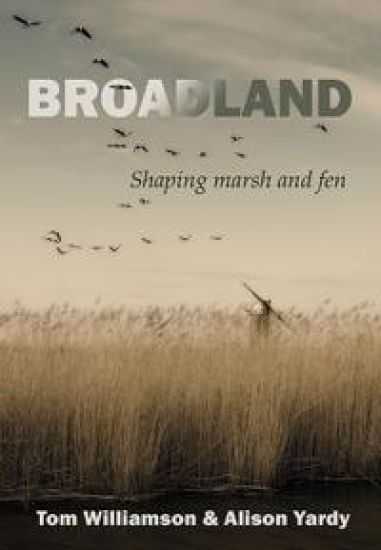
Broadland, or ‘the Broads’, is a unique area of wetlands occupying the floodplains of a network of waterways in eastern Norfolk and north-eastern Suffolk, and which includes around forty shallow freshwater lakes. Since the nineteenth century it has been a major holiday destination, with countless visitors attracted by the seemingly timeless tranquillity of its rivers, fens and marshes. The area also provides a globally important habitat for numerous rare species of flora and fauna. But this is, nevertheless, very much a landscape shaped by its history, and even the ‘broads’ themselves, the shallow lakes which give the area its name, are flooded peat-cuttings dating from the Middle Ages. This is the first new academic study of Broadland for many decades and uses the latest research to explore the making of this distinctive landscape. With contributions from a team of prominent East Anglian local historians, archaeologists and natural scientists, Tom Williamson and Alison Yardy explain how the marshes were reclaimed and the fens were managed, explore the development of drainage technology and discuss the impact of commerce, industry and tourism. The landscape of the adjacent uplands is also considered, in chapters examining subjects as diverse as vernacular architecture and monastic foundations, prehistoric archaeology and medieval parish churches. Broadland’s environments everywhere bear the marks of past human exploitation; its landscapes have always been changing. And all this has profound philosophical implications for the practice of conservation in what is now a National Park. Highly readable and copiously illustrated, this authoritative account will be essential reading for all with an interest in the history and ecology of Broadland. But it will also appeal to those who simply want to know more about the forces that have shaped the character of an iconic British landscape.
This is an inter-disciplinary study of pathways to regional rulership and territorial lordship in early post-Roman Britain which takes as its starting point the East Anglian royal centre at Rendlesham and its contexts. This book examines the origins and development of the East Anglian kingdom in the fifth to eighth centuries AD through the lens of the elite settlement complex at Rendlesham, Suffolk using an interdisciplinary approach involving field survey, landscape history, excavation and metal-detecting finds. It also examines the wider regional context and proposes a new narrative of kingdom formation.
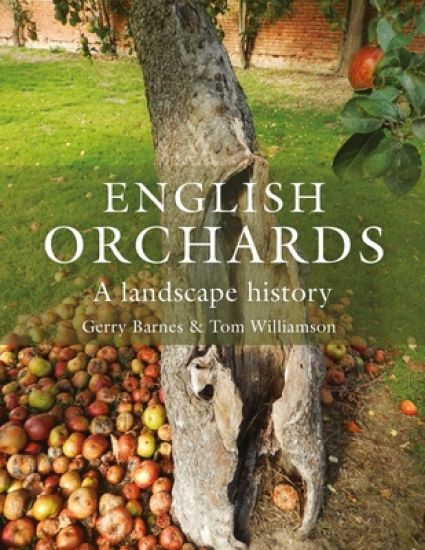
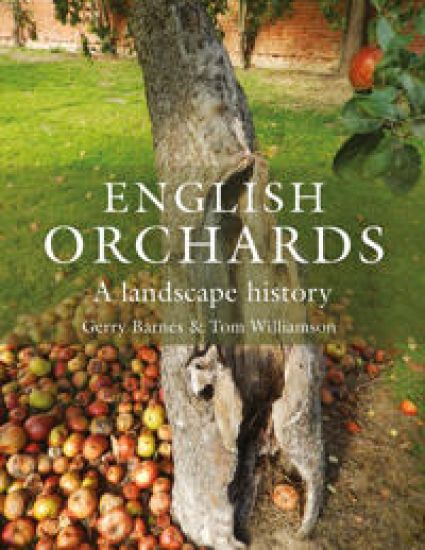
Old orchards have an irresistible appeal. Their ancient trees and obscure fruit varieties seem to provide a direct link with the lost rural world of our ancestors, a time when the pace of life was slower and people had a strong and intimate connection with their local environment. They are also of critical importance for sustaining biodiversity, providing habitats, in particular, for a range of rare invertebrates. Not surprisingly, orchards and the fruit they contain have attracted an increasing amount of attention over the last few decades, from both enthusiastic bands of amateurs and official conservation bodies. But much of what has been written about them is historically vague, romanticised and nostalgic. Orchards have become a symbol of unspoilt, picturesque rural England. This book attempts, for the first time, to provide a comprehensive review of the development of orchards in England from the Middle Ages to the present day. It describes the various different kinds of orchard and explains how, and when, they appeared in the landscape - and why they have disappeared, at a catastrophic rate, over the last six decades. Chapters discuss the contrasting histories of fruit growing in different regions of England, the complex story of 'traditional' fruit varieties and the role of orchards in wildlife conservation. In addition, a chapter on researching orchards provides a practical guide for those wishing to investigate the history and archaeology of particular examples.
Have probes of extraterrestrial origin conducted surveillance missions in Earth's atmosphere? James McDonald, co-founder of the Institute of Atmospheric Physics at the University of Arizona, one of the twentieth century's leading atmospheric physicists, presented strong evidence for this hypothesis at the annual meeting of the American Association for the Advancement of Science in December 1969. Yet, remarkably, McDonald's important conjecture has all but disappeared from the purview of scientists today. That's likely to soon change, former Science Museum (London) curator Tom Willamson argues in this book. The reason is simple: a large chunk of science supporting McDonald's idea, much of it carried out in the former Soviet Union and later Russia and Ukraine during the 1980s and 1990s, had gone missing. Now, thanks to the wonders of Google Translate, Williamson has been able to put together in this book a provisional, alien-free (and UFOlogy-free) account of that missing science.
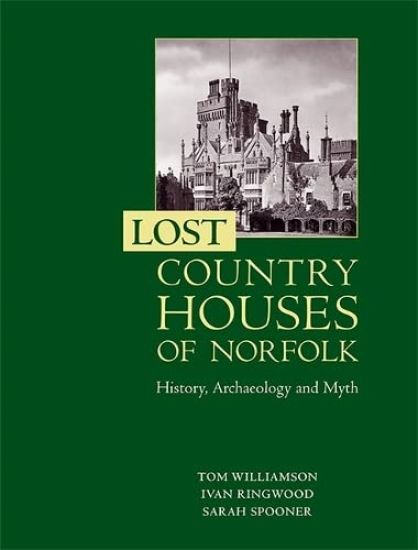
Norfolk is a county sadly rich in "lost" country houses; this account and gazetteer offer a comprehensive account of them. Winner of the general non-fiction category in the East Anglian Book Awards 2016. The country houses lost from the landscape since the late nineteenth century exercise a peculiar grip on the English imagination, seeming to symbolise the passing of a world of taste and elegance, of stability and deference: a world destroyed by modernity. This important new book argues that most previous studies of the subject have been characterised by nostalgia and vagueness, and by a tendency to exaggerate the scale of the destruction and simplify its causes. It presents a balanced, systematic analysis of country house losses in Norfolk, discussing the scale and chronology of destruction. The authors argue that the loss of great houses was not an entirely new development of the twentieth century, they explain the varied reasons why houses were abandoned and destroyed, and they explore the archaeological traces which these places, their gardens and parks, have left in the modern landscape. Their arguments are illuminated by a full and lavishly-illustrated gazetteer. This book, the results of many years of fieldwork and documentary research, will be essential reading for all those interested in the history of the country house, in the development of the post-medieval landscape, and in the archaeology and history of the county of Norfolk. Tom Williamson is Professor of Landscape History at the University of East Anglia; Ivan Ringwood is an independent historical researcher; Sarah Spooner is Lecturer in Landscape History at the University of East Anglia.
Old orchards have an irresistible appeal. Their ancient trees and obscure fruit varieties seem to provide a direct link with the lost rural world of our ancestors, a time when the pace of life was slower and people had a strong and intimate connection with their local environment. They are also of critical importance for sustaining biodiversity, providing habitats, in particular, for a range of rare invertebrates. Not surprisingly, orchards and the fruit they contain have attracted an increasing amount of attention over the last few decades, from both enthusiastic bands of amateurs and official conservation bodies. But much of what has been written about them is historically vague, romanticised and nostalgic. Orchards have become a symbol of unspoilt, picturesque rural England. This book attempts, for the first time, to provide a comprehensive review of the development of orchards in England from the Middle Ages to the present day. It describes the various different kinds of orchard and explains how, and when, they appeared in the landscape – and why they have disappeared, at a catastrophic rate, over the last six decades. Chapters discuss the contrasting histories of fruit growing in different regions of England, the complex story of ‘traditional’ fruit varieties and the role of orchards in wildlife conservation. In addition, a chapter on researching orchards provides a practical guide for those wishing to investigate the history and archaeology of particular examples.
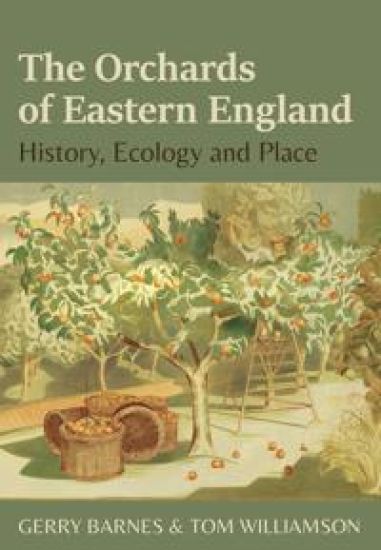
Although the history of orchards and fruit varieties is of great popular interest, there have been few academic treatments of the subject. This book presents results from a three-year project, 'Orchards East', investigating the history and ecology of orchards in the east of England. Together, the eastern counties of Hertfordshire, Essex, Cambridgeshire and Huntingdonshire, Bedfordshire, Norfolk and Suffolk have a tradition of fruit cultivation comparable in scale to that of the better-known west of England. Drawing on far-reaching archival research, an extensive survey of surviving orchards and biodiversity surveys, the authors tell the fascinating story of orchards in the east since the late Middle Ages. Orchards were ubiquitous features of the medieval and early modern landscape. Planted for the most part for practical reasons, they were also appreciated for their aesthetic qualities. By the seventeenth century some districts had begun to specialise in fruit production - most notably west Hertfordshire and the Fens around Wisbech. But it was only in the 'orchard century', beginning in the 1850s, that commercial production really took off, fuelled by the growth of large urban markets and new transport systems that could take the fruit to them with relative ease. By the 1960s orchards were extensive in many districts but, since then, they have largely disappeared, with significant impacts on landscape character and biodiversity. For well over a century now, orchards have been romanticised as nostalgic elements of a timeless yet disappearing rural world. Even before that, they were embedded in myths of lost Edens, or golden ages of effortless plenty. A key aim of this book is to challenge some of these myths by grounding orchards within a wider range of historical and environmental contexts. Orchards are not timeless, and in some ways our relationship with orchards is a classic example of the 'invention of tradition'. What do our attitudes to this aspect of our heritage tell us about our wider engagement with the past, with nature, and with place?
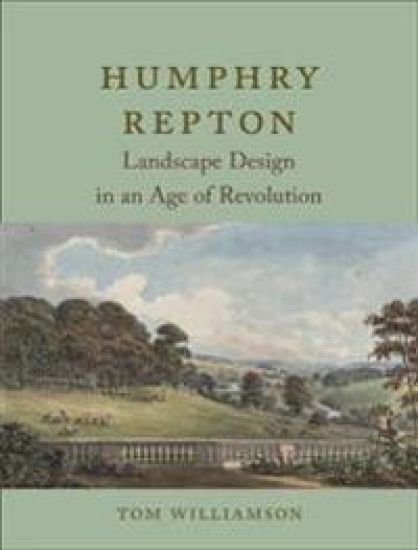
Humphry Repton is one of England’s most interesting and prolific garden and landscape designers. Renowned for his innovative design proposals and distinctive ‘before and after’ images, captured in his famous ‘Red Books’, Repton’s astonishing career represents the link between the simple parklands of his predecessor Capability Brown and the more elaborate, structured and formal landscapes of the Victorian age. This lavishly illustrated book, based on a wealth of new research, reinterprets Repton’s life, working methods and designs, and why they proved so popular in a rapidly changing world.
Ancient woodland' is a term widely used in England for long-established semi-natural woods, shaped by centuries of traditional management. As an official designation, it describes woods which have existed since the early seventeenth century, and which today contain a distinctive range of plants which find it hard to colonize more recently wooded ground. Such woods are often assumed to provide a direct link with the natural vegetation of England, as this existed before the virgin forests were fragmented by the arrival of farming. This groundbreaking study questions many of these assumptions. Drawing on more than a decade of research in Norfolk, the authors emphasize the essentially unnatural character of ancient woods. This important volume will be essential reading for all those interested in the history of the English countryside and environmental history.
The origins of England's regional cultures are here shown to be strongly influenced by the natural environment and geographical features. The Anglo-Saxon period was crucial in the development of England's character: its language, and much of its landscape and culture, were forged in the period between the fifth and the eleventh centuries. Historians and archaeologists have long been fascinated by its regional variations, by the way in which different parts of the country displayed marked differences in social structures, settlement patterns, and field systems. In this controversial and wide-ranging study, the author argues that such differences were largely a consequence of environmental factors: of the influence of climate, soils and hydrology, and of the patterns of contact and communication engendered by natural topography. He also suggests that such environmental influences have been neglected over recent decades by generations of scholars who are embedded in an urban culture and largely divorced from the natural world; and that an appreciation of the fundamental role of physical geography in shaping human affairs can throw much new light on a number of important debates about early medieval society. The book will be essential reading for all those interestedin the character of the Anglo-Saxon and Scandinavian settlements, in early medieval social and territorial organization, and in the origins of the England's medieval landscapes. Tom Williamson is Professor of LandscapeHistory, University of East Anglia; he has written widely on landscape archaeology, agricultural history, and the history of landscape design.
Choice Outstanding Academic Title 2014While few detailed surveys of fauna or flora exist in England from the period before the nineteenth century, it is possible to combine the evidence of historical sources (ranging from game books, diaries, churchwardens' accounts and even folk songs) and our wider knowledge of past land use and landscape, with contemporary analyses made by modern natural scientists, in order to model the situation at various times and places in the more remote past. This timely volume encompasses both rural and urban environments from 1650 to the mid-twentieth century, drawing on a wide variety of social, historical and ecological sources. It examines the impact of social and economic organisation on the English landscape, biodiversity, the agricultural revolution, landed estates, the coming of large-scale industry and the growth of towns and suburbs. It also develops an original perspective on the complexity and ambiguity of man/animal relationships in this post-medieval period.
Champion: The pattern of nucleated settlements and extensive open fields most commonly found within the landscape of the Midlands. This book presents a radical reinterpretation of the origins of villages and open fields, and their development in the late medieval and post-medieval periods, in the Midland, ‘champion’ areas of England. Most landscape historians believe that villages were created in the middle or later Saxon periods through the ‘nucleation’ of a formerly dispersed pattern of settlement, that many villages were initially laid out as planned, regular settlements and that open fields probably came into existence at the same time. Re-examination and mapping of the data suggests ‘nucleation’ is a myth, ‘village planning’ an illusion and open fields were created, at least in their classic, ‘regular’ forms, only in the eleventh or twelfth centuries.