
Kirjailija
Umberto Eco
Kirjat ja teokset yhdessä paikassa: 161 kirjaa, julkaisuja vuosilta 1975-2026, suosituimpien joukossa Sylvie. Vertaile teosten hintoja ja tarkista saatavuus suomalaisista kirjakaupoista.
161 kirjaa
Kirjojen julkaisuhaarukka 1975-2026.
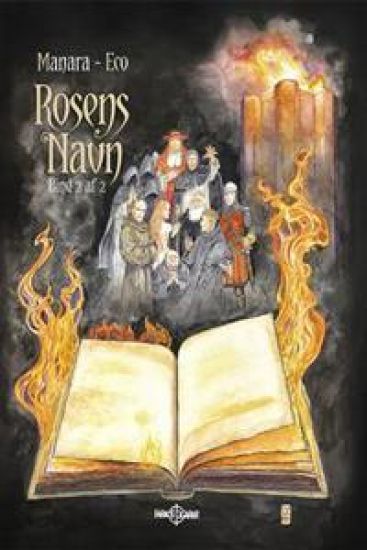
Milo Manara fortolker på smukkeske grafiske vis historien om den engelske franciskanermunk William af Baskerville og hans lærling Adsos bestræbelser på at løse en mordgåde i et italiensk kloster i 1327, samtidig med at han favner romanforlæggets underliggende intellektuelle tematikker. De seneste par år har den italienske forfatter og filosof Umberto Ecos gennembrudsroman befundet sig på landsmanden og serieskaberen Milo Manaras tegnebord, hvor han har arbejdet på en grafisk fortolkning i to bind. Tegneserieudgaven af ”Rosens navn” er oversat af Nina Gross, som oprindeligt også oversatte Umberto Ecos roman til dansk.
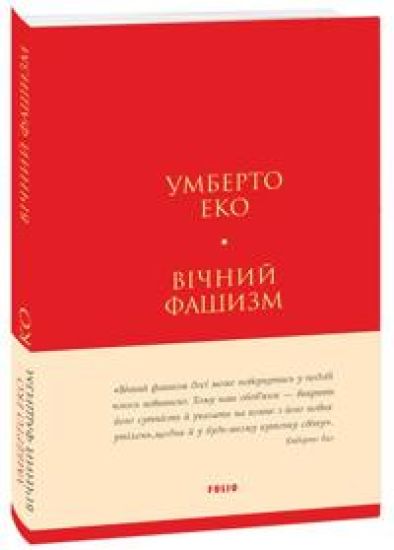
Umberto Eko (1932-2016) - viznachnij italijskij pismennik, filosof, istorik-medijevist i fakhivets iz semiotiki.V eseji "Vichnij fashizm" (1995 r.), vazhlivomu tvori v dorobku U. Eko, pismennik i mislitel viokremljuje ta analizuje 14 oznak, jaki, na jogo dumku, kharakterni dlja fashizmu, zokrema v jogo novikh formakh i projavakh. TSi oznaki inodi vikoristovujut dlja opisu suchasnogo rosijskogo politichnogo rezhimu.
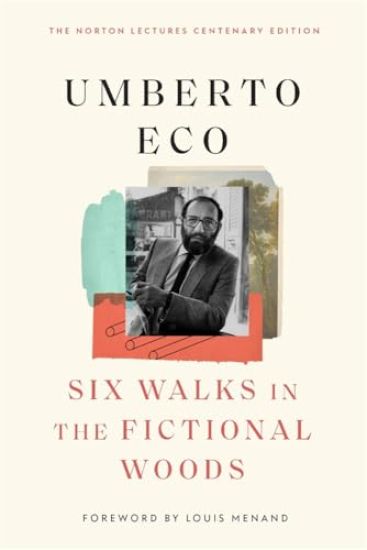
“Erudite, wide-ranging, and slyly humorous.” —The AtlanticOne of the great novelists and public intellectuals of our time gives a master class on the philosophy of fiction.Umberto Eco was fond of pointing out that all writing is narrative. He published his famed debut novel The Name of the Rose when he was forty-eight years old, yet he believed that everything he had written to that point—from treatises on semiotics to essays on mass culture—took the form of a story. To Eco, scholarship, much like fiction, was shaped by narrative. It was the stuff of life itself.Six Walks in the Fictional Woods, a collection of essays based on Eco’s 1992–1993 Norton Lectures at Harvard, illuminates fiction’s porous boundaries—in particular, the myriad ways that literary works conscript readers’ experiences and expectations. Fiction, says Eco, can offer metaphysical comfort by appealing to our desire for a smaller, more legible world, one that gives a definitive answer to the question of “whodunnit?” But it also makes demands of us, presupposing a model reader who possesses the cultural knowledge necessary to interpret the text, as well as a willingness to follow the never-quite-specified rules of the literary game.Whether he is dissecting grammatical ambiguities in Gérard de Nerval’s nineteenth-century romantic masterpiece Sylvie, studying the rhythms of Ian Fleming’s James Bond novels, or tracing the web of fraud and misattribution that produced the antisemitic conspiracy theory of The Protocols of the Elders of Zion, this is Eco at his very best: intellectually omnivorous, endlessly fascinated by hoaxes, and always an adept navigator of the narrative forests that surround us.
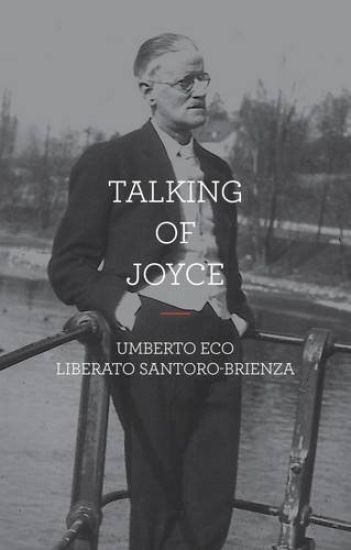
This new and expanded edition of Talking of Joyce focuses on James Joyce's cultural ancestry - aesthetic and linguistic, in particular - and his Italian influences and connections. Originally published in 1998, to great success, this new and revised edition brings original scholarship to contemporary readers and contains an insightful added essay on Joyce's aesthetic musings. In his foreword, the internationally renowned Coleridge scholar J. C. C. Mays praises the original essays by Eco and Santoro-Brienza for being both highly respectful of Joyce and for their friendly familiarity with him. Mays also notes that 'These commentaries, by Italians in English, of an author of books in English who preferred to speak Italian, are a rich and illuminating conjunction. Read these lectures for the way they are, for they brings together two worlds. Their eminent authors do not stand on dignity: they communicate directly what is important. They have different things to say, but each celebrates values which Joyce held most dear.' The addition of Santoro-Brienza's new essay also gives readers a fresh insight into Eco's unique contribution to our understanding of Joyce, Aquinas and aesthetics, and was written in honour of Eco's eightieth birthday. This volume brings to light fascinating aspects of Ireland's most famous literary figure and places him in a wider cultural context. From two renowned scholars, passionately interested in the Irish revolutionary writer, Talking of Joyce is a welcome addition to our reckoning with Joyce's legacy and is a fascinating contribution to Joyce studies.

Umberto Eko - italjanskij pisatel i filosof, avtor romanov "Imja rozy", "Majatnik Fuko" i dr.Zhan-Klod Karer - frantsuzskij stsenarist (avtor stsenariev k filmam "Dnevnaja krasavitsa", "Skromnoe obajanie burzhuazii", "Zhestjanoj baraban" i dr.), pisatel, akter.Pomimo druzhby, ikh obedinjaet strastnaja ljubov k knige. "Kniga - kak lozhka, molotok, koleso ili nozhnitsy, - govorit Umberto Eko. - Posle togo kak oni byli izobreteny, nichego luchshego uzhe ne pridumaesh"."Ne nadejtes izbavitsja ot knig!" - eto zapis besedy dvukh eruditov o sudbe knigi v tsifrovuju epokhu, a takzhe o mnogikh drugikh, ne menee zanimatelnykh predmetakh:- Pravda li, chto pervye fleshki pojavilis v XVIII veke?- Pochemu odni proizvedenija iskusstva dozhivajut do nashikh dnej, a drugie bessledno ischezajut v labirintakh proshlogo?- Skolko stoit samaja dorogaja kniga v mire?- Kakaja polza byvaet ot gluposti?- Pravda li, chto u bibliotek suschestvuet svoj osobennyj ad, i kak v nego popast?"Ne nadejtes izbavitsja ot knig!" - eto prekrasnyj podarok dlja ljudej, vljublennykh v knigi. Ved eta ljubov, kak izvestno, vsegda vzaimna...
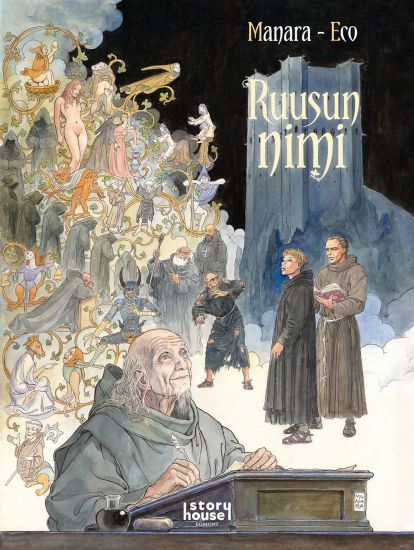
Milo Manaran upea tulkinta Umberto Econ klassikosta. William Baskerville tutkii munkkiluostarissa tapahtunutta murhaa, ja mysteeri sotkee hänet oppipoikineen inkvisition toimintaan. Löytyykö vastaus salaisesta kirjastosta?
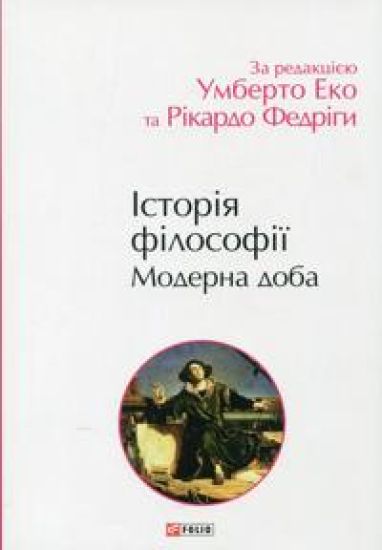
Na mezhi XV-XVI stolit rozpochalasja nova era v istoriji filosofiji - doba onovlennja, u jakij sformuvalasja vira v te, scho svitovij porjadok ne je nezminnim i scho ljudina maje zminiti jogo. Gumanizm buv ne rizkim perekhodom vid Serednovichchja do Vidrodzhennja, ne novitnoju paradigmoju, a radshe novoju kontseptsijeju vidnosin mizh ljudinoju, Bogom i svitom, u jakij ljudina stavala aktivnim tsentrom, dijovoju osoboju ta miroju vsikh rechej. XVII stolittja - period bezladdja ta nestabilnosti, zanepokojennja ta dezorijentatsiji, naukovikh rozvidok i velikikh utopij - privelo do rozkvitu jevropejskoji kulturi. I vzhe u XVIII stolitti svitlo rozumu ta kritichnogo mislennja pronikaje na kozhen riven naukovikh doslidzhen.Nashe vidannja proponuje chitacham zdijsniti tsikavu j nezvichajnu podorozh istorijeju filosofskoji dumki vid gumanizmu do Kanta. U nij svitogljadni ideji pojednano z javischami materialnoji kulturi, formi mirkuvan - iz zhittjam suspilstva, filosofiju - z istorijeju, mistetstvom i naukoju.Misliteli, jaki suprovodzhuvatimut chitachiv na tsomu shljakhu, je stovpami filosofskoji dumki: vid Marsilio Fichino i Piko della Mirandoli do Dzhordano Bruno ta Frensisa Bekona, vid Rene Dekarta i Dzhona Loka do Barukha Spinozi ta Gotfrida Lejbnitsa, vid Devida Juma do Immanujila Kanta.PerekladachOlena Smintina, Oleksandr Judin, Ju. Grigorenko, Dar'ja Kondakova, M. Nagajev, A. Streminska
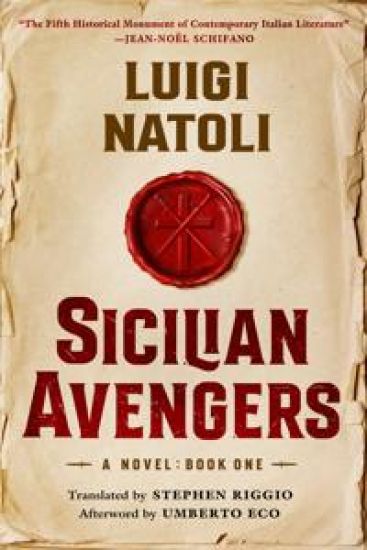
A thrilling Sicilian saga about the legendary secret sect purported to be forerunners of the Mafia, translated into English for the first time.Emerging from the dark streets and subterranean caves of Palermo, the Beati Paoli, masked and hooded, mete out their own form of justice to counter the unfettered power and privilege wielded by the aristocracy. For the voiceless, weak, and oppressed, the Beati Paoli are defenders and heroes. Reminiscent of a Dumas novel, Sicilian Avengers is a vibrant, atmospheric fresco of early eighteenth-century Palermo. Onto the stage of the ancient city, Blasco da Castiglione, a bold, brash, orphan adventurer, arrives on a quest to discover his origins and seek his destiny. But this fearless, swashbuckling D’Artagnan-esque hero unwittingly gets caught up in a devious and murderous succession plot involving a powerful noble family. When the Beati Paoli hear about this plot to usurp a rightful inheritance, they spring into action. Their shadowy machinations entangle the charismatic Blasco, who crosses paths with a cast of characters that test his loyalty and resolve in the pursuit of his true identity. The historical accuracy of the novel is complemented by the most meticulous description of Sicily’s capital city ever written. Action-packed and laced with intrigue and chivalrous duels, Sicilian Avengers is a tale of love and hatred, friendship and betrayal, suffering and retribution. As French critic Jean Noël Schifano said, Natoli's novel is “the fifth historical monument of contemporary Italian literature.” Book 1 of 2 that includes an afterword by Umberto Eco.
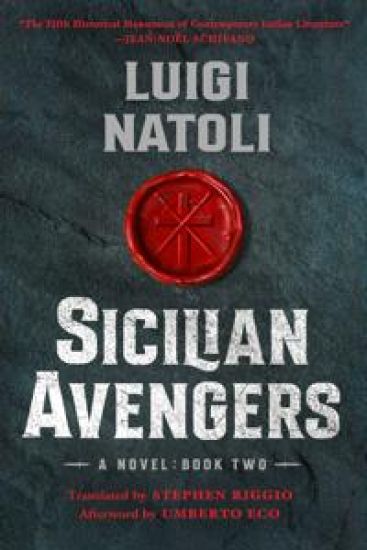
The Beati Paoli’s unrelenting campaign to restore justice is compromised by an act of betrayal and a plot that threatens its very existence. Set against the backdrop of the island’s increasing disillusionment with its new rulers from Savoy and a yearning for the return of the formerly detested Spanish monarchy, book two of Sicilian Avengers continues as the future of the House of Albamonte hangs in the balance and the survival of the Beati Paoli is threatened. Shifting allegiances, brutal reprisals, tortures, and kidnappings occur as the Beati Paoli’s efforts to restore a usurped patrimony to its rightful owner is compromised by an act of betrayal. As they race to complete their mission, they must also thwart the diabolical plans of the villainous Don Raimondo and the evil Matteo Lo Vecchio, and deal with the wavering loyalty of one of the sect’s newest recruits. Blasco de Castiglione finally discovers his true identity, which tests his sense of justice, honor, and fidelity to the people he knows, trusts, and loves: Duke Don Raimondo, whom he has pledged to protect; the beautiful and alluring Donna Gabriella, who has captured his heart; his friend and protector, the enigmatic Coriolano della Floresta; and the young and naïve Violante, whose love is within reach yet out of bounds. Translated into English for the first time by Stephen Riggio, Luigi Natoli’s saga brings early eighteenth-century Palermo into vivid relief, where Sicilian aristocrats enjoy their soirees and luxuries while the poor and destitute scrounge for food in the dark and filthy streets. Nowhere is the contrast more shocking and wrenching than in the scrupulous depiction of the auto-da-fé. Readers will become immersed in a Sicily that is long gone but whose glorious and troubled past echoes in these pages. As French critic Jean Noël Schifano said, Natoli's novel is “the fifth historical monument of contemporary Italian literature.” Book 2 of 2 includes an afterword by Umberto Eco.
V rossijskoj traditsii natsizm zovetsja "fashizmom". Umberto Eko, kulturolog, publitsist i filosof, ne osparivaet terminologicheskij raznoboj. Naoborot, v kljuchevom esse sbornika on vydeljaet obschie printsipy dlja raznykh totalitarnykh rezhimov i pomogaet zanovo osmyslit korni togo, chto nazyvaet "vechnym fashizmom" v ego istoricheskikh i, uvy, sovremennykh projavlenijakh. Eta podborka esse daet povod k razmyshlenijam o nenavisti, o vojne, o religii - razmyshlenijam, obedinjajuschim tekh, komu mir nebezrazlichen, tekh, kto soznaet, chto pobeda razuma nad regressom nikogda ne okonchatelna i chto vnutrennjaja rabota dlja kazhdogo iz nas vsegda objazatelna. Moral li, etika, sovest li, nravstvennost, grazhdanstvennost - razlichie opjat zhe tolko v terminakh. Sut zhe odna: uroki istorii polezny, lish esli ljudi ne lenjatsja obdumyvat ikh. A umstvennyj trud bok o bok s Eko obychno ne v tjagost, beseda s nim - i radost, i razvlechenie.

Umberto Eko izvesten miru ne tolko kak klassik sovremennoj literatury, no i kak sereznyj uchenyj - semiolog, medievist, kulturolog i massmediolog. Roman "Nulevoj nomer" stroitsja na akademicheskom fundamente - vsestoronnem izuchenii raboty SMI.V Milane zapuskaetsja pilotnyj proekt gazety, kotoraja dolzhna stat ocherednym instrumentom politicheskogo vlijanija dlja sponsirujuschego ee mediamagnata. No redaktsija, sostavlennaja iz khronicheskikh neudachnikov, zanimaetsja ne rabotoj, a mifotvorchestvom. Odin iz sotrudnikov s maniakalnoj oderzhimostju sobiraet dokazatelnyj material, podtverzhdajuschij ego sobstvennuju versiju o tom, chto sluchilos s Benito Mussolini v 1945 godu i kak spetssluzhby sojuznikov upravljali politicheskoj zhiznju Evropy posle vojny. Vokrug rassledovanija razygryvaetsja naprjazhennaja drama ljubvi i smerti, schastja i strakha, realnosti i vymysla.
Dejstvie romana "Prazhskoe kladbische" razvorachivaetsja pochti tselikom vo Frantsii, no posledstvija etoj intrigi tragicheski porazjat potom tselyj mir. V tsentre sobytij dovolno skoro okazhetsja Rossija, gde v 1905 godu byla vpervye napechatana znamenitaja literaturnaja poddelka "Protokoly sionskikh mudretsov". V romane dokumentalno rasskazano, chimi usilijami eta poddelka byla sozdana. Glavnyj geroj ochen gadok, a vse, chto proiskhodit s nim, i uzhasno, i interesno. Avtor, stroja sjuzhet v dukhe Aleksandra Djuma, protaskivaet zataivshego dykhanie chitatelja po zlovonnym parizhskim kloakam i po banditskim pritonam, verbuet geroja v garibaldijskoe vojsko, zastavljaet ego shpionit na vse razvedki i kontrrazvedki mira, v tom chisle i na russkuju okhranku, ukroschat isterichek iz kliniki doktora Sharko, raspivat pivo s Zigmundom Frejdom, forsit bok o bok so Svobodoj na barrikadakh i dazhe uchastvovat v sataninskoj messe. Odnovremenno, kak vsegda, Umberto Eko vydaet chitatelju v obolochke prikljuchencheskogo romana ogromnyj zarjad znanij i idej.

Entsiklopedichne vidannja "Istorija filosofiji" za redaktsijeju Umberto Eko ta Rikardo Fedrigi rozpovidaje pro rozvitok filosofskoji dumki vid Antichnosti do Novitnogo chasu i skladajetsja z trokh tomiv.1-j tom - "Istorija filosofiji. Antichnist ta Serednovichchja".Koli u pervisnoji ljudini z'javilas mozhlivist dumati ne tilki pro vizhivannja, vona zamislilasja pro te, dlja chogo vona prijshla v tsej svit i khto stvoriv use, scho jiji otochuje, - same todi, mozhna stverdzhuvati, i narodilasja filosofija jak taka.Za pervinnoju etimologijeju termin "filosofija" oznachaje "ljubov do znannja". Ljudina zavzhdi khotila znati: chi je v tsomu sviti spravedlivist? Chomu potribno strazhdati? Chi isnuje zhittja pislja smerti? Scho take dusha i de vona perebuvaje? Scho take istina? Mozhna prodovzhuvati tsej perelik bezkinechno: use tse filosofski pitannja, i ne potribno buti profesorom filosofiji, schob jikh staviti. Voni tsikavljat kozhnogo z nas, bo filosofija peredusim dopomagaje nam prizvichajitisja do abstraktnogo mislennja.Istorija filosofiji rozpochinajetsja z grekiv. Same jikhnja dumka utvorila prostir mislennja zakhidnogo svitu, j lishe zrozumivshi, jak rozmirkovuvali greki, mi zmozhemo zbagnuti, v jakij sposib rozvivalosja mislennja protjagom nastupnikh majzhe trokh tisjacholit.Nashe vidannja znajomit chitacha z rozvitkom filosofiji vid Antichnosti do Serednovichchja, visvitljujuchi tisnij zv'jazok filosofskoji dumki Sokrata, Platona, Aristotelja z formuvannjam pogljadiv takikh predstavnikiv serednovichnoji filosofiji, jak Albert Velikij, Toma Akvinskij, Rodzher Bekon ta inshi.PerekladachOleksandr Judin, Julija Grigorenko, Dar'ja Kondakova, Olena Smintina

Kak i v "Imeni rozy", Srednie veka i sovremennost zdes pereklikajutsja i vzaimootrazhajutsja. Kak i "Imja rozy", "Baudolino" - istoricheskij roman s elementami detektiva. Zdes sjuzhet voskhodit k "Shesti Napoleonam" Konan-Dojla, dobavleny mificheskie istorii Volkhvotsarej, Turinskoj plaschanitsy, poiskov Graalja, geroi stranstvujut po vymyshlennym tsarstvam i bjutsja s armijami fantasticheskikh suschestv, a zavershaetsja vse trillernoj dvojnoj razvjazkoj. Zhurnalisty napisali srazu: Baudolino - eto avtoportret Eko. Neutomimyj rasskazchik, knizhnik, znamenitost i grazhdanin mira i v to zhe vremja znatok, a vremenami - uchastnik prostonarodnogo, plotojadnogo, polukrestjanskogo byta italjanskoj provintsii, Eko i ego geroj - plot ot ploti rodnogo gorodka Aleksandrija v Pemonte. Imenno eta Aleksandrija, gorod, rozhdajuschijsja na glazakh chitatelja, v romane Eko izobrazhen, pri vsej svoej syrovatoj prostote, kak pochti svjaschennoe mesto, judol zemnogo raja, pristanische Graalja. Perevodchik: Kostjukovich Elena

Umberto Eko (1932-2016) - samyj znamenityj italjanskij pisatel nashego vremeni, avtor mirovykh bestsellerov "Imja rozy" i "Majatnik Fuko", istorik kultury, spetsialist po semiotike, lingvist, laureat krupnejshikh premij, chi knigi perevedeny na sorok jazykov."O televidenii" - polnyj sbornik statej i esse, publikovavshikhsja v periodicheskikh i knizhnykh izdanijakh v period s 1956 po 2015 g. i posvjaschennykh televideniju - ego znakovoj sisteme i estetike, formam kommunikatsii i ispolzuemym tekhnologijam, o "strategijakh ubezhdenija" i o sposobakh kriticheskoj zaschity ot nikh.Proslezhivaja put televidenija ot pervykh prjamykh efirov 1950-kh do realiti-shou 2010-kh, avtor razmyshljaet o ego roli v formirovanii kulturnoj i sotsialnoj sredy, o tom, kakim ono moglo by byt, esli by svoju moschnuju energiju obratilo na sluzhenie obschestvu.
Illjustrirovannyj roman - soblaznitelnaja dlja chitatelja novaja forma sovremennoj literatury, odnako Umberto Eko v dejstvitelnosti "pereizobretaet" starye ljubimye knigi. Knigi detstva vsegda polny kartinok, i kartinki eti volshebnym plamenem ozarjajut detskuju fantaziju. Imenno eto i nuzhno geroju, bukinistu Dzhambattiste Bodoni iz Milana, chtoby vernutsja v sobstvennoe "ja" posle tjazheloj bolezni i utraty pamjati. Zhurnaly, komiksy, klassnye sochinenija, rechovki, reklamki, plastinki, radioperedachi. Na cherdake, kak v skazochn