Kirjojen hintavertailu. Mukana 12 290 406 kirjaa ja 12 kauppaa.
Kirjailija
Upton Sinclair
Kirjat ja teokset yhdessä paikassa: 576 kirjaa, julkaisuja vuosilta 1905-2026, suosituimpien joukossa Sylvia. Vertaile teosten hintoja ja tarkista saatavuus suomalaisista kirjakaupoista.
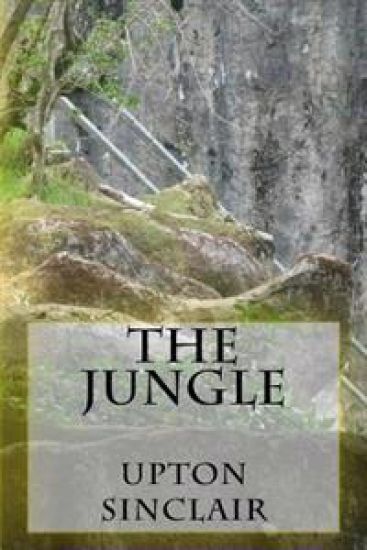
Hold on to your hats for a ride through the injustices of 1900s America courtesy of Upton Sinclair, (1878 - 1968), an American author and commentator who wrote nearly 100 books. Not only did he write amazing stories and expose dreadful truths, he changed America for good, the public uproar resulting from his books caused Laws to be passed and greater justice was the outcome. In 'The Jungle' we meet a young Lithuanian immigrant who arrives in America, hoping to find the land of opportunity. He
"They use everything about the hog except the squeal." --- Upton Sinclair, The Jungle The Jungle is a 1906 novel written by author and socialist journalist Upton Sinclair. It was written about the corruption of the American meatpacking industry during the early 20th century. The novel depicts in harsh tones the poverty, absence of social programs, unpleasant living and working conditions, and hopelessness prevalent among the "have-nots", which is contrasted with the deeply rooted corruption on the part of the "haves".
100%: The Story Of A Patriot tells the story of Peter Gudge, a poor young man who becomes embroiled in industrial spying and sabotage. Said to be based upon a real case of a bombing in San Francisco, Peter's tale is compelling reading. Originally published by the author himself, this is the story of a young man's descent into fear and corruption, and eventual happy redemption. excerpt: "Now and then it occurs to one to reflect upon what slender threads of accident depend the most important circumstances of his life; to look back and shudder, realizing how close to the edge of nothingness his being has come. A young man is walking down the street, quite casually, with an empty mind and no set purpose; he comes to a crossing, and for no reason that he could tell he takes the right hand turn instead of the left; and so it happens that he encounters a blue-eyed girl, who sets his heart to beating. He meets the girl, marries her-and she became your mother. But now, suppose the young man had taken the left hand turn instead of the right, and had never met the blue-eyed girl; where would you be now, and what would have become of those qualities of mind which you consider of importance to the world, and those grave affairs of business to which your time is devoted?"
The Profits of Religion: An Essay in Economic Interpretation is a nonfiction book, first published in 1917, by the American novelist and muck-raking journalist Upton Sinclair. It is a snapshot of the religious movements in the U.S. before its entry into World War I. The book is the first of the "Dead Hand" series: six books Sinclair wrote on American institutions. The series also includes The Brass Check (journalism), The Goose-step (higher education), The Goslings (elementary and high school education), Mammonart (art) and Money Writes (literature). The term "Dead Hand" ironically refers to Adam Smith's concept that allowing an "invisible hand" of individual self-interest to shape economic relations provides the best result for society as a whole. In this book, Sinclair attacks institutionalized religion as a "source of income to parasites, and the natural ally of every form of oppression and exploitation."