Kirjojen hintavertailu. Mukana 12 176 047 kirjaa ja 12 kauppaa.

Kirjailija

Upton Sinclair

Kirjat ja teokset yhdessä paikassa: 574 kirjaa, julkaisuja vuosilta 1905-2026, suosituimpien joukossa Sylvia. Vertaile teosten hintoja ja tarkista saatavuus suomalaisista kirjakaupoista.

574 kirjaa

Kirjojen julkaisuhaarukka 1905-2026.

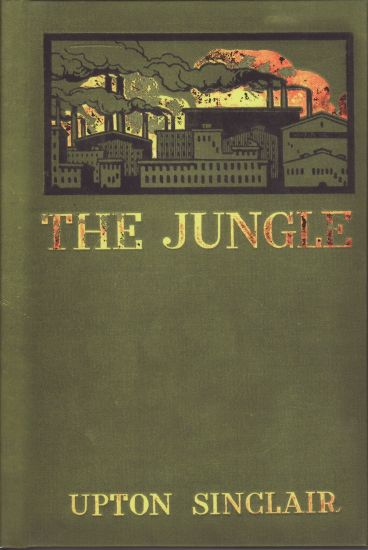
The Jungle

The Jungle

Upton Sinclair

12th Media Services
1906
pokkari
An ardent activist, champion of political reform, novelist, and progressive journalist, Upton Sinclair is perhaps best known today for The Jungle -- his devastating expos of the meat-packing industry. A protest novel he privately published in 1906, the book was a shocking revelation of intolerable labor practices and unsanitary working conditions in the Chicago stockyards. It quickly became a bestseller, arousing public sentiment and resulting in such federal legislation as the Pure Food and Drug Act. The brutally grim story of a Slavic family who emigrates to America, The Jungle tells of their rapid and inexorable descent into numbing poverty, moral degradation, and social and economic despair. Vulnerable and isolated, the family of Jurgis Rudkus struggles -- unsuccessfully -- to survive in an urban jungle.A powerful view of turn-of-the-century poverty, graft, and corruption, this fiercely realistic American classic is still required reading in many history and literature classes. It will continue to haunt readers long after they've finished the last page.

Mammonart: An Essay in Economic Interpretation
"A school of ingenious Bible-twisters arose, . . . in order that people who no longer believed could continue with good conscience to collect the salaries of belief." ―Upton Sinclair, Mammonart Mammonart: An Essay in Economic Interpretation (1925) by Upton Sinclair consists mainly of critiques of many great artists from Homer to Mark Twain and from Michelangelo to Jack London. It is one in a series of six books the author wrote analyzing American institutions from a socialist perspective. Other books in this muckraking Dead-Hand collection, include: The Profits of Religion (religion, 1917), The Brass Check (journalism, 1919), The Goose-Step (higher education, 1923), The Goslings (education, 1924), and Money Writes (literature, 1927), all available from Cosimo Classics.
Money Writes!

Money Writes!

Upton Sinclair

Cosimo Classics
1905
nidottu
"The rich people not only had all the money, they had all the chance to get more; they had all the knowledge and the power, and so the poor man was down, and he had to stay down." -Upton Sinclair, The Jungle (1906) Money Writes (1927) by Upton Sinclair is one in a series of six books the author wrote analyzing American institutions from a socialist perspective. As the author himself observed, "It is a study of American literature from the economic point of view. It takes our living in 1927] writers, and turns their pockets inside out, asking, 'Where did you get it' and 'What did you do for it' It is not a polite book, but it is an honest book, and it is needed." Other books in this muckraking Dead-Hand collection, include: The Profits of Religion (religion, 1917), Mammonart (art, 1925), The Brass Check (journalism, 1919), The Goose-Step (higher education, 1923), and The Goslings (education, 1924), all available from Cosimo Classics.
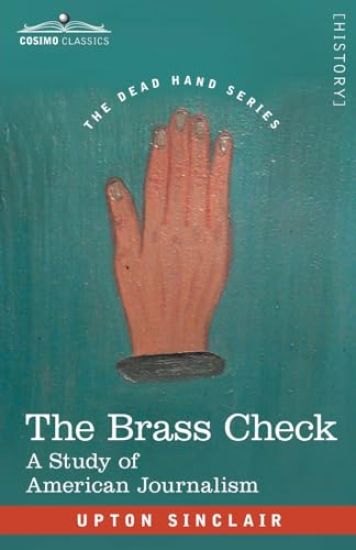
The Brass Check: A Study of American Journalism
"The most important and most dangerous book I have ever written." -Upton Sinclair, The Brass Check (1919) In The Brass Check: A Study of American Journalism (1919) Upton Sinclair sets out to expose the effects of "yellow journalism" and restrictions on the "free press." The book publicizes these issues with stories of lives damaged by bad press. It is remembered for the famous line, "It is difficult to get a man to understand something, when his salary depends upon his not understanding it" and for its contribution to the creation of the first code of ethics for journalists. It is one in a series of six books, the author wrote analyzing American institutions from a socialist perspective. Other books in this muckraking Dead-Hand collection, include: Mammonart (art, 1925), The Profits of Religion (religion, 1917), The Goose-Step (higher education, 1923), The Goslings (education, 1924), and Money Writes (literature, 1927), all available from Cosimo Classics.
The Brass Check: A Study of American Journalism
"The most important and most dangerous book I have ever written." -Upton Sinclair, The Brass Check (1919) In The Brass Check: A Study of American Journalism (1919) Upton Sinclair sets out to expose the effects of "yellow journalism" and restrictions on the "free press." The book publicizes these issues with stories of lives damaged by bad press. It is remembered for the famous line, "It is difficult to get a man to understand something, when his salary depends upon his not understanding it" and for its contribution to the creation of the first code of ethics for journalists. It is one in a series of six books, the author wrote analyzing American institutions from a socialist perspective. Other books in this muckraking Dead-Hand collection, include: Mammonart (art, 1925), The Profits of Religion (religion, 1917), The Goose-Step (higher education, 1923), The Goslings (education, 1924), and Money Writes (literature, 1927), all available from Cosimo Classics.
The Goose-Step: A Study of American Education
"Our educational system is not a public service, but an instrument of special privilege; its purpose is not to further the welfare of mankind, but merely to keep America capitalist." -Upton Sinclair, The Goose-Step (1923) The Goose-Step: A Study of American Education (1923) by Upton Sinclair is one in a series of six books, the author wrote that analyze American institutions from a socialist perspective. It offers a commentary on how control by the wealthy affects American colleges and universities. Other books in this muckraking Dead-Hand collection, include: The Profits of Religion (religion, 1917), Mammonart (art, 1925), The Brass Check (journalism, 1919), The Goslings (education, 1924), and Money Writes (literature, 1937).
The Goslings: A Study of the American Schools
"Modern science has shown that within the child's soul lies magically locked up all the past of our race; also, it is evident that within it lies all the future of our race. What our children are now being made is what America will be." -Upton Sinclair, The Goslings In The Goslings: A Study of American Schools (1924), Upton Sinclair examines how American industry influences public schools, asserting that "an 'invisible' government" of big business . . . has taken over the charge of your children." The book describes the influence of industry with examples from schools of several major cities. Also included are sections that examine what and how a variety of forces shape education. It is one in a series of six books the author wrote, analyzing American institutions from a socialist perspective. Other books in this muckraking Dead-Hand collection, include: The Profits of Religion (religion, 1917), The Brass Check (journalism, 1919), The Goose Step (education, 1923), Mammonart (art, 1925), and Money Writes (literature,1927), all available from Cosimo Classics.
The Jungle

The Jungle

Upton Sinclair

Cosimo Classics
1905
sidottu
"It is a book that does for modern industrial slavery what Uncle Tom's Cabin did for black slavery. But the work is done far better and more accurately in The Jungle than in Uncle Tom's Cabin." -Arthur Brisbane in the New York Evening Journal, (1906) The Jungle (1906) is an iconic novel in which Sinclair drew on several years of research to unmask the corruption in Chicago's meatpacking industry and the misery it inflicted on the lives of the workers there. Its main plot tells the story of a Lithuanian immigrant, Jurgis Rudkus, and his extended family, all of whom had come to the United States to live the American dream. While created by the author to expose abuses and advance the cause of socialism in the US, its more practical outcome was reforms that included the passage of the Meat Inspection Act.
The Jungle

The Jungle

Upton Sinclair

Cosimo Classics
1905
nidottu
"It is a book that does for modern industrial slavery what Uncle Tom's Cabin did for black slavery. But the work is done far better and more accurately in The Jungle than in Uncle Tom's Cabin." -Arthur Brisbane in the New York Evening Journal, (1906) The Jungle (1906) is an iconic novel in which Sinclair drew on several years of research to unmask the corruption in Chicago's meatpacking industry and the misery it inflicted on the lives of the workers there. Its main plot tells the story of a Lithuanian immigrant, Jurgis Rudkus, and his extended family, all of whom had come to the United States to live the American dream. While created by the author to expose abuses and advance the cause of socialism in the US, its more practical outcome was reforms that included the passage of the Meat Inspection Act.
King Coal

King Coal

Upton Sinclair

Cosimo Classics
1905
sidottu
"It lives and breathes in the light, because it has thousands of unfortunates toiling in the darkness. It lives and has its being in proud liberty because thousands are slaving for it, whose thralldom is the price of this liberty." ― Upton Sinclair, King Coal King Coal (1917) by Upton Sinclair is a novel set during the time of the 1913-1914 coal strikes in Colorado. It is a story that describes the working conditions in the mines as seen through the eyes of its protagonist, Hal Warner. As an avid follower of socialist doctrines, the author chose the story of Warner, an upper-class observer, to expose the exploitation of miners.
The Fasting Cure

The Fasting Cure

Upton Sinclair

Cosimo Classics
1905
nidottu
"I had taken several fasts of ten or twelve days' duration, with the result of a complete making over of my health." -Upton Sinclair, The Fasting Cure Upton Sinclair's The Fasting Cure (1911) consists of two essays in which Sinclair discusses the reasons he believes that engaging in regular fasts to remove toxins from the body is a healthy practice. While medically controversial, this book is considered worthwhile as an historical document of the "fasting fever," which occurred around the time of its writing.
King Coal

King Coal

Upton Sinclair

Cosimo Classics
1905
nidottu
"It lives and breathes in the light, because it has thousands of unfortunates toiling in the darkness. It lives and has its being in proud liberty because thousands are slaving for it, whose thralldom is the price of this liberty." ― Upton Sinclair, King Coal King Coal (1917) by Upton Sinclair is a novel set during the time of the 1913-1914 coal strikes in Colorado. It is a story that describes the working conditions in the mines as seen through the eyes of its protagonist, Hal Warner. As an avid follower of socialist doctrines, the author chose the story of Warner, an upper-class observer, to expose the exploitation of miners.