
Kirjailija
Upton Sinclair
Kirjat ja teokset yhdessä paikassa: 575 kirjaa, julkaisuja vuosilta 1905-2026, suosituimpien joukossa Sylvia. Vertaile teosten hintoja ja tarkista saatavuus suomalaisista kirjakaupoista.
575 kirjaa
Kirjojen julkaisuhaarukka 1905-2026.


In this fictional account of the events and the key players involved in the Wall Street panic of 1907, the famous author of The Jungle depicts the glittering society of New York's fabulously wealthy, for whom money is not the object of existence, just the means of wielding power. In the midst of the alluring lifestyle of the high rollers, with their debutante balls, sumptuous summer homes in Newport, and their retinue of servants, a newcomer from the South arrives. The strikingly beautiful Lucy Dupree seeks entrance into high society through her childhood friend, Allan Montague, who is now a successful lawyer working in the city. Despite Allan's attempts to protect her, the naive Lucy soon finds herself caught in a jealous rivalry between two of the wealthiest and most unscrupulous powerbrokers. Their fight to destroy each other using high-stake financial manipulations precipitates a major Wall Street collapse and puts Lucy into great peril. Sinclair has created an exciting page-turner full of vivid characters showing rapacious capitalists at their very worst. This novel, exposing abuses that no newspaper dared to print, provides fascinating parallels to our own time of wild investor speculation and politics corrupted by money.
Allan Montague, born on a Mississippi plantation 20 years prior to the Civil War, has grown up with slavery and considers it natural. When his father moves to Boston, Allan hears a speech which will cement his transformation into an abolitionist and lead him back to the Deep South.
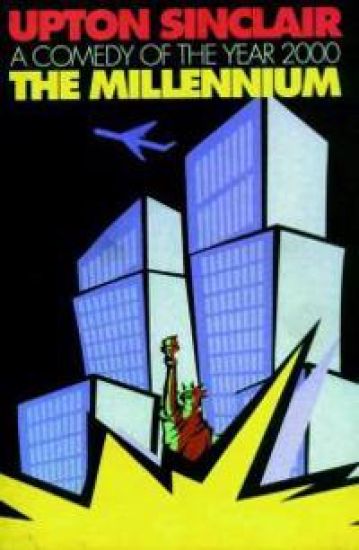
This is the first edition of The Millennium since the author self-published it in 1924. In the year 2000, capitalism reaches its zenith with the construction of the Pleasure Palace, a glittering half-mile-high structure in the middle of Central Park. During the grand opening, a scientific experiment with radiumite explodes, killing everyone on Earth except 11 people in the Pleasure Palace. Their attempt to rebuild a capitalist society results instead in the world's first successful utopian state.

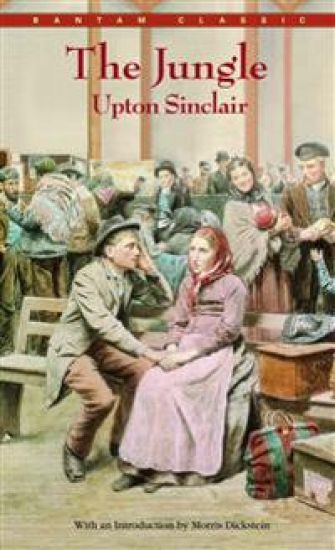
In this powerful book we enter the world of Jurgis Rudkus, a young Lithuanian immigrant who arrives in America fired with dreams of wealth, freedom, and opportunity. And we discover, with him, the astonishing truth about "packingtown," the busy, flourishing, filthy Chicago stockyards, where new world visions perish in a jungle of human suffering. Upton Sinclair, master of the "muckraking" novel, here explores the workingman's lot at the turn of the century: the backbreaking labor, the injustices of "wage-slavery," the bewildering chaos of urban life. The Jungle, a story so shocking that it launched a government investigation, recreates this startling chapter if our history in unflinching detail. Always a vigorous champion on political reform, Sinclair is also a gripping storyteller, and his 1906 novel stands as one of the most important -- and moving -- works in the literature of social change.
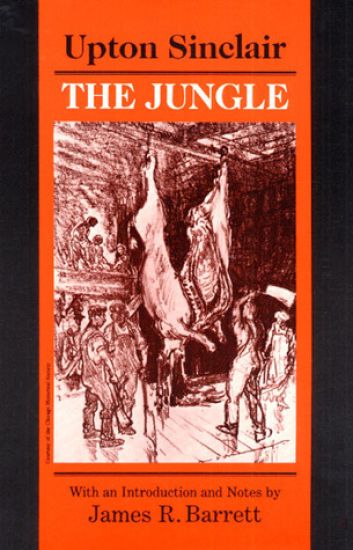
One of the most important American novels of the twentieth century, The Jungle shocked a nation with its horrifying depiction of the meatpacking industry and the dangerous labor performed by its impoverished, exploited workers. In this first annotated edition of Upton Sinclair's muckraking classic, James Barrett provides students and scholars with a broader understanding of the events and the milieu that led Sinclair to write the book.

One of the most powerful, provocative and enduring novels to expose social injustice ever published in the United States, Upton Sinclair's The Jungle contains an introduction by Ronald Gottesman in Penguin Classics.Upton Sinclair's dramatic and deeply moving story exposed the brutal conditions in the Chicago stockyards at the turn of the nineteenth century and brought into sharp moral focus the appalling odds against which immigrants and other working people struggled for their share of the American Dream. Denounced by the conservative press as an un-American libel on the meatpacking industry, and condemned for Sinclair's unabashed promotion of Socialism and unionisation as a solution to the exploitation of workers, the book was championed by more progressive thinkers, including then President Theodore Roosevelt, and was a major catalyst to the passing of the Pure Food and Meat Inspection act, which has tremendous impact to this day.Upton Sinclair (1878-1968) was born into an impoverished Baltimore family, the son of an alcoholic liquor salesman. At fifteen, he began writing a series of dime novels to pay for his education at the City College of New York, and he was later accepted to do graduate work at Columbia. While there, he published a number of novels, but his breakthrough was The Jungle (1906), a scathing indictment of the vile health and working conditions of the Chicago meat-packing industry. After a dalliance with politics, Sinclair returned to novel-writing, winning the Pulitzer Prize for his account of the Nazi takeover of Germany in Dragon's Teeth (1942).If you enjoyed The Jungle, you might like Saul Bellow's The Adventures of Augie March, also available in Penguin Classics.

Boston - A Documentary Novel of the Sacco-Vanzetti Case
Upton Sinclair
Bentley Publishers
1978
sidottu
The protracted trial of Sacco and Vanzetti was the most controversial political event of the 1920s. Today, more than seventy years after their execution, the events surrounding the case of Sacco and Vanzetti are still the source of debate. Truly, it is the "case that would not die." Surprisingly, of all the books that have appeared over the years concerning the case, the most complete and convincing was first published in 1928, only a year after the execution of Sacco and Vanzetti. That book is Upton Sinclair's Boston. In his "documentary novel" the celebrated author of The Jungle combined a firm grasp of the facts of the case with an engrossing fictional framework to produce a remarkably accurate and comprehensive report of the events that spanned the years 1919 to 1927 which ultimately focused the attention of the whole world on a drama played out in the drawing rooms, courts, and streets of the city of Boston. In Boston, Sinclair described the xenophobia and paranoia that led the upper crust of Boston society to see these two illiterate immigrants as a threat to their way of life, and led to their conviction on the flimsiest of evidence. Sinclair used his considerable skills to arouse the reader to a state of outrage as the protagonists' inevitable fate approaches.

Boston - A Documentary Novel of the Sacco-Vanzetti Case
Upton Sinclair
Bentley Publishers
1978
nidottu
The protracted trial of Sacco and Vanzetti was the most controversial political event of the 1920s. Today, more than seventy years after their execution, the events surrounding the case of Sacco and Vanzetti are still the source of debate. Truly, it is the "case that would not die." Surprisingly, of all the books that have appeared over the years concerning the case, the most complete and convincing was first published in 1928, only a year after the execution of Sacco and Vanzetti. That book is Upton Sinclair's Boston. In his "documentary novel" the celebrated author of The Jungle combined a firm grasp of the facts of the case with an engrossing fictional framework to produce a remarkably accurate and comprehensive report of the events that spanned the years 1919 to 1927 which ultimately focused the attention of the whole world on a drama played out in the drawing rooms, courts, and streets of the city of Boston. In Boston, Sinclair described the xenophobia and paranoia that led the upper crust of Boston society to see these two illiterate immigrants as a threat to their way of life, and led to their conviction on the flimsiest of evidence. Sinclair used his considerable skills to arouse the reader to a state of outrage as the protagonists' inevitable fate approaches.