Kirjailija
Upton Sinclair
Kirjat ja teokset yhdessä paikassa: 575 kirjaa, julkaisuja vuosilta 1905-2026, suosituimpien joukossa Sylvia. Vertaile teosten hintoja ja tarkista saatavuus suomalaisista kirjakaupoista.
575 kirjaa
Kirjojen julkaisuhaarukka 1905-2026.


A searing novel of social realism, Upton Sinclair's The Jungle follows the fortunes of Jurgis Rudkus, an immigrant who finds in the stockyards of turn-of-the-century Chicago a ruthless system that degrades and impoverishes him, and an industry whose filthy practices contaminate the meat it processes. From the stench of the killing-beds to the horrors of the fertilizer-works, the appalling conditions in which Jurgis works are described in intense detail by an author bent on social reform. So powerful was the book's message that it caught the eye of President Theodore Roosevelt and led to changes to the food hygiene laws. In his Introduction to this new edition, Russ Castronovo highlights the aesthetic concerns that were central to Sinclair's aspirations, examining the relationship between history and historical fiction, and between the documentary impulse and literary narrative. As he examines the book's disputed status as novel (it is propaganda or literature?), he reveals why Sinclair's message-driven fiction has relevance to literary and historical matters today, now more than a hundred years after the novel first appeared in print.

A searing novel of social realism, Upton Sinclair's The Jungle follows the fortunes of Jurgis Rudkus, an immigrant who finds in the stockyards of turn-of-the-century Chicago a ruthless system that degrades and impoverishes him, and an industry whose filthy practices contaminate the meat it processes. From the stench of the killing-beds to the horrors of the fertilizer-works, the appalling conditions in which Jurgis works are described in intense detail by an author bent on social reform. So powerful was the book's message that it caught the eye of President Theodore Roosevelt and led to changes to the food hygiene laws. In his Introduction to this new edition, Russ Castronovo highlights the aesthetic concerns that were central to Sinclair's aspirations, examining the relationship between history and historical fiction, and between the documentary impulse and literary narrative. As he examines the book's disputed status as novel (it is propaganda or literature?), he reveals why Sinclair's message-driven fiction has relevance to literary and historical matters today, now more than a hundred years after the novel first appeared in print.

Theosophy in Outline: Little Blue Book No. 477
Frederick Milton Willis; Upton Sinclair; E. Haldeman-Julius
Literary Licensing, LLC
2011
nidottu

The Spokesman's Secretary: Being the Letters of Mame to Mom
Upton Sinclair
Literary Licensing, LLC
2011
nidottu

My Lifetime In Letters is a collection of letters written by Sinclair Upton, an American author and social activist, throughout his life. The book includes personal letters to family and friends, as well as letters to public figures such as presidents, publishers, and fellow writers. The letters provide insight into Upton's personal life, as well as his political and social views on issues such as labor rights, socialism, and animal welfare. The book also includes a biographical introduction and annotations to provide context for the letters. Overall, My Lifetime In Letters offers a unique perspective on the life and work of Sinclair Upton, as well as a glimpse into the history of American politics and society during the 20th century.This scarce antiquarian book is a facsimile reprint of the old original and may contain some imperfections such as library marks and notations. Because we believe this work is culturally important, we have made it available as part of our commitment for protecting, preserving, and promoting the world's literature in affordable, high quality, modern editions, that are true to their original work.
The Spokesman's Secretary: Being the Letters of Mame to Mom
Upton Sinclair
Literary Licensing, LLC
2011
sidottu
The Spokesman's Secretary: Being The Letters Of Mame To Mom is a book written by the American author Upton Sinclair. The book follows the correspondence between two women, Mame and Mom, over the course of several years. Mame is the secretary for a prominent political figure, known as the Spokesman, and her letters detail the inner workings of his office and the political landscape of the time. Mom, on the other hand, is a housewife and mother who writes to Mame about her daily life and struggles. Through their letters, the two women develop a close friendship and provide a unique perspective on the challenges faced by women in both the political and domestic spheres. The Spokesman's Secretary is a thought-provoking and insightful exploration of gender roles and power dynamics in early 20th century America.This scarce antiquarian book is a facsimile reprint of the old original and may contain some imperfections such as library marks and notations. Because we believe this work is culturally important, we have made it available as part of our commitment for protecting, preserving, and promoting the world's literature in affordable, high quality, modern editions, that are true to their original work.
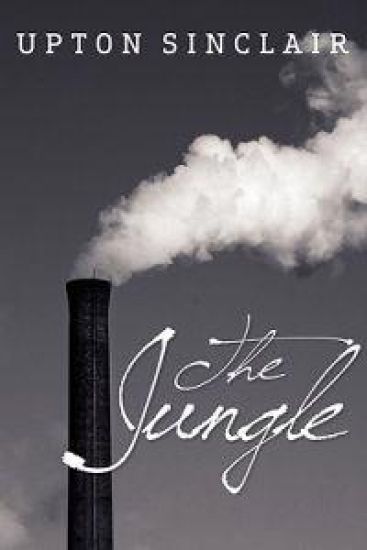
A searing novel of social realism, Upton Sinclair's The Jungle follows the fortunes of Jurgis Rudkus, an immigrant who finds in the stockyards of turn-of-the-century Chicago a ruthless system that degrades and impoverishes him, and an industry whose filthy practices contaminate the meat it processes. From the stench of the killing-beds to the horrors of the fertilizer-works, the appalling conditions in which Jurgis works are described in intense detail by an author bent on social reform. So powerful was the book's message that it caught the eye of President Theodore Roosevelt and led to changes to the food hygiene laws. In his Introduction to this new edition, Russ Castronovo highlights the aesthetic concerns that were central to Sinclair's aspirations, examining the relationship between history and historical fiction, and between the documentary impulse and literary narrative. As he examines the book's disputed status as novel (it is propaganda or literature?), he reveals why Sinclair's message-driven fiction has relevance to literary and historical matters today, now more than a hundred years after the novel first appeared in print.

Upton Sinclair took a gamble publishing this book. A lifelong Socialist who ran for high office several times, a muckraking author who had exposed the abuses of capitalism, was dabbling with what was seen as the occult. The impetus for this was his dear wife, Mary Craig Sinclair, known as 'Craig, ' who had been aware all her life that she could sense things that had not yet happened, or which she had no rational access to. In the late 1920s, this came to light when Craig had an odd feeling that their friend Jack London was in mental turmoil, just prior to London's suicide. The Sinclairs started to investigate how deep this particular rabbit hole went...The core of this book is a series of doodles which Upton and others made outside Craig's presence, which she was able to duplicate, apparently telepathically or through clairvoyance. Sinclair claims that Craig had over a 75% success rate over 290 tests, including 25% matches, and 50% partial matches. This success rate is obviously a lot higher than probability, considering that the potential set of drawings is a lot larger than, say, a deck of cards.Sinclair's top reputation as a 'speaker of truth to power' was actually a compelling reason to take this book seriously. The response to Mental Radio was very positive, impressing academics in the field of psychology and other scientists, including Albert Einstein, who wrote the introduction to the German edition. William McDougal, Chair of the Psychology Department at Duke University, who wrote the introduction for this edition, conducted his own experiments with Craig. McDougal and J.B. Rhine later went on to found the Parapsychology Laboratory at Duke, which conducted the first academic investigations of ESP.--Text refers the hardcover edition
""Letters to Judd: An American Workingman"" is a book written by Sinclair, Upton. It is a collection of letters that the author wrote to his friend Judd, who was a blue-collar worker in America. The letters are a reflection of the author's observations and experiences of the working-class life in America during the early 20th century. The book is an insightful portrayal of the struggles and hardships faced by the working-class people during that time. The author talks about issues like poverty, unemployment, and social inequality that were prevalent in the society. He also highlights the exploitation of workers by the capitalists and the need for labor unions to protect their rights.The letters are written in a conversational style, making it easy for the reader to connect with the author's thoughts and emotions. The book provides a glimpse into the life of an ordinary American worker and the challenges they faced in their daily lives.In summary, ""Letters to Judd: An American Workingman"" is a thought-provoking book that sheds light on the social and economic conditions of America during the early 20th century. It is a must-read for anyone interested in the history of the American working class and the labor movement.This scarce antiquarian book is a facsimile reprint of the old original and may contain some imperfections such as library marks and notations. Because we believe this work is culturally important, we have made it available as part of our commitment for protecting, preserving, and promoting the world's literature in affordable, high quality, modern editions, that are true to their original work.