Kirjojen hintavertailu. Mukana 12 192 387 kirjaa ja 12 kauppaa.

Kirjailija

Virgil

Kirjat ja teokset yhdessä paikassa: 311 kirjaa, julkaisuja vuosilta 1823-2025, suosituimpien joukossa Virgil's Eclogues. Vertaile teosten hintoja ja tarkista saatavuus suomalaisista kirjakaupoista.

311 kirjaa

Kirjojen julkaisuhaarukka 1823-2025.

Virgil's Eclogues

Virgil's Eclogues

Virgil

University of Pennsylvania Press
2012
pokkari
Publius Vergilius Maro (70-19 B.C.), known in English as Virgil, was perhaps the single greatest poet of the Roman empire-a friend to the emperor Augustus and the beneficiary of wealthy and powerful patrons. Most famous for his epic of the founding of Rome, the Aeneid, he wrote two other collections of poems: the Georgics and the Bucolics, or Eclogues. The Eclogues were Virgil's first published poems. Ancient sources say that he spent three years composing and revising them at about the age of thirty. Though these poems begin a sequence that continues with the Georgics and culminates in the Aeneid, they are no less elegant in style or less profound in insight than the later, more extensive works. These intricate and highly polished variations on the idea of the pastoral poem, as practiced by earlier Greek poets, mix political, social, historical, artistic, and moral commentary in musical Latin that exerted a profound influence on subsequent Western poetry. Poet Len Krisak's vibrant metric translation captures the music of Virgil's richly textured verse by employing rhyme and other sonic devices. The result is English poetry rather than translated prose. Presenting the English on facing pages with the original Latin, Virgil's Eclogues also features an introduction by scholar Gregson Davis that situates the poems in the time in which they were created.
Virgil: Aeneid Book XII

Virgil: Aeneid Book XII

Virgil

Cambridge University Press
2012
sidottu
Book XII brings Virgil's Aeneid to a close, as the long-delayed single combat between Aeneas and Turnus ends with Turnus' death - a finale that many readers find more unsettling than triumphant. In this, the first detailed single-volume commentary on the book in any language, Professor Tarrant explores Virgil's complex portrayal of the opposing champions, his use and transformation of earlier poetry (Homer's in particular) and his shaping of the narrative in its final phases. In addition to the linguistic and thematic commentary, the volume contains a substantial introduction that discusses the larger literary and historical issues raised by the poem's conclusion; other sections include accounts of Virgil's metre, later treatments of the book's events in art and music, and the transmission of the text. The edition is designed for upper-level undergraduates and graduate students and will also be of interest to scholars of Latin literature.
Virgil: Eclogues

Virgil: Eclogues

Virgil

Clarendon Press
1995
nidottu
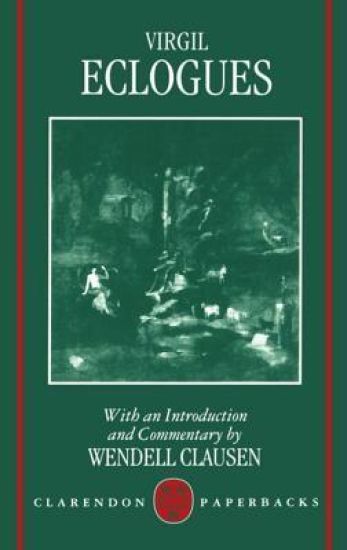
Surprising though it may seem, this is the first full-scale scholarly commentary in English on Virgil's Eclogues. Written between about 42 and 35 BC, these ten short pastorals are among the best known poems in Latin literature. They have inspired numerous poets - Sidney, Ronsard, and others - and at the same time have held enduring fascination among scholars for their sophistaicated and allusive blend of Theocritean idyll and contemporary Roman history. Professor Clausen's commentary will provide a comprehensive guide to the poems and the considerable scholarship surrounding them, and should be indispensable to all serious students of Virgil's poetry. Special attention is paid throughout the commentary to the important question of Virgil's use of Theocritus and other Hellenistic poets, with translations provided of all Greek passages. There are many new and illuminating observations on Virgil's poetic style and vocabulary, often with reference to his Latin predecessors: Lucretius, Catullus and (virtually unnoticed by previous scholars) Plautus. A third feature of the commentary is a new examination of the plants and trees in the poems - both their exact identification and their significance. There are helpful introductions to each poem, as well as a comprehensive general introduction to the Eclogues as a whole, in which Professor Clausen discusses the nature of ancient pastoral poetry, the structure of the Eclogues, and the composition of a pastoral landscape by Virgil and Theocritus.
Virgil: Selections from the Aeneid

Virgil: Selections from the Aeneid

Virgil

Cambridge University Press
1984
pokkari
Selections from Virgil’s epic poem which follows the fortunes of Aeneas after he escapes the sack of Troy. He struggles through countless difficulties to reach Italy where he wins in battle the right to found a settlement for his people - from this grew Rome and the Roman empire.
Virgil: Eclogues

Virgil: Eclogues

Virgil

Cambridge University Press
1977
pokkari
Pastoral poetry was probably the creation of the Hellenistic poet Theocritus, and he was certainly its most distinguished exponent in Greek. Vergil not only transposed the spirit of Greek pastoral into an Italian setting, blending details from the life of his native countryside into the subsequent history of the genre. On publication the Eclogues won immediate acclaim and Vergil’s reputation as a major poet was established. In this edition Robert Coleman describes the earlier pastoral tradition, sets Vergil’s poems in historical perspective and evaluates the poet’s distinctive contribution to the genre. In the commentary difficulties of interpretation are elucidated. Theocritean influences are examined in detail and points of interest in the language, style and subject-matter discussed. This is the fullest edition of the Eclogues to have appeared in any language and the first in English since the end of the nineteenth century. It is intended primarily for university students and sixth-formers but will be valuable to anyone interested in Latin poetry and the development of the pastoral genre.
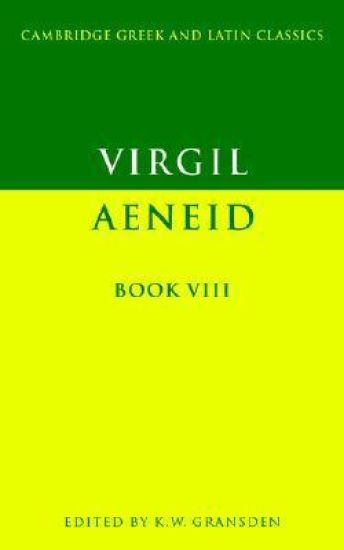
Virgil: Aeneid Book VIII

Virgil: Aeneid Book VIII

Virgil

Cambridge University Press
1976
pokkari
Book VIII is one of the most attractive and important books of Virgil's Aeneid. It includes the visit of Aaneas to the site of the future Rome, the story of Hercules and Cacus, the episode between Venus and Vulcan and the description of the great symbolic shield of Aeneas. Mr Gransden's introduction relates this book to the Aeneid as a whole considers the text in various aspects: the topography, Virgil's sense of history, his typology and symbolism, his literary style and his influence on subsequent vernacular poetry. The commentary discusses points of special interest and difficulty in interpretation, style and prosody and gives detailed explanation of the many allusions in Book VIII to customs, legends, traditions and historical events. This is primarily a textbook for university students and sixth-formers, but it also contains material which may be of interest to students of English and comparative literature.
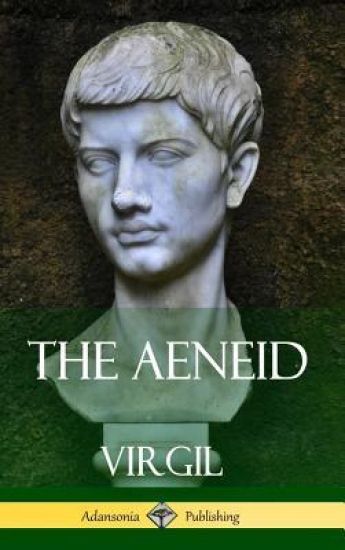
The Aeneid (Hardcover)

The Aeneid (Hardcover)

Virgil; J W Mackail

Lulu.com
2018
sidottu
This edition of Virgil's famed epic poem, which chronicles the journeys and adventures of the Spartan Aeneas, features the respected translation of J.W. Mackail. In the poem, we first hear a retelling of Aeneas exploits in Troy. After he concludes these battles, he makes his way across Greece, Sicily and even the Underworld, encountering all manner of adventures along the way. His daring treks across Europe eventually result in Aeneas bringing a large cohort of his fellow Trojans to settle in Italy where they engage in war. It is here that Aeneas encounters his final nemesis, Turnus, whereby his adventures crescendo to their final conclusion. A classic of Roman literature, The Aeneid explains how Aeneas became the genetic progeny of the Roman Empire. Bravery and martial prowess were characteristics prized by Ancient Rome, and it is in the Aeneid that the profound admiration for aspects of fighting prowess first displayed in Greece are expressed.
O Cruel Alexis

O Cruel Alexis

Virgil

Penguin Classics
2015
nidottu
'But I, while vineyards ring with the cicadas' scream, Retrace your steps, alone, beneath the burning sun.' Virgil's lyrical, wistful and often witty pastoral poems. Introducing Little Black Classics: 80 books for Penguin's 80th birthday. Little Black Classics celebrate the huge range and diversity of Penguin Classics, with books from around the world and across many centuries. They take us from a balloon ride over Victorian London to a garden of blossom in Japan, from Tierra del Fuego to 16th-century California and the Russian steppe. Here are stories lyrical and savage; poems epic and intimate; essays satirical and inspirational; and ideas that have shaped the lives of millions. Publius Vergilius Maro (70-19 BCE). Virgil's other works available in Penguin Classics are The Aeneid, The Eclogues and The Georgics.
Virgil: Aeneid Book XII

Virgil: Aeneid Book XII

Virgil

Cambridge University Press
2012
pokkari
Book XII brings Virgil's Aeneid to a close, as the long-delayed single combat between Aeneas and Turnus ends with Turnus' death - a finale that many readers find more unsettling than triumphant. In this, the first detailed single-volume commentary on the book in any language, Professor Tarrant explores Virgil's complex portrayal of the opposing champions, his use and transformation of earlier poetry (Homer's in particular) and his shaping of the narrative in its final phases. In addition to the linguistic and thematic commentary, the volume contains a substantial introduction that discusses the larger literary and historical issues raised by the poem's conclusion; other sections include accounts of Virgil's metre, later treatments of the book's events in art and music, and the transmission of the text. The edition is designed for upper-level undergraduates and graduate students and will also be of interest to scholars of Latin literature.
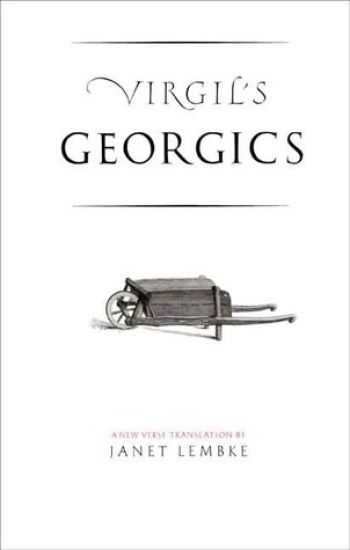
Virgil's Georgics

Virgil's Georgics

Virgil

Yale University Press
2007
pokkari
A masterful new verse translation of one of the greatest nature poems ever written. Virgil’s Georgics is a paean to the earth and all that grows and grazes there. It is an ancient work, yet one that speaks to our times as powerfully as it did to the poet’s. This unmatched translation presents the poem in an American idiom that is elegant and sensitive to the meaning and rhythm of the original. Janet Lembke brings a faithful version of Virgil’s celebratory poem to modern readers who are interested in classic literature and who relish reading about animals and gardens. The word georgics meansfarming. Virgil was born to a farming family, and his poem gives specific instructions to Italian farmers along with a passionate message to care for the land and for the crops and animals that it sustains. The Georgics is also a heartfelt cry for returning farmers and their families to land they had lost through a series of dispiriting political events. It is often considered the most technically accomplished and beautiful of all of Virgil’s work.
Virgil: Aeneid 10

Virgil: Aeneid 10

Virgil

Clarendon Press
1997
nidottu
Vergil's Aeneid was written in twelve books in the last years of the poet's life (29-19 BC). It was designed as a national epic of Rome and is one of the greatest poems of world literature. The tenth book, which contains some of the poem's most dramatic war-narrative, has been unjustly neglected by Vergilian scholars, and this is the first major commentary to deal exclusively with it. Its aim is to explain Vergil's text for the modern reader. A full introduction examines the literary aspects of Aeneid 10; the scholarly commentary assesses Vergil's skill as a Latin poet and his careful and original use of literary models (especially the Iliad of Homer). There is also some discussion of the major interpretational problems of the Aeneid raised in Book 10. The Latin text is reproduced from R.A.B. Mynors's edition in the Oxford Classical Texts series. A facing English translation makes the text accessible to those with no knowledge of Latin.
Virgil: Georgics: Volume 2, Books III-IV

Virgil: Georgics: Volume 2, Books III-IV

Virgil

Cambridge University Press
1988
pokkari
This volume, the second of two companion volumes which provide a detailed commentary, with text, on the whole of Virgil’s Georgics, is devoted to Books III and IV of the poem. Professor Thomas describes the Georgics as ‘perhaps the most difficult, certainly the most controversial, poem in Roman literature’. He presents the Georgics as the finished poem of Virgil’s mature years, approaching it not merely as a part of the tradition of didactic poetry, but rather as a work which confronts, behind its generic appearance, issues not essentially different from those which inform the Eclogues and Aeneid. His introduction (in Volume 1 only) and Commentary argue that Virgil’s agricultural world, with its successes, failures and ultimate limitations, represents the arena for man’s struggle with the realities of existence. Professor Thomas pays particular attention to Virgil’s allusion to and reshaping of prior Greek and Latin poetry. The Introduction also covers stylistic, metrical and structural questions. A subject index and indexes of important Greek and Latin words conclude each volume, the indexes in this volume covering the whole work. This edition is aimed primarily at students at university and in the upper forms of schools, but the range of its scholarship means that it will be valuable to all classical scholars. The Introduction contains material for non-classicists interested in Latin literature.