Kirjojen hintavertailu. Mukana 12 390 323 kirjaa ja 12 kauppaa.

Kirjailija

Wendy Brown

Kirjat ja teokset yhdessä paikassa: 39 kirjaa, julkaisuja vuosilta 1995-2026, suosituimpien joukossa Capital. Vertaile teosten hintoja ja tarkista saatavuus suomalaisista kirjakaupoista.

39 kirjaa

Kirjojen julkaisuhaarukka 1995-2026.

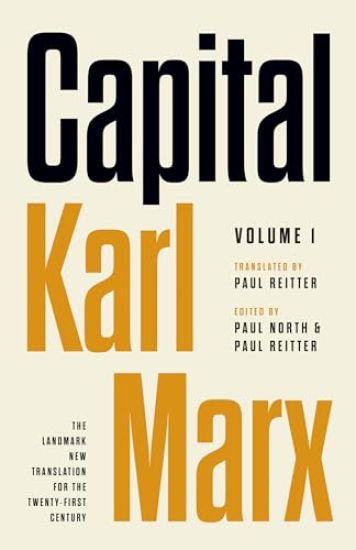
Capital

Capital

Karl Marx; Wendy Brown; William Clare Roberts

PRINCETON UNIVERSITY PRESS
2026
pokkari
Marx for the twenty-first century The first new English translation in fifty years—and the only one based on the last German edition revised by Marx himself Featuring extensive original commentary, including a foreword by acclaimed political theorist Wendy Brown “An astounding achievement.”—China Miéville, author of October: The Story of the Russian Revolution Karl Marx (1818–1883) was living in exile in England when he embarked on an ambitious, multivolume critique of the capitalist system of production. Though only the first volume saw publication in Marx’s lifetime, it would become one of the most consequential books in history. This magnificent new edition of Capital is a translation of Marx for the twenty-first century. It is the first translation into English to be based on the last German edition revised by Marx himself, the only version that can be called authoritative, and it features extensive commentary and annotations by Paul North and Paul Reitter that draw on the latest scholarship and provide invaluable perspective on the book and its complicated legacy. At once precise and boldly readable, this translation captures the momentous scale and sweep of Marx’s thought while recovering the elegance and humor of the original source. For Marx, our global economic system is relentlessly driven by “value”—to produce it, capture it, trade it, and, most of all, to increase it. Lifespans are shortened under the demand for ever-greater value. Days are lengthened, work is intensified, and the division of labor deepens until it leaves two classes, owners and workers, in constant struggle for life and livelihood. In Capital, Marx reveals how value came to tyrannize our world, and how the history of capital is a chronicle of bloodshed, colonization, and enslavement. With a foreword by Wendy Brown and an afterword by William Clare Roberts, this is a critical edition of Capital for our time, one that faithfully preserves the vitality and directness of Marx’s German prose and renders his ideas newly relevant to modern readers.
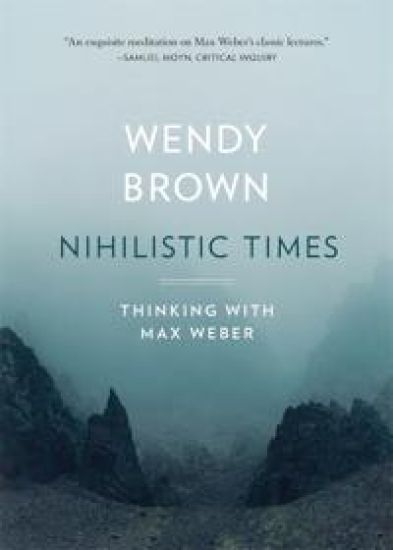
Nihilistic Times

Nihilistic Times

Wendy Brown

HARVARD UNIVERSITY PRESS
2025
nidottu
A Seminary Co-op Notable Book“What makes Brown’s book especially well worth reading is her impressive ability to show how key themes in Weber’s scholarship—including his emphasis on the defining characteristics of modernity . . . speak to our own time.” —Inside Higher Ed “Presses us to think more carefully and imaginatively about the relationships among human freedom, human value, and something beyond purely human concerns, be it truth, God, or Gaia.” —Commonweal “Worth reading…A timely reminder of the nihilistic air we breathe.” —Law & Liberty “Elegantly and concisely written…this insightful, thought-provoking book illuminates some objective culture factors contributing to the social division and degradation of public life in many democracies today.” —Critical TheologyHow has politics become a playpen for vain demagogues? Why has the university become an ideological war zone? What has happened to Truth? Wendy Brown places nihilism at the center of these predicaments. Emerging from the retreat of God and tradition in the face of science and reason, nihilism removes the foundation on which values, including that of truth, stand. It hyperpoliticizes knowledge and renders the profound trivial, the future unimportant, and corruption banal.In search of remedies, Brown turns to Max Weber’s Vocation Lectures. Weber famously decries the effects of nihilism on scholarly and political life and proposes to keep the two separate, restricting academic work to the pursuit of facts and the political realm to the legislation of values. Without accepting Weber’s arch oppositions, Brown acknowledges the distinctions they mark as she charts reparative strategies for our own times. She calls for retrieving knowledge from hyperpoliticization without expunging values from research or teaching, and she challenges the left to make good on its commitments to critical thinking and democratization.
States of Injury

States of Injury

Wendy Brown

PRINCETON UNIVERSITY PRESS
2025
pokkari
A landmark work from one of our leading political theoristsA sympathetic critique that attempts to free Left politics from its own snares, States of Injury explores how woundedness became a basis for contemporary political identity. Without condemning identity politics, Wendy Brown carefully probes the varied historical forces generating them today and the ways these formative conditions constrain emancipatory desire. Along the way, she advances a novel feminist critical theory of liberalism and the liberal democratic state. She also develops an original theoretical practice that weaves together Nietzsche, Marx, Weber, Foucault, and cultural theories of gender and race to analyze contemporary political predicaments. In a new preface, Brown places States of Injury in political and intellectual context, including the rise of neoliberalism, and addresses the book’s renewed relevance in today’s political landscape.
Capital

Capital

Karl Marx; Wendy Brown; William Clare Roberts

PRINCETON UNIVERSITY PRESS
2024
sidottu
Marx for the twenty-first centuryThe first new English translation in fifty years—and the only one based on the last German edition revised by Marx himselfFeaturing extensive original commentary, including a foreword by acclaimed political theorist Wendy Brown“An astounding achievement.”—China Miéville, author of October: The Story of the Russian RevolutionKarl Marx (1818–1883) was living in exile in England when he embarked on an ambitious, multivolume critique of the capitalist system of production. Though only the first volume saw publication in Marx’s lifetime, it would become one of the most consequential books in history. This magnificent new edition of Capital is a translation of Marx for the twenty-first century. It is the first translation into English to be based on the last German edition revised by Marx himself, the only version that can be called authoritative, and it features extensive commentary and annotations by Paul North and Paul Reitter that draw on the latest scholarship and provide invaluable perspective on the book and its complicated legacy. At once precise and boldly readable, this translation captures the momentous scale and sweep of Marx’s thought while recovering the elegance and humor of the original source.For Marx, our global economic system is relentlessly driven by “value”—to produce it, capture it, trade it, and, most of all, to increase it. Lifespans are shortened under the demand for ever-greater value. Days are lengthened, work is intensified, and the division of labor deepens until it leaves two classes, owners and workers, in constant struggle for life and livelihood. In Capital, Marx reveals how value came to tyrannize our world, and how the history of capital is a chronicle of bloodshed, colonization, and enslavement.With a foreword by Wendy Brown and an afterword by William Clare Roberts, this is a critical edition of Capital for our time, one that faithfully preserves the vitality and directness of Marx’s German prose and renders his ideas newly relevant to modern readers.

Nihilistic Times

Nihilistic Times

Wendy Brown

HARVARD UNIVERSITY PRESS
2023
sidottu
One of America’s leading political theorists analyzes the nihilism degrading—and confounding—political and academic life today. Through readings of Max Weber’s Vocation Lectures, she proposes ways to counter nihilism’s devaluations of both knowledge and political responsibility.How has politics become a playpen for vain demagogues? Why has the university become an ideological war zone? What has happened to Truth? Wendy Brown places nihilism at the center of these predicaments. Emerging from European modernity’s replacement of God and tradition with science and reason, nihilism removes the foundation on which values, including that of truth itself, stand. It hyperpoliticizes knowledge and reduces the political sphere to displays of narcissism and irresponsible power plays. It renders the profound trivial, the future unimportant, and corruption banal.To consider remedies for this condition, Brown turns to Weber’s famous Vocation Lectures, delivered at the end of World War I. There, Weber himself decries the effects of nihilism on both scholarly and political life. He also spells out requirements for re-securing truth in the academy and integrity in politics. Famously opposing the two spheres to each other, he sought to restrict academic life to the pursuit of facts and reserve for the political realm the pursuit and legislation of values.Without accepting Weber’s arch oppositions, Brown acknowledges the distinctions they aim to mark as she charts reparative strategies for our own times. She calls for retrieving knowledge from hyperpoliticization without expunging values from research or teaching, and reflects on ways to embed responsibility in radical political action. Above all, she challenges the left to make good on its commitment to critical thinking by submitting all values to scrutiny in the classroom and to make good on its ambition for political transformation by twinning a radical democratic vision with charismatic leadership.
A Very Australian Christmas

A Very Australian Christmas

Wendy Brown

Wendiilou Publishing
2021
pokkari
Featuring stunning photos of the Australian landscape along with pictures from the author's own Christmas celebrations throughout the years, A Very Australian Christmas describes how Christmas is different, and sometimes the same, in Australia as in other countries. Written in simple rhyme, this book appeals to children of all ages.
Fireside Stories

Fireside Stories

Helen Brown; Wendy Brown

Reading Stones Publishing
2021
pokkari
Join Helen and Wendy as they take you on a journey into days gone by. Visit with family and friends in a simpler time, when hard work was the order of the day, family was everything, and life in Australia was challenging but rewarding.
Seven Essays on Populism

Seven Essays on Populism

Paula Biglieri; Luciana Cadahia; Wendy Brown

Polity Press
2021
nidottu
This important intervention interrogates keystone features of the dominant European theoretical landscape in the field of populism studies, advancing existing debates and introducing new avenues of thought, in conjunction with insights from the contemporary Latin American political experience and perspectives. In each essay – the title a nod to the influential socialist thinker José Carlos Mariátegui, from whom the authors draw inspiration – leading Argentine scholars Paula Biglieri and Luciana Cadahia pair key dimensions of populism with diverse themes such as modern-day feminism, militancy, and neoliberalism, in order to stimulate discussion surrounding the constitutive nature, goals, and potential of populist social movements. Biglieri and Cadahia are unafraid to court provocation in their frank assessment of populism as a force which could bring about essential emancipatory social change to confront emerging right-wing trends in policy and leadership. At the same time, this fresh interpretation of a much-maligned political articulation is balanced by their denunciation of right-aligned populisms and their failure to bring to bear a sustainable alternative to contemporary neo-authoritarian forms of neoliberalism. In their place, they articulate a populism which offers a viable means of mobilizing a response to hegemonic forms of neoliberal discourse and government.
Seven Essays on Populism

Seven Essays on Populism

Paula Biglieri; Luciana Cadahia; Wendy Brown

Polity Press
2021
sidottu
This important intervention interrogates keystone features of the dominant European theoretical landscape in the field of populism studies, advancing existing debates and introducing new avenues of thought, in conjunction with insights from the contemporary Latin American political experience and perspectives. In each essay – the title a nod to the influential socialist thinker José Carlos Mariátegui, from whom the authors draw inspiration – leading Argentine scholars Paula Biglieri and Luciana Cadahia pair key dimensions of populism with diverse themes such as modern-day feminism, militancy, and neoliberalism, in order to stimulate discussion surrounding the constitutive nature, goals, and potential of populist social movements. Biglieri and Cadahia are unafraid to court provocation in their frank assessment of populism as a force which could bring about essential emancipatory social change to confront emerging right-wing trends in policy and leadership. At the same time, this fresh interpretation of a much-maligned political articulation is balanced by their denunciation of right-aligned populisms and their failure to bring to bear a sustainable alternative to contemporary neo-authoritarian forms of neoliberalism. In their place, they articulate a populism which offers a viable means of mobilizing a response to hegemonic forms of neoliberal discourse and government.
In the Ruins of Neoliberalism

In the Ruins of Neoliberalism

Wendy Brown

Columbia University Press
2019
pokkari
Across the West, hard-right leaders are surging to power on platforms of ethno-economic nationalism, Christianity, and traditional family values. Is this phenomenon the end of neoliberalism or its monstrous offspring?In the Ruins of Neoliberalism casts the hard-right turn as animated by socioeconomically aggrieved white working- and middle-class populations but contoured by neoliberalism’s multipronged assault on democratic values. From its inception, neoliberalism flirted with authoritarian liberalism as it warred against robust democracy. It repelled social-justice claims through appeals to market freedom and morality. It sought to de-democratize the state, economy, and society and re-secure the patriarchal family. In key works of the founding neoliberal intellectuals, Wendy Brown traces the ambition to replace democratic orders with ones disciplined by markets and traditional morality and democratic states with technocratic ones.Yet plutocracy, white supremacy, politicized mass affect, indifference to truth, and extreme social disinhibition were no part of the neoliberal vision. Brown theorizes their unintentional spurring by neoliberal reason, from its attack on the value of society and its fetish of individual freedom to its legitimation of inequality. Above all, she argues, neoliberalism’s intensification of nihilism coupled with its accidental wounding of white male supremacy generates an apocalyptic populism willing to destroy the world rather than endure a future in which this supremacy disappears.
In the Ruins of Neoliberalism

In the Ruins of Neoliberalism

Wendy Brown

Columbia University Press
2019
sidottu
Across the West, hard-right leaders are surging to power on platforms of ethno-economic nationalism, Christianity, and traditional family values. Is this phenomenon the end of neoliberalism or its monstrous offspring?In the Ruins of Neoliberalism casts the hard-right turn as animated by socioeconomically aggrieved white working- and middle-class populations but contoured by neoliberalism’s multipronged assault on democratic values. From its inception, neoliberalism flirted with authoritarian liberalism as it warred against robust democracy. It repelled social-justice claims through appeals to market freedom and morality. It sought to de-democratize the state, economy, and society and re-secure the patriarchal family. In key works of the founding neoliberal intellectuals, Wendy Brown traces the ambition to replace democratic orders with ones disciplined by markets and traditional morality and democratic states with technocratic ones.Yet plutocracy, white supremacy, politicized mass affect, indifference to truth, and extreme social disinhibition were no part of the neoliberal vision. Brown theorizes their unintentional spurring by neoliberal reason, from its attack on the value of society and its fetish of individual freedom to its legitimation of inequality. Above all, she argues, neoliberalism’s intensification of nihilism coupled with its accidental wounding of white male supremacy generates an apocalyptic populism willing to destroy the world rather than endure a future in which this supremacy disappears.
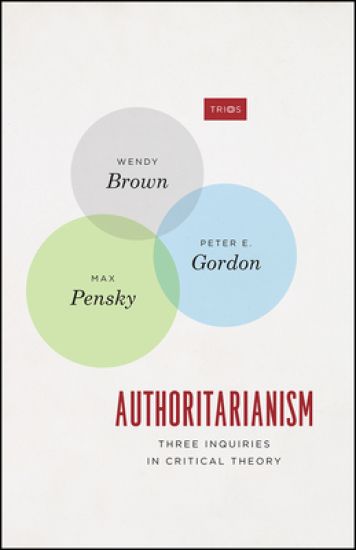
Authoritarianism

Authoritarianism

Wendy Brown; Peter E. Gordon; Max Pensky

University of Chicago Press
2018
nidottu
Across the Euro-Atlantic world, political leaders have been mobilizing their bases with nativism, racism, xenophobia, and paeans to “traditional values,” in brazen bids for electoral support. How are we to understand this move to the mainstream of political policies and platforms that lurked only on the far fringes through most of the postwar era? Does it herald a new wave of authoritarianism? Is liberal democracy itself in crisis? In this volume, three distinguished scholars draw on critical theory to address our current predicament. Wendy Brown, Peter E. Gordon, and Max Pensky share a conviction that critical theory retains the power to illuminate the forces producing the current political constellation as well as possible paths away from it. Brown explains how “freedom” has become a rallying cry for manifestly un-emancipatory movements; Gordon dismantles the idea that fascism is rooted in the susceptible psychology of individual citizens and reflects instead on the broader cultural and historical circumstances that lend it force; and Pensky brings together the unlikely pair of Tocqueville and Adorno to explore how democracies can buckle under internal pressure. These incisive essays do not seek to smooth over the irrationality of the contemporary world, and they do not offer the false comforts of an easy return to liberal democratic values. Rather, the three authors draw on their deep engagements with nineteenth–and twentieth–century thought to investigate the historical and political contradictions that have brought about this moment, offering fiery and urgent responses to the demands of the day.
Authoritarianism

Authoritarianism

Wendy Brown; Peter E. Gordon; Max Pensky

University of Chicago Press
2018
sidottu
Across the Euro-Atlantic world, political leaders have been mobilizing their bases with nativism, racism, xenophobia, and paeans to “traditional values,” in brazen bids for electoral support. How are we to understand this move to the mainstream of political policies and platforms that lurked only on the far fringes through most of the postwar era? Does it herald a new wave of authoritarianism? Is liberal democracy itself in crisis? In this volume, three distinguished scholars draw on critical theory to address our current predicament. Wendy Brown, Peter E. Gordon, and Max Pensky share a conviction that critical theory retains the power to illuminate the forces producing the current political constellation as well as possible paths away from it. Brown explains how “freedom” has become a rallying cry for manifestly un-emancipatory movements; Gordon dismantles the idea that fascism is rooted in the susceptible psychology of individual citizens and reflects instead on the broader cultural and historical circumstances that lend it force; and Pensky brings together the unlikely pair of Tocqueville and Adorno to explore how democracies can buckle under internal pressure. These incisive essays do not seek to smooth over the irrationality of the contemporary world, and they do not offer the false comforts of an easy return to liberal democratic values. Rather, the three authors draw on their deep engagements with nineteenth–and twentieth–century thought to investigate the historical and political contradictions that have brought about this moment, offering fiery and urgent responses to the demands of the day.
Undoing the Demos

Undoing the Demos

Wendy Brown

Zone Books
2017
pokkari
Tracing neoliberalism's devastating erosions of democratic principles, practices, and cultures. Neoliberal rationality-ubiquitous today in statecraft and the workplace, in jurisprudence, education, and culture-remakes everything and everyone in the image of homo oeconomicus. What happens when this rationality transposes the constituent elements of democracy into an economic register? In Undoing the Demos, Wendy Brown explains how democracy itself is imperiled. The demos disintegrates into bits of human capital; concerns with justice bow to the mandates of growth rates, credit ratings, and investment climates; liberty submits to the imperative of human capital appreciation; equality dissolves into market competition; and popular sovereignty grows incoherent. Liberal democratic practices may not survive these transformations. Radical democratic dreams may not either.In an original and compelling argument, Brown explains how and why neoliberal reason undoes the political form and political imaginary it falsely promises to secure and reinvigorate. Through meticulous analyses of neoliberalized law, political practices, governance, and education, she charts the new common sense. Undoing the Demos makes clear that for democracy to have a future, it must become an object of struggle and rethinking.
OWww! Traveling with Chronic Pain

OWww! Traveling with Chronic Pain

Wendy Brown

Createspace Independent Publishing Platform
2017
nidottu
For people with chronic pain and those who love them Helpful advice and irreverent, laugh-out-loud cartoons take the anxiety out of what often seems impossible--leaving home. "OWww Traveling with Chronic Pain", makes travel easier, less stressful and above all, fun. brown, an international award-winning cartoonist, has always suffered from daily chronic pain, but travels extensively in spite of it. She understands the joys and pitfalls waiting for travelers who'd rather lie down with an ice pack RIGHT NOW than move themselves and their bags one more mile.
Walled States, Waning Sovereignty
A prize-winning examination of why nation-states wall themselves off despite widespread proclamations of global connectedness.Why do walls marking national boundaries proliferate amid widespread proclamations of global connectedness and despite anticipation of a world without borders? Why are barricades built of concrete, steel, and barbed wire when threats to the nation today are so often miniaturized, vaporous, clandestine, dispersed, or networked?In Walled States, Waning Sovereignty, Wendy Brown considers the recent spate of wall building in contrast to the erosion of nation-state sovereignty. Drawing on classical and contemporary political theories of state sovereignty in order to understand how state power and national identity persist amid its decline, Brown considers both the need of the state for legitimacy and the popular desires that incite the contemporary building of walls. The new walls-dividing Texas from Mexico, Israel from Palestine, South Africa from Zimbabwe-consecrate the broken boundaries they would seem to contest and signify the ungovernability of a range of forces unleashed by globalization. Yet these same walls often amount to little more than theatrical props, frequently breached, and blur the distinction between law and lawlessness that they are intended to represent. But if today's walls fail to resolve the conflicts between globalization and national identity, they nonetheless project a stark image of sovereign power. Walls, Brown argues, address human desires for containment and protection in a world increasingly without these provisions. Walls respond to the wish for horizons even as horizons are vanquished.