Kirjailija
Willa Cather
Kirjat ja teokset yhdessä paikassa: 610 kirjaa, julkaisuja vuosilta 1927-2026, suosituimpien joukossa Christmas Classics. Vertaile teosten hintoja ja tarkista saatavuus suomalaisista kirjakaupoista.
610 kirjaa
Kirjojen julkaisuhaarukka 1927-2026.
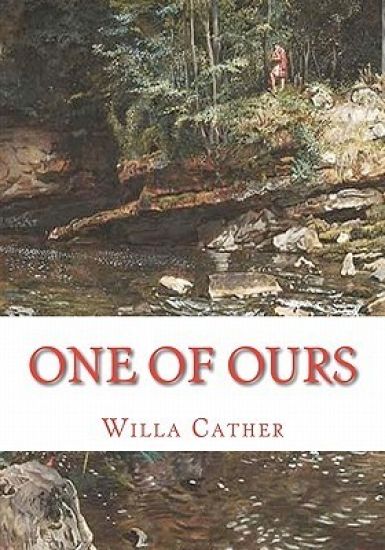
One of Ours is a novel by Willa Cather which won the 1923 Pulitzer Prize about the life of a native of Nebraska around the turn of the 20th century. H. L. Mencken suggested the novel read like "a Hollywood movie".

Willa Cather's twelfth and final novel, Sapphira and the Slave Girl, is her most intense fictional engagement with political and personal conflict. Set in Cather's Virginia birthplace in 1856, the novel draws on family and local history and the escalating conflicts of the last years of slavery—conflicts in which Cather's family members were deeply involved, both as slave owners and as opponents of slavery. Cather, at five years old, appears as a character in an unprecedented first-person epilogue. Tapping her earliest memories, Cather powerfully and sparely renders a Virginia world that is simultaneously beautiful and, as she said, "terrible." The historical essay and explanatory notes explore the novel's grounding in family, local, and national history; show how southern cultures continually shaped Cather's life and work, culminating with this novel; and trace the progress of Cather's research and composition during years of grief and loss that she described as the worst of her life. More early drafts, including manuscript fragments, are available for Sapphira and the Slave Girl than for any other Cather novel, and the revealing textual essay draws on this rich resource to provide new insights into Cather's composition process.
In 1920 Willa Cather collected eight of the stories she had written over the past twenty years into Youth and the Bright Medusa, stories of the perilous pursuit of the bright medusa of art in a hostile, materialistic world. These include some of her best tales: "Coming, Aphrodite!" focuses on a dedicated painter and his affair with a singer in pursuit of celebrity; "Paul's Case" and "A Wagner Matinée" tell of a young man and an old woman with artistic longings crushed by their environments; "The Sculptor's Funeral" and "The Diamond Mine" show the high costs of success.The historical essay and explanatory notes trace the composition of the stories and their roots in the people, events, and places Cather knew, from her family to world-famous sopranos, from Nebraska and Wyoming to New York and Pittsburgh, with new information on the sources for "Paul's Case." Historical photographs, including a hitherto unknown portrait of the prototype for Paul, show people and places as Cather knew them. The textual essay and apparatus explore the versions that appeared in her lifetime, from first magazine publication to the final collected edition of her works—and describe how the magazine version of "Coming, Aphrodite!" was censored by the editors, even to the title.


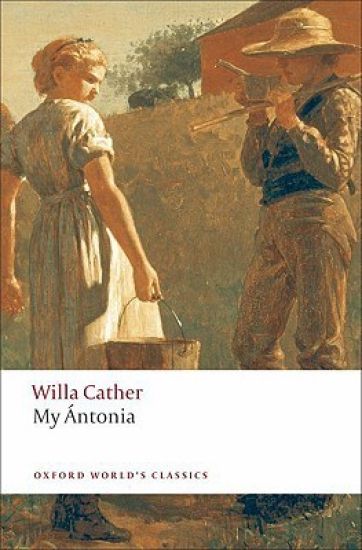
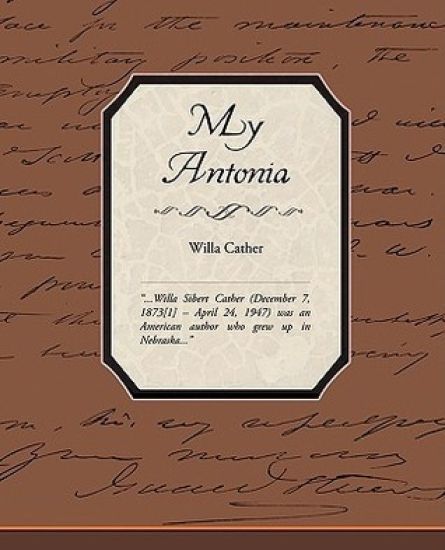
'As I looked about me I felt that the grass was the country, as the water is the sea. The red of the grass made all the great prairie the colour of wine-stains...And there was so much motion in it; the whole country seemed, somehow, to be running.' My Antonia (1918) depicts the pioneering period of European settlement on the tall-grass prairie of the American midwest, with its beautiful yet terrifying landscape, rich ethnic mix of immigrants and native-born Americans, and communities who share life's joys and sorrows. Jim Burden recounts his memories of Antonia Shimerda, whose family settle in Nebraska from Bohemia. Together they share childhoods spent in a new world. Jim leaves the prairie for college and a career in the east, while Antonia devotes herself to her large family and productive farm. Her story is that of the land itself, a moving portrait of endurance and strength. Described on publication as 'one of the best [novels] that any American has ever done', My Antonia paradoxically took Cather out of the rank of provincial novelists as the same time that it celebrated the provinces, and mythologized a period of American history that had to be lost before its value could be understood. ABOUT THE SERIES: For over 100 years Oxford World's Classics has made available the widest range of literature from around the globe. Each affordable volume reflects Oxford's commitment to scholarship, providing the most accurate text plus a wealth of other valuable features, including expert introductions by leading authorities, helpful notes to clarify the text, up-to-date bibliographies for further study, and much more.