

Kirjailija
William B. Rouse
Kirjat ja teokset yhdessä paikassa: 33 kirjaa, julkaisuja vuosilta 1991-2026, suosituimpien joukossa Resilient Systems. Vertaile teosten hintoja ja tarkista saatavuus suomalaisista kirjakaupoista.
Mukana myös kirjoitusasut: William B Rouse
33 kirjaa
Kirjojen julkaisuhaarukka 1991-2026.

Health and Well-Being Risks for Organizations and People
William B. Rouse
TAYLOR FRANCIS LTD
2025
sidottu
From climate disasters to technological disruptions, society faces an unprecedented wave of risks that threaten global stability and economic security. Each year, over 20 million people die due to pollution, disease, accidents, and environmental hazards, while millions more suffer long-term health effects. Yet, within these challenges lie vast business opportunities for industries prepared to lead in risk mitigation. This book examines how the healthcare, insurance, construction, and manufacturing sectors can adapt, innovate, and thrive in a world increasingly characterized by unpredictable risks. From addressing systemic vulnerabilities in the healthcare industry to integrating sustainability into manufacturing practices, leaders must reassess their strategies to strike a balance between resilience and profitability. As technology accelerates societal integration, whether through cyber advancements or social media, the pace at which risks emerge and propagate continues to grow. Companies that embrace this new reality, integrating risk mitigation into their business models, will not only safeguard their operations but also unlock new opportunities for innovation, market expansion, and sustained competitive advantage. Those that fail to adapt will be left behind in the wake of creative destruction. This book is a roadmap for forward-thinking professionals, providing insights, strategies, and frameworks to navigate emerging risks and position their businesses for long term success.

Health and Well-Being Risks for Organizations and People
William B. Rouse
TAYLOR FRANCIS LTD
2025
nidottu
From climate disasters to technological disruptions, society faces an unprecedented wave of risks that threaten global stability and economic security. Each year, over 20 million people die due to pollution, disease, accidents, and environmental hazards, while millions more suffer long-term health effects. Yet, within these challenges lie vast business opportunities for industries prepared to lead in risk mitigation. This book examines how the healthcare, insurance, construction, and manufacturing sectors can adapt, innovate, and thrive in a world increasingly characterized by unpredictable risks. From addressing systemic vulnerabilities in the healthcare industry to integrating sustainability into manufacturing practices, leaders must reassess their strategies to strike a balance between resilience and profitability. As technology accelerates societal integration, whether through cyber advancements or social media, the pace at which risks emerge and propagate continues to grow. Companies that embrace this new reality, integrating risk mitigation into their business models, will not only safeguard their operations but also unlock new opportunities for innovation, market expansion, and sustained competitive advantage. Those that fail to adapt will be left behind in the wake of creative destruction. This book is a roadmap for forward-thinking professionals, providing insights, strategies, and frameworks to navigate emerging risks and position their businesses for long term success.
This book chronicles how four resort cities (Asheville, Aspen, Key West and Laguna Beach) addressed failing economic situations to reinvent themselves and prosper. The author explores bottom-up reinventions of local community value propositions, often driven by economic forces that require reinvention due to declining or disappearing traditional economic opportunities. The author foregoes broad national policies and focuses on a wide range of citizen groups, local institutions and businesses that coalesce to understand what is happening or has happened to their community. These cities then formulate future aspirations with new value propositions and experiment to determine what works. The investment becomes focused on emergent successes. The book addresses four community ecosystems and a spectrum of contexts—For example, mountains vs. oceans and venues for entertainment vs. thought leadership. These four ecosystems were reinvented creatively to enable great economic and societal successes. In particular, the energy provided by bottom-up innovation was crucial. The information presented in this book is drawn from two sources—First, historical accounts of such initiatives are leveraged. Second, and more substantial are findings synthesized from extensive interviews in Asheville, NC.
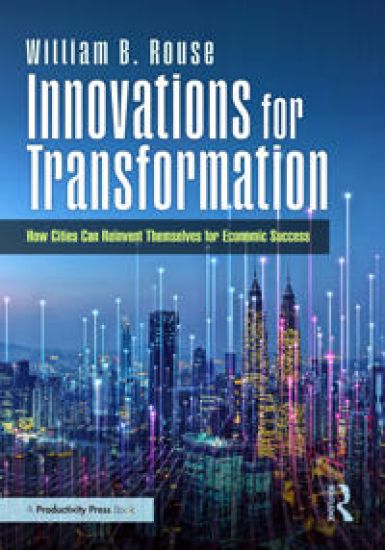
This book chronicles how four resort cities (Asheville, Aspen, Key West and Laguna Beach) addressed failing economic situations to reinvent themselves and prosper. The author explores bottom-up reinventions of local community value propositions, often driven by economic forces that require reinvention due to declining or disappearing traditional economic opportunities. The author foregoes broad national policies and focuses on a wide range of citizen groups, local institutions and businesses that coalesce to understand what is happening or has happened to their community. These cities then formulate future aspirations with new value propositions and experiment to determine what works. The investment becomes focused on emergent successes. The book addresses four community ecosystems and a spectrum of contexts—For example, mountains vs. oceans and venues for entertainment vs. thought leadership. These four ecosystems were reinvented creatively to enable great economic and societal successes. In particular, the energy provided by bottom-up innovation was crucial. The information presented in this book is drawn from two sources—First, historical accounts of such initiatives are leveraged. Second, and more substantial are findings synthesized from extensive interviews in Asheville, NC.

Society seems increasingly complex, in part due to constant “breaking news,” likes, tweets, etc. Considerable change is being entertained, or at least debated. Significant decisions are required. Decision-making lately has been flawed, laced with contention, hesitancy, and poor outcomes.The author has long helped clients and sponsors to understand complexity, address needs for change, formulate plans, and make decisions to invest resources to execute these plans. His engagement with them has focused on formulating problems, devising possible solutions, and deciding which solutions merited investment.This book represents the author's reflections on these engagements, associated challenges, and typical outcomes. These stories are reports about clients' or sponsors’ problems and how he and his colleagues went about addressing these problems of complexity, change, and decision-making. The clients or customers for these services included over 100 enterprises in industry, government, and academia. Most were large, many in the US, but quite a few were in Europe, Asia, Africa, and Latin America. Geography mattered in these engagements but did not dominate.The chapters in this book represent his reports on what he learned, and what he could generalize across airplanes, automobiles, banking, computers, communications, insurance, pharmaceuticals, retail, satellites, semiconductors, and telecoms, working with stakeholders from companies, agencies, and academia.

Society seems increasingly complex, in part due to constant “breaking news,” likes, tweets, etc. Considerable change is being entertained, or at least debated. Significant decisions are required. Decision-making lately has been flawed, laced with contention, hesitancy, and poor outcomes.The author has long helped clients and sponsors to understand complexity, address needs for change, formulate plans, and make decisions to invest resources to execute these plans. His engagement with them has focused on formulating problems, devising possible solutions, and deciding which solutions merited investment.This book represents the author's reflections on these engagements, associated challenges, and typical outcomes. These stories are reports about clients' or sponsors’ problems and how he and his colleagues went about addressing these problems of complexity, change, and decision-making. The clients or customers for these services included over 100 enterprises in industry, government, and academia. Most were large, many in the US, but quite a few were in Europe, Asia, Africa, and Latin America. Geography mattered in these engagements but did not dominate.The chapters in this book represent his reports on what he learned, and what he could generalize across airplanes, automobiles, banking, computers, communications, insurance, pharmaceuticals, retail, satellites, semiconductors, and telecoms, working with stakeholders from companies, agencies, and academia.
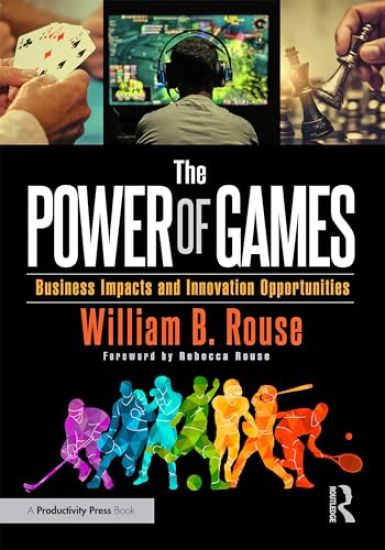
Games have long played a central role in society – actually a central role in the animal kingdom. Their play provides primary behavioral mechanisms that enable animals to learn and socialize. Indeed, "play" is a core animal activity. The principal focus of this book is on how games foster human playing, learning, and competing, including how we can design games to do this better. The author provides a wealth of real-world examples of how he created games for clients in the domains of education, energy, healthcare, national security, and transportation. He has focused on training and aiding for strategic thinking, product planning, technology development, and business operations. The technologies underlying these games became increasingly sophisticated. This has taken on greater significance as the gaming industry has grown and prospered. Gaming revenues now dwarf film and theater. New games released gain millions of sales within a few days of release. What makes games so appealing? What is the psychology of gaming? Does it vary for card games, board games, simulation games, and online games? What makes a game successful over years? What about sports games? What sociological roles do they play in our society? Why do they claim such energy and devotion? Why are sports stars able to earn enormous contracts? What is the business of these games? Why is it expected to be increasingly lucrative? What strategies might succeed or fail? Who might be the losers and winners? This book addresses all of these questions as well as an overarching question for society – Can online games fundamentally enhance the education of employees and students? The author is convinced they can. This requires, however, that games be designed to achieve these ends. This book is intended to contribute to understanding how to create and evaluate such games. Essentially, games enable employees and managers to play, learn, compete, and achieve in terms of knowledge and skills gained, competencies attained, customers attracted, and economic outcomes. This book explains, illustrates, and motivates investments in these pursuits to these ends.
Games have long played a central role in society – actually a central role in the animal kingdom. Their play provides primary behavioral mechanisms that enable animals to learn and socialize. Indeed, "play" is a core animal activity. The principal focus of this book is on how games foster human playing, learning, and competing, including how we can design games to do this better. The author provides a wealth of real-world examples of how he created games for clients in the domains of education, energy, healthcare, national security, and transportation. He has focused on training and aiding for strategic thinking, product planning, technology development, and business operations. The technologies underlying these games became increasingly sophisticated. This has taken on greater significance as the gaming industry has grown and prospered. Gaming revenues now dwarf film and theater. New games released gain millions of sales within a few days of release. What makes games so appealing? What is the psychology of gaming? Does it vary for card games, board games, simulation games, and online games? What makes a game successful over years? What about sports games? What sociological roles do they play in our society? Why do they claim such energy and devotion? Why are sports stars able to earn enormous contracts? What is the business of these games? Why is it expected to be increasingly lucrative? What strategies might succeed or fail? Who might be the losers and winners? This book addresses all of these questions as well as an overarching question for society – Can online games fundamentally enhance the education of employees and students? The author is convinced they can. This requires, however, that games be designed to achieve these ends. This book is intended to contribute to understanding how to create and evaluate such games. Essentially, games enable employees and managers to play, learn, compete, and achieve in terms of knowledge and skills gained, competencies attained, customers attracted, and economic outcomes. This book explains, illustrates, and motivates investments in these pursuits to these ends.

This book is about geography, economics, society, and innovation. Why did different regions evolve in different ways? What caused economic priorities and activities to go in one direction or another? The author believes that happenstance played a relatively minor role in this process. There were and are driving forces, as well as success factors.In each ecosystem, ambitious immigrants arrived, displaced native populations, and proceeded to develop and exploit the geography of their ecosystem, which included leveraging water resources for transportation, commerce, irrigation, etc. They often invented the means of development and exploitation, unfortunately including slavery, but also various technical methods, tools, and devices. Inventions that became innovations enabled industries, revenues, profits, and economic growth, initially for the ecosystem and then more broadly.The impacts of geography and economics are profound. Available resources strongly affect the options available for sustainable economic growth. This growth is fueled by technological innovations that are significantly affected by the physical, economic, and social characteristics of the ecosystem of interest.The eight case studies in this book illustrate how patterns of these characteristics impact innovation. They also depict changes over centuries, rather than just decades or years. Today’s crises are often just blips in the ongoing evolution of an innovation ecosystem. There are ups and downs, but the physical, economic, and social characteristics of the ecosystems dominate their evolution. These factors largely determine what potential innovations are pursued, who leads these pursuits, and why they think they can succeed. People and organizations dominate the factors influencing success.

This book is about geography, economics, society, and innovation. Why did different regions evolve in different ways? What caused economic priorities and activities to go in one direction or another? The author believes that happenstance played a relatively minor role in this process. There were and are driving forces, as well as success factors.In each ecosystem, ambitious immigrants arrived, displaced native populations, and proceeded to develop and exploit the geography of their ecosystem, which included leveraging water resources for transportation, commerce, irrigation, etc. They often invented the means of development and exploitation, unfortunately including slavery, but also various technical methods, tools, and devices. Inventions that became innovations enabled industries, revenues, profits, and economic growth, initially for the ecosystem and then more broadly.The impacts of geography and economics are profound. Available resources strongly affect the options available for sustainable economic growth. This growth is fueled by technological innovations that are significantly affected by the physical, economic, and social characteristics of the ecosystem of interest.The eight case studies in this book illustrate how patterns of these characteristics impact innovation. They also depict changes over centuries, rather than just decades or years. Today’s crises are often just blips in the ongoing evolution of an innovation ecosystem. There are ups and downs, but the physical, economic, and social characteristics of the ecosystems dominate their evolution. These factors largely determine what potential innovations are pursued, who leads these pursuits, and why they think they can succeed. People and organizations dominate the factors influencing success.

From Human-Centered Design to Human-Centered Society
William B. Rouse
TAYLOR FRANCIS LTD
2024
nidottu
A human-centered society creatively balances investments in sources of innovation, while also governing in a manner that eventually limits exploitation by originators once innovations have proven their value in the marketplace, broadly defined to include both private and public constituencies. The desired balance requires society to invest in constituencies to be able to create innovations that provide current and future collective benefits, while also assuring society provides laws, courts, police, and military to protect individual rights to life, liberty, and the pursuit of happiness. The balance addresses collectivism vs. individualism. Collectivism emphasizes the importance of the community. Individualism, in contrast, is focused on the rights and concerns of each person. Unity and selflessness or altruism are valued traits in collectivist cultures; independence and personal identity are central in individualistic cultures. Collectivists can become so focused on collective benefits that they ignore sources and opportunities for innovation. Individualists can tend to invest themselves, almost irrationally, in ideas and visions, many of which will fail, but some will transform society. Collectivists need to let individualists exploit their successful ideas. Individualists need to eventually accept the need to provide collective benefits. This book addresses the inherent tension underlying the pursuit of this balance. It has played a central role in society at least since the Industrial Revolution (1760–1840). Thus, the story of this tension, how it regularly emerges, and how it is repeatedly resolved, for better or worse, is almost a couple of centuries old. Creating a human-centered society can be enabled by creatively enabling this balance. Explicitly recognizing the need for this balance is a key success factor. This book draws upon extensive experiences within the domains of transportation and defense, computing and communications, the Internet and social media, health and wellness, and energy and climate. Balancing innovation and exploitation takes varying forms in these different domains. Nevertheless, the underlying patterns and practices are sufficiently similar to enable important generalizations.

From Human-Centered Design to Human-Centered Society
William B. Rouse
TAYLOR FRANCIS LTD
2024
sidottu
A human-centered society creatively balances investments in sources of innovation, while also governing in a manner that eventually limits exploitation by originators once innovations have proven their value in the marketplace, broadly defined to include both private and public constituencies. The desired balance requires society to invest in constituencies to be able to create innovations that provide current and future collective benefits, while also assuring society provides laws, courts, police, and military to protect individual rights to life, liberty, and the pursuit of happiness. The balance addresses collectivism vs. individualism. Collectivism emphasizes the importance of the community. Individualism, in contrast, is focused on the rights and concerns of each person. Unity and selflessness or altruism are valued traits in collectivist cultures; independence and personal identity are central in individualistic cultures. Collectivists can become so focused on collective benefits that they ignore sources and opportunities for innovation. Individualists can tend to invest themselves, almost irrationally, in ideas and visions, many of which will fail, but some will transform society. Collectivists need to let individualists exploit their successful ideas. Individualists need to eventually accept the need to provide collective benefits. This book addresses the inherent tension underlying the pursuit of this balance. It has played a central role in society at least since the Industrial Revolution (1760–1840). Thus, the story of this tension, how it regularly emerges, and how it is repeatedly resolved, for better or worse, is almost a couple of centuries old. Creating a human-centered society can be enabled by creatively enabling this balance. Explicitly recognizing the need for this balance is a key success factor. This book draws upon extensive experiences within the domains of transportation and defense, computing and communications, the Internet and social media, health and wellness, and energy and climate. Balancing innovation and exploitation takes varying forms in these different domains. Nevertheless, the underlying patterns and practices are sufficiently similar to enable important generalizations.

We seem to be stuck, staring at insurmountable challenges. The pandemic is the opening act for climate change, and we need to get much better at anticipating and preparing for these types of challenge. Simply rebuilding bridges once they fall, or houses once they are swept away, is both expensive and risks human lives. Anticipation and preparation costs more now, but is much less costly over time. Of course, spending now to save later is not a dominant American tradition. We have managed - or at least reacted to - the Aids epidemic (1981-2013), Internet bubble bursting (2001), the real estate bubble bursting (2007), the opioid epidemic (2017), forest fires on the West Coast (2018), and the coronavirus pandemic (2020). Very recently, we have experienced the fall of Afghanistan (2021), the latest earthquake and hurricane in Haiti (2021), and the attack on Ukraine (2022). Various earthquakes, hurricanes, and recently cicadas, but fortunately not locusts, have been sprinkled throughout. Beyond Quick Fixes steps back from business as usual to rethink how we can approach the complex challenges of contemporary society -- health, education, energy, and social media. Rouse retreats, initially, into the principals of design thinking rather than policy making; he rigorously reconsiders our typical modes of operation and explores alternative ways of thinking about complex problems and potential solutions. The result is an integrated approach to addressing complexity to assist leaders and advisors responsible for addressing these challenges.
This book comprises a set of stories about being an engineer for many decades and the lessons the author learned from research and practice. These lessons focus on people and organizations, often enabled by technology. The settings range from airplanes, power plants, and communication networks to ecosystems that enable education, healthcare, and transportation. All of these settings are laced with behavioral and social phenomena that need to be understood and influenced. The author’s work in these domains has often led to the question: "Well, why does it work like that?" He invariably sought to understand the bigger picture to find the sources of requirements, constraints, norms, and values. He wanted to understand what could be changed, albeit often with much effort to overcome resistance. He found that higher levels of an ecosystem often provide the resources and dictate the constraints imposed on lower levels. These prescriptions are not just commands. They also reflect values and cultural norms. Thus, the answers to the question were not just technical and economic. Often, the answers reflected eons of social and political priorities. The endeavors related in the book frequently involved addressing emerging realities rather than just the status quo. This book is an ongoing discovery of these bigger pictures. The stories and the lessons related in this book provide useful perspectives on change. The understanding of people and organizations that emerges from these lessons can help to enable transformative change. Fundamental change is an intensely human-centric endeavor, not just for the people and organizations aspiring to change, but also for the people helping them. You will meet many of these people in this book as the stories unfold. The genesis of this book originated in a decision made early in the author’s career. He had developed a habit of asking at the end of each day, "What did I really accomplish today?" This was sometimes frustrating as he was not sure the day had yielded any significant accomplishments. One day it dawned on him that this was the wrong question – He needed to ask, "What did I learn today?" It is always possible to learn, most recently about public health and climate change. In planning this book, the author first thought in terms of accomplishments such as projects conducted, systems built, and articles and books published. He could not imagine this being interesting to readers. Then, it struck him – It is much more interesting to report on what he learned about people and organizations, including how he helped them accomplish their goals. This is a book of stories about how these lessons emerged.In planning this book, the author first thought in terms of accomplishments such as projects conducted, systems built, and articles and books published. He could not imagine this being interesting to readers. Then, it struck him – It is much more interesting to report on what he learned about people and organizations, including how he helped them accomplish their goals. This is a book of stories about how these lessons emerged.

This book comprises a set of stories about being an engineer for many decades and the lessons the author learned from research and practice. These lessons focus on people and organizations, often enabled by technology. The settings range from airplanes, power plants, and communication networks to ecosystems that enable education, healthcare, and transportation. All of these settings are laced with behavioral and social phenomena that need to be understood and influenced. The author’s work in these domains has often led to the question: "Well, why does it work like that?" He invariably sought to understand the bigger picture to find the sources of requirements, constraints, norms, and values. He wanted to understand what could be changed, albeit often with much effort to overcome resistance. He found that higher levels of an ecosystem often provide the resources and dictate the constraints imposed on lower levels. These prescriptions are not just commands. They also reflect values and cultural norms. Thus, the answers to the question were not just technical and economic. Often, the answers reflected eons of social and political priorities. The endeavors related in the book frequently involved addressing emerging realities rather than just the status quo. This book is an ongoing discovery of these bigger pictures. The stories and the lessons related in this book provide useful perspectives on change. The understanding of people and organizations that emerges from these lessons can help to enable transformative change. Fundamental change is an intensely human-centric endeavor, not just for the people and organizations aspiring to change, but also for the people helping them. You will meet many of these people in this book as the stories unfold. The genesis of this book originated in a decision made early in the author’s career. He had developed a habit of asking at the end of each day, "What did I really accomplish today?" This was sometimes frustrating as he was not sure the day had yielded any significant accomplishments. One day it dawned on him that this was the wrong question – He needed to ask, "What did I learn today?" It is always possible to learn, most recently about public health and climate change. In planning this book, the author first thought in terms of accomplishments such as projects conducted, systems built, and articles and books published. He could not imagine this being interesting to readers. Then, it struck him – It is much more interesting to report on what he learned about people and organizations, including how he helped them accomplish their goals. This is a book of stories about how these lessons emerged.In planning this book, the author first thought in terms of accomplishments such as projects conducted, systems built, and articles and books published. He could not imagine this being interesting to readers. Then, it struck him – It is much more interesting to report on what he learned about people and organizations, including how he helped them accomplish their goals. This is a book of stories about how these lessons emerged.

Public-private collaborations are central to the functioning and provisioning of most essential ecosystems. Ecosystems such as security, healthcare, education, and the environment face challenges of governance, diverse constituencies, numerous advocacy organizations, incompatible outcome metrics, and persistent media attention, to name a few. There is a wide range of public and private players involved in operating, sustaining, and investing in these ecosystems, including stakeholders from government, industry, academia, non-governmental organizations, and the general public. Fundamental change requires understanding a wide range of interests and accommodating change strategies accordingly. The challenges of transforming these ecosystems would easily qualify as “wicked problems”; social or cultural problems laced with incomplete or contradictory knowledge, large numbers of people and opinions, substantial economic burdens, and inextricable connections with other issues. Transforming Public-Private Ecosystems addresses these challenges for the four important ecosystems of national security, healthcare delivery, higher education, and energy and climate, and provides an integrated perspective for understanding and enabling change.

Failures are a common phenomena in civilization. Things fail and society responds, often very slowly, sometimes inappropriately. What kinds of things go wrong? Why do they go wrong? How do people and organizations react to failures, and what are the best ways to react? William B. Rouse takes an analytic approach to these questions and addresses eighteen well-known cases of high-consequence failures. He employs a multi-level framework to integrate findings across the case studies, and in turn uses these to outline a conceptual approach to integrated failure management. Though diverse in their causes and outcomes, his analysis shows that the conceptual design of an integrated approach to failure management can encompass each of the case studies, all of which would have benefitted from the same conceptual decision support architecture. This enables cross-cutting system design principles and practices, assuring that failure management in every new domain and context need not start with a blank slate.

Mathematical modelling and simulation is an increasingly powerful area of mathematics and computer science, which in recent years has been fuelled by the unprecedented access to larger than ever stores of data. These techniques have an increasing number of applications in the professional and political spheres, and people try to predict the results of certain courses of action as accurately as possible. Computing Possible Futures explores the use of models on everyday phenomena such as waiting in lines and driving a car, before expanding the model's complexity to look at how large-scale computational models can help imagine big scale "what-if" scenarios like the effect self-driving cars on the US economy. The successes and failures of complex real world problems are examined, and it is shown how few, if any, failures are due to model errors or computational difficulties. It is also shown how real life decision makers have addressed important problems and used their model-based understanding of possible futures to inform these decisions. Written in an entertaining and accessible way, Computing Possible Futures will help those concerned about the futurity of their decisions to understand what fundamentally needs to be done, why it needs to be done, and how to do it.

Perspectives on Complex Global Challenges
Elisabeth Pate-Cornell; William B. Rouse
John Wiley Sons Inc
2016
nidottu
Examines current and prospective challenges surrounding global challenges of education, energy, healthcare, security, and resilience This book discusses issues in large-scale systems in the United States and around the world. The authors examine the challenges of education, energy, healthcare, national security, and urban resilience. The book covers challenges in education including America's use of educational funds, standardized testing, and the use of classroom technology. On the topic of energy, this book examines debates on climate, the current and future developments of the nuclear power industry, the benefits and cost decline of natural gases, and the promise of renewable energy. The authors also discuss national security, focusing on the issues of nuclear weapons, terrorism and cyber security. Urban resilience is addressed in the context of natural threats such as hurricanes and floods. Studies the usage of a globalized benchmark for both student and pedagogical performanceCovers topics such as surveillance, operational capabilities, movement of resources, and the pros and cons of globalizationExamines big data, evolving medical methodologies and effects on the medical educational curriculum, and the positive effects of electronic records in healthcare data Perspectives on Complex Global Challenges: Education, Energy Healthcare, Security, and Resilience serves as a reference for government officials, personnel in security, business executives and system engineers.