Kirjojen hintavertailu. Mukana 12 444 278 kirjaa ja 12 kauppaa.
Kirjailija
William Carlos Williams
Kirjat ja teokset yhdessä paikassa: 76 kirjaa, julkaisuja vuosilta 1967-2026, suosituimpien joukossa Kora in Hell: Improvisations (1920). Vertaile teosten hintoja ja tarkista saatavuus suomalaisista kirjakaupoista.
""A Dream of Love"" is a play written by William Carlos Williams, consisting of three acts and eight scenes. The story revolves around a young couple, Jack and Edith, who are deeply in love but face numerous challenges in their relationship. Jack is an aspiring writer who struggles to make ends meet, while Edith comes from a wealthy family and is torn between her love for Jack and her family's expectations. As the play progresses, the couple's relationship is put to the test as they navigate through various obstacles such as financial struggles, infidelity, and societal pressures. The play also touches upon themes of class struggle, the pursuit of artistic passion, and the complexities of human relationships.Throughout the play, Williams employs poetic language and vivid imagery to convey the emotional depth of the characters and their struggles. The play ultimately culminates in a dramatic conclusion that leaves the audience questioning the true nature of love and the sacrifices one must make to pursue it.Overall, ""A Dream of Love"" is a poignant and thought-provoking play that explores the complexities of love and the human experience.Direction, No. 6.This scarce antiquarian book is a facsimile reprint of the old original and may contain some imperfections such as library marks and notations. Because we believe this work is culturally important, we have made it available as part of our commitment for protecting, preserving, and promoting the world's literature in affordable, high quality, modern editions, that are true to their original work.
William Carlos Williams (1883–1963) produced a startling number of translations of both Spanish and Latin American poetry starting during WWI and continuing through the late fifties. Williams grew up in a Spanish-speaking home and sometimes described himself as half-Spanish. His mother was Puerto Rican and his father spoke Spanish fluently. “Spanish is not, in the sense to which I refer, a literary language,” Williams wrote in his Autobiography. “It has a place of its own, an independent place very sympathetic to the New World.” Williams approached translation as a way not only to present the work of unknown Spanish poets, but also to extend the range and capacity of American poetry, to use language “with unlimited freshness.” Included in this bilingual edition are beautifully rendered translations of poets well-known — Neruda, Paz, and Parra — and lesser-known: Rafael Are´valo Marti´nez (from Guatemala), Rafael Beltra´n Logron~o (from Spain), and Eunice Odio (from Costa Rica).
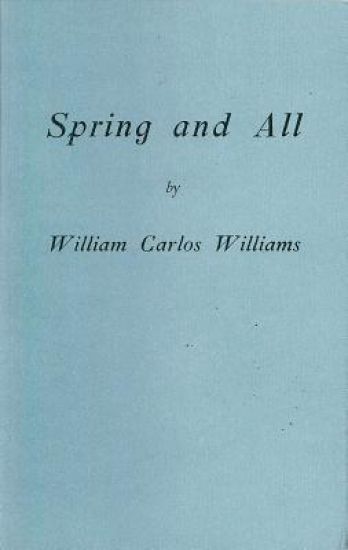
Spring and All is a manifesto of the imagination — a hybrid of alternating sections of prose and free verse that coalesce in dramatic, energetic, and beautifully cryptic statements of how language re-creates the world. Spring and All contains some of Williams’s best-known poetry, including Section I, which opens, “By the road to the contagious hospital,” and Section XXII, where Williams penned his most famous poem, “The Red Wheelbarrow.” Now, almost 90 years since its first publiction, New Directions publishes this facsimile of the original 1923 Contact Press edition, featuring a new introduction by C. D. Wright.
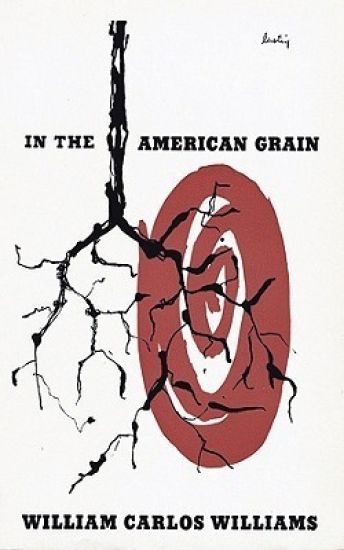
Although admired by D. H. Lawrence, this modern classic went generally unnoticed during the years after its publication in 1925. Yet it is “a fundamental book, essential if one proposes to come to terms with American literature” (Times Literary Supplement). William Carlos Williams was not a historian, but he was fascinated by the texture of American history. Beginning with Columbus’s discovery of the Indies and moving on through Sir Walter Raleigh, Cotton Mather, Daniel Boone, George Washington, Ben Franklin, Aaron Burr, Edgar Allan Poe, and Abraham Lincoln, Williams found in the fabric of familiar episodes new shades of meaning and configurations of character. He brought a poetic imagination to the task of reconstructing a live tradition for Americans, and what results is one of the finest works of prose to have been penned by any writer of the twentieth century.
Renowned poet William Carlos Williams and literary innovator Louis Zukofsky maintained a relationship through correspondence as both collaborators and friends between 1928 and 1963. Their letters have remained largely unpublished until now. Edited by Barry Ahearn, The Correspondence of William Carlos Williams and Louis Zukofsky chronicles the professional and personal relationship between Williams and Zukofsky as they present one another with criticism, suggestions and confidences that are at turns touching and astonishingly candid. In addition to delving into the creative processes of the two men, this exciting and extensive collection provides insight into such literary icons as Ezra Pound, E.E. Cummings, T.S. Eliot and Conrad Aiken. The analytical voice of Zukofsky and the experimental style of Williams radiate in these letters, creating a vivid and invaluable document of American literature.
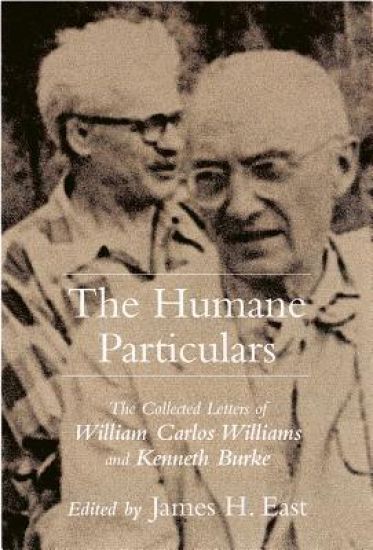
Significantly deepening our understanding of two key figures from the modernist period, The Humane Particulars collects the letters between William Carlos Williams and Kenneth Burke. Written during forty-two years of close friendship and literary debate, these nearly 250 letters span two long lives, two complicated personalities, and two brilliantly productive careers. The animated exchange between a canonical poet and the leading American rhetorical critic of the twentieth century offers a more complete vision of their outlooks and their contributions to the shape and tenor of the modernist scene. Set in context by James H. East's introduction and explanatory notes, the letters begin just after Burke and Williams's initial meeting in 1921 during a tramp through a New Jersey swamp and surrounding meadowlands. Their written exchange follows the maturing of their friendship and professional regard. The correspondence shows that Williams and Burke were fast friends during the experimental twenties, preoccupied by individual and divergent projects in the thirties and early forties, and reunited as enthusiastic correspondents after the Second World War. The letters refer to happy times spent together - walks in the woods, picnics and swimming, and visits to Burke's farm in Andover, New Jersey. They reveal, among other interesting personal matters, Burke's fascination with Williams's double life as physician and poet, Burke's hypochondria, and Williams's at times chastising medical advice to Burke. But, more important, the letters preserve the continual wrangling over the origin and nature of literary form that enlightened the pair's many disagreements. Of particular interest, the correspondence documents a largely unexplored aspect of Burke's career - his reciprocally influential relationship with the writers of the late modern and midcentury periods.
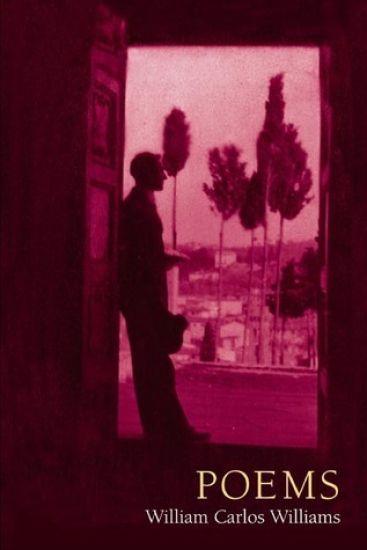
Before William Carlos Williams was recognized as one of the most important innovators in American poetry, he commissioned a printer to publish 100 copies of Poems (1909), a small collection largely imitating the styles of the Romantics and the Victorians. This volume collects the self-published edition of Poems, Williams's foray into the world of letters, with previously unpublished notes he made after spending nearly a year in Europe rethinking poetry and how to write it. As Poems shows his first tentative steps into poetry, the notes show him as he prepares to make a giant transformation in his art. Shortly after Poems appeared, Williams went through a series of experiences that changed his life--a trip to Europe, a marriage to the sister of the woman he genuinely loved, and the establishment of his medical practice. In Europe he was introduced to a consideration of an unlikely trio: Heinrich Heine, Martin Luther, and Richard Wagner, resulting in an exposure that subsequently influenced his developing style. Williams looked back on Poems as apprentice work, calling them, "bad Keats, nothing else--oh well, bad Whitman too. But I sure loved them. . . . There is not one thing of the slightest value in the whole thin booklet--except the intent," and never republished the collection. Now that Williams's work is widely read and appreciated, his reputation secure, his development as a poet is a matter worth serious study, Poems can be seen as a point of departure, a clear record of where Williams began before his life and ideas about poetry made seismic shifts. Virginia M. Wright-Peterson's succinct introduction puts Poems in the context of his life and times, discusses the reception of the volume, his reconsideration of the poems, and what they reveal about his poetic ambitions.
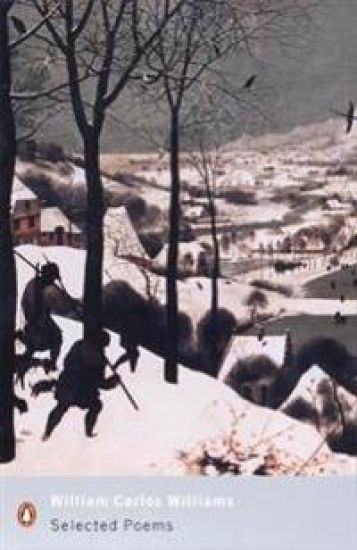
In his work as a physician, Williams had learnt the skill of objective observation which he applied to his poetry, examining, as he said, 'the particular to discover the universal'. Marked by a vernacular American speech and direct observation of the landscape and people of his native New Jersey, his poetry explores the 'raw merging of American pastoral and urban squalor. Emotionally restrained but rich in sensory experience, the poems were written according to the guiding concept: 'no ideas but in things' and those 'things', a red wheelbarrow, a group of trees, a river, convey the local and the particular with a vivid intensity.
New Directions has long published poet William Carlos Williams' entire body of short fiction as The Farmers' Daughters (1961). This new edition of The Collected Stories of William Carlos Williams contains all fifty-two stories combining the early collections The Knife of the Times (1932), Life Along the Passaic (1938) with the later collection Make Light of It (1950) and the great long story, "The Farmers' Daughters" (1956). When these stories first appeared, their vitality and immediacy shocked many readers, as did the blunt, idiosyncratic speech of Williams' immigrant and working-class characters. But the passage of time has silenced the detractors, and what shines in the best of these stories is the unflinching honesty and deep humanity of Williams' portraits, burnished by the seeming artlessness which only the greatest masters command.
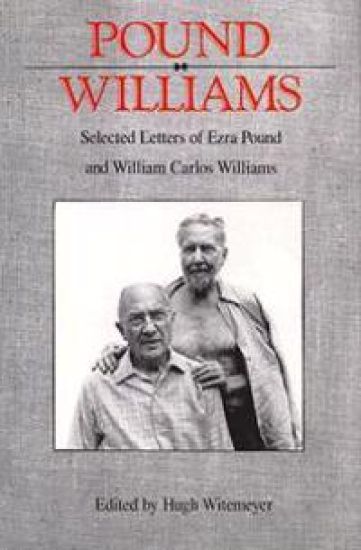
Ezra Pound and William Carlos Williams, two towering figures in American poetry, began their lifelong, and often contentious, friendship as students at the University of Pennsylvania. Their correspondence ran from 1907, the year Pound took up his virtually permanent residence in Europe, until Williams' death in 1963. The letters contribute an unparalleled documentary record of modern culture - a wealth of information about the lives and works of the two poets themselves; the literary and political movements in which they became involved and the impact of public events upon the arts; the activities of other writers and artists; and the world of small presses and little magazines that nourished the growth of modernism.
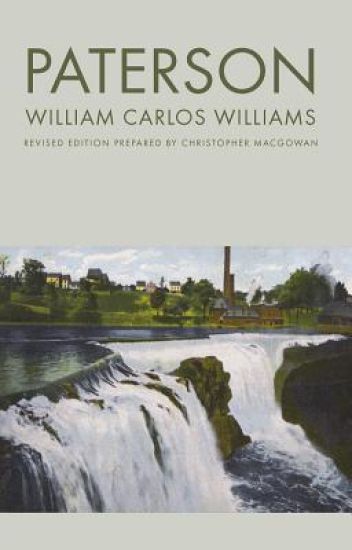
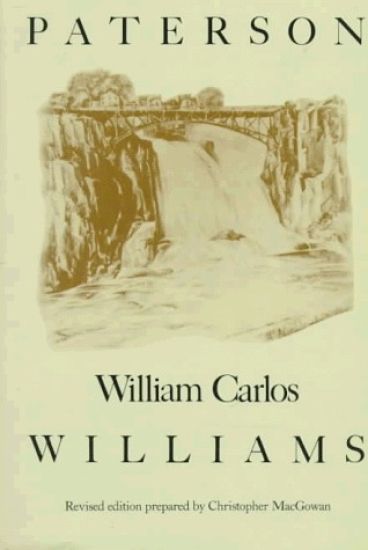
Paterson is both a place—the New Jersey city in whom the person (the poet's own life) and the public (the history of the region) are combined. Originally four books (published individually between 1946 and 1951), the structure of Paterson (in Dr. Williams' words) "follows the course of teh Passaic River" from above the great falls to its entrance into the sea. The unexpected Book Five, published in 1958, affirms the triumphant life of the imagination, in spite of age and death. This revised edition has been meticulously re-edited by Christopher MacGowan, who has supplied a wealth of notes and explanatory material.
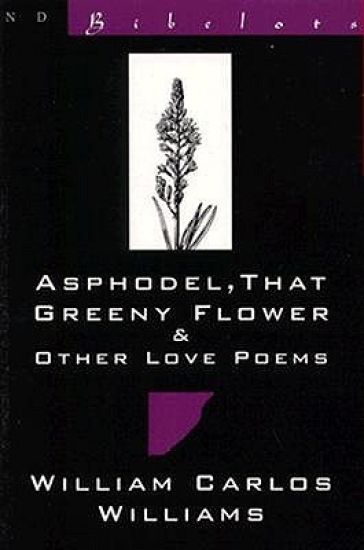
"Asphodel, That Greeny Flower," first published when William Carlos Williams was seventy-two, forms the heart of this new selection of his love poems. Robert Lowell praised "Asphodel" for delivering "to us what was impossible, something that was poetry and beyond poetry." Lyrical and moving, elegant and supple, it is charged with sheer musical pleasure. In addition to "Asphodel," eleven other important love poems have been chosen from the whole range of Williams' writing life--a life whose history of love is reviewed by Herbert Leibowitz in his incisive introduction. Leibowitz, editor of Parnassus: Poetry in Review magazine and author of forthcoming critical biography of William Carlos Williams, considers "Asphodel" in the context of Williams' singularly non-traditional love poetry, and distinguishes it as his "most eloquent and unorthodox love poem, a quest for 'abiding love' in the gathering shadows of death."
Paterson is both a place--the New Jersey city in whom the person (the poet's own life) and the public (the history of the region) are combined. Originally four books (published individually between 1946 and 1951), the structure of Paterson (in Dr. Williams' words) "follows the course of teh Passaic River" from above the great falls to its entrance into the sea. The unexpected Book Five, published in 1958, affirms the triumphant life of the imagination, in spite of age and death. This revised edition has been meticulously re-edited by Christopher MacGowan, who has supplied a wealth of notes and explanatory material.