Kirjojen hintavertailu. Mukana 12 371 547 kirjaa ja 12 kauppaa.
Kirjailija
William Carlos Williams
Kirjat ja teokset yhdessä paikassa: 76 kirjaa, julkaisuja vuosilta 1967-2026, suosituimpien joukossa Kora in Hell: Improvisations (1920). Vertaile teosten hintoja ja tarkista saatavuus suomalaisista kirjakaupoista.
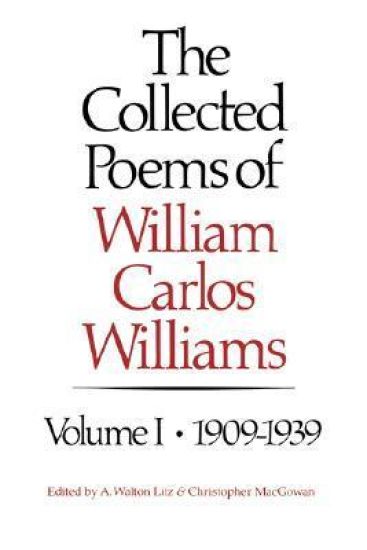
So that readers could more fully understand the extent of Williams' radical simplicity, all of his published poetry, excluding Paterson, was reissued in two definite volumes, of which this is the first.
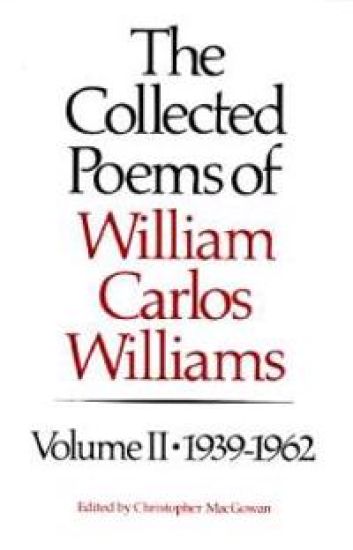
So that readers could more fully understand the extent of Williams' radical simplicity, all of his published poetry, excluding Paterson, was reissued in two definite volumes, of which this is the first.
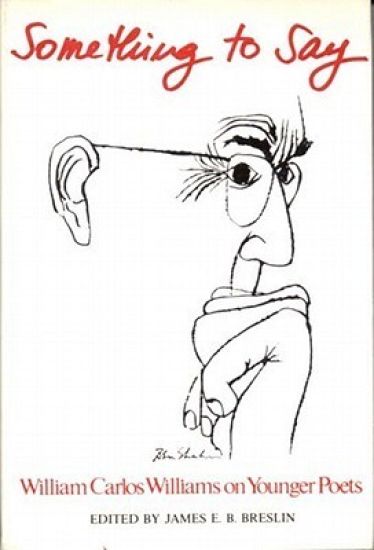
Something to Say: William Carlos Williams on Younger Poets collects all of Williams’ known writings—reviews, essays, introductions, and letters to the editor—on the two generations of poets that followed him, from Kenneth Rexroth and Louis Zukofsky to Robert Lowell and Allen Ginsberg. What might have been a random collection of occasional pieces achieves remarkable coherence from the singleness of Williams’ poetic vision: his belief that the secret spirit of ritual, of poetry, was trapped in restrictive molds, and, if these could be broken, the spirit would be able to live again in a new, contemporary form. Only a revived clarity and accuracy in sight and expression would enable the modern world to reform social order which Williams saw in complete disarray. To resuscitate American Poetry, Williams concentrated his efforts on the purification of poetic speech—his American idiom—and on remaking the poetic line in a new measure—his variable foot. And while his battles with his contemporaries on these issues could be heated, he was always a nurturing father to the young, “a useful presence,” “a model and a liberator.” He told Ginsberg to pare down and economize, Roethke to open up, and encouraged Lowell and Levertov to shake off poetic conventions. But in all his emphasis on the poem as a made object of concrete physicality or as a field of action, he would return again and again to this basic advice to young writers: “The only thing necessary is to have something to say when at last the opportunity comes to say it.”
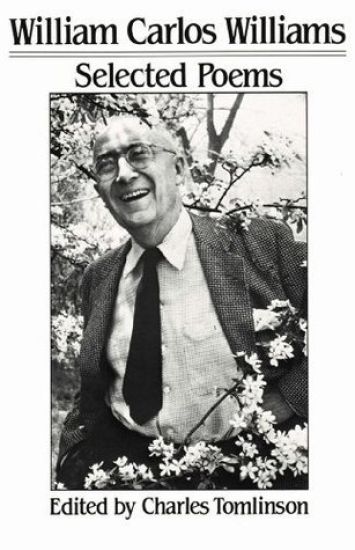
Opening with Professor Tomlinson's superbly clear and helpful introduction this selection reflects the most up-to-date Williams scholarship. In addition to including many more pieces, Tomlinson has organized the whole in chronological order. "It isn't what he [the poet] says that counts as a work of art," Williams maintained, "it's what he makes, with such intensity of purpose that it lives with an intrinsic movement of its own to verify its authenticity."
Many Loves, which ran for nearly a year (1959) in repertory at New York's famous Living Theatre, explores four varieties of human attachment, while A Dream of Love, first produced in 1949, is a penetrating and poetic treatment of infidelity and marriage. Tituba's Children, written three years before Arthur Miller's Crucible, is a dramatic study of witch-hunting – the Salem trials of 1692 and McCarthyism in the 1950's. The First President was first published in 1936. It is preceded by a long introduction on the theory of opera, the role of music, and the problems of realizing a historic figure on the stage. The Cure (1960) reminds us that Dr. Williams was for forty-two years a practicing physician. Its theme, developed in a very unusual situation, is the relationship between nurse and patient.
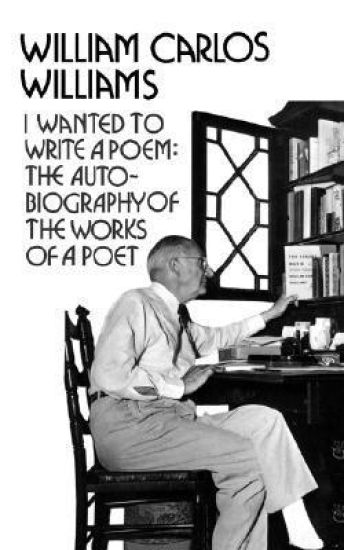
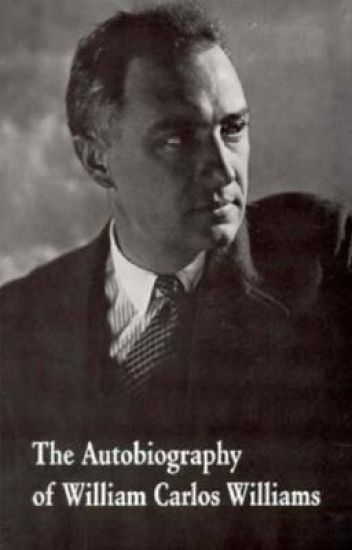
Subtitled "The Autobiography of the Works of a Poet," this unique volume was the result of a series of informal conversations in the mid-1950s between Dr. Williams, his wife, and Edith Heal, then a student at Columbia University. In the relaxed atmosphere of the Williams home in Rutherford, New Jersey, the three discussed, chronologically, the poet's works as collected on his very own library shelves. "There was an air of discovery about the whole procedure," Miss Heal writes in her introduction, "the poet's excited 'Why I'd forgotten this dedication,' the unexpected appearance of reviews that had been tucked away in the pages of the books, pencilled corrections in the text, scrawled first drafts on prescription blanks." I Wanted to Write a Poem is, then, a brief "talking" bibliography, alive with the Williamses' memories of the circumstances in which the books were brought into being––in Miss Heal's words, "a nostalgic review of the early twentieth-century literary world."
"Not after the establishment, but speaking straight ahead." This is how William Carlos Williams referred to his own forthrightness as well as his practice of using only American speech patterns in his poems. In Interviews with William Carlos Williams, Linda Wagner of the English Department, Michigan State University, has assembled Dr. Williams's most important public statements. The first section, entitled simply "Interviews," reproduces in toto three in-depth conversations, revealing Dr. Williams's humor, vitality, and American-ness, as he discusses his theories of poetic meter and diction, his opinions of such contemporaries as Pound and Eliot, and his view of his own role in shaping the course of modern American poetry. The second section, "Dialogues," is arranged alphabetically by subject heading. Here are recorded the poet's thoughts on topics from "Art" to "Women." The third and final part of Interviews with William Carlos Williams, "Memoirs and Miscellany," includes the touching account of a visit to the Williamses by artist Gael Turnbull in 1958. Also reprinted are two of Dr. Williams's best expositions of his own poetic techniques, "The American Idiot" and "How to Write"--essays which appeared in early New Directions anthologies but have been generally unavailable since. This valuable collection of comments "for the record" is annotated and includes an index.
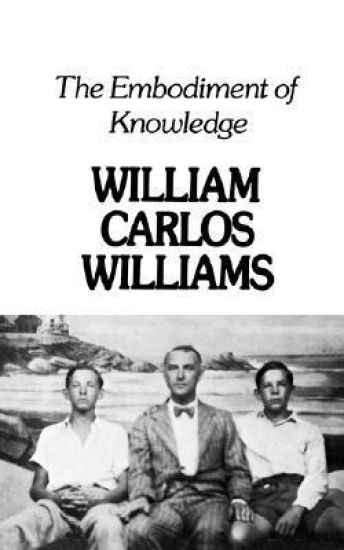
The miscellany of essays, notes, fragments, and jottings to which William Carlos Williams gave the title The Embodiment of Knowledge was found in manuscript after his death in the archive of his papers at the Beinecke Library at Yale University. Written in 1928-30, and dedicated to his sons, it was intended as a concrete demonstration of the organic nature of education, to show that knowledge is an ongoing process by which we create our selves from day to day. And to underscore the fact that so many of his own books were extended works of self-exploration, Dr. Williams wrote on the cover of his manuscript: “to be printed as it is, faults and all.”
Williams was foremost a poet, but the novels are of great interest. They are important books in their own right, because they present with a poet’s insight, and in a prose style of striking originality, aspects of American life which few other writers have approached. White Mule and its sequels, In the Money and The Build-Up, form a trilogy, the saga of the Stecher family, but each volume is a complete novel by itself. Joe Stecher and Gurlie, his wife, are a young couple of European origin settled in New York at the turn of the century and working to make a place for themselves in the new world. White Mule is the story of Joe’s inner struggle between love of fine craftsmanship (he is a printer by trade) and Gurlie’s ambition to get ahead, to have him get “in the money.” But it also the story of the awakening consciousness of their children; the real heroine is the baby Flossie––she had a kick like “White Mule” whiskey––whose birth begins the book. Everything revolves around the baby and she is surely unique in literature. Dr. Williams was a pediatrician, and without sentimentality he makes of this little being, who cannot even talk, a full-scale, three-dimensional personality.
William Carlos Williams’s medical practice and his literary career formed an undivided life. For forty years he was a busy doctor in the town of Rutherford, New Jersey, and yet he was able to write more than thirty books. One of the finest chapters in the Autobiography tells how each of his two roles stimulated and supported the other.
First published by New Directions in 1940, In the Money is a sequel to White Mule, and the second volume in Dr. Williams’s “Stecher Trilogy,” but it also stands alone as a novel complete in itself. White Mule is a study of childhood––of the baby Flossie Stecher and her sister Lottie, and their parents, Joe and Gurlie Stecher, of German and Norwegian origin, living in New York before the first World War. In the Money is Joe Stecher’s success story––the tale of his fight against graft and injustice to found his own business and get “into the money.” Joe is by nature quiet and reserved. But his wife Gurlie is full of ambition and drives him on toward the things she wants––position and a home of her own. It is a simple story, yet a meaningful one––a typical American situation. As a novelist, one of Dr. Williams’s strengths is his striking use of detail, an “objectivism,” related to the style of his poetry; which achieves great, even symbolic force in its enlargement of the minutiae of American life and character.
This collection makes available work of one of our greatest American poets in the last decade of his life. The first section, Pictures from Brueghel, contains previously uncollected short poems, while the second and third parts are the complete texts of The Desert Music (1954) and Journey to Love (1955), originally published by Random House. In these books, Dr. Williams perfected his "variable foot" metric and achieved full mastery of the "American idiom" which was his lifelong first concern. Among the poems of this period is the long "Asphodel, That Greeny Flower" which W. H. Auden has called "one of the most beautiful love poems in the language." Pictures from Brueghel was awarded the Pulitzer Prize for Poetry only two months after William Carlos Williams' death on March 4, 1963.