Kirjojen hintavertailu. Mukana 12 595 353 kirjaa ja 12 kauppaa.

Kirjailija

William James

Kirjat ja teokset yhdessä paikassa: 590 kirjaa, julkaisuja vuosilta 1896-2026, suosituimpien joukossa Pragmatism a New Name for Some Old Ways of Thinking. Vertaile teosten hintoja ja tarkista saatavuus suomalaisista kirjakaupoista.

590 kirjaa

Kirjojen julkaisuhaarukka 1896-2026.

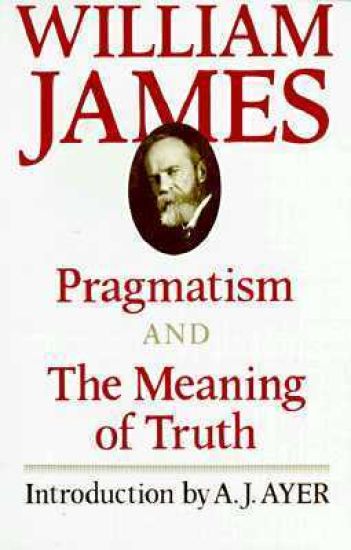
Pragmatism and The Meaning of Truth

Pragmatism and The Meaning of Truth

William James

Harvard University Press
1978
nidottu
Pragmatism is the most famous single work of American philosophy. Its sequel, The Meaning of Truth, is its imperative and inevitable companion. The definitive texts of both works are here available for the first time in one volume, with an introduction by the distinguished contemporary philosopher A. J. Ayer.In Pragmatism, William James attacked the transcendental, rationalist tradition in philosophy and tried to clear the ground for the doctrine he called radical empiricism. When first published, the book caused an uproar. It was greeted with praise, hostility, ridicule. Determined to clarify his views, James collected nine essays he had written on this subject before he wrote Pragmatism and six written later in response to criticisms by Bertrand Russell and others. He published The Meaning of Truth in 1909, the year before his death.These two works show James at his best full of verve and good humor. Intent upon making difficult ideas clear, he is characteristically vigorous in his effort to make them prevail.
A Pluralistic Universe

A Pluralistic Universe

William James; Richard J. Bernstein

Harvard University Press
1977
sidottu
In May 1908 William James, a gifted and popular lecturer, delivered a series of eight Hibbert Lectures at Manchester College, Oxford, on “The Present Situation in Philosophy.” These were published a year later as A Pluralistic Universe.During the preceding decade James, as he struggled with deep conflicts within his own philosophic development, had become increasingly preoccupied with epistemological and metaphysical issues. He saw serious inadequacies in the forms of absolute and monistic idealism dominant in England and the United States, and he used the lectures to attack the specific form that “vicious intellectualism” had taken. In A Pluralistic Universe James captures a new philosophic vision, at once intimate and realistic. He shares with his readers a view of the universe that is fresh, active, and novel. The message conveyed is as relevant today as it was in his time.This is the fourth volume of The Works of William James in an authoritative edition sponsored by the American Council of Learned Societies. Prepared according to modern standards of textual scholarship, this series utilizes all available published and unpublished materials; its texts have been awarded the seal of approval of the Center for Editions of American Authors. Frederick Burkhardt is General Editor; Fredson Bowers, Textual Editor; Ignas K. Skrupskelis, Associate Editor.
Essays in Radical Empiricism

Essays in Radical Empiricism

William James

Harvard University Press
1976
sidottu
A pioneer in early studies of the human mind and founder of that peculiarly American philosophy called Pragmatism, William James remains America's most widely read philosopher. Generations of students have been drawn to his lucid presentations of philosophical problems. His works, now being made available for the first time in a definitive edition, have a permanent place in American letters and a continuing influence in philosophy and psychology. The essays gathered in the posthumously published Essays in Radical Empiricism formulate ideas that had brewed in James's mind for thirty years as he sought a way out of the philosophical dilemmas generated by the new psychology of the late nineteenth century. They constitute the explanatory core of his doctrine of radical empiricism, a doctrine that charts his course between the absolute idealism he could not accept and, at the other extreme, the law of associationism, which reduces knowledge to sheer contiguity of ideas. In his introduction John J. McDermott describes the historical background and the genesis of James's theory and considers the objections raised by its opponents.
Pragmatism

Pragmatism

William James

Harvard University Press
1975
sidottu
"It is absolutely the only philosophy with no humbug in it," an exhilarated William James wrote to a friend early in 1907. And later that year, after finishing the proofs of his "little book," he wrote to his brother Henry: "I shouldn't be surprised if ten years hence it should be rated as 'epoch-making,' for of the definitive triumph of that general way of thinking I can entertain no doubt whatever—I believe it to be something quite like the protestant reformation." Both the acclaim and outcry that greeted Pragmatism: A New Name for Some Old Ways of Thinking helped to affirm James's conviction. For it was in Pragmatism that he confronted older philosophic methods with the "pragmatic" method, demanding that ideas be tested by their relation to life and their effects in experience. James's reasoning and conclusions in Pragmatism have exerted a profound influence on philosophy in this century, and the book remains a landmark.
The Meaning of Truth

The Meaning of Truth

William James

Harvard University Press
1975
sidottu
In Pragmatism, William James attacked the transcendental, rationalist tradition in philosophy and tried to clear the ground for the doctrine he called radical empiricism. The book caused an uproar; it was greeted with praise, hostility, and ridicule. Determined to clarify the pragmatic conception of truth, James collected nine essays he had written on this subject before he wrote Pragmatism and six written later in response to criticisms of that volume by Bertrand Russell and others. He published the collection under the title “The Meaning of Truth” in 1909, the year before his death.The Meaning of Truth shows James at his best—clear and readable as always, and full of verve and good humor. Intent upon making difficult ideas clear, he is also forceful in his effort to make them prevail.
Essays in Pragmatism

Essays in Pragmatism

William James

The Free Press
1970
pokkari
From the Hafner Library of Classics comes a collection of essays from William James, including introductory essays from some of the top scholars in America.The Hafner Library of Classics offers a refreshing approach to the study of major Western philosophers through introductory essays by noted scholars that work to enliven the discussion of the human side of great thinkers. In this addition to the series, readers will be immersed into the works and writings, including discussion of the sentiment of rationality, the moral philosopher and the moral life, Pragmatism’s conception of truth. Essays in Pragmatism is a highly recommended classroom title that is sure to lead to stimulating discussion on historical backgrounds, evolution, and the importance of philosophical ideas.
Talks to Teachers on Psychology and to Students on Some of Life's Ideals
Chapter I. 9 PSYCHOLOGY AND THE TEACHING ART The American educational organization, -What teachers may expect from psychology, -Teaching methods must agree with psychology, but cannot be immediately deduced therefrom, -The science of teaching and the science of war, -The educational uses of psychology defined, -The teacher's duty toward child-study. Chapter II. 15 THE STREAM OF CONSCIOUSNESS Our mental life is a succession of conscious 'fields, '-They have a focus and a margin, -This description contrasted with the theory of 'ideas, '-Wundt's conclusions, note. Chapter III. 19 THE CHILD AS A BEHAVING ORGANISM Mind as pure reason and mind as practical guide, -The latter view the more fashionable one to-day, -It will be adopted in this work, -Why so?-The teacher's function is to train pupils to behavior. Chapter IV. 23 EDUCATION AND BEHAVIOR Education defined, -Conduct is always its outcome, -Different national ideals: Germany and England. Chapter V. 25 THE NECESSITY OF REACTIONS No impression without expression, -Verbal reproduction, -Manual training, -Pupils should know their 'marks'. Chapter VI. 28 NATIVE REACTIONS AND ACQUIRED REACTIONS The acquired reactions must be preceded by native ones, -Illustration: teaching child to ask instead of snatching, -Man has more instincts than other mammals. Chapter VII. 31 WHAT THE NATIVE REACTIONS ARE Fear and love, -Curiosity, -Imitation, -Emulation, -Forbidden by Rousseau, -His error, -Ambition, pugnacity, and pride. Soft pedagogics and the fighting impulse, -Ownership, -Its educational uses, -Constructiveness, -Manual teaching, -Transitoriness in instincts, -Their order of succession. Chapter VIII. 40 THE LAWS OF HABIT Good and bad habits, -Habit due to plasticity of organic tissues, -The aim of education is to make useful habits automatic, -Maxims relative to habit-forming: 1. Strong initiative, -2. No exception, -3. Seize first opportunity to act, -4. Don't preach, -Darwin and poetry: without exercise our capacities decay, -The habit of mental and muscular relaxation, -Fifth maxim, keep the faculty of effort trained, -Sudden conversions compatible with laws of habit, -Momentous influence of habits on character. Chapter IX. 48 THE ASSOCIATION OF IDEAS A case of habit, -The two laws, contiguity and similarity, -The teacher has to build up useful systems of association, -Habitual associations determine character, -Indeterminateness of our trains of association, -We can trace them backward, but not foretell them, -Interest deflects, -Prepotent parts of the field, -In teaching, multiply cues. Chapter X. 54 INTEREST The child's native interests, -How uninteresting things acquire an interest, -Rules for the teacher, -'Preparation' of the mind for the lesson: the pupil must have something to attend with, -All later interests are borrowed from original ones. Chapter XI. 59 ATTENTION Interest and attention are two aspects of one fact, -Voluntary attention comes in beats, -Genius and attention, -The subject must change to win attention, -Mechanical aids, -The physiological process, -The new in the old is what excites interest, -Interest and effort are compatible, -Mind-wandering, -No
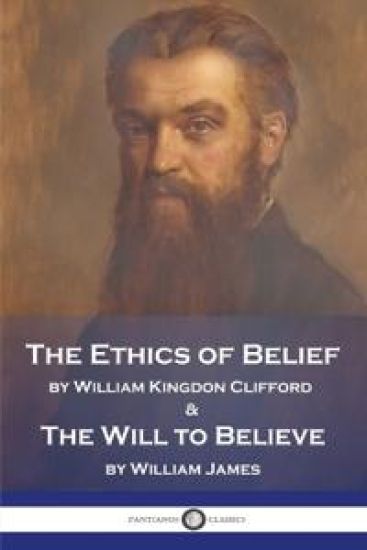
The Ethics of Belief and The Will to Believe

The Ethics of Belief and The Will to Believe

William Kingdon Clifford; William James

Pantianos Classics
1896
pokkari
William Kingdon Clifford's excellent treatise The Ethics of Belief is in this edition united with The Will to Believe; the spirited response by William James.This book brings together the two essays which comprise the famous philosophical exchange between the mathematician William Kingdon Clifford and William James, a psychologist and philosopher. Famous for articulating the arguments and morality surrounding belief, these two papers are united in a single compact edition for the consideration and study of the reader.The chief difference in opinion between Clifford and James, surrounds the matter of evidence. Clifford argued that belief in anything without supporting evidence is folly; individuals should hold an intellectual duty as well as a moral duty in what they believe. Wishful thinking, supposition, assumptions, or blind faith are therefore unacceptable and can act to damage one's intellect and ability to reason.William James, in opposition to Clifford's view, states that the formation of beliefs is justifiable. He uses the athlete as one example; self-belief in one's abilities or capacity for achievement can provision a psychological edge that results in such beliefs being realized.James then proceeds to outline a number of conditions which seek to justify the phenomena of religious belief as an intellectual and moral occurrence. That the issue of whether God exists is intellectually undecidable is central to James's thesis: a person can, without impinging on their intellect or morals, choose to believe or not to believe in a deity.Both Clifford and James draw upon the established epistemic norms of philosophy, these being the principles which seekers of knowledge and truth should hold when acquiring a belief. Their exchange served to refine the norms in scholarly circles, ushering in a renewed and sustained interest in belief morality.A total of almost two decades elapsed between Clifford and James papers, and Clifford himself died in 1879. However the succinctness of James' reply - which acts as an effective summary for the arguments within many of his lengthier works - brought both his paper and the paper of Clifford to prominence in academic circles.