Kirjailija
William S. Burroughs
Kirjat ja teokset yhdessä paikassa: 66 kirjaa, julkaisuja vuosilta 1979-2026, suosituimpien joukossa Naked Lunch: The Restored Text. Vertaile teosten hintoja ja tarkista saatavuus suomalaisista kirjakaupoista.
Mukana myös kirjoitusasut: William S Burroughs
66 kirjaa
Kirjojen julkaisuhaarukka 1979-2026.
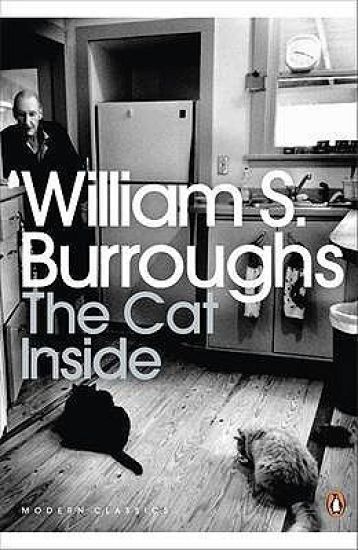
Both heartwarming and meditative, The Cat Inside explores not only the personal relationship between Burroughs and cats, but the deeper relationship of cats with mankind, which Burroughs traces back to the Egyptians. This book of moving and witty discourse is for both Burroughs fans and cat lovers alike.
And the Hippos Were Boiled in Their Tanks
Jack Kerouac; William S. Burroughs
Penguin Classics
2009
pokkari
In alternating chapters that reveal a nascent period in their development as two of the twentieth century's most influential writers, Beat Generation icons William S. Burroughs and Jack Kerouac's And the Hippos Were Boiled in Their Tanks is an electrifying true-life mystery, including afterword by James Grauerholtz in Penguin Modern Classics.This is a hardboiled crime novel, and a true story. In 1944, Jack Kerouac and William Burroughs, then still unknown writers, were both arrested following a murder: one of their friends had stabbed another and then come to them for advice - neither had told the police. Later they wrote this fictionalised account of that summer - of a group of friends in wartime New York, moving through each other's apartments, drinking, necking, talking and taking drugs and haphazardly drifting towards a bloody crime. Unpublished for years, And the Hippos were Boiled in their Tanks is a remarkable insight into the lives and literary development of two great writers. If you enjoyed And the Hippos were Boiled in their Tanks, you might like Kerouac's On the Road, also available in Penguin Modern Classics.'The novel that kicked it all off'Independent'An insight into Kerouac before he went on the road and Burroughs before his drug use spiralled out of control, this is a major literary event'GQ
Naked Lunch is one of the most important novels of the twentieth century. Exerting its influence on authors like Thomas Pynchon, J. G. Ballard, and William Gibson; on the relationship between art and obscenity; and on the shape of music, film, and media generally, it is one of the books that redefined not just literature but American culture. Naked Lunch is the unnerving tale of Bill Lee, addicted to hustlers and narcotics, and his monumental descent into Hell. His journey takes him from New York to Tangiers, as he runs from the police and searches for a place to buy and take drugs. Ultimately, he enters the hallucinatory fantasy world of the "Interzone," a nightmarish urban wasteland where individual freedom confronts the forces of totalitarianism. Reedited by Burroughs scholar Barry Miles and Burroughs' longtime editor James Grauerholz, Naked Lunch: The Restored Text corrects errors present in previous editions and incorporates Burroughs' notes on the text, several essays he wrote about the book, an appendix of new material, and alternate drafts from the original manuscript. For the Burroughs enthusiast and the neophyte, this volume is a valuable and fresh experience of this classic of our culture.
Arvostetun myöhäiskauden trilogiansa toisessa osassa Burroughs valloittaa Villin lännen. Kuolleitten katujen paikka kertoo parikymppisestä Kim Carsonsista, joka vanhempiensa kuoltua muuttaa kaupungista takaisin suvun maatilalle pikkukylän laitamille, ja opettelee pyssysankariksi. Hän kehittää ampumisesta taidemuodon. Kuolleitten katujen paikka kertoo myös Johnsoneista, joiden mottoja ovat "pidä huoli omista asioistasi" ja "auta, kun apua tarvitaan". Kim matkaa kohti väistämätöntä viimeistä aseellista välienselvittelyä Kuolleitten katujen paikassa. Vaikka trilogian kirjat toimivat myös itsenäisinä romaaneina, tarinassa vilahtelee Punaisen yön kaupungeista tuttuja hahmoja, eikä tässäkään kirjassa voi aina tietää, ovatko asiat niin kuin näyttäisivät olevan. kuka esimerkiksi lopulta on Kim Carsons? Tai ketkä kaikki? Tämä teos sai J.G. Ballardin julistamaan Burroughsin neroksi ja James Joycen seuraajaksi.
In this funny, nightmarish masterpiece of imaginative excess, grotesque characters engage in acts of violent one-upmanship, boundless riches mangle a corner of Africa into a Bacchanalian utopia, and technology, flesh and violence fuse with and undo each other. A fragmentary, freewheeling novel, it sees wild boys engage in vigorous, ritualistic sex and drug taking, as well as pranksterish guerrilla warfare and open combat with a confused and outmatched army. The Wild Boys shows why Burroughs is a writer unlike any other, able to make captivating the explicit and horrific.
A shocking exposé of the desperate subculture surrounding heroin addiction, William S. Burroughs' Junky is edited with an introduction by Oliver Harris in Penguin Modern Classics.Burroughs' first novel, a largely autobiographical account of the constant cycle of drug dependency, cures and relapses, remains the most unflinching, unsentimental account of addiction ever written. Through junk neighbourhoods in New York, New Orleans and Mexico City, through time spent kicking, time spent dealing and time rolling drunks for money, through junk sickness and a sanatorium, Junky is a field report (by a writer trained in anthropology at Harvard) from the American post-war drug underground. Nurtured into being by fellow Beat Generation guru Allen Ginsberg, Junky is a cult classic that has influenced generations of writers with its raw, sparse and unapologetic tone. This definitive edition painstakingly recreates the author's original text word for word.In work and in life, William S. Burroughs (1914-1997) expressed a constant subversion of the morality, politics and economics of modern America. To escape those conditions, and in particular his treatment as a homosexual and a drug-user, Burroughs left his homeland in 1950, and soon after began writing. By the time of his death he was widely recognised as one of the most politically trenchant, culturally influential, and innovative artists of the twentieth century. His numerous books include Naked Lunch, Junky, Queer, Nova Express, Interzone, The Wild Boys, The Ticket That Exploded and The Soft Machine. If you enjoyed Junky, you might like Burroughs' Exterminator!, also available in Penguin Modern Classics.'Reads today as fresh and unvarnished as it ever has'Will Self
A man, dispirited by ageing, endeavours to steal a younger man’s face; a doctor yearns for a virus that might eliminate his discomfort by turning everyone else into doubles of himself; a Colonel lays out the precepts of the life of DE (Do Easy); conspirators posthumously succeed in blowing up a train full of nerve gas; a mandrill known as the Purple Better One runs for the presidency with brutal results; and the world drifts towards apocalypses of violence, climate and plague. The hallucinatory landscape of William Burroughs’ compellingly bizarre, fragmented novel is constantly shifting, something sinister always just beneath the surface.
William Burroughs’ work was dedicated to an assault upon language, traditional values and all agents of control. Produced at a time when he was at his most extreme and messianic, The Job lays out his abrasive, incisive, paranoiac, maddened and maddening worldview in interviews interspersed with stories and other writing. On the Beat movement, the importance of the cut-up technique, the press, Scientology, capital punishment, drugs, good and evil, the destruction of nations, Deadly Orgone Radiation and whether violence just in words is violence enough – Burroughs’ insights show why he was one of the most influential writers and one of the sharpest, most startling and strangest minds of his generation.
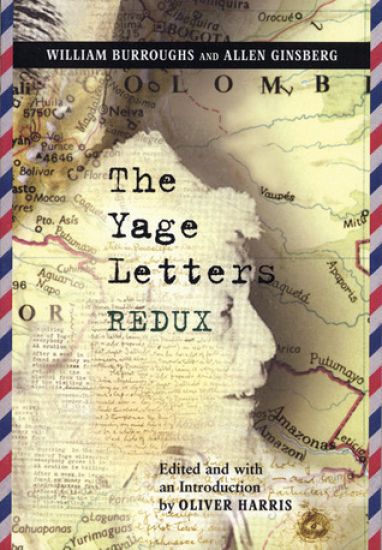
William Burroughs closed his classic debut novel, Junky, by saying he had determined to search out a drug he called 'Yage' which he believed transmitted telepathic powers, a drug that could be 'the final fix'. In The Yage Letters - a mix of travel writing, satire, psychedelia and epistolary novel - he journeys through South America, writing to his friend Allen Ginsberg about his experiments with the strange drug, using it to travel through time and space, to derange his senses - the perfect drug for the author of the wild decentred books that followed. Years later, Ginsberg writes back as he follows in Burroughs' footsteps, and the drug worse and more profound than he had imagined.
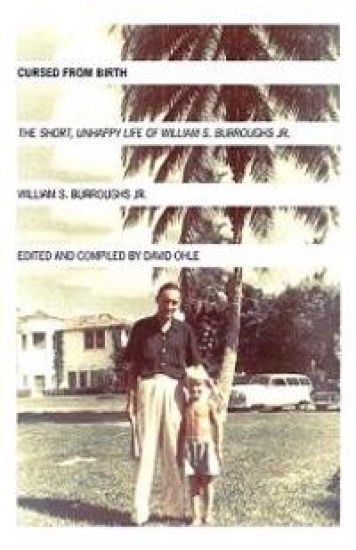
An intimate portrait of the son of the best-selling counterculture author draws on his final journals, poems, and correspondence to offer insight into the factors that challenged his life, from his relationship with his father to his tragic personal losses. Original.
In January 1953, William Burroughs began a seven-month expedition into the jungles of South America, ostensibly to find yage, the fabled hallucinogen of the Amazon. But Burroughs also cast his anthropological-satiric eye over the local regimes to record trademark vignettes of political and psychic malaise. From the notebooks he kept and the letters he wrote home to Allen Ginsberg, Burroughs composed a narrative of his adventures that appeared ten years later as “In Search of Yage” within The Yage Letters.That book, published by City Lights in 1963, was completed by the addition of Ginsberg’s account of his own experiences with yage as he traveled through South America in 1960, and by the addition of other Burroughs letters and texts.For this new edition, Burroughs scholar Oliver Harris has gone back to the original manuscripts to untangle the history of the text, telling the fascinating story of its genesis and cultural importance in his wide-ranging introduction. Also included in this edition are extensive materials, never before published, by both Burroughs and Ginsberg that shed new light on their adventures in exploration and writing“A complete understanding of the literary legacy of William Burroughs and Allen Ginsberg is impossible without reading this amazing collection of letters and documents centered on yage, the fabled hallucinogen of the Amazon. . . . These crucial texts go beyond simple curiosity about mind-changing drugs to set the foundation of what would later become a literary movement that changed American literature.”—Bloomsbury Review"Burroughs' book about his search for the 'ultimate fix', The Yage Letters, possesses an equally strange and secret history. Published in 1963 but written a decade earlier, it has long been seen as a fascinating curio in the Burroughs canon, yet a new edition of the book, edited by Oliver Harris, places it more centrally in the list of key Burroughs texts. . . . The Yage Letters marks the point when Burroughs moved full-time into his own, fully realised universe."—The Independent UKWilliam Burroughs is widely recognized as one of the most influential and innovative writers of the twentieth century. His books include: Junky, Naked Lunch, Queer, The Wild Boys and The Place of Dead Roads.Oliver Harris is a professor in literature and film in the School of American Studies at Keele University. He is the editor of The Letters of William S, Burroughs (Penguin) and the 50th anniversary edition of Junky (Penguin).
OEI Editör och Modernista presenterar stolt William S. Burroughs inflytelserika romantrilogi Den mjuka maskinen (1961), Biljetten som exploderade (1962) och Nova Express (1964). William Seward Burroughs (1914-1997) är inte bara den litterära myt som signaleras av efterhängsna epitet som "the godfather of beat", "the godfather of punk", "the gentleman junky", "the literary outlaw". Burroughs är också en av den amerikanska efterkrigstidens mest inflytelserika författare, som genom sitt såväl formellt som tematiskt innovativa skrivande lämnat avtryck långt utanför litteraturen. För att betona denna sida hos Burroughs har Funclub valt att översätta tre av hans mest betydelsefulla och lekfullt experimentella romaner. Burroughs debuterade under pseudonymen William Lee med romanen Junkie 1953. Efter genombrottet med The Naked Lunch 1959 radikaliserade Burroughs sitt språkliga och begreppsliga experimenterande vilket resulterade i den romansvit som brukar kallas cut-uptrilogin, eller novatrilogin. Trilogin - som består av The Soft Machine ( Den mjuka maskinen), The Ticket that Exploded ( Biljetten som exploderade) och Nova Express ( Novaexpressen) - publicerades i Paris, New York och London mellan 1961 och 1968. I dessa romaner utvecklas kontrolltemat från Den nakna lunchen till ett veritabelt science fiction-scenario. Genom tillämpningen av cut-uptekniken, som Burroughs började experimentera med 1959, producerades en textmosaik som vecklas ut till en hallucinatoriskt absorberande pikaresk där det moderna medie- och konsumtionssamhället utsätts för en hänsynslös satir. Burroughs har med en exempellös konsekvens arbetat med att knäcka koden till vårt hyperverkliga och globaliserade kontrollsamhälle och dess virala och digitala kontrollteknologier, och han föregriper i sitt skrivande på ett kusligt sätt effekterna av de senaste 30 årens explosiva utveckling inom såväl medie- som bioteknologi. "Till Burroughs innovationer brukar räknas cut up-metoden, i Europa betydligt mer uppmärksammad än Kerouacs spontanitetsidé (...) Aldrig genomförde Burroughs metoden så konsekvent som i Novatrilogin, eller cut up-trilogin (...) och att den nu publicerats i sin helhet på svenska måste betraktas som en stor litterär händelse." Per Planhammar, Göteborgs-Posten
OEI Editör och Modernista presenterar stolt William S. Burroughs inflytelserika romantrilogi Den mjuka maskinen (1961), Biljetten som exploderade (1962) och Nova Express (1964). William Seward Burroughs (1914-1997) är inte bara den litterära myt som signaleras av efterhängsna epitet som "the godfather of beat", "the godfather of punk", "the gentleman junky", "the literary outlaw". Burroughs är också en av den amerikanska efterkrigstidens mest inflytelserika författare, som genom sitt såväl formellt som tematiskt innovativa skrivande lämnat avtryck långt utanför litteraturen. För att betona denna sida hos Burroughs har Funclub valt att översätta tre av hans mest betydelsefulla och lekfullt experimentella romaner. Burroughs debuterade under pseudonymen William Lee med romanen Junkie 1953. Efter genombrottet med The Naked Lunch 1959 radikaliserade Burroughs sitt språkliga och begreppsliga experimenterande vilket resulterade i den romansvit som brukar kallas cut-uptrilogin, eller novatrilogin. Trilogin - som består av The Soft Machine ( Den mjuka maskinen), The Ticket that Exploded ( Biljetten som exploderade) och Nova Express ( Novaexpressen) - publicerades i Paris, New York och London mellan 1961 och 1968. I dessa romaner utvecklas kontrolltemat från Den nakna lunchen till ett veritabelt science fiction-scenario. Genom tillämpningen av cut-uptekniken, som Burroughs började experimentera med 1959, producerades en textmosaik som vecklas ut till en hallucinatoriskt absorberande pikaresk där det moderna medie- och konsumtionssamhället utsätts för en hänsynslös satir. Burroughs har med en exempellös konsekvens arbetat med att knäcka koden till vårt hyperverkliga och globaliserade kontrollsamhälle och dess virala och digitala kontrollteknologier, och han föregriper i sitt skrivande på ett kusligt sätt effekterna av de senaste 30 årens explosiva utveckling inom såväl medie- som bioteknologi. Biljetten som exploderade presenteras här för första gången i bokform på svenska. "Till Burroughs innovationer brukar räknas cut up-metoden, i Europa betydligt mer uppmärksammad än Kerouacs spontanitetsidé (...) Aldrig genomförde Burroughs metoden så konsekvent som i Novatrilogin, eller cut up-trilogin (...) och att den nu publicerats i sin helhet på svenska måste betraktas som en stor litterär händelse." Per Planhammar, Göteborgs-Posten
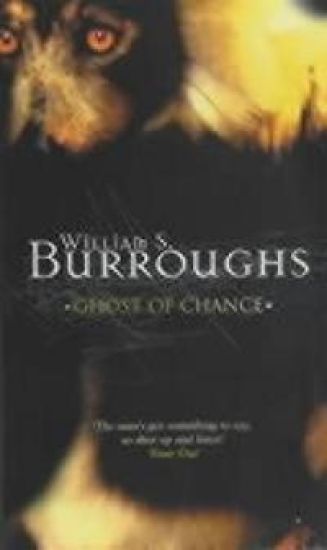
Ghost of Chance is an adventure story set in the jungle of Madagascar and filled with the obsessions that mark the work of the man who Norman Mailer once called, "the only American writer possessed by genius." While tripping through the author's trademark concerns?drugs, paranoia, and lemurs, this short novel tells an important story about environmental devastation in a way that only Burroughs can tell it.
Best known for the wild, phantasmagoric satire of works like Naked Lunch, William S. Burroughs reveals another, gentler side in The Cat Inside. Originally published as a limited-edition volume, this moving and witty discourse on cats combines deadpan routines and dream passages with a heartwarming account of Burroughs's unexpected friendships with the many cats he has known. It is also a meditation on the long, mysterious relationship between cats and their human hosts, which Burroughs traces back to the Egyptian cult of the "animal other." With its street sense and whiplash prose, The Cat Inside is a genuine revelation for Burroughs fans and cat lovers alike.
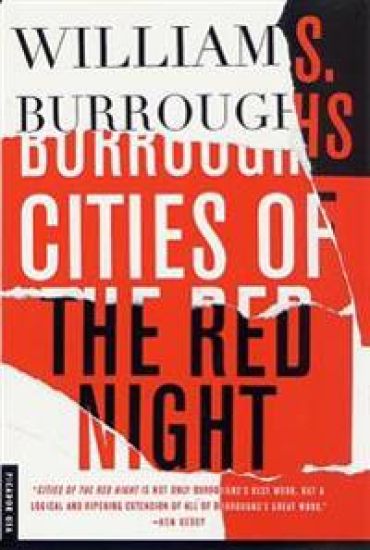
While young men wage war against an evil empire of zealous mutants, the population of this modern inferno is afflicted with the epidemic of a radioactive virus. An opium-infused apocalyptic vision from the legendary author of "Naked Lunch" is the first of the trilogy with "The Places of the Dead Roads" and his final novel, "The Western Plains."
Short stories exploring American society and drug addiction are accompanied by selections from the author's scrapbooks and diaries
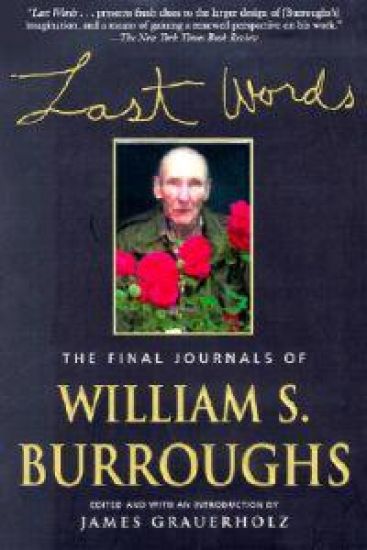
Laid out as diary entries of the last nine months of Burroughs's life, "Last Words" spans the realms of cultural criticism, personal memoir, and fiction. Classic Burroughs concerns--literature, U.S. drug policy, the state of humanity, his love for his cats--permeate this poignant portrait of the man, his life, and the creative process.
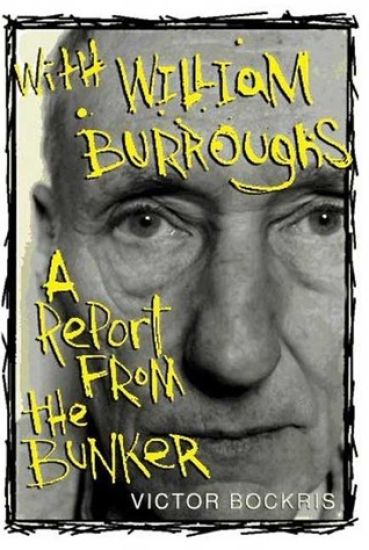
With William Burroughs: A Report from the Bunker
Victor Bockris; William S. Burroughs
St. Martin's Griffin
1996
nidottu
Burroughs, the eccentric, brilliant artist who burned the bridge with logic and wrote the classic Naked Lunch, has a court recorder in Victor Bockris. Bockris has collected into a cogent whole the man's most brilliant moments of conversation, thinking, and interview repartee. This fascinating material, gleaned from the fertile time at Burroughs's New York headquarters, the Bunker (which was located on the Bowery, three blocks from CBGB), encompasses the years 1974 to 1980, and also includes a 1991 Burroughs interview from Interview magazine. The Beats' devotion to subjective experience has left readers with a profound amount of objective material to analyze and debate. Choice public and private utterances, hallucinatory and prescient diatribes such as these, remain rich sources of literary history. As Americans we find the Beats' approach to life romantic, even heroic. Tearing the walls down in the name of freedom and spirituality strikes a particularly pilgrimesque chord. With William Burroughs: A Report from the Bunker is a fascinating compendium of Burroughs-speak, so complete it can be considered a credo.
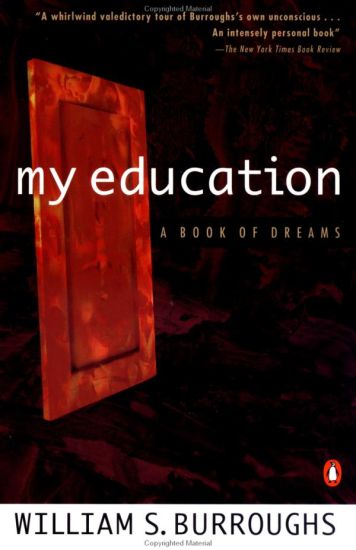
My Education is William S. Burroughs's final collection, first published two years before his death in 1997. It is a book of dreams, written over several decades and as personal and close to a memoir as we will see. The dreams cover themes from the mundane and ordinary -- conversations with his friends Allen Ginsberg or Ian Sommerville, feeding his cats, procuring drugs or sex -- to the erotic, bizarre, and visionary. Always a rich source of imagery in Burroughs's own fiction, in this book, dreams become a direct and powerful force in themselves. "Mr. Burroughs has lost none of his irreverence or wit, but in recent years he has acquired an elegant, elegiac tone." - The New York Times