
Kirjailija
William Walker
Kirjat ja teokset yhdessä paikassa: 89 kirjaa, julkaisuja vuosilta 1985-2025, suosituimpien joukossa Betrayal at Little Gibraltar. Vertaile teosten hintoja ja tarkista saatavuus suomalaisista kirjakaupoista.
89 kirjaa
Kirjojen julkaisuhaarukka 1985-2025.

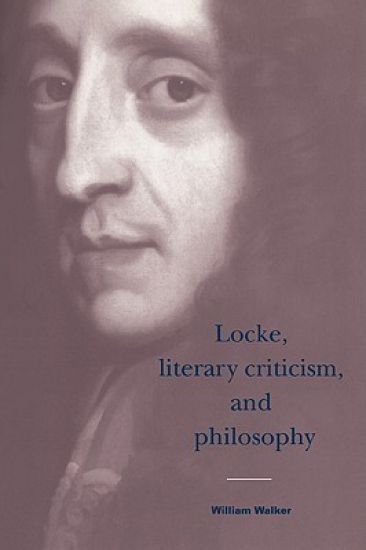
William Walker's original analysis of John Locke's An Essay Concerning Human Understanding offers a challenging and provocative assessment of Locke's importance as a thinker, bridging the gap between philosophical and literary-critical discussion of his work. He presents Locke as a foundational figure who defines the epistemological and ontological ground on which eighteenth-century and Romantic literature operate and eventually diverge. He is revealed as a crucial figure for emerging modernity, less the familiar empiricist innovator and more the proto-Nietzschean thinker whose text fosters hitherto unsuspected instabilities and promotes a new kind of rhetorical force to counterbalance them. Walker's reading of Locke is at once finely attentive to the text and engagingly resourceful in placing the Essay in its broadest philosophical and historical context.
Weapons of Mass Destruction and International Order
William Walker
Oxford University Press Inc
2005
nidottu
First Published in 2005. Routledge is an imprint of Taylor & Francis, an informa company.
Plutonium and Highly Enriched Uranium 1996
David Albright; Frans Berkhout; William Walker
Oxford University Press
1997
sidottu
Plutonium and highly enriched uranium (HEU) are the basic materials used in nuclear weapons. Plutonium also plays an important part in the generation of nuclear electricity. Knowing how much plutonium and HEU exist, where and in which form is vital for international security and nuclear commerce. Plutonium and Highly Enriched Uranium 1996 is a thorough revision of the World Inventory of Plutonium and Highly Enriched Uranium 1992. It provides a rigorous and comprehensive assessment of the amounts of plutonium and HEU in military and civilian programmes, in nuclear and non-nuclear weapon states, and in countries seeking to acquire nuclear weapons. The capabilities that exist for producing these materials around the world are examined in depth, as are the policy issues raised by them. Containing much new information, it is indispensable to all those concerned with the great contemporary issues in international nuclear relations: arms reductions in the nuclear weapon states, nuclear proliferation, nuclear smuggling, the roles of plutonium and enriched uranium in the nuclear fuel-cycle, and the disposition of surplus weapon material.
William Walker’s original analysis of John Locke’s An Essay Concerning Human Understanding offers a challenging and provocative assessment of Locke’s importance as a thinker, bridging the gap between philosophical and literary-critical discussion of his work. He presents Locke as a foundational figure who defines the epistemological and ontological ground on which eighteenth-century and Romantic literature operate and eventually diverge. He is revealed as a crucial figure for emerging modernity, less the familiar empiricist innovator and more the proto-Nietzschean thinker whose text fosters hitherto unsuspected instabilities and promotes a new kind of rhetorical force to counterbalance them. Walker’s reading of Locke is at once finely attentive to the text and engagingly resourceful in placing the Essay in its broadest philosophical and historical context.
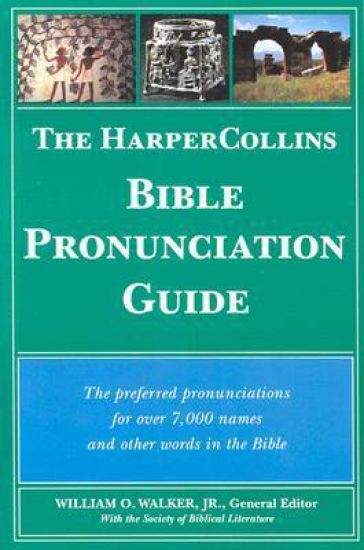
The most authoritative and easy-to-use Bible pronunciation guide available--for use with any version of the Bible in English.

World Inventory of Plutonium and Highly Enriched Uranium 1992
David Albright; Berkhout Frans; William Walker
Oxford University Press
1993
Sidottu
Plutonium and highly enriched uranium (HEU) were first introduced fifty years ago. In the Manhattan project the amounts separated were measured in kilograms, enough for the first atomic bombs. Today there are about 1000 tonnes of plutonium and 1300 tonnes of HEU in existence, the result of the great expansion of nuclear weapon and nuclear power programmes in recent decades. Controlling and disposing of these vast quantities is now one of the most serious challenges facing the international community. Despite the great significance of plutonium and HEU for international security and nuclear commerce, there are no international statistics on these materials. Information on them is generally classified in countries possessing or trying to acquire nuclear weapons, and holders of civil materials only give information to safeguards agencies on condition that it remains confidential. This book fills the gap. It provides for the first time a comprehensive and authoritative assessment of the amounts of plutonium and HEU in military and civilian programmes, country by country. World Inventory of Plutonium and Highly Enriched Uranium 1992 is based on knowledge of how nuclear reactors, reprocessing and enrichment plants have been operated around the world. Step by step, it explains how civil and military nuclear programmes have been run, which technologies and facilities have been used, and what has happened to the materials produced by them. It details the huge amounts of plutonium and HEU that will be extracted from dismantled weapons as the United States and the former Soviet Union reduce their nuclear arsenals, and the equally large amounts of plutonium that will be separated from civil fuels in Britain, France, Japan and Russia if reprocessing plans are implemented. It also contains the most thorough examination yet of the efforts by Iraq, Israel, Pakistan, India and a few other countries to acquire the materials needed to build nuclear weapons. And throughout, the book points out the main uncertainties over the quantities and whereabouts of these vital materials. The book ends by stressing the need to end the over-supply of civil plutonium and to develop plans for disposing of surplus stocks of both plutonium and HEU. Much of the plutonium will have to be treated as a waste, while the HEU can be diluted and used as nuclear fuel. It also calls on the international community to end the secrecy surrounding these materials. The United Nations should publish annual statistics on every country's holdings of plutonium and HEU, including materials in nuclear weapon states.