Kirjojen hintavertailu. Mukana 12 329 577 kirjaa ja 12 kauppaa.
Kirjailija
Aeschylus
Kirjat ja teokset yhdessä paikassa: 236 kirjaa, julkaisuja vuosilta 1845-2026, suosituimpien joukossa Aeschylus Plays: I. Vertaile teosten hintoja ja tarkista saatavuus suomalaisista kirjakaupoista.
This work has been selected by scholars as being culturally important and is part of the knowledge base of civilization as we know it.This work is in the public domain in the United States of America, and possibly other nations. Within the United States, you may freely copy and distribute this work, as no entity (individual or corporate) has a copyright on the body of the work.Scholars believe, and we concur, that this work is important enough to be preserved, reproduced, and made generally available to the public. To ensure a quality reading experience, this work has been proofread and republished using a format that seamlessly blends the original graphical elements with text in an easy-to-read typeface.We appreciate your support of the preservation process, and thank you for being an important part of keeping this knowledge alive and relevant.
From the perspective of the townspeople and the queen, Clytemnestra, Agamemnon follows the emotional journey of grief, rage, and revenge. Agamemnon had dedicated much of his life to a war that his brother started. He vowed to do whatever it takes to win—committing war crimes and killing innocents. But, even in victory, Agamemnon feels unsatisfied and plagued by the bloodshed he caused. Because of this, he decides to perform a ritual to clear his conscience and regain the gods’ approval. After he fought for ten years in the Trojan war, Clytemnestra eagerly awaited the return of her husband, King Agamemnon. However, upon his arrival, she learns that he has sacrificed one of her loved ones to the gods, in order to win their favor. Though Agamemnon expressed slight remorse, he felt resolute in his actions, as he viewed the sacrifice as a necessity. Already devastated, Clytemnestra is driven to pure rage when she finds that Agamemnon also brought back a “spoil of war”, Cassandra, a Trojan princess and prophetess, who has been punished by the god Apollo for refusing his advances. Though she is able to see the future, she is cursed to be never believed. Considered as Agamemnon’s war prize, Cassandra is trapped in the kingdom, especially hopeless when she receives a vision of unescapable doom. Meanwhile, as Clytemnestra settles in her grief and rage, she creates a plot for vengeance, and much like her husband at war, is unconcerned about any collateral damage. As the first installment of the sole surviving Greek trilogy, Agamemnon is both a stand-alone piece and a compliment to later plays. With symbolism and precise prose, Agamemnon by Aeschylus depicts the consequences of warfare—both abroad and domestic. Featuring strong, dynamic, and well-developed characters and an emotional, dramatic plot, Agamemnon is an enthralling perspective on the fates of famous heroes from Greek mythology. This edition of Aeschylus’ acclaimed tragedy, Agamemnon features a new, eye-catching cover and is reprinted in a modern, readable font. With these accommodations, contemporary readers are encouraged to revisit this classic and enthralling tale of revenge.
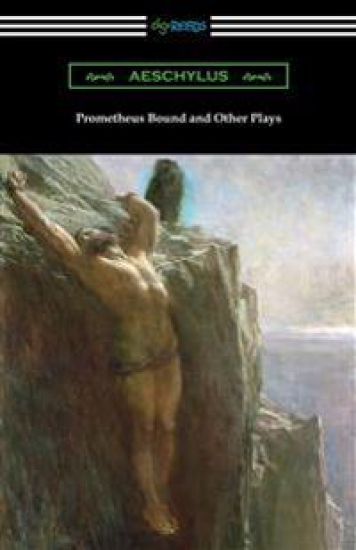
Though it tells the stories of the defeated, Prometheus Bound and Other Plays features four tragedies that depict both unfortunate demises and the essence of the fighting human spirit. The Suppliants, the first play of the collection, follows the daughters of Danaus as they flee from the loveless marriages that had been forced upon them. The Persians, perhaps the oldest surviving play in existence, portrays the defeat of the Persian King Xeroxes. Though written by a Greek man who fought in the Persian war, The Persians displays a surprisingly sympathetic view of the opposing army. Next in the collection is Seven Against Thebes, which follows the battle between two brothers for the throne of Thebes. After the banishment of Oedipus, Eteocles and Adrastus, the two brothers, engaged in an epic war, fulfilling the tragic curse of the Oedipus family. The title tragedy in Prometheus Bound and Other Plays, Prometheus Bound, tells the tale of the downfall of the titian Prometheus. Before Prometheus, mankind had no advantage over the gods that ruled the heavens and Earth. Humans were forced to cower in the cold darkness, plagued by ignorance until Prometheus took pity on them. With heroic intentions, Prometheus stole fire and knowledge from Olympus and gave it to mankind. Though he brought light, warmth, and understanding to Earth, Zeus was outraged, and so began Prometheus’ punishment. Featuring the oldest surviving play, legendary myths, epic battles, and humanist perspectives, Prometheus Bound and Other Plays by Aeschylus is a classic tragedy that exemplifies empathy and the human spirit even in its tales of defeat. Written by the father of tragedy, this collection is a privileged possession. This edition of Prometheus Bound and Other Plays by Aeschylus is now easier than ever to enjoy with a modern, readable font and a stunning new cover design. Witness a surprising triumph of spirit even in the face of failure with Prometheus Bound and Other Plays.
The Agamemnon Of Aeschylus: Translated Into English Rhyming Verse With Explanatory Notes By Gilbert Murray This book is a result of an effort made by us towards making a contribution to the preservation and repair of original classic literature. In an attempt to preserve, improve and recreate the original content, we have worked towards: 1. Type-setting & Reformatting: The complete work has been re-designed via professional layout, formatting and type-setting tools to re-create the same edition with rich typography, graphics, high quality images, and table elements, giving our readers the feel of holding a 'fresh and newly' reprinted and/or revised edition, as opposed to other scanned & printed (Optical Character Recognition - OCR) reproductions. 2. Correction of imperfections: As the work was re-created from the scratch, therefore, it was vetted to rectify certain conventional norms with regard to typographical mistakes, hyphenations, punctuations, blurred images, missing content/pages, and/or other related subject matters, upon our consideration. Every attempt was made to rectify the imperfections related to omitted constructs in the original edition via other references. However, a few of such imperfections which could not be rectified due to intentional\unintentional omission of content in the original edition, were inherited and preserved from the original work to maintain the authenticity and construct, relevant to the work. We believe that this work holds historical, cultural and/or intellectual importance in the literary works community, therefore despite the oddities, we accounted the work for print as a part of our continuing effort towards preservation of literary work and our contribution towards the development of the society as a whole, driven by our beliefs. We are grateful to our readers for putting their faith in us and accepting our imperfections with regard to preservation of the historical content. HAPPY READING
Often recognized as the father of tragedy, this collection of plays by the ancient Greek soldier and playwright Aeschylus is a testament to his skill and enduring legacy in the history of theatre. In "Suppliant Maidens," the fifty daughters of Danaus flee from marriages to the fifty sons of their uncle, showing an obedience to their father that has tragic consequences. "The Persians", thought to be the oldest surviving play in the history of drama, focuses on the gory defeat of King Xerxes in his military expedition against the Greeks. The gods are punishing the hubris of the Persians to the point at which even the Greeks feel some sympathy for them. In "The Seven Against Thebes," the battle for the throne of Thebes upon the banishment of Oedipus pits two brothers against each other in a fatal bout of single combat. Finally, "Prometheus Bound", whose authorship by Aeschylus has been questioned by dramatic scholars, explores the myth of a Titan and his punishment from Zeus for giving fire and knowledge to mankind. Though all of the plays differ widely in plot, the enduring quality of the characters and dialogue within these dramas are a testament to the considerable skill of Aeschylus. This edition is printed on premium acid-free paper and follows the translations of E. D. A. Morshead.
One of the foundational texts of Western literature, the Oresteia trilogy is about cycles of deception and brutality within the ruling family of Argos. In Agamemnon, queen Clytemnestra awaits her husband’s return from war to commit a terrible act of retribution. The next plays, radically retitled here as The Women at the Graveside and Orestes in Athens, deal with the aftermath of the regicide, Orestes’ search to avenge his father’s death and his ceaseless torment. A powerful discourse on the formation of democracy, The Oresteia illuminates the tensions between loyalty to one’s family and to the community. In this classic for future generations, Oliver Taplin captures the lyricism of the original.
The Oresteia of Aeschylus is the greatest monument of the ancient Greek theater, and one of the greatest classics of Western literature. It is the only surviving trilogy of the many performed in the Theater of Dionysos of Athens at a spring religious festival, the City Dionysia, and its subject is a mythical enactment of the transition from retributive justice to fully civil means of dealing with wrongdoing, a central concern of societies everywhere. Partly in retrospective narrative and partly in action, it treats the course of the intrafamilial curse on the house of Atreus, princes of Argos, that destroys the family and upsets the social order, to its resolution in a newly constituted court in Athens, the Areopagos. In this context, the gods important to the Athenians appear or are invoked. But despite the serious matter, it was an entertaining theatrical experience, as extravagant as any surviving Greek play, with spectacular entrances-Agamemnon on a chariot, the Erinyes sleeping on the stage, Athena flying with her cape-like aegis; dances, solo lyrics, choruses, and impassioned musical exchanges among chorus and characters; and at the end a procession of citizens. Nor is humor absent: Orestes' nurse voices a funny yet incisive account of the equivocal feelings-affection and impatience-roused by infant care, and the gods' clumsy and finally irrelevant arguments in Orestes' trial must have raised a smile in ancient spectators and can do so today. For all these features of the performance the aural experience was of the essence. The actors declaimed the dialogue so as to project it through their stylized masks and reach the farthest spectators in the large open-air theater. The chorus and the characters chanted or sang the choral odes and lyrics to the accompaniment of an aulos, a wind instrument like a double oboe. Though the melodies, which were probably never written down, do not survive, we have the rhythms embodied in the wide-ranging meters of the verse. Aeschylus constructed these with great care for their musical expressiveness, and he may well have composed the monodic melodies that embodied them in the lyric passages. This translation seeks to convey this pervasive music; the dialogue is mainly in formal iambic hexameter verse, representing Greek iambic trimeters, two syllables longer than the iambic pentameter verse prevalent in English poetry. The lyrics are set in meters representing those of the original; they range from simple and regular to highly complex. This version is dedicated especially to those who would like to realize this musical experience in viva voce performances, reciting the dialogue, chanting some of the choruses, even, perhaps, improvising tunes for some choral and lyric passages. To encourage this, all the lyric passages are marked to indicate accented syllables and phrasing. The typeface throughout is large enough to make the book suitable for use as a script on such occasions, perhaps among groups of friends. Yet the translation also seeks to transmit the meaning of the original as closely as possible and to preserve tragic decorum in its diction.The aim throughout is to allow the modern audience of readers and hearers to imagine and participate in one of the most entertaining and stimulating dramatic experiences of all time. To that end the book includes a brief Foreword, a longer Afterword suggesting some interpretive approaches and describing the most prominent meters, a selected bibliography, and a list of names for quick reference to elucidate mythical, geographical, and historical allusions. On the covers are lively pictures from ancient Greek vases-one of them from Aeschylus' lifetime, the other almost a century later-illustrating some features of the trilogy.
The Persians Aeschylus The Persians, Aeschylus' earliest surviving tragedy, holds a fascination both for readers of Greek drama and Greek history. Not only is it the earliest existing play in the Western tradition, it is drawn directly from the playwright's own experiences at the battle of Salamis, making it the only account of the Persian Wars composed by an eyewitness. And as pure tragedy, it is a masterpiece. Aeschylus tells the story of the war from the Persian point of view, and his pride in the great victory of Greeks is tempered with a real compassion for Xerxes and his vanquished nation. Lembke and Harrington have rendered this stunning work in a modern translation that loses none of the original's dramatic juxtaposition of serenity and violence, hope and despair. We are delighted to publish this classic book as part of our extensive Classic Library collection. Many of the books in our collection have been out of print for decades, and therefore have not been accessible to the general public. The aim of our publishing program is to facilitate rapid access to this vast reservoir of literature, and our view is that this is a significant literary work, which deserves to be brought back into print after many decades. The contents of the vast majority of titles in the Classic Library have been scanned from the original works. To ensure a high quality product, each title has been meticulously hand curated by our staff. Our philosophy has been guided by a desire to provide the reader with a book that is as close as possible to ownership of the original work. We hope that you will enjoy this wonderful classic work, and that for you it becomes an enriching experience.
Agamemnon of Aeschylus. Aeschylus was an ancient Greek tragedian. He is often described as the father of tragedy. Academics' knowledge of the genre begins with his work, and understanding of earlier tragedies is largely based on inferences from his surviving plays. According to Aristotle, he expanded the number of characters in the theater and allowed conflict among them; characters previously had interacted only with the chorus. In Greek mythology, Agamemnon was the son of King Atreus and Queen Aerope of Mycenae, the brother of Menelaus, the husband of Clytemnestra and the father of Iphigenia, Electra or Laodike, Orestes and Chrysothemis. Aeschylus begins in Greece describing the return of King Agamemnon from his victory in the Trojan War, from the perspective of the towns people (the Chorus) and his wife, Clytemnestra. However, dark foreshadowings build to the death of the king at the hands of his wife, who was angry at his sacrifice of their daughter Iphigenia, who was killed so that the gods would restore the winds and allow the Greek fleet to sail to Troy.