Kirjojen hintavertailu. Mukana 12 459 402 kirjaa ja 12 kauppaa.

Kirjailija

Alain Badiou

Kirjat ja teokset yhdessä paikassa: 155 kirjaa, julkaisuja vuosilta 1999-2026, suosituimpien joukossa Ahmed the Philosopher. Vertaile teosten hintoja ja tarkista saatavuus suomalaisista kirjakaupoista.

155 kirjaa

Kirjojen julkaisuhaarukka 1999-2026.

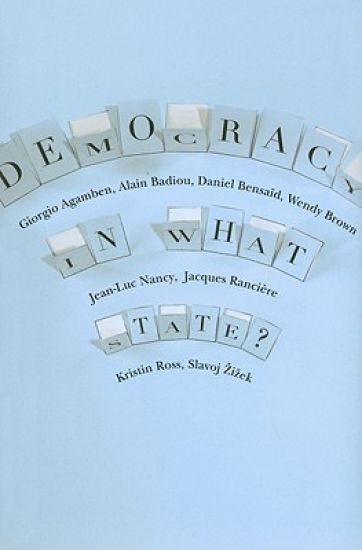
Democracy in What State?

Democracy in What State?

Giorgio Agamben; Alain Badiou; Daniel Bensaid; Wendy Brown; Jean-Luc Nancy; Jacques Rancière; Kristin Ross; Slavoj Žižek

Columbia University Press
2012
pokkari
"Is it meaningful to call oneself a democrat? And if so, how do you interpret the word?" In responding to this question, eight iconoclastic thinkers prove the rich potential of democracy, along with its critical weaknesses, and reconceive the practice to accommodate new political and cultural realities. Giorgio Agamben traces the tense history of constitutions and their coexistence with various governments. Alain Badiou contrasts current democratic practice with democratic communism. Daniel Bensaid ponders the institutionalization of democracy, while Wendy Brown discusses the democratization of society under neoliberalism. Jean-Luc Nancy measures the difference between democracy as a form of rule and as a human end, and Jacques Ranciere highlights its egalitarian nature. Kristin Ross identifies hierarchical relationships within democratic practice, and Slavoj Zizek complicates the distinction between those who desire to own the state and those who wish to do without it. Concentrating on the classical roots of democracy and its changing meaning over time and within different contexts, these essays uniquely defend what is left of the left-wing tradition after the fall of Soviet communism. They confront disincentives to active democratic participation that have caused voter turnout to decline in western countries, and they address electoral indifference by invoking and reviving the tradition of citizen involvement. Passionately written and theoretically rich, this collection speaks to all facets of modern political and democratic debate.

Andra manifestet för filosofin

Andra manifestet för filosofin

Alain Badiou

Tankekraft Förlag
2012
kartonkisidos
Det är nu tjugo år sedan jag i mitt första Manifest för filosofin vände mig emot tillkännagivandet av filosofins ”slut”, som då kungjordes överallt. Gentemot denna slutets problematik föreslog jag att strävan borde vara att ta ”ännu ett steg”. Nu har situationen förändrats betydligt. Om filosofin vid den tiden hotades till sin existens, skulle man kunna hävda att den idag är lika hotad, men av motsatt skäl: filosofin förlänas en artificiell existens av överdrivna mått. Filosofin används som firmanamn för en mängd proffstyckare i media. Den fyller atmosfären i kaféerna och gymmen. Den har sina egna magasin och guruer. Den åberopas i alla sammanhang, i bankerna och i de stora statliga utredningarna, för att uttala sig om etiken, rätten och plikten. Poängen är att ”filosofi” numera har kommit att avse precis det som utgör filosofins äldsta fiende: den konservativa moralen. Mitt andra manifest syftar följaktligen till att demoralisera filosofin, att invertera den dom som den fäller över tomheten i de ”filosofier” som är lika allestädes närvarande som de är servila. Boken knyter an till några eviga sanningar som kan upplysa handlandet och därmed bära filosofin långt bortom bilden av människan med hennes ”rättigheter”, långt bortom all moralism, dithän där livet, i den ljusning som idén skapar, blir något helt annat än överlevnad. A. B.
In Praise Of Love

In Praise Of Love

Alain Badiou; Nicolas Truong

Serpent's Tail
2012
pokkari
A new century, new threats to love . . . Love without risks is like war without deaths - but, today, love is threatened by an alliance of liberalism and hedonism. Caught between consumerism and casual sexual encounters devoid of passion, love - without the key ingredient of chance - is in danger of withering on the vine. In In Praise of Love, Alain Badiou takes on contemporary 'dating agency' conceptions of love that come complete with zero-risk insurance - like US zero-casualty bombs. He develops a new take on love that sees it as an adventure, and an opportunity for re-invention, in a constant exploration of otherness and difference that leads the individual out of an obsession with identity and self. Liberal, libertine and libertarian reductions of love to instant pleasure and non-commitment bite the dust as Badiou invokes a supporting cast of thinkers from Plato to Lacan via Karl Marx to form a new narrative of romance, relationships and sex - a narrative that does not fear love.
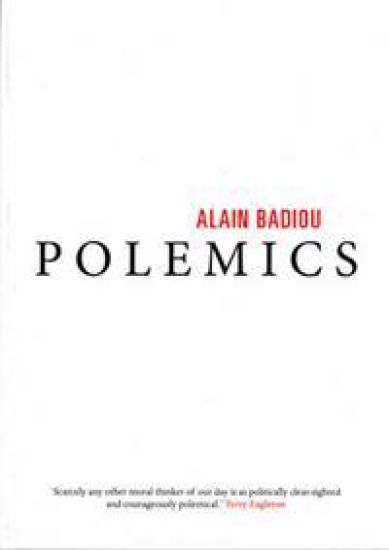
Polemics

Polemics

Alain Badiou

Verso Books
2012
nidottu
Polemics is a series of brilliant metapolitical reflections, demolishing established opinion and dominant propaganda, and reorienting our understanding of events from the Kosovo and Iraq wars to the Paris Commune and the Cultural Revolution. At once witty and profound, Badiou presents a series of radical philosophical engagements with politics, and questions what constitutes political truth.
Metapolitics

Metapolitics

Alain Badiou

Verso Books
2012
nidottu
Badiou indicts this approach, which reduces politics to a matter of opinion, thus eliminating any of its truly radical and emancipatory possibilities. Against this intellectual tradition, Badiou proposes instead the consideration of politics in terms of the production of truth and the affirmation of equality. He demands that the question of a possible "political truth" be separated from any notion of consensus or public opinion, and that political action be rethought in terms of the complex process that binds discussion to decision. Starting from this analysis, Badiou critically examines the thought of anthropologist and political theorist Sylvain Lazarus, Jacques Ranciere's writings on workers' history and democratic dissensus, the role of the subject in Althusser, as well as the concept of democracy and the link between truth and justice.
Kommunismens idé

Kommunismens idé

Slavoj Zizek; Antonio Negri; Jacques Rancière; Alain Badiou

Tankekraft Förlag
2011
nidottu
Att göra åtskillnad mellan kommunismens löften och 1900-talets totalitära tragedier är ingen enkel uppgift. Men i en värld som hotas av miljömässiga katastrofer, nya former av apartheid och oöverstigliga klyftor mellan inkluderade och exkluderade finns det ett akut behov av nya idéer som kan vägleda strävan efter ett verkligt fritt och jämlikt samhälle. I denna volym ger femton av dagens viktigaste vänsterteoretiker sin syn på kommunismens begrepp. Utifrån olika infallsvinkar diskuterar de möjligheten av att gentemot kapitalismens kriser och privatiseringar återupprätta kommunismen som namnet på den radikala filosofin och politiken. I kontrast till den rådande uppdelningen i privat och offentligt pekar kommunismen fram mot det gemensamma i den mänskliga tillvaron, de delade resurser och förmågor som kan göra en annan värld möjlig. "Var inte rädda, anslut er till oss, kom tillbaka! Ni har haft era antikommunistiska eskapader, och vi förlåter er för dem men nu är det dags för allvar igen!" Slavoj Zizek
Democracy in What State?

Democracy in What State?

Giorgio Agamben; Alain Badiou; Daniel Bensaid; Wendy Brown; Jean-Luc Nancy; Jacques Rancière; Kristin Ross; Slavoj Žižek

Columbia University Press
2011
sidottu
"Is it meaningful to call oneself a democrat? And if so, how do you interpret the word?" In responding to this question, eight iconoclastic thinkers prove the rich potential of democracy, along with its critical weaknesses, and reconceive the practice to accommodate new political and cultural realities. Giorgio Agamben traces the tense history of constitutions and their coexistence with various governments. Alain Badiou contrasts current democratic practice with democratic communism. Daniel Bensaid ponders the institutionalization of democracy, while Wendy Brown discusses the democratization of society under neoliberalism. Jean-Luc Nancy measures the difference between democracy as a form of rule and as a human end, and Jacques Ranciere highlights its egalitarian nature. Kristin Ross identifies hierarchical relationships within democratic practice, and Slavoj Zizek complicates the distinction between those who desire to own the state and those who wish to do without it. Concentrating on the classical roots of democracy and its changing meaning over time and within different contexts, these essays uniquely defend what is left of the left-wing tradition after the fall of Soviet communism. They confront disincentives to active democratic participation that have caused voter turnout to decline in western countries, and they address electoral indifference by invoking and reviving the tradition of citizen involvement. Passionately written and theoretically rich, this collection speaks to all facets of modern political and democratic debate.

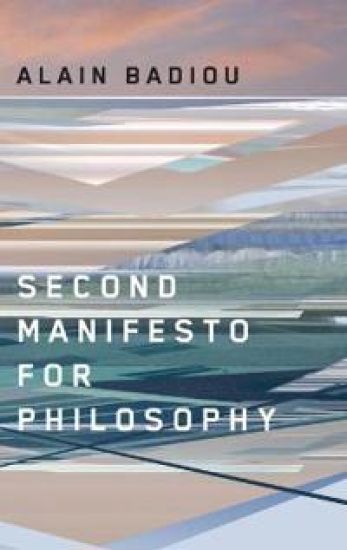
Second Manifesto for Philosophy

Second Manifesto for Philosophy

Alain Badiou

Polity Press
2010
nidottu
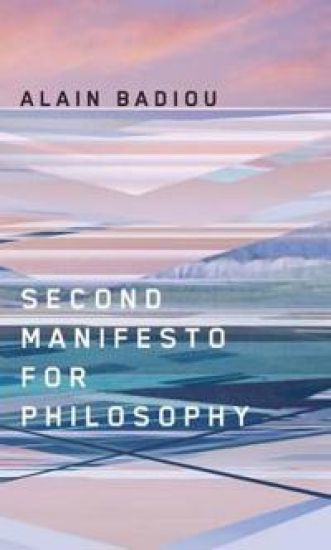
Twenty years ago, Alain Badiou's first Manifesto for Philosophy rose up against the all-pervasive proclamation of the "end" of philosophy. In lieu of this problematic of the end, he put forward the watchword: "one more step". The situation has considerably changed since then. Philosophy was threatened with obliteration at the time, whereas today it finds itself under threat for the diametrically opposed reason: it is endowed with an excessive, artificial existence. "Philosophy" is everywhere. It serves as a trademark for various media pundits. It livens up cafés and health clubs. It has its magazines and its gurus. It is universally called upon, by everything from banks to major state commissions, to pronounce on ethics, law and duty. In essence, "philosophy" has now come to stand for nothing other than its most ancient enemy: conservative ethics. Badiou's second manifesto therefore seeks to demoralize philosophy and to separate it from all those "philosophies" that are as servile as they are ubiquitous. It demonstrates the power of certain eternal truths to illuminate action and, as such, to transport philosophy far beyond the figure of "the human" and its "rights". There, well beyond all moralism, in the clear expanse of the idea, life becomes something radically other than survival.
Second Manifesto for Philosophy

Second Manifesto for Philosophy

Alain Badiou

Polity Press
2010
sidottu
Twenty years ago, Alain Badiou's first Manifesto for Philosophy rose up against the all-pervasive proclamation of the "end" of philosophy. In lieu of this problematic of the end, he put forward the watchword: "one more step". The situation has considerably changed since then. Philosophy was threatened with obliteration at the time, whereas today it finds itself under threat for the diametrically opposed reason: it is endowed with an excessive, artificial existence. "Philosophy" is everywhere. It serves as a trademark for various media pundits. It livens up cafés and health clubs. It has its magazines and its gurus. It is universally called upon, by everything from banks to major state commissions, to pronounce on ethics, law and duty. In essence, "philosophy" has now come to stand for nothing other than its most ancient enemy: conservative ethics. Badiou's second manifesto therefore seeks to demoralize philosophy and to separate it from all those "philosophies" that are as servile as they are ubiquitous. It demonstrates the power of certain eternal truths to illuminate action and, as such, to transport philosophy far beyond the figure of "the human" and its "rights". There, well beyond all moralism, in the clear expanse of the idea, life becomes something radically other than survival.
Five Lessons on Wagner

Five Lessons on Wagner

Slavoj Zizek; Alain Badiou

Verso Books
2010
nidottu
For over a century, Richard Wagner's music has been the subject of intense debate among philosophers, many of whom have attacked its ideological-some say racist and reactionary-underpinnings. In this major new work, Alain Badiou, radical philosopher and keen Wagner enthusiast, offers a detailed reading of the critical responses to the composer's work, which include Adorno's writings on the composer and Wagner's recuperation by Nazism as well as more recent readings by Philippe Lacoue-Labarthe and others. Slavoj Zizek provides an afterword, and both philosophers make a passionate case for re-examining the relevance of Wagner to the contemporary world.
The Meaning of Sarkozy

The Meaning of Sarkozy

Alain Badiou

Verso Books
2010
nidottu
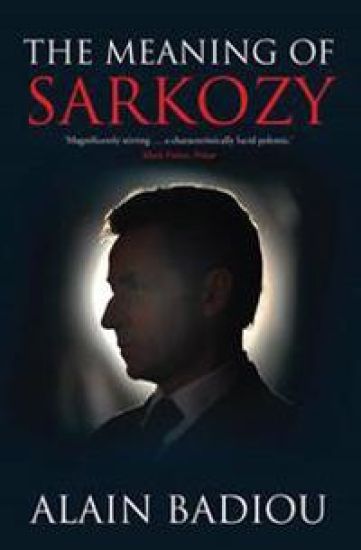
In this incisive, acerbic work, Alain Badiou looks beyond the petty vulgarity of the French president to decipher the true significance of what he represents-a reactionary tradition that goes back more than a hundred years. To escape the malaise that has enveloped the Left since Sarkozy's election, Badiou casts aside the slavish worship of electoral democracy and maps out a communist hypothesis that lays the basis for an emancipatory politics of the twenty-first century.
Philosophy in the Present

Philosophy in the Present

Alain Badiou; Slavoj Zizek

Polity Press
2009
sidottu
Two controversial thinkers discuss a timeless but nonetheless urgent question: should philosophy interfere in the world? Nothing less than philosophy is at stake because, according to Badiou, philosophy is nothing but interference and commitment and will not be restrained by academic discipline. Philosophy is strange and new, and yet speaks in the name of all - as Badiou shows with his theory of universality. Similarly, Zizek believes that the philosopher must intervene, contrary to all expectations, in the key issues of the time. He can offer no direction, but this only shows that the question has been posed incorrectly: it is valid to change the terms of the debate and settle on philosophy as abnormality and excess. At once an invitation to philosophy and an introduction to the thinking of two of the most topical and controversial philosophers writing today, this concise volume will be of great interest to students and general readers alike.
Philosophy in the Present

Philosophy in the Present

Alain Badiou; Slavoj Zizek

Polity Press
2009
nidottu
Two controversial thinkers discuss a timeless but nonetheless urgent question: should philosophy interfere in the world? Nothing less than philosophy is at stake because, according to Badiou, philosophy is nothing but interference and commitment and will not be restrained by academic discipline. Philosophy is strange and new, and yet speaks in the name of all - as Badiou shows with his theory of universality. Similarly, Zizek believes that the philosopher must intervene, contrary to all expectations, in the key issues of the time. He can offer no direction, but this only shows that the question has been posed incorrectly: it is valid to change the terms of the debate and settle on philosophy as abnormality and excess. At once an invitation to philosophy and an introduction to the thinking of two of the most topical and controversial philosophers writing today, this concise volume will be of great interest to students and general readers alike.
Theory of the Subject

Theory of the Subject

Alain Badiou

Continuum International Publishing Group Ltd.
2009
sidottu
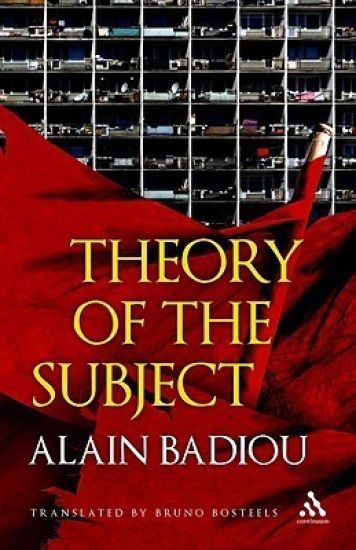
Badiou is widely considered to be France's most important and exciting contemporary thinker. Much of Badiou's earlier work (including "Being and Event") can only be fully understood with a clear grasp of "Theory of the Subject", one of his most important works."Theory of the Subject", first published in France in 1982, is without doubt one of Alain Badiou's most important works, laying many of the foundations for his magnum opus, "Being and Event". Here Badiou seeks to provide a theory of the subject for Marxism through a study of Lacanian psychoanalysis, offering a major contribution to Marxism, as well as to the larger debate regarding the relationship between psychoanalysis and philosophy.The book also provides a history and theory of structuralism and poststructuralism, a unique evaluation of the achievements of French Maoism during the 1970s and the significance of the events of May 1968, and breathtaking analyses of art and literature. As a theoretical synthesis, the book is extraordinary in terms of its originality, breadth and clarity. This is arguably Badiou's most creative and passionate book, encompassing the entire battlefield of contemporary theory, philosophy and psychoanalysis. Available for the first time in English, and including a new preface by the author, this is a must-read for anyone interested in this lively and highly original thinker.
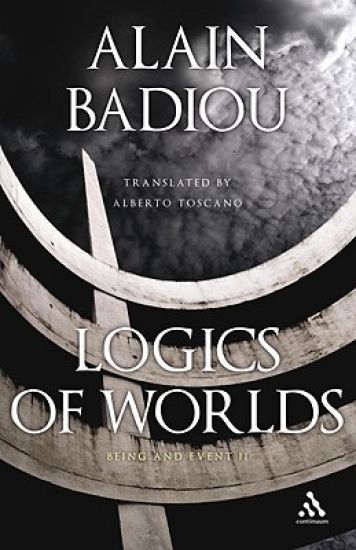
Logics of Worlds

Logics of Worlds

Alain Badiou

Continuum International Publishing Group Ltd.
2009
sidottu
Logics of Worlds is the long-awaited sequel to Alain Badiou's much-heralded masterpiece, Being and Event. Tackling the questions that had been left open by Being and Event, and answering many of his critics in the process, Badiou supplements his pioneering treatment of multiple being with a daring and complex theory of the worlds in which truths and subjects make their mark - what he calls a materialist dialectic. The radical recasting of ontology in Being and Event is followed and complemented here by a thoroughgoing transformation in our very understanding of logic, conceived as a theory not of being but of appearing. Unafraid to resurrect and reinvent the classical themes of philosophy, Badiou gives new meaning to concepts such as object, body and relation, mobilising them in arresting studies that range from the architectural planning of Brasilia to contemporary astronomy, and confronting himself with towering philosophical counterparts (Leibniz, Kant, Hegel, Kierkegaard, Lacan, Deleuze). The book culminates in an impassioned call to 'live for an Idea'.
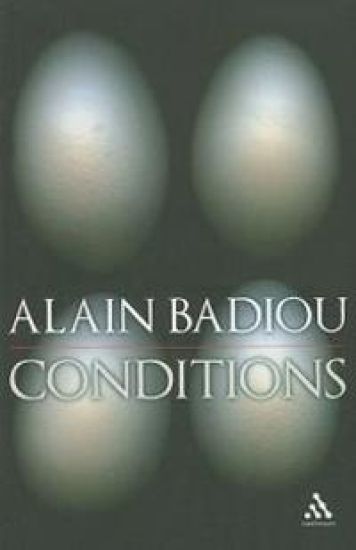
Conditions

Conditions

Alain Badiou

Continuum International Publishing Group Ltd.
2008
sidottu
This is the first complete English translation of the work that immediately followed Badiou's magnum opus, "Being and Event" in which Badiou provides an overview of what he sees as the four great conditions of philosophy - this book is therefore central to an understanding of Badiou's whole philosophical project.Alain Badiou is without doubt the most important and influential thinker working in European philosophy today. "Conditions" is the first major collection of essays written after "Being and Event", his extraordinary magnum opus.Beginning with a sustained critique of the so-called 'end of philosophy', the book goes on to propose a new definition of philosophy, one that is tested with respect to both its origin, in Plato, and its contemporary state. The essays that follow are ordered according to what Badiou sees as the four great conditions of philosophy: philosophy and poetry, philosophy and mathematics, philosophy and politics, and philosophy and love. Conditions provides an illuminating reworking of all the major theories in "Being and Event". In so doing, Badiou not only develops the complexity of the concepts central to "Being and Event" but also adds new ones to his already formidable arsenal. The essays contained within "Conditions" reveal the extraordinary and systematic nature of Badiou's philosophical enterprise.
Number and Numbers

Number and Numbers

Alain Badiou

Polity Press
2008
nidottu
The political regime of global capitalism reduces the world to an endless network of numbers within numbers, but how many of us really understand what numbers are? Without such an understanding, how can we challenge the regime of number? In Number and Numbers Alain Badiou offers an philosophically penetrating account with a powerful political subtext of the attempts that have been made over the last century to define the special status of number. Badiou argues that number cannot be defined by the multiform calculative uses to which numbers are put, nor is it exhausted by the various species described by number theory. Drawing on the mathematical theory of surreal numbers, he develops a unified theory of Number as a particular form of being, an infinite expanse to which our access remains limited. This understanding of Number as being harbours important philosophical truths about the structure of the world in which we live. In Badiou's view, only by rigorously thinking through Number can philosophy offer us some hope of breaking through the dense and apparently impenetrable capitalist fabric of numerical relations. For this will finally allow us to point to that which cannot be numbered: the possibility of an event that would deliver us from our unthinking subordination of number.
Number and Numbers

Number and Numbers

Alain Badiou

Polity Press
2008
sidottu
The political regime of global capitalism reduces the world to an endless network of numbers within numbers, but how many of us really understand what numbers are? Without such an understanding, how can we challenge the regime of number? In Number and Numbers Alain Badiou offers an philosophically penetrating account with a powerful political subtext of the attempts that have been made over the last century to define the special status of number. Badiou argues that number cannot be defined by the multiform calculative uses to which numbers are put, nor is it exhausted by the various species described by number theory. Drawing on the mathematical theory of surreal numbers, he develops a unified theory of Number as a particular form of being, an infinite expanse to which our access remains limited. This understanding of Number as being harbours important philosophical truths about the structure of the world in which we live. In Badiou's view, only by rigorously thinking through Number can philosophy offer us some hope of breaking through the dense and apparently impenetrable capitalist fabric of numerical relations. For this will finally allow us to point to that which cannot be numbered: the possibility of an event that would deliver us from our unthinking subordination of number.