Kirjojen hintavertailu. Mukana 12 423 424 kirjaa ja 12 kauppaa.

Kirjailija

Alain Badiou

Kirjat ja teokset yhdessä paikassa: 155 kirjaa, julkaisuja vuosilta 1999-2026, suosituimpien joukossa Ahmed the Philosopher. Vertaile teosten hintoja ja tarkista saatavuus suomalaisista kirjakaupoista.

155 kirjaa

Kirjojen julkaisuhaarukka 1999-2026.

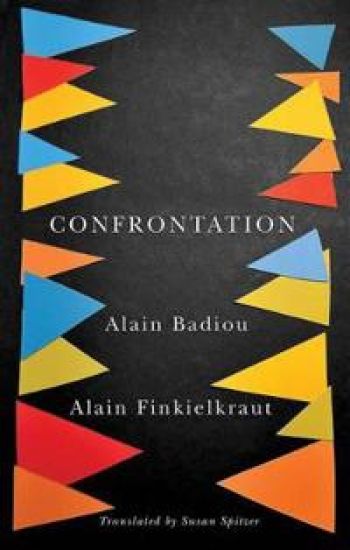
Confrontation

Confrontation

Alain Badiou; Alain Finkielkraut

Polity Press
2014
nidottu
Everything in their respective positions divides them: Alain Badiou is the thinker of a revitalized communism and Alain Finkielkraut the mournful observer of the loss of values. The two opponents, gathered here for their first-ever debate, have irreconcilable visions. Yet neither is a stranger to controversy, and in this debate they make explicit the grounds of their personal dispute as well as addressing, in a frank and open exchange, their ideas and theories. Guided by Aude Lancelin, the two philosophers discuss subjects as diverse as national identity, Israel and Judaism, May 1968, and renewed popularity of the idea of communism. Their passionate debate is more than just the sum total of their disagreements, however, for neither of them is satisfied with the state of our society or the direction in which its political representatives persist in taking it. They agree that there needs to be change and their confrontation in this volume shows the importance of asking difficult questions, not only of each other, but also of our political systems.
Controversies

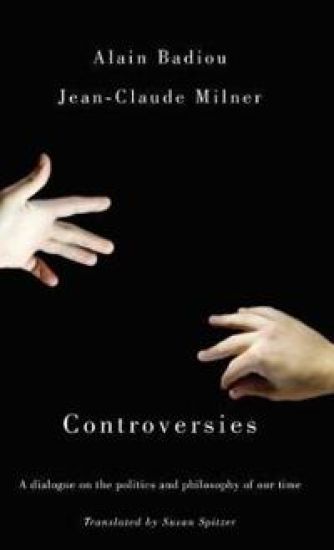
Controversies

Alain Badiou; Jean-Claude Milner

Polity Press
2014
sidottu
Alain Badiou was born in 1937 in Rabat and Jean-Claude Milner in 1941 in Paris. They were both involved in the "Red Years" at the end of the Sixties and both were Maoists, but while Badiou was focusing all his attention on China, Milner was already taking his distance from it. Over the years, that original dispute over the destiny of gauchisme was fueled by deep, new differences between them concerning the role of philosophy and politics. In this wide-ranging and compelling dialogue, these two great thinkers explore the role of politics in today's world and consider the need for a formal theory of communist political organization. Whether they are addressing the era of revolutions, and in particular the Paris Commune and the Chinese Cultural Revolution, or discussing the infinite, the universal, the name "Jew", violence, capitalism, the left, or Europe, Jean-Claude Milner's dyed-in-the-wool skepticism constantly runs up against Alain Badiou's doctrinal passion.This extraordinary debate ultimately leads to new areas of interrogation and shows that there is no better remedy for the crushing power of media-influenced thinking than the revival of the great disputes of the mind.
Controversies

Controversies

Alain Badiou; Jean-Claude Milner

Polity Press
2014
nidottu
Alain Badiou was born in 1937 in Rabat and Jean-Claude Milner in 1941 in Paris. They were both involved in the "Red Years" at the end of the Sixties and both were Maoists, but while Badiou was focusing all his attention on China, Milner was already taking his distance from it. Over the years, that original dispute over the destiny of gauchisme was fueled by deep, new differences between them concerning the role of philosophy and politics. In this wide-ranging and compelling dialogue, these two great thinkers explore the role of politics in today's world and consider the need for a formal theory of communist political organization. Whether they are addressing the era of revolutions, and in particular the Paris Commune and the Chinese Cultural Revolution, or discussing the infinite, the universal, the name "Jew", violence, capitalism, the left, or Europe, Jean-Claude Milner's dyed-in-the-wool skepticism constantly runs up against Alain Badiou's doctrinal passion.This extraordinary debate ultimately leads to new areas of interrogation and shows that there is no better remedy for the crushing power of media-influenced thinking than the revival of the great disputes of the mind.
Mathematics of the Transcendental

Mathematics of the Transcendental

Alain Badiou

Bloomsbury Academic USA
2014
sidottu
In Mathematics of the Transcendental, Alain Badiou painstakingly works through the pertinent aspects of category theory, demonstrating their internal logic and veracity, their derivation and distinction from set theory, and the 'thinking of being'. In doing so he sets out the basic onto-logical requirements of his greater and transcendental logics as articulated in his magnum opus, Logics of Worlds. Previously unpublished in either French or English, Mathematics of the Transcendental provides Badiou's readers with a much-needed complete elaboration of his understanding and use of category theory. The book is vital to understanding the mathematical and logical basis of his theory of appearing as elaborated in Logics of Worlds and other works and is essential reading for his many followers.
Being and Event

Being and Event

Alain Badiou

Bloomsbury Academic
2013
nidottu
Since the book’s first publication in 1988, Alain Badiou’s Being and Event has established itself of one of the most important and controversial works in contemporary philosophy and its author as one of the most influential thinkers of our time. Being and Event is a comprehensive statement of Badiou’s philosophical project and sees him recast the European philosophical tradition from Plato onwards, via a series of analyses of such key figures as Descartes, Spinoza, Leibniz, Hegel, Rousseau, and Lacan. He thus develops the basis for a history of philosophy rivalling those of Heidegger and Deleuze in its depth.Now publishing in the Bloomsbury Revelations series to mark 25 years since the book’s first publication in French, Being and Event is an essential read for anyone interested in contemporary thought.
Rhapsody for the Theatre

Rhapsody for the Theatre

Alain Badiou

Verso Books
2013
nidottu
For Alain Badiou, theatre-unlike cinema-creates a space in which philosophy can be lived. It is, of all the arts, the most closely related to politics: both depend on a limited number of texts or statements, which are collectively enacted by a group of actors or militants who test the limits of the structure inn which they are confined, be it the medium of drama or the nation-state. For this reason, the history of theatre is inseparable from the history of state repression and censorship. This definitive collection of Badiou's work on the theatre includes not only the title essay "Rhapsody for the Theatre," originally published as a pamphlet in France, but also essay on Jean-Paul Sartre, on the political destiny of contemporary drama, and on Badiou's own work as a playwright.
Philosophy and the Event

Philosophy and the Event

Alain Badiou

Polity Press
2013
sidottu
This concise and accessible book is the perfect introduction to Badiou’s thought. Responding to Tarby’s questions, Badiou takes us on a journey that interrogates and explores the four conditions of philosophy: politics, love, art and science. In all these domains, events occur that bring to light possibilities that were invisible or even unthinkable; they propose something to us. Everything then depends on how the possibility opened up by the event is grasped, elaborated and embedded in the world – this is what Badiou calls a ‘truth procedure’. The event creates a possibility but there then has to be an effort – a group effort in the case of politics, an individual effort in the case of love or art – for this possibility to become real and inscribed in the world. As he explains his thinking on politics, love, art and science, Badiou takes stock of his major works, reflects on their central themes and arguments and looks forward to the questions he plans to address in his future writings. The book concludes with a short introduction to Badiou’s philosophy by Fabien Tarby. For anyone wishing to understand the work of one of the most widely read and influential philosophers writing today, this small book will be an indispensable guide.
Philosophy and the Event

Philosophy and the Event

Alain Badiou

Polity Press
2013
nidottu
This concise and accessible book is the perfect introduction to Badiou’s thought. Responding to Tarby’s questions, Badiou takes us on a journey that interrogates and explores the four conditions of philosophy: politics, love, art and science. In all these domains, events occur that bring to light possibilities that were invisible or even unthinkable; they propose something to us. Everything then depends on how the possibility opened up by the event is grasped, elaborated and embedded in the world – this is what Badiou calls a ‘truth procedure’. The event creates a possibility but there then has to be an effort – a group effort in the case of politics, an individual effort in the case of love or art – for this possibility to become real and inscribed in the world. As he explains his thinking on politics, love, art and science, Badiou takes stock of his major works, reflects on their central themes and arguments and looks forward to the questions he plans to address in his future writings. The book concludes with a short introduction to Badiou’s philosophy by Fabien Tarby. For anyone wishing to understand the work of one of the most widely read and influential philosophers writing today, this small book will be an indispensable guide.
Cinema

Cinema

Alain Badiou

Polity Press
2013
sidottu
For Alain Badiou, films think, and it is the task of the philosopher to transcribe that thinking. What is the subject to which the film gives expressive form? This is the question that lies at the heart of Badiou’s account of cinema. He contends that cinema is an art form that bears witness to the Other and renders human presence visible, thus testifying to the universal value of human existence and human freedom. Through the experience of viewing, the movement of thought that constitutes the film is passed on to the viewer, who thereby encounters an aspect of the world and its exaltation and vitality as well as its difficulty and complexity. Cinema is an impure art cannibalizing its times, the other arts, and people – a major art precisely because it is the locus of the indiscernibility between art and non-art. It is this, argues Badiou, that makes cinema the social and political art par excellence, the best indicator of our civilization, in the way that Greek tragedy, the coming-of-age novel and the operetta were in their respective eras.
Cinema

Cinema

Alain Badiou

Polity Press
2013
nidottu
For Alain Badiou, films think, and it is the task of the philosopher to transcribe that thinking. What is the subject to which the film gives expressive form? This is the question that lies at the heart of Badiou’s account of cinema. He contends that cinema is an art form that bears witness to the Other and renders human presence visible, thus testifying to the universal value of human existence and human freedom. Through the experience of viewing, the movement of thought that constitutes the film is passed on to the viewer, who thereby encounters an aspect of the world and its exaltation and vitality as well as its difficulty and complexity. Cinema is an impure art cannibalizing its times, the other arts, and people – a major art precisely because it is the locus of the indiscernibility between art and non-art. It is this, argues Badiou, that makes cinema the social and political art par excellence, the best indicator of our civilization, in the way that Greek tragedy, the coming-of-age novel and the operetta were in their respective eras.
The Incident at Antioch / L’Incident d’Antioche

The Incident at Antioch / L’Incident d’Antioche

Alain Badiou

Columbia University Press
2013
pokkari
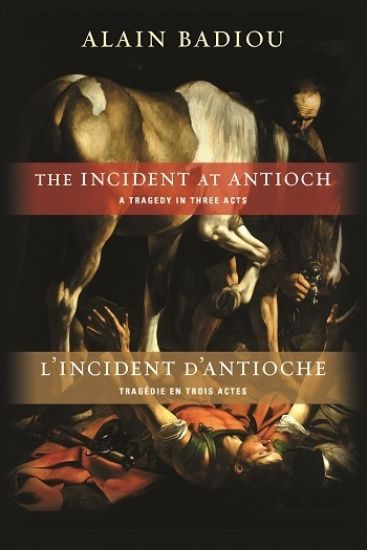
The Incident at Antioch is a key play marking Alain Badiou's transition from classical Marxism to a "politics of subtraction" far removed from party and state. Written with striking eloquence and extraordinary poetic richness, and shifting from highly serious emotional and intellectual drama to surreal comic interlude, the work features statesmen, workers, and revolutionaries struggling to reconcile the nature and practice of politics. This bilingual edition presents L'Incident d'Antioche in its original French and, on facing pages, an expertly executed English translation. Badiou adds a special preface, and an introduction by the scholar Kenneth Reinhard connects the play to Paul Claudel's The City, Saint Paul and the early history of the Church, and the innovative mathematical thinking of Paul Cohen. The translation includes Susan Spitzer's extensive notes clarifying allusions and quotations and hinting at Badiou's intentions. An interview with Badiou encompasses the play's settings, themes, and events, as well as his ongoing literary and conceptual experimentation on stage and off.
The Incident at Antioch / L’Incident d’Antioche

The Incident at Antioch / L’Incident d’Antioche

Alain Badiou

Columbia University Press
2013
sidottu
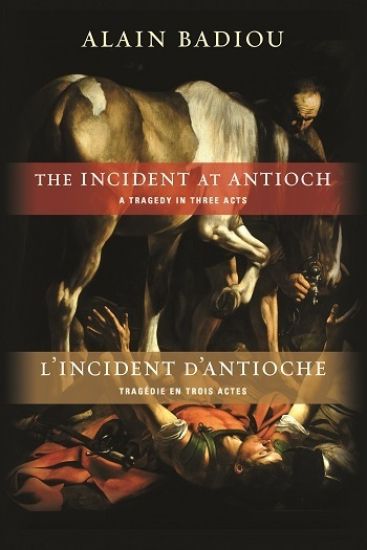
The Incident at Antioch is a key play marking Alain Badiou's transition from classical Marxism to a "politics of subtraction" far removed from party and state. Written with striking eloquence and extraordinary poetic richness, and shifting from highly serious emotional and intellectual drama to surreal comic interlude, the work features statesmen, workers, and revolutionaries struggling to reconcile the nature and practice of politics. This bilingual edition presents L'Incident d'Antioche in its original French and, on facing pages, an expertly executed English translation. Badiou adds a special preface, and an introduction by the scholar Kenneth Reinhard connects the play to Paul Claudel's The City, Saint Paul and the early history of the Church, and the innovative mathematical thinking of Paul Cohen. The translation includes Susan Spitzer's extensive notes clarifying allusions and quotations and hinting at Badiou's intentions. An interview with Badiou encompasses the play's settings, themes, and events, as well as his ongoing literary and conceptual experimentation on stage and off.
Theory of the Subject

Theory of the Subject

Alain Badiou

Bloomsbury Academic USA
2013
nidottu
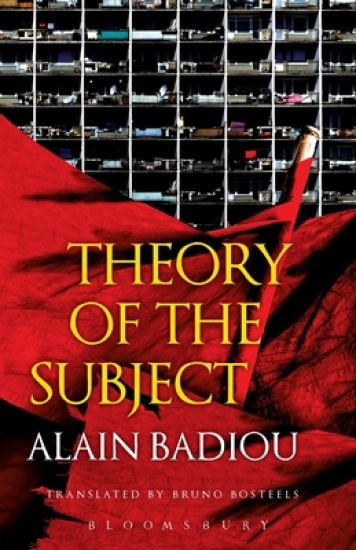
Theory of the Subject, first published in France in 1982, is without doubt one of Alain Badiou's most important works, laying many of the foundations for his magnum opus, Being and Event. Here Badiou seeks to provide a theory of the subject for Marxism through a study of Lacanian psychoanalysis, offering a major contribution to Marxism, as well as to the larger debate regarding the relationship between psychoanalysis and philosophy. The book also provides a history and theory of structuralism and poststructuralism, a unique evaluation of the achievements of French Maoism during the 1970s and the significance of the events of May 1968, and breathtaking analyses of art and literature. As a theoretical synthesis, the book is extraordinary in terms of its originality, breadth and clarity.This is arguably Badiou's most creative and passionate book, encompassing the entire battlefield of contemporary theory, philosophy and psychoanalysis. Available for the first time in English and now in paperback, this is a must-read for anyone interested in this lively and highly original thinker.
Ethics

Ethics

Alain Badiou

Verso Books
2013
nidottu
Ethical questions dominate current political and academic agendas. While government think-tanks ponder the dilemmas of bio-ethics, medical ethics and professional ethics, respect for human rights and reverence for the Other have become matters of broad consensus.Alain Badiou, one of the most powerful voices in contemporary French philosophy, explodes the facile assumptions behind this recent ethical turn. He shows how our prevailing ethical principles serve ultimately to reinforce an ideology of the status quo, and fail to provide a framework for an effective understanding of the concept of evil.In contrast, Badiou summons up an "ethic of truths" which is designed both to sustain and inspire a disciplined, subjective adherence to a militant cause (be it political or scientific, artistic or romantic), and to discern a finely demarcated zone of application for the concept of evil. He defends an effectively super-human integrity over the respect for merely human rights, asserts a partisan universality over the negotiation of merely particular interests, and appeals to an "immortal" value beyond the protection of mortal privileges.
In Praise of Love

In Praise of Love

Alain Badiou

The New Press
2013
sidottu
The renowned French philosopher’s “ode to love’s power to unite in the face of eternity, and its optimism in the face of pain” (Publishers Weekly). In a world rife with consumerism, where online dating promises risk-free romance and love is all too often seen as a mere variant of desire and hedonism, Alain Badiou believes that love is under threat. Taking to heart Rimbaud’s famous line “love needs reinventing,” In Praise of Love is the celebrated French intellectual’s passionate treatise in defense of love. For Badiou, love is an existential project, a constantly unfolding quest for truth. This quest begins with the chance encounter, an event that forever changes two individuals, challenging them “to see the world from the point of view of two rather than one.” This, Badiou believes, is love’s most essential transforming power. Through thought-provoking dialogue edited from a conversation between Badiou and Truong, a vibrant cast of thinkers are invoked: Kierkegaard, Plato, de Beauvoir, Proust, and more, create a new narrative of love in the face of twenty-first-century modernity. Moving, zealous, and wise, Badiou’s “paean to the anticapitalist, antiessentialist, unifying power of love” urges us not to fear it but to see it as a magnificent undertaking that compels us to explore others and to move away from an obsession with ourselves (Publishers Weekly). “Finally, the cure for the pornographic, utilitarian exchange of favors to which love has been reduced in America. Alain Badiou is our philosopher of love.” —Simon Critchley, author of The Faith of the Faithless
Plato's Republic: A Dialogue in Sixteen Chapters

Plato's Republic: A Dialogue in Sixteen Chapters

Alain Badiou

Columbia University Press
2013
sidottu
Plato's Republic is one of the best-known and most widely-discussed texts in the history of philosophy. But how might we get to the heart of this work today, 2,500 years after its original composition? Alain Badiou breathes life into Plato's landmark text and revives its universality. Rather than producing yet another critical commentary, he has instead worked closely on the original Greek and, through spectacular changes, adapted it to our times. In this innovative reimagining of Plato's work, Badiou has removed all references specific to ancient Greek society--from lengthy exchanges about moral courage in archaic poetry to political considerations mainly of interest to the aristocratic elite--and has expanded the range of cultural references. Here, philosophy is firing on all cylinders: Socrates and his companions are joined by Beckett, Pessoa, Freud, and Hegel, among others. Together these thinkers demonstrate that true philosophy endures, ready to absorb new horizons without changing its essence.Moreover, Badiou--who is also a dramatist--has transformed the Socratic dialogue into a genuine oratorial contest. In his version of the Republic, the interlocutors do much more than simply agree with Socrates. They argue, stand up to him, put him on the spot, and show thought in motion. In this work of dramatic scholarship and philosophy, we encounter a modern version of Plato's text that is alive, stimulating, and directly relevant to our own world.
Plato's Republic

Plato's Republic

Alain Badiou

Polity Press
2012
sidottu
Plato's Republic is one of the most well-known and widely discussed texts in the history of philosophy, but how might we get to the heart of this work today, 2500 years after it was originally composed? Alain Badiou invents a new genre in order to breathe fresh life into Plato's text and restore its universality. Rather than producing yet another critical commentary, he has retranslated the work from the original Greek and, by making various changes, adapted it for our times. In this innovative reimagining of a classic text, Badiou has removed all references specific to ancient Greek society, from the endless exchanges about the moral courage of poets to those political considerations that were only of interest to the aristocratic elite. On the other hand, Badiou has expanded the range of cultural references: here philosophy is firing on all cylinders, and Socrates and his companions are joined by Beckett, Pessoa, Freud and Hegel. They demonstrate the enduring nature of true philosophy, always ready to move with the times. Moreover, Badiou the dramatist has made the Socratic dialogue a true oratorial contest: in his version of the Republic, the interlocutors have more in mind than merely agreeing with the Master. They stand up to him, put him on the spot and thereby show thought in motion. Through this work of writing, scholarship and philosophy, we are able, for the first time, to read a version of Plato's text which is alive, stimulating and directly relevant to our world today.
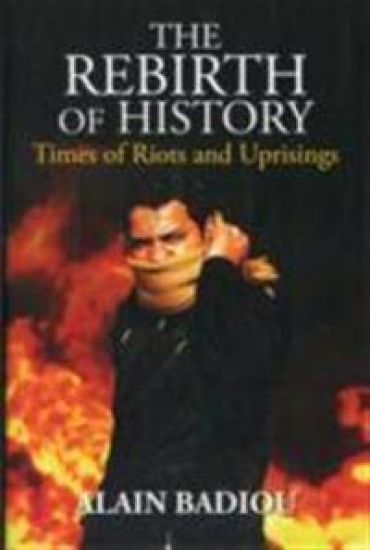
The Rebirth of History

The Rebirth of History

Alain Badiou

Verso Books
2012
sidottu
In the uprisings of the Arab world, Alain Badiou discerns echoes of the European revolutions of 1848. In both cases, the object was to overthrow despotic regimes maintained by the great powers-regimes designed to impose the will of financial oligarchies. Both events occurred after what was commonly thought to be the end of a revolutionary epoch: in 1815, the final defeat of Napoleon; and in 1989, the fall of the Soviet Union. But the revolutions of 1848 proclaimed for a century and a half the return of revolutionary thought and action. Likewise, the uprisings underway today herald a worldwide resurgence in the liberating force of the masses-despite the attempts of the 'international community' to neutralize its power.Badiou's book salutes this reawakening of history, weaving examples from the Arab Spring and elsewhere into a global analysis of the return of emancipatory universalism.